
Almost fifty-two years have passed since the hot August of 1974, that sad month when, abandoned and betrayed, we left behind our city, our always beloved Famagusta, with the impression or the illusion of certainty that it was something temporary. That's what we thought or wanted to believe, but since then we have been living an endless temporality, which has already exceeded half a century. Memory, alive and torturous, does not cease to wander constantly in every corner of our occupied city, in streets, spaces and buildings, which carry valuable elements of history. One of them is the District Court of Famagusta, where I had my first experiences as a young lawyer. I submit a historical review of its creation and evolution as a judicial institution, but also as a building in which this institution operated.
Beginning with the arrival of the British in Cyprus
When the British took over the administration of Cyprus in 1878, they wanted to introduce their own legal system as well as their own system of administration and application of Law with the creation of District Courts and a Supreme Court. We should therefore go back to those early years of English colonial rule. It seems that for a short period of time they more or less let things in the field of Justice function as they did during the Ottoman occupation of Cyprus. The first act for the creation of courts on the island was made by the legislation "The Cyprus Courts of Justice Order" of 1882, which came into force on February 7, 1883. With this act, six (6) District Courts were created, one for each province. The District Court of Famagusta began its operation on March 1, 1883, after its staffing. The Courts consisted of three members. It was chaired by a Briton and two members participated, one Christian and one Muslim. It is worth noting here that this first piece of legislation of the English did not refer to a Greek and a Turk, but to a Christian and a Muslim, i.e. with religious and not ethnic criteria. The reasons are obvious. In fact, this provision was in force for many years, as we will see later.
Changes in the decade 1920-30
With the end of World War I and the Treaty of Lausanne in 1923, which defined Turkey's new borders, Cyprus abandoned the rental regime and in May 1925 it was declared a colony of the Crown. Two years later, with the Cyprus Court of Justice Order of 1927, the District Courts were reduced to three, resulting in the operation of the Famagusta-Larnaca District Court, for both districts. The composition of the Court is made up to five members, with a British President and four (4) members, two Christians and two Muslims. This situation was maintained until 1935, when the previous system of six District Courts was restored with new legislation, when we again had a separate court for the province of Famagusta. There was no set number of judges and the members of the court were appointed by the Chief Judge. This system was maintained until 1960, when Cyprus gained its independence. Relevant is the Courts Law no. 14/1960.
Impressive ritual
I find it very interesting to quote at this point, a relevant excerpt from Agni Michailidou's book "The Old Varosha". He vividly describes the operation of the Famagusta Court during the years of British rule. He writes: "England's first task was to improve the courts, in a way that law and justice would take substance. A District Court was established in Varosha, which tried all cases. Serious criminal cases were the work of the Criminal Court, which met at infrequent intervals. It consisted of the Chief Judge and the Crown Advocate, who came from Nicosia with their interpreter and the two judges of the District Court. The first day of the session of the Criminal Court was very spectacular and impressive. On this day, from nine in the morning, a detachment of thirty non-commissioned officers and men of the Police, under the orders of a lieutenant, waited in line for the arrival of the Chief Judge in the area before the courts. The English Chief Judge always arrived on time and was greeted by the Police Officer of the province with his uniform and medals. But the one who gave colour and weight to the whole picture was the Chief Judge himself. Dressed in a red long judicial robe, garnished with a white ermine, he had a long white wig on his head, which fell down to his shoulders. The chief judge and the policeman walked slowly towards the police detachment, which paid tribute. The whole ceremony was a matter of lasting ten minutes, but the impression it made was very great. It gave everyone the feeling that Justice was above all.
After this short ceremony. the Chief Judge and the Police Officer proceeded to the Court building, where the Chief Judge was greeted by the associate judges, the Crown Advocate and the interpreter, all wearing black robe and a white short wig that covered the head to the ears. They all entered the courtroom together, where the trial normally began. When there were no cases to be tried, a simple and imposing ceremony took place. The Prosecutor in a few words announced to the Court that the plate was white and offered the Chief Judge a pair of white gloves. And the meeting was considered over."
It is no exaggeration to say that these are heard today with some nostalgia. For times that have passed irrevocably. The English left behind a legal and judicial system for which we can only feel satisfaction, and the values and ethos they created remain to a large extent to this day.
Developments after 1960
Let's go back to the years of independence. The law I referred to maintained the status of one court for each province and therefore the Famagusta District Court continued to operate more or less as before. With a president initially and with judges whose number fluctuated according to the workload of the court, as determined by the Supreme Court. From 1972 there was a second president. When we left the city in 1974, the Administrative President of the Court was the late Loukis Savvidis, father of the current Attorney General, and the second President was the recently deceased Georgios Pikis. The judges were Christos Artemides and the late Sotos Dimitriou, Petros Artemis and Solon Nikitas. Law firms were concentrated in the streets around the courthouse. Mainly on Anexartisias Avenue and Maria Synkletikis Street. I mention some of the old law firms. Nikolas Antoniou, Andreas Pougiouros, Michael Montanios, Jason Kaniklidis, Nikos Zomenis, Andreas Michailidis.
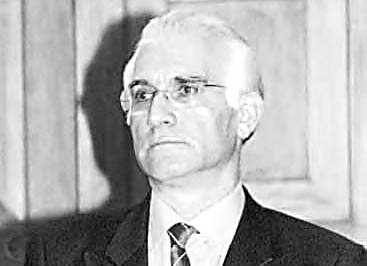
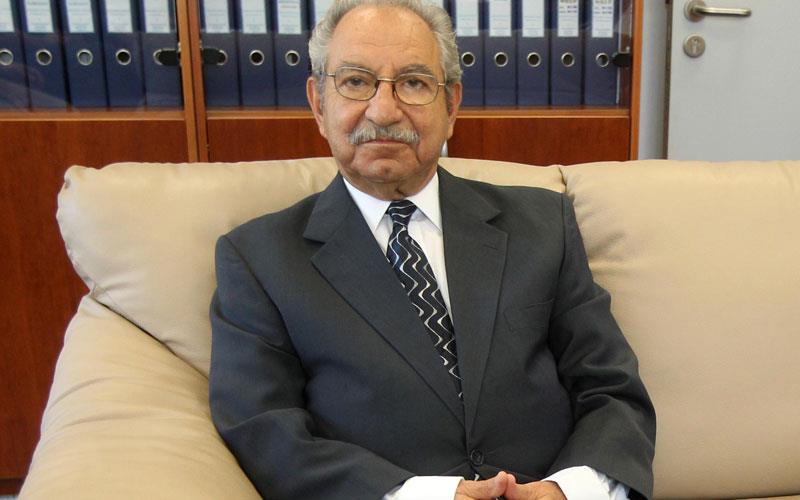
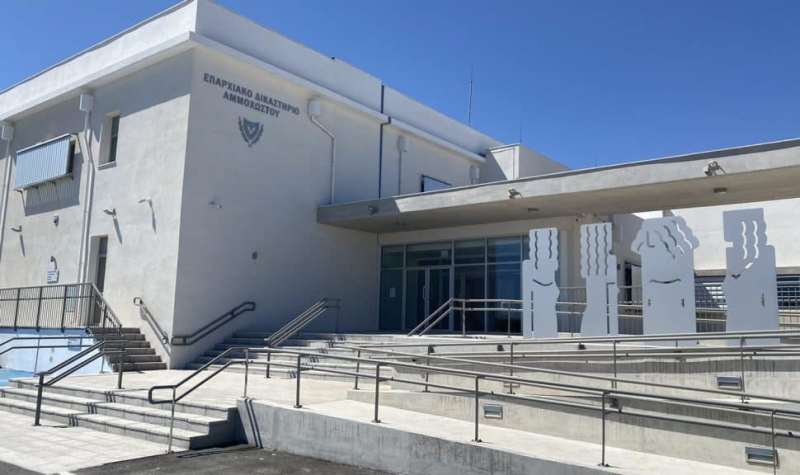
When we left the city on the fateful day of August 1974, the District Court of Famagusta ceased to function. A month later, in September 1974, it began to operate in Larnaca and to adjudicate cases, civil and criminal, for which it would have jurisdiction if we had remained in the city. It was the District Court of Famagusta that sat in Larnaci, during the katharevousa of the time. Some criminal cases were tried in Paralimni, the closest to our city, so that there would be a continuation. Once a week, one of the District Judges who had their headquarters in Larnaca, went to Paralimni to hear these cases. Since 2022, the District Court of Famagusta has been operating and sitting in Paralimni for all cases, civil and criminal, which fall under its jurisdiction. The District Court of Famagusta is currently housed in a newly built, beautiful building in Paralimni.
The building of Emfietzis, the Town Courts and the building of Anexartisias Avenue ...
But let's follow the history of the court in the areas where it was housed until it reached the courthouse in Paralimni. In the book of Michael Koumas "The old Varosha and the old Famagusta" it is mentioned that "The Courts were located in a large old building of Emfietzis on Dimarchias Street, which has now been demolished by the Municipality".
We can assume that this was the place where the court was originally housed. It is known that for many years the Courts of Famagusta were housed in a characteristic colonial stone-built building, which was located on Vasileos Georgiou V Avenue, which was renamed Anexartisias Avenue at the end of colonialism. The same building housed the offices of the District Administration and the Land Registry. It is estimated that this building was erected at the beginning of the twentieth century. The Courts continued to be housed in this building until 1970, when they were relocated to the new modern and elegant courthouse, the first of its kind in Cyprus. It was located on Anexartisias Avenue, very close to the old building. Unfortunately, the District Courts of the illegal Turkish Cypriot administration are housed there today.
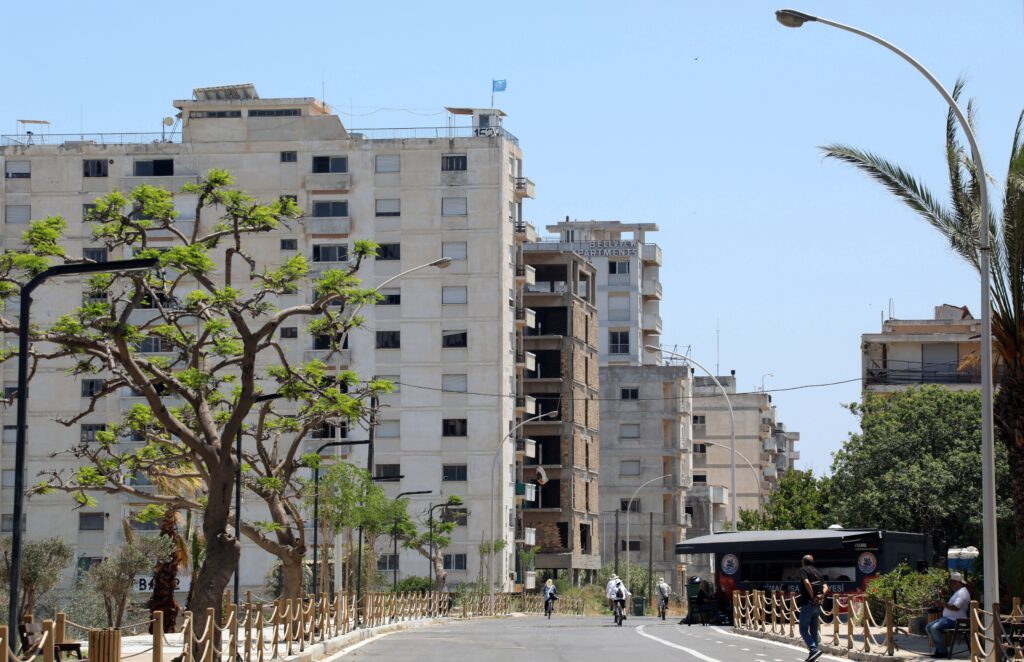
The oldest colonial building was bombed in August 1974 and was almost completely destroyed. Only some bare walls remain standing. I had some information since we were in Famagusta, that the District Court of Famagusta was meeting for non-serious criminal cases in Gialousa. I tried to confirm it. I spoke, among others, with the lawyer Andreas Poitis, who is a little older in the profession than me. He informed me that the court did indeed meet periodically every quarter, both in Yalousa and Lefkoniko, as far as he knew. In fact, he appeared once around 1970, when the Court was meeting in Lefkoniko. Since then, as he told me, he did not realize that there were other sessions of the court, either in Lefkoniko or in Gialousa. In fact, he described to me that there was no suitable place for the sessions of the Court and this was done in somewhat primitive conditions. Another relevant piece of information came to me from Ilias Pantelidis on the basis of what is contained on the website about Aigialousi. It is reported that as early as 1882, i.e. with the establishment of courts in Cyprus, two began to operate in Karpasia, which were then called Town Courts. One in Lefkoniko and one in Gialousa. Therefore, this is where the periodic operation for a limited number of cases of the District Court of Famagusta in the above two towns lies.
Regarding sessions of the District Court of Famagusta outside its seat, for the purposes of historical completeness, it is worth mentioning a peculiar trial, which took place in Trikomo, in December 1891. It concerned a politically sensitive case for the time, which the English administration, in order to avoid incidents, considered safer to take place in Trikomo, which was then one of the big villages of the province. The Court essentially functioned as an electoral court. It concerned a lawsuit that the unsuccessful candidate for the position of MP in the Legislative Council brought against the two elected members of the Council for the Province of Famagusta. The elections had taken place in October of that year. The plaintiff was the then commander of Famagusta, Captain Arthur Young, and the defendants were the two successful candidates, Liasidis and Shakallis. The trial lasted many days and in the end the English judge annulled the elections. The Court met in one of the large houses of Trikomo. Since then, no other trial has taken place in Trikomo.
"Syntysi, my tongue. I understand what you are saying"...
I first came into contact with the District Court of Famagusta in early 1971, when I enrolled as a trainee lawyer. I started working as a licensed lawyer around October 1972. I didn't have time to experience the Famagusta District Court, except for a short period, so I don't have many memories. As a trainee lawyer, I was impressed by a criminal case that I happened to follow and I mention it briefly, because I believe that what I heard touches on the tragedy of our country. It concerned drug-related charges. The main witness for the prosecution was a young Turkish Cypriot woman from Galinoporni. For this reason, there was an interpreter in court to translate from Turkish to Greek and vice versa. The interpreter addressed her in Turkish, showing her the Koran to swear. With an obvious embarrassment, the Turkish Cypriot replied: "Syntysi, my tongue. I understand what you are saying." She then gave her testimony in the Cypriot dialect. She was a Muslim but did not know Turkish, like thousands of other Turkish Cypriots. We managed to throw these people into the arms of Turkey!
I end up with something not judicial, but related to what I narrated above. I will not forget what the great man of letters Kyriakos Hadjiioannou said in a lecture in Larnaca, a few months after the invasion. Turkey, he said, does not consider the Turkish Cypriots to be genuine Turks and, because they lived scattered throughout Cyprus and lived harmoniously with the Greek Cypriots for many years, it was difficult to Turkify them. One goal of the invasion and partition was to convert them from Muslims to Turks. I recall what I said at the beginning: The British did not appoint and did not distinguish between Greek and Turkish judges, but between Christians and Muslims.
*George Arestis is a former judge of the Supreme Court of Cyprus and the Court of Justice of the European Union. (This text was submitted by the author as a speech, in the context of a Two-Day Conference on Famagusta, held in Limassol on March 7, 2026.)
