
TOURISM ZERO HOUR - CYPRUS IN AN AGGRESSIVE ARRANGEMENT NOT TO PAY FOR THE IMAGE OF A WAR THAT DOES NOT EXIST - KOUMIS IS OPTIMISTIC, PASYXE RECOMMENDS CALMNESS - Filenews 29/3 by Ernest Moussas
The Shahed drone that hit the British Bases in Akrotiri on the first day of March may have caused only some light material damage, but it marked various sectors in the interior of the country for good. Tourism is the driving force of the Cypriot economy and this season now seems to be balancing on an extremely thin and tightrope.
A combination of isolated events and risky communication management from which messages emerged that gave the impression that Cyprus was at war, led to the current predicament. As a result, the government and the Deputy Ministry of Tourism are currently running in a decisive race against time. The aim is to tidy up the situation and reverse the negative - and distorted - feeling that has been created abroad, since in reality life in Cyprus remains completely normal.
Security and insecurity
The image of Macron, Mitsotakis and Christodoulidis in front of a military helicopter at the Andreas Papandreou air base in Paphos on March 9, it would be fair to say that it sent ambiguous messages. On the one hand, it strengthened the sense of security of citizens at home and at the same time served as an example of practical European solidarity. On the other hand, however, it contributed to the consolidation of the impression abroad that Cyprus is part of the conflict and to the strengthening of the doubt internationally as to whether it is a safe tourist destination this season. And the French President's erroneous reference to multiple missile and drone attacks, although corrected by the competent lips in Cyprus, remains unchanged to this day on his social media profiles, counting many millions of views around the world.
Foreign Press and Travel Advice
In the days following the attack on the British Bases in Cyprus, the situation here occupied several foreign media, mainly from countries that are the main sources of tourists for our island every year.
From the United Kingdom, in 2025, 53,267 tourists arrived in Cyprus, so the British press was expected to deal extensively with the issue. Indicatively, the Guardian had published a topic on March 8 entitled: "People have second thoughts: Cyprus feels the consequences of the war in Iran on tourism". The report points out that no country in Europe or the Mediterranean will be more affected than Cyprus. Our country was projected as a place that is "clearly in a danger zone", while announcements by the British Foreign Office continue to warn that terrorist acts cannot be ruled out. It is worth noting that the British Cypriot community in the United Kingdom is visibly dissatisfied with the warnings of the British government, whose council complained in a letter to the Minister of State for Europe regarding the travel advice "The Guardian". The community believes that they affect Cypriot tourism, which is why it calls for their revision.
The Telegraph, for its part, included Cyprus in a travel report entitled: "Ten ways the war in the Middle East will affect your next vacation." Specifically, for our country, it is pointed out that after the attack on the Bases, the demand for holidays has decreased. A statement from the CEO of Jet2 is also hosted, stating that people are not making reservations for Cyprus and Turkey, while cancellations are increasing." However, he expects a sharp increase in bookings once the war ends.
Germany's EURACTIV, for its part, in a report published this week, focused on highlighting the current aggressive strategy followed by the Cypriot Deputy Ministry of Tourism, in order to convince that Cyprus is a safe destination. In the report entitled "'No war zone': Cyprus' tourism goes on the counterattack", it is pointed out that Cyprus is fended off security concerns linked to the conflict in the Middle East and is trying to protect its upcoming summer tourist season. It also includes statements by Kostas Koumis, who underlines: "We are not in a war zone. We are hundreds of kilometers away, it's just that the map gives a different impression."
From 2025 of records to 2026 of concern
Just three nights before Hezbollah's drone attack on Akrotiri, the Deputy Minister of Tourism was presenting the work report of his Deputy Ministry for 2025. Last year was a great year for Cypriot tourism, which was sealed as the best in history, with performance recording historically high levels in all key indicators.
According to data presented by Kostas Koumis, tourist arrivals exceeded the 4.5 million barrier for the first time, recording an increase of 12.2% compared to 2024 and 41.6% compared to 2022. Accordingly, revenues for the January-November period increased by 15.3% year-on-year, while total revenues for the three-year period 2023-2025 amounted to a record amount of €9.9 billion.
Tourism's contribution to the Cypriot economy recorded a further strengthening, with its share of GDP amounting to 14%, compared to 13.1% in the previous year. At the same time, visitor spending also appears to have increased, as the average per capita expenditure stood at €822, showing an increase of 2.9%, while the daily expenditure reached €99.5, recording an increase of 7.2% compared to 2024. Despite the slight decrease in the average length of stay, which was limited to 8.27 days, total overnight stays moved upwards, recording an increase of 3.3% and reaching 18.5 million. Cruise tourism recorded significant growth, which doubled its traffic with 278,000 passengers, a number that translates into an increase of 104% compared to 2024. Agrotourism also increased by 3% compared to the previous year, with more than 90,000 arrivals, and an increase of 40.9% over a three-year horizon.
Today's data, about a month after the Akrotiri attack, are not encouraging. In March and April, reservation cancellations reached 40-50%. At the moment, many cancellations are also recorded for May, while bookings for the summer are moving at an alarmingly sluggish pace for the period we are going through. As Reuters reported, cancellation rates for short-term rentals in Cyprus skyrocketed from about 15% before the conflict to 100% in the days after, according to data from AirDNA, which tracks such bookings. This figure has fallen since then, but remained at around 45% until March 21.
Measures and targets
The package of eight measures to relieve households and support the real economy announced on Thursday by the Government also includes two measures that concern exclusively the hotel industry and tourism. Specifically, it was decided to subsidize 30% of the earnings of employees in the hotel industry, for units and tourist accommodation that will be in operation for the entire period from April 1 to April 30, 2026. In addition, a plan was drawn up to further support airlines in order to ensure the seamless connection of our country with important tourist destinations.
A little later on the same day, the Deputy Minister of Tourism spoke of signs of recovery in tourism in Cyprus, after the geopolitical pressures that preceded it. Kostas Koumis spoke about the trend of restoration that bookings have shown in recent days. He also underlined the importance of the Cypriot presence at the ITB tourism exhibition in Berlin, describing it as crucial to convey to strategic partners the message that the country remains a safe destination and that tourism activity continues normally.
In addition, as it became known, the Deputy Ministry of Tourism is considering the possibility of granting incentives to Cypriot citizens to strengthen domestic tourism. The latter could also be a bet for all of us Cypriot citizens to prove our patriotism in practice, in a difficult period when the country may need support from within.
Kostas Koumis: We remain optimistic for a good tourist year
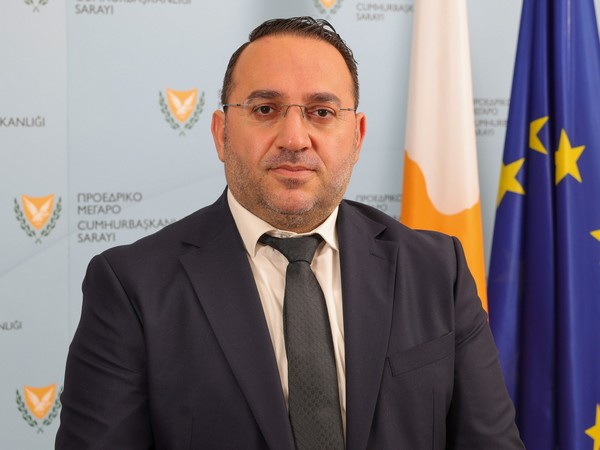
"Tourism, as a sector of the economy affected by external factors, is normal to be often called upon to adapt to unpredictable developments.
The Government and by extension the Deputy Minister. In the last three years, it has been called upon to manage, in at least two cases, the adverse consequences of geopolitical tensions in the Middle East region, which had caused conditions of uncertainty for the tourism scene in the wider region.
In all cases, through coordinated actions by the Government and the entire tourism ecosystem, Cypriot tourism has proven its resilience, and has coped with the challenges successfully. A resilience that is the result of the successive successful years of the tourism sector.
In relation to the current situation, as the Deputy Ministry of Tourism, we have been in constant contact with the tourism industry, inside and outside Cyprus, from the first moment, in order to constantly receive information on the course of tourism and all current developments.
It is noteworthy that in just a few days, all European airlines fully restored their flight schedules to our country, which demonstrates their confidence in the Republic of Cyprus, the Government and the destination.
In addition, an intensive campaign abroad has been launched, with the aim of making it clear that our country remains a safe destination for visitors, and that tourism activity continues unhindered, which is proven by all those international sports and cultural events that take place throughout Cyprus.
There is no doubt that our country is among the safest countries in the world, and at the same time, we remain a popular destination, ready to provide high-quality hospitality as every year.
We remain optimistic, based on the spirit of good cooperation and the resilience of the sector, for a good tourism year, for the benefit of the state, businesses, workers in the sector and local communities."
Thanos Michailidis: It is unclear whether the measures are sufficient
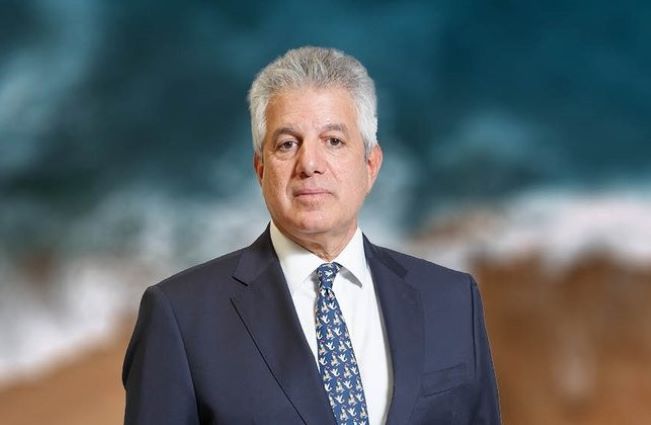
"The war in the wider region has highlighted, once again, the vulnerability of the tourism sector to exogenous crises. Cyprus, as a pre-eminent tourist destination, is directly experiencing the effects of geopolitical instability, with uncertainty affecting both demand and visitor planning. At the same time, it remains crucial to maintain the message that our country is a safe and reliable destination, especially for the European market.
The picture currently confirms that visitors who are already in Cyprus enjoy a smooth and enjoyable holiday, which enhances the credibility of the destination. However, uncertainty has significantly affected demand, mainly during the months of March and April, where cancellations and reduced occupancy rates were recorded, in some cases of significant size, taking into account the reduced operation of units during the winter season.
The first messages for this year remain restrained, with signs of resilience but also clear challenges. April, as the month of the start of the tourist season and in combination with the Catholic Easter, seems to have been more affected, while the course of the coming months will largely depend on the developments in the wider region and the general climate of confidence in the markets. Despite any signs of stabilization, uncertainty remains strong and the situation continues to be characterized by liquidity, making it difficult to make any safe forecast for May.
In relation to the measures that have been announced, it is recognized that they are an initial effort to support employment and the operation of tourist units. However, with the data so far, it is not clear whether they are sufficient to cover all the challenges faced by the tourism sector. As important clarifications on their implementation and scope are still pending, it is appropriate to avoid jumping to conclusions. The next period will allow for a more comprehensive assessment, so that, if gaps are found, additional interventions can be considered based on the real needs of the sector.
Tourism cannot operate in isolation. It requires coordination, flexibility, and timely response to ever-changing data. Close cooperation between the state and the private sector remains crucial to ensure the resilience of the sector and limit the effects of uncertainty. In times like today, composure, realistic data assessment and adaptability are key elements for managing the situation."
