Filenews 1 February 2026 - by Marilena Panayi

The last major revision of the EU's pharmaceutical legislation took place more than 20 years ago. Since then, the way pharmaceutical companies operate and the activity has expanded significantly on the planet, however, this expansion did not bring with it the corresponding change in terms of patients' access to new drugs. In fact, within the European Union, significant divergences are recorded between the Member States, resulting in discrimination among European citizens, since some treatments are unaffordable or unavailable in some countries, including Cyprus, mainly due to the size of the population.
The revision of the European pharmaceutical framework is currently in a critical phase, with Cyprus, as the EU presidency, taking on an important role in the formulation and finalization of the new rules, which are expected to determine the Union's policy in the field of medicines for the next, probably decades.
As the Director of Pharmaceutical Services, Elena Panagiotopoulou, explained to "F", the technical meetings in Brussels continue at a rapid pace, despite the fact that the basic process of revising the legislative framework has been completed on December 11, 2025, a landmark date on which a political agreement was reached between the European institutions.
According to Ms. Panagiotopoulou, the next period is equally crucial, as Cyprus will play an important role in the so-called "cleansing" of the provisionally agreed text. This is a particularly demanding technical process, in which all provisions are examined in detail in order to eliminate ambiguities, overlaps or legal weaknesses before the text reaches its final form.
The text will first be submitted to the Permanent Representatives Committee (COREPER) and then to the SANT Committee (Health) and the plenary of the European Parliament. Only after the completion of these stages will the way be opened for the legal-linguistic revision, in which EU lawyer-linguists will ensure that the text is consistent and accurate in all the official languages of the Union.
Of particular importance is the fact that the signing of the final text is expected to take place during the Presidency of the Republic of Cyprus, which gives increased political and institutional weight to the role of Nicosia.

Critical Medicines Regulation: At the heart of the European agenda
In parallel with the overall pharmaceutical reform, the Critical Medicines Regulation is of particular importance, which comes to respond to one of the most serious problems faced by the EU in recent years: shortages of essential medicines and dependence on a limited number of suppliers outside Europe.
The discussion in the Council concluded during the Danish Presidency, with a general approach reached at the EPSCO Health Council meeting in December. According to the Cyprus Presidency, the proposal is now entering the phase of trilogues, i.e. negotiations between the Council, Parliament and the European Commission.
As emphasized by the Republic of Cyprus, there is a clear commitment to continue and complete the negotiations, with the aim of adopting an effective and functional regulation.
The general principle of the whole effort is that the joint procurement mechanisms should:
- operate under clear and transparent governance;
- ensure the effective involvement of all Member States involved;
- protect national competences,
while at the same time strengthening cooperation at EU level, where necessary. - Maintain a prudent and clear stance on joint procurement procedures for medicines and the role of the European Commission in them.
This approach aims to find, in effect, a balance between the need for European solidarity and the maintenance of the flexibility of Member States to respond to the specific needs of their national health systems.
The Cypriot initiative in the context of the changes
Particular reference is made to the "Voluntary Joint Procurement" initiative, which started in December 2024, following an initiative of the former Minister of Health Michalis Damianos. "With this initiative, Cyprus invited EU Member States to participate in a voluntary mechanism for the joint procurement of medicines, with the aim of strengthening bargaining power and better ensuring adequacy."
This initiative did not stop at a theoretical level. On the contrary, "it was incorporated into the 'Critical Medicines Act', which is currently at the stage of trilogues with the European institutions. This fact is recognized as a decisive contribution of Cyprus to the formulation of the new European policy on medicines."
What is considered a "critical drug"
As clarified, critical medicines are those that are considered absolutely necessary to ensure life and public health. Their deficiency can have immediate and serious effects on both patient care and the functioning of health systems.
The Regulation is not limited to these. It also covers so-called medicines of common interest, i.e. medicines that are vital to the health of citizens but cannot be adequately guaranteed by three or more Member States individually. In such cases, a common European approach is necessary to ensure both availability and security of supply.
European policy with a Cypriot footprint
The overall picture that emerges is that Cyprus, at the moment, is not limited to the role of an observer, but actively and substantially participates in shaping European developments in the field of health and medicines.
The incorporation of the Cypriot initiative into the new rules for "critical medicines", and the direct involvement of Cyprus in the "cleaning" of the final text of the pharmaceutical reform, as well as the prospect of signing the new rules during the Cyprus Presidency, compose a strong political and institutional footprint which of course comes with the corresponding obligations.
As demonstrated, Ms. Panagiotopoulou concluded, "the debate on medicines in Europe is no longer only about the market and regulation, but touches on issues of public health, strategic autonomy and European solidarity – areas in which Cyprus seeks to have a substantial say and presence."
Aid for antibiotics and orphan drugs
Pharmaceutical companies that develop new antibiotics will be able to receive a special "coupon", which gives them an additional year of market protection for any of their drugs. This coupon does not necessarily need to be used by the company itself, as it can also be sold to another pharmaceutical company.
At the same time, companies that invest in medicines for rare diseases, the so-called "orphan drugs", will be able to benefit from extended data protection and market periods. In some cases, and especially for "innovative" medicines that cover unmet medical needs, this protection can reach up to 11 years.
These incentives aim to encourage investment in medicines for rare diseases and help companies recover high R&D costs.
In addition, companies that develop promising orphan drugs will be able to receive timely regulatory guidance, even many years before they apply for marketing authorization. In this way, new treatments can reach patients more quickly.
Reduction of bureaucracy, faster procedures, voice to patients
Faster and more efficient drug approvals
The European Medicines Agency (EMA) is responsible for the authorisation of medicines in the European Union. Once a medicine has been approved by the EMA, it can be marketed in all EU Member States.
The reform aims to make the EMA more efficient, reduce bureaucracy and speed up the approval times of medicines. At the same time, it is planned to strengthen the voice of patients, with the participation of their representatives in the main scientific committee.
Better addressing shortages of medicines
Shortages of medicines have been a serious problem in the European Union for years. The COVID-19 pandemic has highlighted the EU's dependence on countries outside Europe for essential medicines and raw materials, as well as the weaknesses of existing rules.
The reform aims to improve the monitoring and management of shortages. Pharmaceutical companies will be obliged to inform in a timely manner about possible shortages, to draw up prevention plans and to take measures to address critical shortages.
In parallel, the EU will establish a list of critical medicines and systematically monitor their availability. The new rules will also allow member states to require companies to have sufficient quantities of specific medicines when they are protected by regulatory privileges, such as market exclusivity or data protection.
More sustainable and environmentally friendly medicines
Drug residues resulting from production, use, or improper disposal can contaminate water and soil, posing a risk to the environment and public health. Research has identified antimicrobials in the environment, such as in water resources, which may contribute to antimicrobial resistance.
The proposed new rules provide that companies wishing to place medicines on the market will have to carry out environmental risk assessments and take measures to reduce and mitigate risks.
Access to medicines of common interest
In March 2025, the European Commission tabled a proposal for a law on critical medicines, with the aim of substantially improving their availability, supply and production within the European Union. The initiative aims to address shortages of medicines, inequalities of access between Member States, but also to support medicines of common interest, such as those for rare diseases. It provides for the designation of strategic projects with faster permitting procedures and easier access to finance, the use of public procurement to strengthen supply chains, cooperation between Member States in procurement, international cooperation to reduce dependencies on individual suppliers, as well as a clear state aid framework.
Antimicrobial Resistance Package
In April 2023, the European Commission presented the new pharmaceutical package, paving the way for a revision of the rules governing medicines in the European Union. On 4 June 2025, the Council of the European Union agreed on its negotiating position, giving a formal mandate to start the final negotiations. Then, on 11 December 2025, the Council and the European Parliament reached an agreement on the final shape of the new rules. with the aim of strengthening the treatment of antimicrobial resistance (AMR), i.e. the ability of certain microorganisms to survive despite the use of drugs designed to fight them.
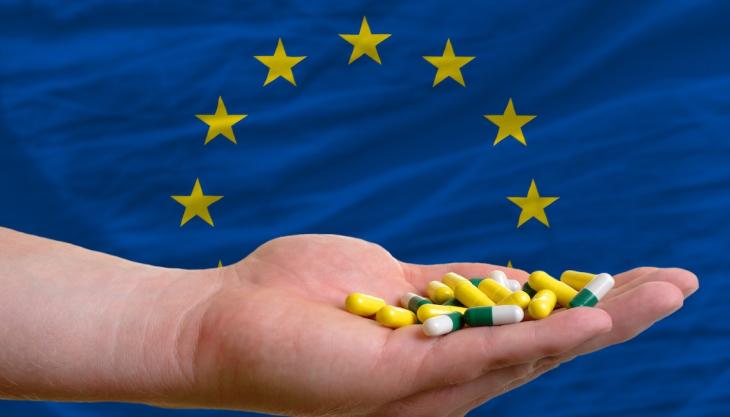
Milestones for change in the field of drug management
March 2025: Proposal submitted
In March 2025, the European Commission tabled a proposal for a law on critical medicines, with the aim of substantially improving their availability, supply and production within the European Union. The initiative aims to address shortages of medicines, inequalities of access between Member States, but also to support medicines of common interest, such as those for rare diseases. It provides for the designation of strategic projects with faster permitting procedures and easier access to finance, the use of public procurement to strengthen supply chains, cooperation between Member States in procurement, international cooperation to reduce dependencies on individual suppliers, as well as a clear state aid framework.
December 2024: Cyprus proposal
The proposal for a law on critical medicines was preceded in December 2024 by the submission/initiative for "Voluntary Joint Procurement" by the Minister of Health of Cyprus, Michalis Damianos, who called on EU member states to voluntarily participate in joint offers aimed at the joint procurement of medicines.
This initiative was integrated into the effort for critical medicines, which is currently in the trilogue stage with the institutions of the European Union.
It is clarified that critical medicines are those that are absolutely necessary to ensure life and public health.

December 2025: Important agreement
The European Union has reached an important agreement to renew its pharmaceutical rules, which have been in force for about 20 years. This reform aims to make the European pharmaceutical framework more modern and more efficient, enhancing competitiveness and innovation, but without relaxing strict safety standards.
- Better and faster access to medicines, so that patients in all Member States can receive basic treatments without delays.
- Simplification of procedures and less bureaucracy, which will help supply chains run more smoothly and allow new medicines to reach the market faster.
- Boosting innovation, with stronger incentives to develop new medicines and creating safe testing frameworks for breakthrough treatments.
- Better address shortages of medicines, through more effective monitoring and coordination, but also with clearer rules that facilitate the timely launch of generic medicines when necessary.
Overall, this reform is expected to strengthen the strategic autonomy of the European Union, support a more competitive and innovative health sector and, most importantly, ensure that citizens have access to safe, quality and effective medicines and treatments.
