Filenews 1 February 2026 - by Ernest Moussos

Social media has been transformed in recent years into a digital public square, where criticism, complaints, anger and misinformation coexist without filters. In the last two months at least, there has been an upsurge in incidents that spring up through some posts on social media and in no time turn into burning issues that figure in the main news of conventional media, of all kinds.
From the misinformation about the works of Giorgos Gabriel and the "lynching" of the artist, to the posts of Nicoletta Tsikkini about the wife of the President of the Republic and the legal battle between them, the video of "Emily Thompson" and what followed, but also what we all watch in amazement happening around the name of the wanted by the Cypriot Police Anna Fotiou, known as Annie Alexui. These recent cases, which have been of great concern to the public sphere, have brought some critical questions back to the forefront. Where does the right of one to say what he wants stop and where does the right of the other to believe that he is being offended begin? Is there a red line, and if so, where do we draw it?
The lawyer, and particularly active on social media, Korina Demetriou, spoke to "F tis Kyriakis" about the issue. On freedom of expression on social media, the chairman of the parliamentary Committee on Institutions and DISY MP, Dimitris Demetriou and the vice-president of the Human Rights Committee and AKEL MP, Giorgos Koukoumas, are placed in a political context.
Can we say everything?
Korina Demetriou, asked if there are limits to freedom of expression on social media, replied that there are restrictions for the digital world, as there are in the physical public sphere. Restrictions concerning racist speech, homophobic speech, rhetoric that incites violence and more. He referred to legislation in relation to persistent stalking and harassment. Where there is chaos, she explained, is in the part of the implementation of the legislation. Despite the fact that there is a European regulation that sets rules on how social media and large digital platforms work (Digital Services Act), there is no implementation mechanism. Countless comments are posted on social media platforms that violate the restrictions, but there are no ones who will have the responsibility to observe, evaluate and denounce them.
Public figures
As far as posts concerning public figures are concerned, the treatment is clearly different, since, according to the libel case-law, they must be more tolerant of criticism. She added that while a phrase could be a libel for a private individual, the same does not apply if it is addressed to public figures. Korina Demetriou clarified that legally there are some restrictions, but she believes that it is also in their own interest to accept everything, with the exception of defamation, which she defines as attributing specific acts to a person who is not actually responsible. Regarding the case of Nicoletta Tsikkini and her references to Filippa Karsera, Korina Demetriou does not identify anything that is legally reprehensible, regardless of whether one agrees or disagrees with the way and style of the parliamentary candidate is positioned. As for when public criticism reaches the point of "character assassination", the lawyer expressed the opinion that this cannot be the result of posts by one or a few people, but depends on the reactions of society as a whole.
Corruption allegations
For Korina Demetriou, there are also cases where public figures have an increased duty to be tolerant of citizens' criticism, such as corruption issues. Highlighting such issues involves high risk and risks, hence the framework for whistleblowers. Those who report corruption need increased protection and at the same time those who are reported must show the appropriate tolerance. She even believes that social media have a decisive role to play in the fight against corruption, due to the huge ramifications that an issue can take through it and the popular outcry.
The Annie Alexui Phenomenon
Anna Fotiou, popularly known on social media as Annie Alexui, is perhaps the most talked-about person in Cyprus over the past couple of weeks. She is currently in Russia, where she has been granted asylum. From there, she makes various allegations every day, both about her own past (reports of prostitution and abuse by her family environment as well as by members of the Police Force), as well as about the life and state of various persons with public visibility, officials and non-officials.
Following the tactic of public shaming, which she considers appropriate to achieve her goal, which she admits is revenge, Annie makes complaints by name and without any hesitation on social media, posting names, surnames, and even audiovisual material many times. Lawyer Korina Demetriou, asked to comment on the way this woman acts, stressed that this is a choice that is definitely not safe for her. He also pointed out the risk of a case going to court due to a violation of the presumption of innocence. However, it should be taken into account, she said, that she initially tried to submit her complaints through the normal channel, but was not heard. He described as tragic, if what Annie claims is true, the way the state handled her case, likening it to the sad case of Eleni Frantzi.
According to her, it is unacceptable that victims are forced to resort to extreme solutions. What is missing, he said, is a connecting link that can bring victims' testimony to criminal justice. The victim is only a witness, he explained, and has no other involvement in the proceedings. It could have a more active role and more rights, such as access to witness material and the possibility of commenting.
Something that has not been of much concern so far, but which she considers important, is the fact that a person facing persecution in Cyprus has secured asylum from Russia. This is something unprecedented and, according to her, it is a blow to the country and should be a cause for concern, because there seems to be a case of persecution by the Cypriot authorities, as well as the reluctance of the state to surround it with protection. He also commented that we saw similar cases with Russians seeking asylum abroad. As long as the state is under-functioning, so will phenomena like Annie, estimated Korina Demetriou.
A lesson in schools?
At a time when public debate and political debate are conducted almost entirely in a digital space, the education system is called upon to take steps towards modernization. In this context, the proposal for a law recently submitted to the Parliament by DISY MP Fotini Tsiridou for the compulsory teaching of a course of Digital Citizenship and Safe Behaviour on Social Media in public and private schools of all levels comes to be included. Digital citizenship education aspires to give children and adolescents the tools to recognize boundaries, protect their privacy – their own and others' – manage speech and anger, develop critical thinking and ask for help when needed.
The issue is of concern to many countries. France followed Australia's example by adopting a draft law banning the use of social networking sites by teenagers and children under the age of fifteen to protect their health. If it is finally adopted, France will become the first European country to impose an age limit on access to social media. Earlier this month, it was disclosed that nearly 5 million social media accounts owned by teenagers in Australia have been disabled, as a result of the start of the ban for users under the age of 16 last December.
Dimitris Demetriou: Can we balance in the new era?
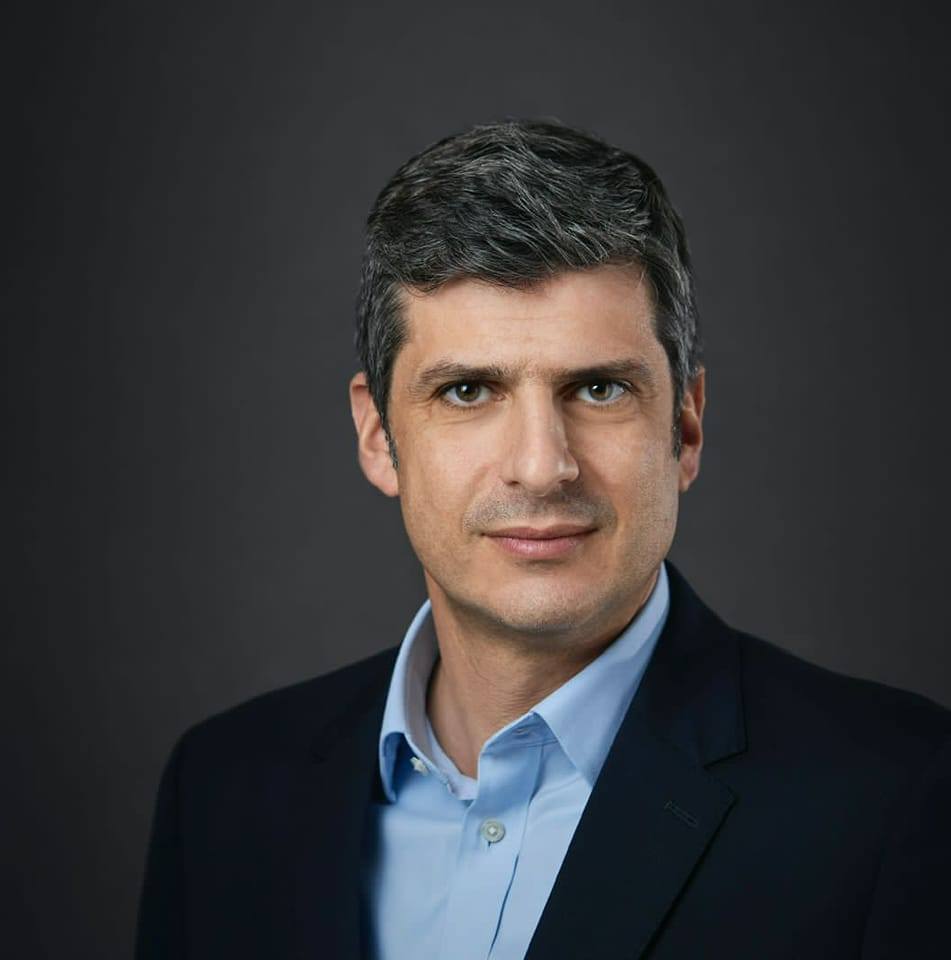
We live in a time when political correctness has ceased to be filtered. The whole world, let alone those of us who are most exposed, are north in the mouth of anyone with access to social media. Without the necessary cross-checking provided by journalistic ethics, everyone can be aspiring journalists, analysts, detectives.
In addition to the many negatives and risks that are visible to the naked eye, there is a positive one. How the possibilities of direct networking, the ease of dissemination of information can work beneficially in the public interest. I mean that events that in any other route would be lost, would be covered up, today are easy to come out. Beyond that, of course, the rest of the system should operate to investigate, control this information and reach a result that concerns either the complainant, in case what he was spreading is false, or actions against the person concerned by the complaint in case what is said is true. Easy to say, of course, difficult to implement. And this is where the adjustment that needs to be made comes in, on the one hand at the level of legislation and on the other hand at the level of education.
The offences of the common penal code that apply to off-internet offences need to be harmonised in the legislation in order to be valid inside. Today if you curse a fellow human being on the street you are liable for a crime, while if you curse him on social media, you are not. This, without of course raising the issue of restricting freedom of speech, needs to be corrected.
As far as education is concerned, it is necessary to educate the new generation, to include a perception of literacy, news and online literacy in order to increase the level of perception and filtering in order for them to stand out, or at least be more suspicious of false or misleading news. Artificial intelligence can also contribute to this.
Finally, I would like to conclude with an exhortation as to the tolerance of those who are on the front line and we are more exposed. We need to increase our levels of patience and composure. Let us respond boldly and sobriety, but with tolerance and endurance.
Giorgos Koukoumas: Boundaries are not an alibi for silencing
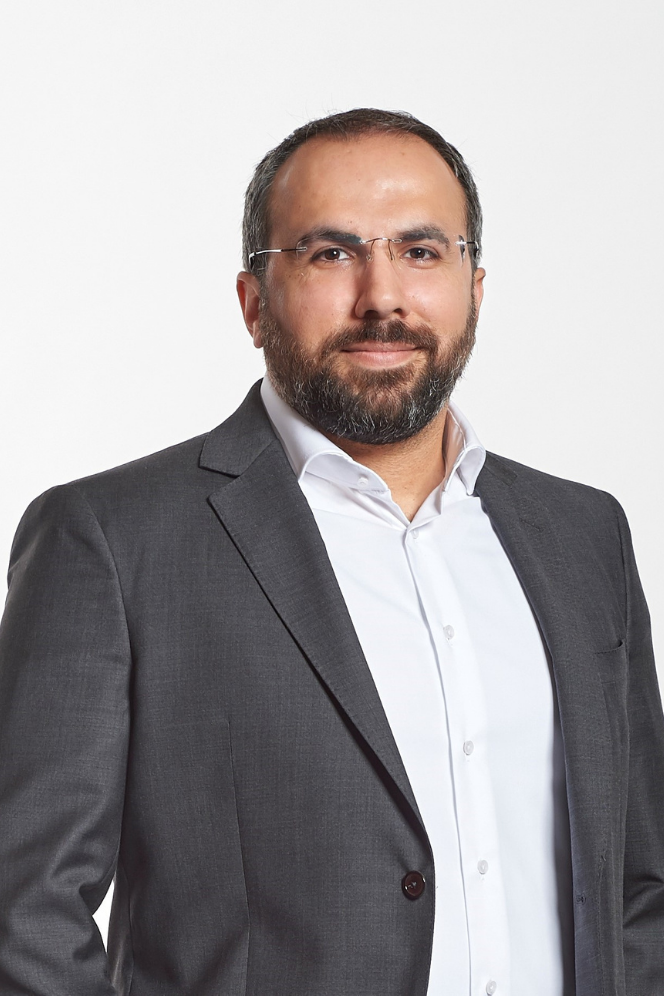
Freedom of expression is constitutionally guaranteed and non-negotiable. Limits and restrictions, as defined by law, exist and have to do mainly with hate speech and incitement to violence. The paradox is that those in power in this country are not bothered by them, but are offended by the criticism of the citizens and want to limit it. For example, the authorities do not act as they should for the sewer of racism and threats of violence on social media, but the Attorney General himself called a few months ago for the criminalization of what he calls "undermining of institutions", i.e. the criticism of citizens for the work of the Prosecutor's Office or the government. Beyond that, public figures must know that precisely because they are public figures, they are subject to greater criticism and must tolerate it. This is also the spirit of the relevant case law of the European Court of Human Rights on freedom of expression.
In addition, there is common sense. And I am referring to the recent public complaints from Annie Alexui. When the Police and the authorities do not investigate named allegations of serious crimes - rape of minors, violence against women, drugs, protection, etc. - with the alleged involvement of police officials and state officials, what other way is left but the weapon of publicity through the social media to start unravelling the tangle? After all, we now know that it is publicity that forced the authorities to investigate what he reported for months, not the sensitivity of the authorities. And instead of trying to prosecute the complainant, they should be held accountable to society for not investigating her complaints in the first place and for not investigating all her complaints.
Therefore, there are limits to freedom of expression, but these are not an alibi to silence the political and social criticism of citizens or to bury complaints about corruption and decay in our country.
