Filenews 21 December 2025 - by Ernest Moussas

The word "prison" alone causes fear and concern. Nowhere in the world does one speak of a prison as a place "angelically created". The Cypriot Central Prisons may have been attempted a few years ago through documentaries to present themselves as such, but apart from some eye-catching footage from high-definition cameras and some nice-sounding conversations, opinions differ on whether what we saw came close to reality.
What is a given today is that the Central Prison has nothing to do with what we saw a few years ago on Netflix. What the Committee against Torture of the Council of Europe (CPT) records in its Report is shocking, with some crude descriptions even disgusting. The extremely problematic thing, however, is that this is not the first time he has recorded them. And yet, she finds in this year's Exhibition that since her visit to the site in 2023, nothing has changed at all. On the contrary, reports recorded for the first time show that things are getting worse. The "hot potato" is now in the hands of the new Minister of Justice and Public Order, Kostas Fytiris, who is called upon to find solutions to the chronic situation.
The CPT's findings
In general, the Report records that the situation in the Central Prisons remains seriously problematic, as in 2023. Overcrowding has not been addressed, resulting in negative consequences for detention conditions and treatment of prisoners. However, some improvements are also noted, such as fewer complaints of physical abuse of prisoners by staff.
The findings on living conditions are particularly harsh. Cells designed for one person accommodate up to four inmates, many of whom sleep on the floor, while more than half of the cells do not have toilets. As a result, prisoners are forced to urinate in bottles and defecate in plastic bags, a situation that the Commission describes as humiliating.
A particularly worrying element, which is recorded for the first time by the CPT, is the fact that the lack of front-line personnel in the Prisons has created fertile ground for the creation of two-speed prisoners. The authorities essentially lost control, which was regained by groups of prisoners who even impose "informal sentences" on other prisoners who are considered to be "weaker". In two wings, these hardcore convicts seem to be in charge.
References are also made in the Report to the conditions of detention of minors, as well as women. For juveniles, CPT points out that they continue to be detained inside the Central Prison along with adults, due to the absence of suitable facilities for minors, in cells inappropriate for their age and needs, sleeping on the floor. It is clearly indicated that the Central Prisons are not a suitable place of detention for children and their immediate transfer to specialized structures is indicated. As far as women are concerned, the need to develop a gender-based policy that takes account of their specific needs is underlined.
In addition, the CPT notes continuing problems in disciplinary proceedings and the temporary isolation regime, as well as a lack of basic guarantees of a fair trial. The complaints system is also characterized as particularly problematic, which remains ineffective, without confidentiality and without the possibility of effective monitoring of prisoners' complaints.
The Commission makes a clear call for immediate action and calls once again for the obvious: recruitment and training of staff, improvement of living conditions and tackling overcrowding, transfer of minors to appropriate structures and establishment of effective policies to prevent violence, self-destructive behaviour and substance use, as well as a reliable and secure complaint system.
Decades of inactivity
A revealing document published by "F" last Wednesday shows that some of the problems have been known for many years at home. A fact that raises even greater questions about the inability or inertia of the State to manage and deal with the "bomb" it holds in its hands. This is a letter where the then Commander of MMAD, Savvas Christou, informed the then Minister Ionas Nikolaou about problems concerning the convicts, but also the prison guards, which remain unresolved to this day. More than 11 years after they were recorded. Particular emphasis was placed on both the lack of prison guards and their reduced to non-existent training in dealing with emergencies and situations. The CPT has been warning about overcrowding since 1999.
The measures of the new Minister are expected
The latest developments for the Prisons coincided almost simultaneously with the reshuffle of President Christodoulidis and the placement of Kostas Fytiris in the "electric chair" of the Minister of Justice and Public Order. In fact, two deaths inside the Prisons in the next twenty-four hours made the need for action even more urgent. That is why one of his first acts was a visit to the Prison for an autopsy. Immediately afterwards, the Minister informed the President of the Republic of what he saw and heard, assuring him of a rapid, substantial and comprehensive intervention. Kostas Fytiris briefly announced the following: Decongestion of the Central Prisons, improvement of the living conditions of prisoners and upgrading of surveillance and control.
In anticipation of the decisions of Fytiris, for whom expectations in the field of public order are high due to his many years of service in the army (he served for a long time as Commander of the OUK), the proposals of experts and non-experts give and take. Of particular interest are the views of the Associate Professor of Public Law and Human Rights Law at the University of Cyprus, Dr. Costas Paraskevas, who was the representative of the Republic of Cyprus in the CPT for 10 years. Speaking to "F", he suggested that for those sentenced by the Courts to less than one year in prison, they should serve alternative sentences instead of ending up in a cell. Dr. Paraskeva does not favour the creation of new prisons. He believes that this is not how overcrowding is dealt with, since convictions will also increase. "There are alternative sentences, the wristband with electronic surveillance for the undertrials as well," he stressed.
Dr. Paraskeva was also a member of the ad hoc Committee created by the then Minister of Justice and current Attorney General, Giorgos Savvidis, to make recommendations regarding the problem of overcrowding in prisons. The group, which, among others, included Anna Aristotelous and Athena Demetriou, came up with three proposals that were never implemented. Alternative penalties for specific offenses by foreigners with a migrant identity card so that they are not sent to prison, extension of the serving of sentences outside prisons by strengthening electronic monitoring (wristband) for convicts and drug users not to be treated as convicts. It is worth noting that only the measure with the bracelet was attempted to be implemented during the Giolitis ministry, however the bill fell on deaf ears after reactions in Parliament.
The cry of the prison guards
In the wake of the developments, the prison guards are ringing an alarm bell for what they are experiencing inside the Central Prison. The ISOTITA Guild warns of an "explosive security crisis" that threatens human lives. For its part, PASYDY emphasizes that the only solution for the proper functioning of prisons is "to change everything". Among other things, EQUALITY denounces uncontrolled overcrowding, criminal activities and murders planned through them, as well as a lack of staff. They believe that their participation in repressive operations and their coercion to carry out prosecution duties makes them a direct target for criminal elements. That is why they dramatically warn that their lives, their families, but also the social balance are in danger.
Their position is that control operations and investigations should be carried out exclusively by the Police or by a specialized, independent security body inside the prisons, which is not involved in the management of prisoners. At the same time, the coexistence of undertrials and convicts, petty offenders and long-term convicts, in common wings, is characterized by them as a "time bomb" that produces violence, organized crime and a complete loss of control. The only realistic solution, as they emphasize, is the construction of a new penitentiary, away from residential areas and outside the Dead Zone, which will meet European standards of safety, living and work. In fact, PASYDY leaves spikes for those who decide "or choose not to decide".
Andreas Kapardis: The challenge of the Central Prison

For several years now, the Central Prison (CF), the supposed penitentiary institution of Cyprus, has been characterized by a continuous crisis. The situation in the CIs has recently alarmed the Committee for the Prevention of Torture of the Council of Europe. In its report, the Commission not only expressed its concerns about (a) high levels of violence and (b) the inability of staff to ensure the safety of prisoners in the CFs, but also highlighted the shortage of frontline officers, with the result that stronger groups of prisoners dominate and impose informal punishments on other prisoners.
The continuous crisis in the CIs and the mainly negative evaluation by the Committee of the Council of Europe is not at all surprising since the institution of the leadership of the institution has been shattered, the population of prisoners (convicts and undertrials) has changed enormously, it is plagued by overcrowding, the morale of the prison guards is very low, the problem of corruption in the "prison" staff is serious and to date there is no National Strategy with immediate measures, in the medium and long term to effectively address the crisis in the CIs.
The institution must be evaluated as a whole as soon as possible by a small group of local experts and by model countries abroad, whose recommendations will be implemented. Until this is done, however, the Ministry of Justice must implement certain measures that will significantly reduce the crisis, such as:
- The vacancy of the director should be announced internationally.
- For overcrowding, amnesty should be given, with the consent of the Attorney General, to the large percentage of prisoners who are minor offenders and which include several foreigners.
- To create an Information and Security Department in the CIs.
- To introduce the administration system with small units.
- To increase the salary scales of prison guards.
- All prison guards should go through a fast-paced training with the aim of training them.
* Ph.D (Camb.)Emeritus Professor of Criminal Sciences, Department of Law, University of Cyprus
Member of the European Academy of Sciences and Arts
Honorary Professor of Research, Institute of Criminology, University of Cambridge
Lifetime Member, Clare Hall, University of Cambridge
Michalis Vorkas: Government and Parliament should boldly touch on the problem
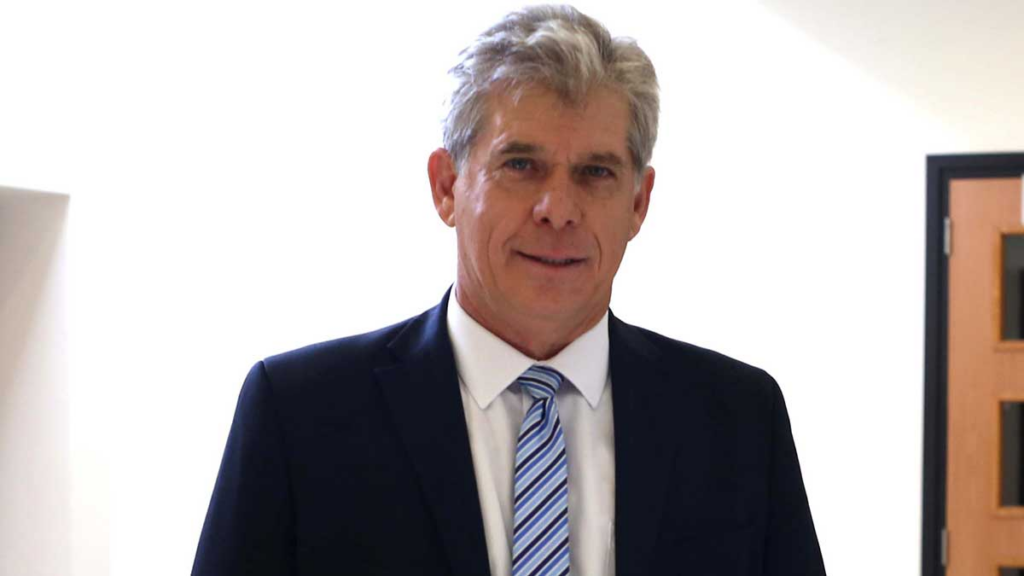
The main goal of a prison system is, in addition to punishing the offender, to prevent him and other members of society from repeating criminal acts. In addition, the aim is the resocialization of offenders through an institutionalized process of correcting the behaviour of those who have broken the law.
It is sad that in Cyprus phenomena are observed completely contrary to the intended goal as I quote it above. There are not a few cases where a prisoner is faced not once but many times with the same offenses for which he was imprisoned.
Almost every day and for many years, Cypriot society is faced with an unacceptable situation for our prison system. Murders, suicides, drugs, mobile phones and the organization of criminal acts through the prisons themselves shock every law-abiding citizen.
In a modern state, this situation is unacceptable. It insults us even abroad. I leave the fact that the above findings, along with others that have to do with infrastructure, overcrowding and other serious issues, are also findings of the European Commission itself for the prevention of torture and the inhuman and degrading treatment of the Council of Europe.
The Cyprus Bar Association has repeatedly sounded the alarm about the above wrongs and expressed its readiness to contribute to finding solutions. The situation has reached the point of no return. The executive power and the legislative power must cooperate directly and take actions and not words, to really and boldly touch on the problem.
*President of the Cyprus Bar Association.
