Filenews 21 December 2025 - by Angelos Nikolaou

With the aim of preventing, reducing and properly managing Construction and Demolition Waste (AKK), as well as achieving the 70% recycling target set by the EU, the Ministry of Agriculture, Rural Development and Environment (YGAAP) and the Department of Environment (IT) are intensifying their actions. The new legislation, with the Waste Regulations of 2023 (P.D.P 112/2023), sets a clear framework with increased obligations for all involved.
The Department of Environment is committed to intensifying controls at construction sites, in order to limit uncontrolled dumping in the countryside and the operation of illegal AKK management sites. The aim of the YGAAP, as well as the Department of Environment, is to assist, as far as possible, collectors/transporters of AKK in finding suitable pieces (e.g. government-owned) for the creation of licensed sites for the temporary storage, sorting and/or transhipment of AKK.
In addition, the IT is examining with the Legal Service whether the agreement can be made between the waste producers/contractors with the licensed AKK management facilities, with the Collector/Transporter (SM) as an intermediary, after a "Concession Agreement", according to a model Agreement form that will be prepared by the Department of Environment.
It is noted that meetings with the SBs have been preceded, and the IT is waiting for the submission of their suggestions, as agreed, so that they can be evaluated and promoted accordingly.
It is emphasized that the current institutional framework must ensure the following:
• That the waste will be transported to licensed management facilities.
• There should be control over both the quantities and the actual content of the load of waste leaving the construction site. To minimize the risk of additional quantities being loaded by the SB or mixing waste from other illegal activities, resulting in overcharges.
• Illegal transhipment should not be preferred.
• Not to give preference to the illegal sorting of waste and the exploitation by the SMs of waste streams that have economic value and the illegal dumping of other waste.
• Not to favour the burden of waste management that has no economic value (in cases where illegal pre-sorting has been carried out), in the AKK management facilities, which have invested significant amounts for their operation, in contrast to the management that takes place in illegal squares.
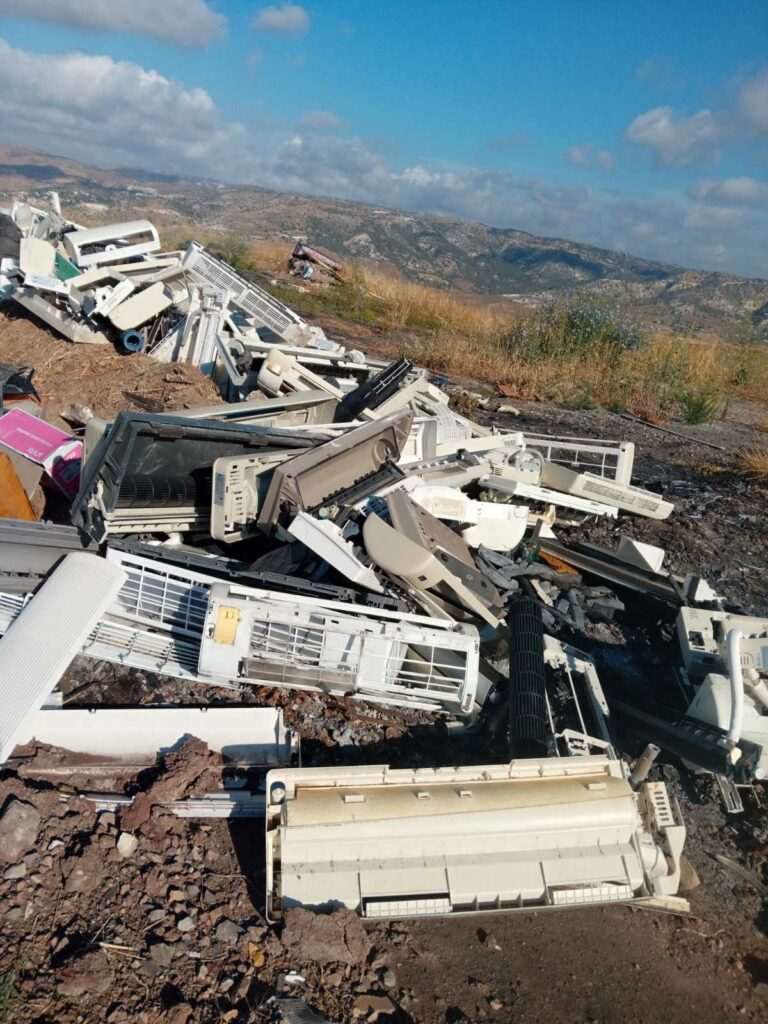
• Apply the good practice of separate collection during the construction of technical/building projects and selective demolition and separate collection of hazardous substances (asbestos waste, waste electrical and electronic equipment, light bulbs, etc.), as well as the selective removal of materials at least for wood, inorganic fractions (concrete, bricks, tiles and ceramics, stone), metals, glass, plastics and plaster, in the case of demolitions (volume of AKKs is >300 m3), on the construction site. Illegal intermediate management practices do not favour this objective because the cost of illegal sorting and disposal is lower.
Key actions and changes
Mandatory participation in Management Systems: The Council for the Registration and Control of Building and Civil Engineering Contractors (SEEEE) has decided to amend its legislation. As a prerequisite for the issuance of the annual license to practice the profession, the contractor must hold a valid certificate of participation in a Collective AKK Management System or an Individual System Operating License. .
Obligation Guide: A letter/guide is being prepared with clear instructions on the obligations of waste producers (contractors).
Control campaigns: Contractors' compliance control campaigns with R.D.P 112/2023 are continuous and will be repeated in 2026.
Building Inspectors' Institution: A new role in environmental compliance
A legal regulation is being promoted for the use of Building Inspectors (who will carry out on-site inspections at construction sites) in matters of the YGAAP as well. Specifically, the Ministry of the Interior was asked to include a provision for the Auditors to check:
• Keeping a copy of the updated AKK Management Plan at the construction site.
• The agreement with a licensed AKK management unit for acceptance.
• The agreement with a Collector/Carrier (SM) who holds a valid Registration Certificate.
Promoting the circular economy – Use of recyclable materials
Significant progress is also being made in the field of material reuse.
Amendment of the Decree: The Decree on Basic Requirements (R.A.A. 338/2023) has been amended, allowing the use of recyclable materials for backfill and embankment works.
Public Works: The amendment of the technical specifications by the Department of Public Works is in the final stage, in order to incorporate the priority use of recycled materials from the processing of AKK in specific categories of public works.
Concerns and actions for Collectors/Transporters – SKIP
The new legislation, while aimed at traceability and protection against illegal discharges, has caused concern among Collectors/Transporters (SMs), who are expressing concerns about their turnover and their possible transformation into employees of the management facilities.
The main points of friction
Conclusion of Agreement Request for a Producer agreement with an SM, not directly with a management unit. The agreement with the licensed unit is essential for tracing, ensuring transportation to licensed facilities, and protecting the producer from illegal practices.
Employment Concern about compulsory employment by the management units and loss of clientele. This is not the case according to the Department of Environment, as the producer determines the SM in the CCP Management Plan, thus maintaining the SM clientele.
Upload Request to exclude upload from licensing procedures. The Waste Management Permit (ADA) for trans-shipment is applied continuously under the current legislation (Law 185(I)/2011) and ensures the proper handling of waste.
The goal is for 70% to be recycled
The responsibility for regulating the management of Waste from Excavation, Construction and Demolition (AEEK) was undertaken in 2016, by the Department of Environment, based on the provisions of the Waste Laws of 2011 to 2022, which is the licensing and controlling authority for the implementation of this Legislation.
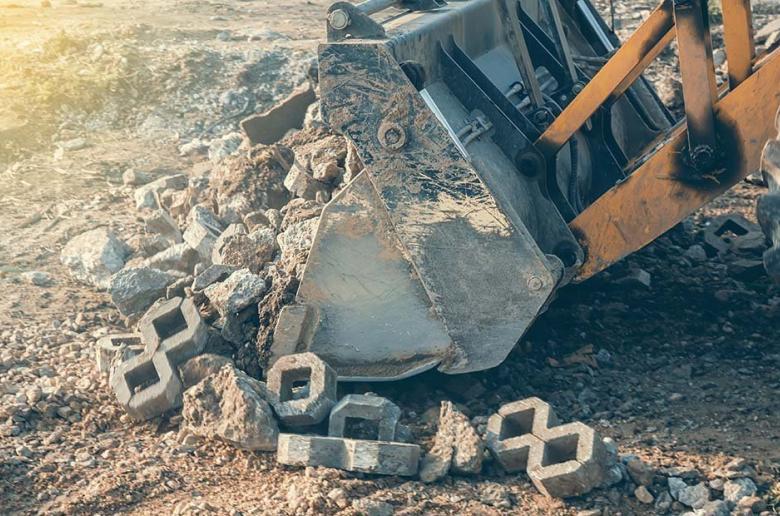
In this context, new Waste Management Regulations were prepared, which came into force in April 2023. The aim of the new regulations is to optimize the Legal Framework in order to prevent, reduce and properly manage PFM and achieve the recycling target set at 70% of waste.
With the Waste Regulations of 2023, the obligations of waste producers were exclusively regulated, from which the following arise:
a. the obligations of the producers of CBD are clearly recorded;
b. the role and obligations of the Individual and Collective Management Systems of AKK are upgraded, so that they have a decisive and substantial involvement in the rational management of waste.
c. the role of the Supervising Engineers and Designers of the projects in the management of the AKK is upgraded through the obligations of the project owners
d. It is necessary to promote the separate collection of specific waste streams at the construction site as well as the selective removal and removal of materials in demolition projects, in order to increase their reuse and recycling rates.
In the new Regulations, a provision was introduced for the obligation of AKK producers to maintain an agreement with a licensed AKK management unit for the receipt and full management of their waste. The conclusion of an agreement between the waste producer and the plant has a dual role. On the one hand, to ensure that the waste is transported to licensed management facilities and, on the other hand, to protect the waste producer, who has full responsibility for the management of his waste, from any intermediate illegal practice that may be followed by the collector/transporter (SM).
Before the start of the execution of each project they perform, waste producers are obliged to prepare and submit a Construction and Demolition Waste Management Plan (AKP), which includes the agreement with the licensed AKK management unit for the receipt and management of the resulting waste, as well as to declare the SM that will transport the waste from their production site to the licensed facility.
The management of waste both in the integrated AKK Management Units, as well as in the units for the trans-shipment of mixed AKK and/or the treatment of clean AKK using a Crusher and/or Sieve are regulated by the Waste Laws of 2011 to 2022 [Law 185 (I)/2011] which harmonize the relevant provisions of Directive 2008/98/EC.
The Collection and Transport of waste to the licensed Units is carried out by holders of a Registration Certificate in the Waste Managers' Registry. The obligations of persons collecting/transporting waste are regulated in accordance with the Waste (Obligations of Persons Collecting – Transporting Waste on a Professional Basis) Decree of 2016 (K.D.P. 76/2016).
Illegal AKK management sites are closed
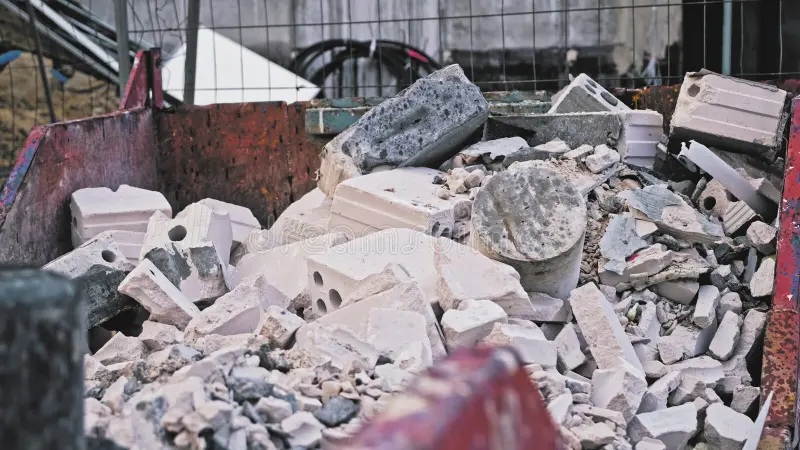
The Department of Environment has the obligation to monitor compliance with the legislation, intensifying the controls it carries out to limit uncontrolled dumping in the countryside and the operation of illegal AKK management sites.
A letter/guide has been prepared that clearly records the obligations of waste producers. It is noted that the Lists of Members of the Contractors Registration and Control Council have been notified to the YGAAP on 11/9/2025
A decision was taken by the Council for the Registration and Control of Building and Civil Engineering Contractors (SEEE) to amend its legislation so that the Contractor holds a valid certificate of participation in a Collective AKK Management System or a License to Operate an Individual AKK Management System, as a prerequisite for the issuance of the annual license to practice his profession. This was announced at the meeting held on 3.09.2025 in the Parliamentary Committee on the Environment, by the Director of SEEEE.
The campaigns at construction sites to check the compliance of AKK/Contractors producers with the provisions of the K.D.P. 112/2023, are continuous and will be intensified.
The legal regulation through the responsibilities of the Building Inspectors will contribute significantly to the direction of the implementation of the current legislation on the management of waste from AKK. For this purpose, a letter was forwarded to the Ministry of Interior, with the request that during the preparation and/or during the consultation for the preparation of the Legislation on the adoption of the institution of Building Inspectors (Inspectors for on-site inspections on construction sites up to 10% of them), to include a provision such as these Auditors, in addition to the inspections concerning the Laws "On Roads and Buildings", to also check issues that also fall within the Ministry of Agriculture, Rural Development and Environment and in particular some provisions of the Waste (Management of Waste from Construction and Demolition) Regulations of 2023 (P.D.P.112/2023), as follows:
• keeping at the construction site a copy of the updated Management Plan of the AKK, bearing the seal of the collective system in which the contractor participates,
• agreement with the licensed AKK management unit for the receipt and management of waste,
• agreement with a Collector/Transporter who holds a valid Certificate of Registration in the Waste Managers' Record for collection and transport.
Regarding the issue of the reuse of secondary materials in the construction industry, the Decree concerning the Basic Requirements (Construction Products) has been amended to enable the use of recyclable materials to be used for backfill and backfilling works with the K.D.P. 338/2023 (20/9/2023), while the amendment of the technical specifications by the Department of Public Works to promote the use of recycled materials in construction of public works. Specifically, it is in the process of finalizing it and promoting it to the Tenders Section of the said Department so that it can be included in the new projects that will be announced. It is noted that the Department of Public Works has decided to adopt technical specifications that provide for the priority use of recycled materials resulting from the treatment of Waste from AKK in embankment works and other related works for specific categories of projects.
In the context of prevention, reduction, proper management of AKK, achievement of recycling targets and containment control, uncontrolled dumping in fields, streams or landfills and in the context of the implementation of the circular economy, the Ministry continues its actions towards the rational management of Waste, implementing the existing Legislation. To date, a great effort has been made on the part of the YGAAP and the Department of Environment (relevant actions are recorded in the attached Annex) while the next actions are already planned as follows:
a. Continuation of the work of the Technical Committee, to promote the use of recyclable materials resulting from the processing of AKK, with the aim of their completion within 2025.
b. Announcement of employment offers by the Private Sector for a predetermined time frame in order to carry out inspections at construction sites to check the compliance of AKK producers/Contractors with the provisions of R.D.P 112/2023,
c. Repetition of the campaign at construction sites to check the compliance of AKK producers/Contractors with the provisions of K.D.P 112/2023, in the months of March – April, June – July, October – November 2026.
d. Preparation by the Department of Environment, of a user guide regarding the basic obligations of contractors and sent to all contractors registered with the Council for the Registration and Control of Building and Technical Contractors.
e.Campaign to close the illegal premises maintained by some Collectors / Transporters after prior consultation with the Police and the Legal Service.
f. Preparation of the Waste (Annual Report Form of the Collective/Individual Management Systems of AKK) Decree, for its issuance in early 2026.
