Filenews 30 July 2025

Important findings on alcohol consumption habits in Cyprus are brought to light by the first national epidemiological study through wastewater analysis, which was conducted over a period of one year in five urban centers of the island.
The research, which was recently published in the scientific journal Science of The Total Environment, accurately records the trends of ethanol consumption in the Cypriot population and demonstrates clear temporal and geographical differences.
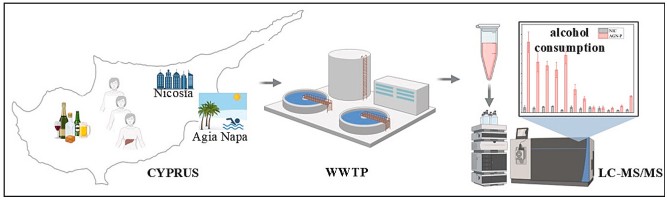
According to the results, alcohol consumption in Cyprus peaks on weekends, with an increase of more than 40% compared to weekdays, confirming the connection of consumption with social and recreational activities.
Weekend consumption peaks were observed in Nicosia both during winter and summer. However, the coastal tourist area did not show any weekday-weekend pattern during the summer months due to the continuous tourist activity.
Limassol first in consumption
Limassol records the highest average daily ethanol consumption per inhabitant in Cyprus, surpassing Ayia Napa by 140%, Nicosia by 60%, and maintaining a slight superiority over Paphos and Larnaca.
Ethanol consumption by city (in mL/day/inhabitant):
- Limassol: 2.69 mL
- Paphos: 2.36 mL
- Larnaca: 2.25 mL
- Nicosia: 1.67 mL
- Ayia Napa: 1.12 mL
Intense tourist activity and nightlife seem to significantly boost consumption, especially during the summer months. Especially in Paphos and Limassol, consumption shows a sharp increase in the summer months, a fact attributed to increased tourist activity. According to the results, in coastal areas, 78.4% of annual alcohol consumption occurred during the May-September tourist season, compared to 21.6% during the winter months.
On the contrary, Nicosia maintains a more stable and restrained profile throughout the year. Specifically, the study found that alcohol consumption in Nicosia throughout the year rangedfrom 0.31 to 10.60 mL per day per inhabitant. In contrast, the coastal area showed significant variations, with consumption varying from 0.58 to 60.85 mL per day per inhabitant.
The average annual consumption was 2.14 mL per day per inhabitant in Nicosia compared to 14.71 mL in the coastal area.
Specific consumption patterns
- Summer vs. Winter in Coastal Areas: Average summer consumption was almost 10 times higher than winter consumption
- Peak Consumption Days: The highest single-day consumption reached 51.18 mL/day/inhabitant in the coastal area during the peak tourism season
- Lower Consumption: Minimum levels of 0.26 mL/day/inhabitant were recorded in Nicosia during the winter.
Low consumption compared to other countries
Compared to other Mediterranean studies, Cyprus showed relatively low levels of alcohol consumption. The average in Nicosia corresponds to 0.2 drinks per person per day, while the coastal area had an average of 1.2 drinks per person per day.
Similar tourism patterns have been documented in Valencia, Spain, where festive seasons showed consumption of between 4.4 and 52.7 mL per day per inhabitant, comparable to the peaks of the coastal region of Cyprus.
International Comparisons:
- Turkey (Antalya): 25.9 mL/day/inhabitant average – significantly higher than Cyprus
- Greece (Lesvos): range 1.7-11.2 mL/day/inhabitant – similar to Nicosia levels
- Italy: range 3.8-22.9 mL/day/inhabitant in 17 cities
- Spain (Valencia): 1.1-18.31 mL/day/inhabitant (non-festive periods); 4.4-52.7 mL/day/inhabitant (festive periods).
Association of alcohol with five drugs
The study also analyzed five stimulant drugs. The results showed statistically significant associations between alcohol and methamphetamine, MDMA and ketamine, although the researchers emphasized that this suggests concomitant presence rather than direct consumption.
During four seasonal campaigns (summer, autumn, winter, spring), the researchers analyzed:
- Amphetamine and methamphetamine: Significant association with alcohol in Nicosia
- MDMA: Significant association with alcohol in all locations
- Ketamine: Higher levels in coastal areas, especially during summer/autumn; Significant association with alcohol in the coastal area
- Cocaine: Weak association (ρ = 0.2) with alcohol at both sites
- Drug cross-associations: Methamphetamine was significantly associated with cocaine in all areas.
Wastewater analysis: New tools for public health policy
The study, which is based on innovative methods of wastewater-based epidemiology (WBE), allows for the estimation of the actual level of consumption in the general population, regardless of social stereotypes or sub-reference to questionnaires.
The researchers point out that these data can support the development of targeted public health policies, adapted to the local and temporal specificities of each region.
Warning on public debate and prevention
As noted in the study, Cyprus has levels of consumption that are comparable to other countries in Southern Europe. However, scientists underline the need to strengthen awareness-raising programmes, particularly for youth and tourist areas where consumption appears to be increased.
The study was carried out by a team of Cypriot and European researchers, led by the Laboratory of Environmental Chemistry of CUT, and is part of a broader framework of European efforts to monitor the use of substances through wastewater.
