
In order to find a parade of similar importance on October 1st, we must go back to the 90s and the early years of the 2000s, when, in addition to the ritual of celebrating Cypriot independence, Cyprus sent messages inside and outside the borders through the contingents. The importance of this year's parade lies, on the one hand, in the weapon systems that were presented and reflect the upgrade of the National Guard and, on the other hand, in the foreign contingents, which show that what is being done at the diplomatic and political level brings results.
A military parade, wherever it takes place, aims to send a message to those who watch it, not only at home but especially abroad. This year's sent a lot, with recipients beyond the island.
What should be noted
The political and diplomatic imprint of this year's parade showed that alliances and collaborations are not empty declarations. The participation of foreign contingents is also a strong message of recognition of the Republic of Cyprus.
Three elements stand out:
-After last March's incident at the Akrotiri base, there was a very specific reaction from some countries, which on Thursday took part in the military parade. A sign that their presence at the time was not occasional but institutionalized.
-Agreements are not signed only for the photographs, but have substance and practical effects.
-The countries that were present militarily at the parade are turning to Cyprus and cooperation with it, bypassing any reactions from Turkey.
Apart from these, foreign participations show that prohibitions and disputes of the past have ceased to exist. The case of Greece is typical: the Greek fighters, who have been in Paphos since March, participated in the parade without fear of reactions.
From prohibitions to participation
However, the detachments from Greece also highlighted another important element: American weapon systems, such as Humvee vehicles, were evident in the motorized platoon. In the past, the Americans did not allow it, which is why the Greek participation was limited to the ELDYK detachment.
This year, the US not only had no objection to the American weapons systems located in Cyprus, but also participated itself with a section consisting of 5 Marines and 12 sailors.
Equally politically important was the participation of a military contingent from Britain, if one considers the special relations between the Republic of Cyprus and the United Kingdom.
Egypt, with its pedestrian section and CN295 aircraft, clearly showed its relationship with Cyprus and its support for the island's sovereignty. A message that also responds to Turkish actions, which constantly aim to challenge the sovereign rights of the Republic of Cyprus.
France was one of the first countries to respond in March, and its contingent is also a sign of where the two countries' civil-military cooperation stands.
Israel is now making a significant contribution to strengthening the National Guard with modern weapon systems. If the conditions in the Middle East were different, perhaps this year we would see the flag of the Republic of Cyprus on a Merkava.
The new weapons that make the difference
The modern missile, anti-aircraft and unmanned systems presented reflected the significant upgrade of the Army's operational capabilities in recent years.
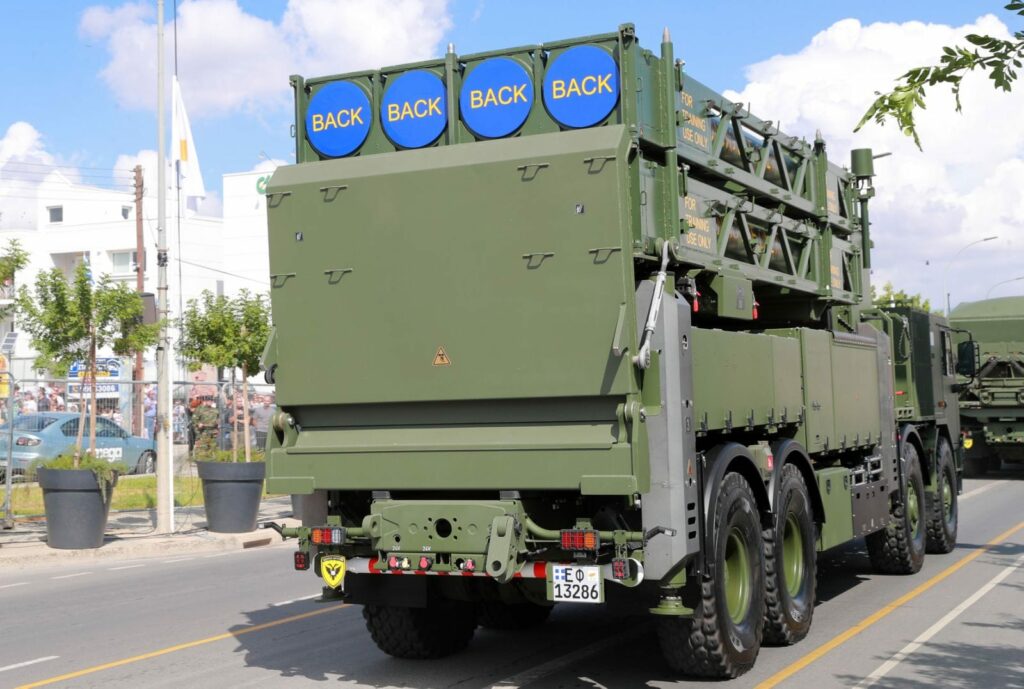
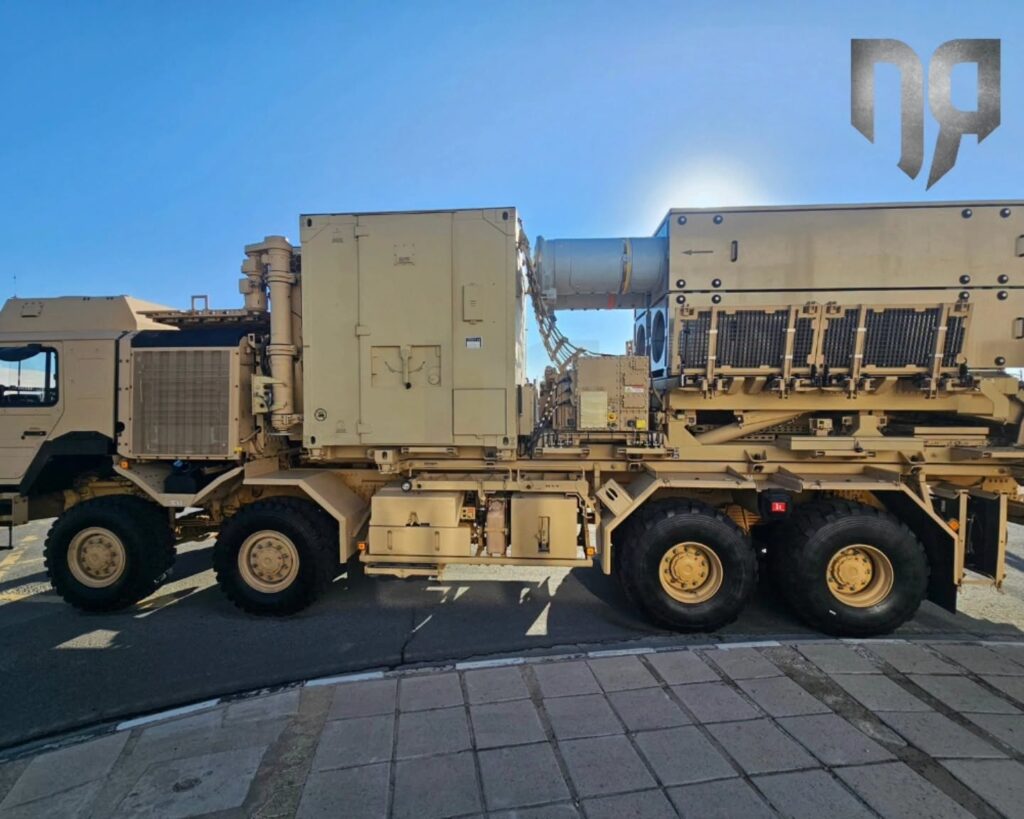
What is the Barak MX anti-aircraft system
The "iron dome" of the Republic of Cyprus, which made its first appearance in a parade, has been in the arsenal of the National Guard since 2025.
It is an integrated, multi-level air defense and missile defense system of Israel's Israel Aerospace Industries (IAI). It is designed to counter a variety of threats, including fighter jets, UAVs, cruise missiles, rockets, and tactical ballistic missiles, and can engage multiple targets simultaneously. It combines advanced AESA radars, a command and control center, and a family of interceptor missiles with a range of 15 to 150 kilometers, offering 360-degree coverage.
Thanks to this system, Cyprus can now, first of all, detect and monitor targets at very long distances and, if necessary, intercept them, substantially strengthening its anti-aircraft and anti-missile defences. Such a possibility, in this range, did not exist in the past.
Officially in the era of drones
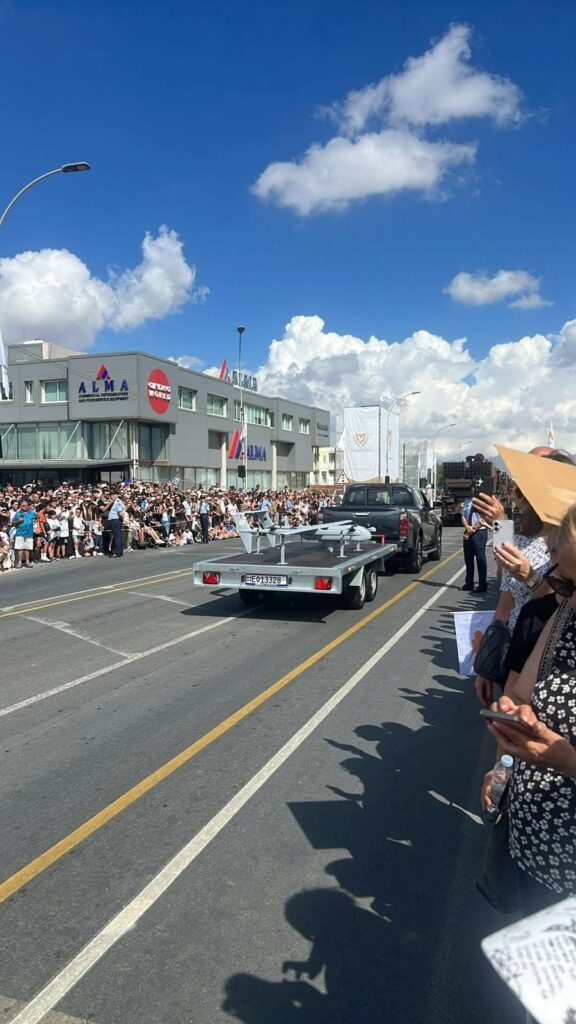
Modern theatres of operations and new military tactics are now inextricably linked to drones, which have acquired a crucial role in surveillance, reconnaissance, intelligence gathering and, depending on their type, in attacking targets.
With the assistance of the domestic defense industry, the National Guard acquired new capabilities in unmanned systems. Drones were presented at the parade, as well as specially designed vehicles that can transport, support, and even build them in the field of operations. It is an approach that major military powers are also considering internationally, with the aim of massively and rapidly producing drones for different missions during operations, so that the units become more self-sufficient.
Such a possibility is of particular value for a state like Cyprus, with limited resources and means. The rapid production, adaptation and utilization of unmanned systems can act as a force multiplier, enhancing the flexibility and operational autonomy of the National Guard, without requiring a corresponding increase in personnel or heavy means.
Unmanned vessels for the protection of the EEZ
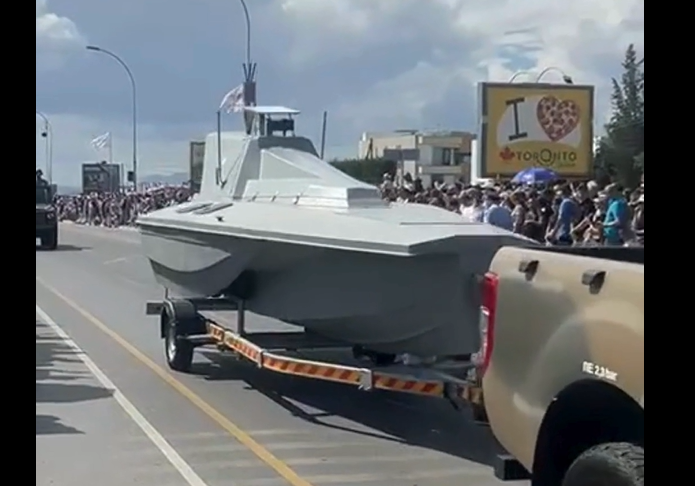
What Ukraine has achieved in the Black Sea with unmanned surface craft (USV) has caused a great international debate. A state without a notable navy has managed to contain one of the world's largest fleets and open up the sea routes through which it exports and imports.
Cyprus has now acquired a similar capability, with the Hydra unmanned surface vessels of the Cypriot company Swarmly Aero and the "EVAGORAS" of the Cyprus Institute for the Sea and Shipping (CMMI). These systems enhance surveillance, reconnaissance and operational presence at sea, offering the National Guard another modern tool for coastal security and protection missions of critical maritime infrastructure.
These platforms have a modular design and are configured according to operational needs, so that they can be used in a wide range of missions, up to the support of naval operations.
The new AKERON anti-tank missiles
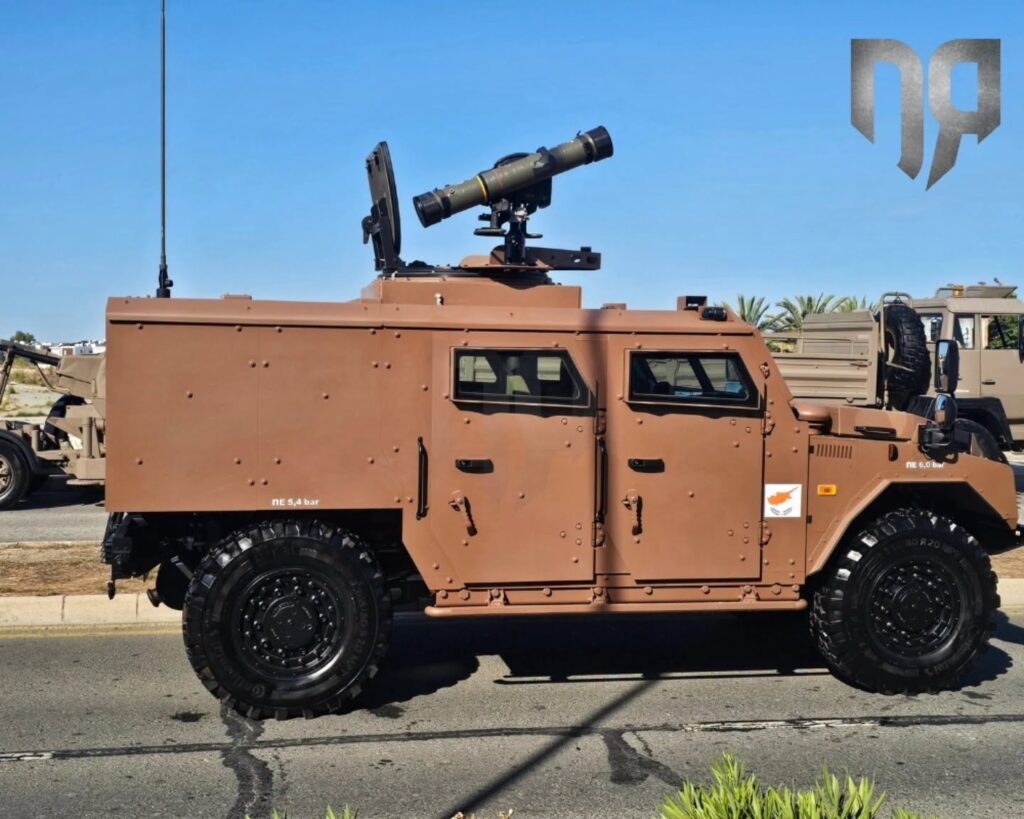
A special place in the new equipment of the National Guard is held by the AKERON MP anti-tank missiles of the French MBDA, which can hit modern armoured targets at distances of more than 4 kilometers. The system features advanced day and night electro-optical sensors and fiber optic guidance, allowing the operator to control the projectile even after launch.
AKERON are used against tanks and other armoured vehicles as well as against fortified positions, and support different modes of attack, such as attacking the target from above, where tank armour is usually weaker. Their placement on Sherpa vehicles noticeably increases the mobility and maneuverability of anti-tank units.
200 km naval deterrence
MBDA's new French Exocet MM40 Block 3 anti-ship missiles also bring a substantial upgrade to coastal defense. They are designed to attack warships at distances of more than 200 kilometers and fly very low above sea level, making it difficult to detect and intercept them in time.
The Exocet Block 3 have inertial and satellite navigation, an active radar sensor for the final phase of the attack and the ability to plan a complex path to the target. They can also strike coastal land targets, giving the National Guard increased surveillance and attack capability over much of the maritime space around Cyprus.
Crowds of people at the parade
This year's celebrations attracted many more people than in previous years. Citizens understand the importance of upgrading the National Guard and rushed to see the new weapon systems up close. A black spot was, for another year, the obsolete tanks, which is commonly accepted.
