
THE OCCUPIED TERRITORIES ARE A BLACK HOLE FOR HUMAN TRAFFICKING - MODERN TRAFFICKING IN CYPRUS AND THE RECRUITMENT OF VICTIMS . . . ONLINE - Filenews 18/10 by Marios Demetriou
"Today we are faced with new forms of human trafficking that are significantly different from those of previous decades, since modern exploiters rely heavily on digital platforms, encrypted applications and online victim recruitment scams," underlined the executive president of the non-governmental organization Cyprus Stop Trafficking (CST) Paraskevi Jew.
Speaking at the conference organized by CST last Wednesday (14/10) at the House of Cooperation in Nicosia on the occasion of today's Pan-European Day Against Trafficking in Human Beings which is October 18 each year, Paraskevi Tzeou stressed that "we observe cases of forced labor that appear as legal employment, complex forms of debt dependency that affect asylum seekers and foreign students, as well as insidious forms of psychological coercion that replace physical confinement." He made special reference to the US State Department's 2026 annual Report on trafficking in human beings in the world, which was published a few days ago and which for another year ranked the Republic of Cyprus in the honorary category 1 (tier 1). He underlined that "the recognition rewards the substantial efforts, the legislative frameworks and the work carried out by the state authorities And civil society over the years, however, is not an end to the effort, it is a level that requires even greater vigilance." Mrs. Tzeou also conveyed to the attendees, a message from the founder and honorary president of CST, Androula Christofidou-Henriques.
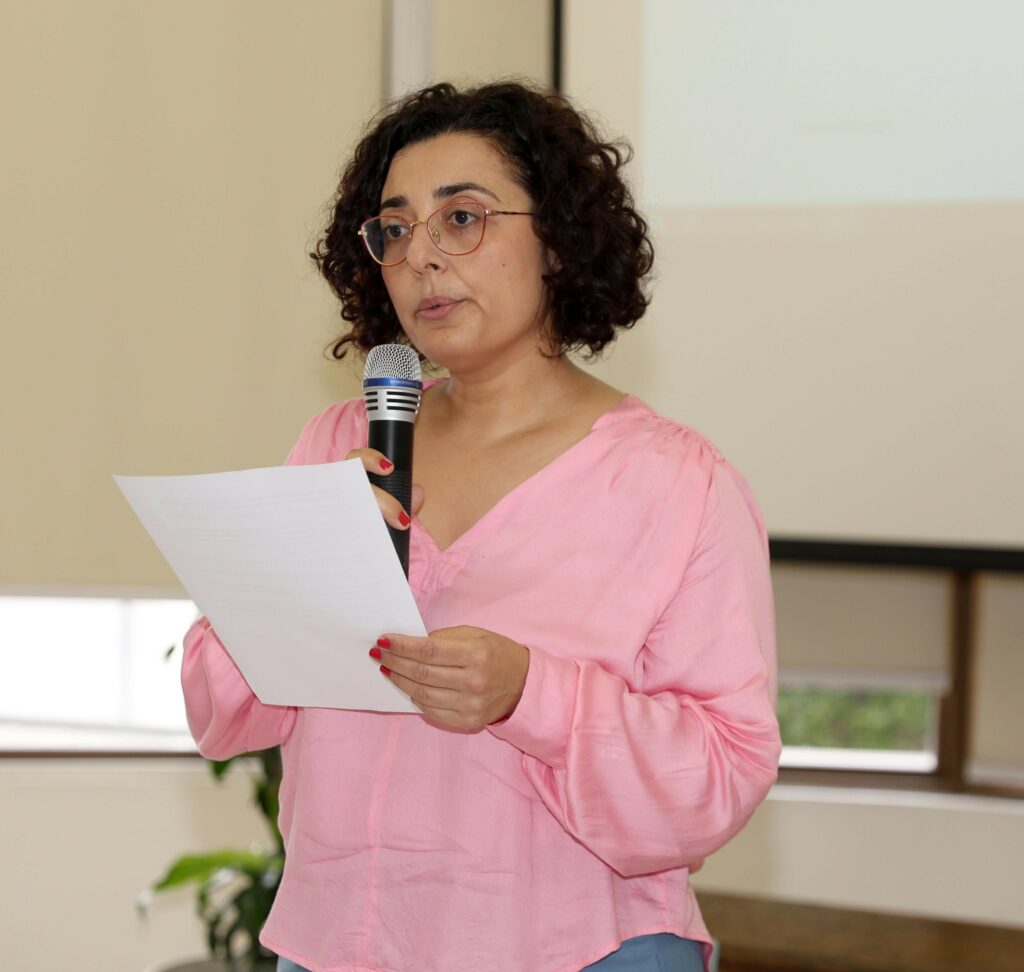
The speaker at the event was also Deniz Altıok, program coordinator at the Turkish Cypriot "non-governmental" organization Human Rights Platform, which recognizes victims of trafficking in the occupied territories, conducting ad hoc checks, based on international protocols. He referred, among other things, to the gaps created by the partition of Cyprus, which are exploited by human traffickers and to patterns of recruitment of victims such as student visas and online job offers in occupied Cyprus. He characteristically said that human trafficking in the occupied territories "is a crime only on paper, since no protection is provided for the victims and indicative of this is that last year there was no investigation, no prosecution, no conviction of a trafficker and no victim was identified". We note that the immigration model of the occupying regime is essentially an "ally" of traffickers in the occupied territories, because it prohibits female victims from leaving their jobs and their employer in the nightclub in which they were initially hired on the basis of their entry permit (visa). Otherwise, they will be deported – and thus become more vulnerable to exploitation.
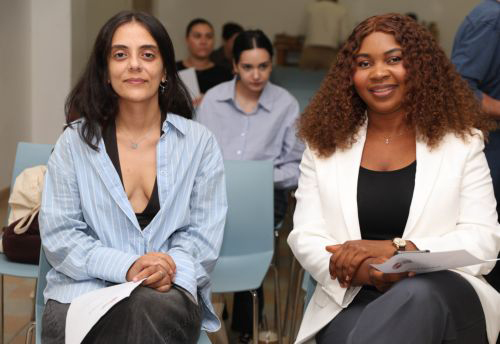
During the conference, which was held in English, reference was also made to the "story of a victim", by survivor and anti-human trafficking activist Irene Che, head of the Survivors' Advisory Council of the non-governmental organization Step Up Stop Slavery, who underlined that "the rescue and official recognition of a victim by the state is not the happy ending of the story, but the beginning of a long and arduous journey." We note that the secretary of Cyprus Stop Trafficking, Efi Xanthou, also intervened at the event, referring to surrogacy as a new form of human trafficking. "Already," she said, "states are faced with dilemmas in managing cross-border births and infants who urgently need travel documents to return to their parents' country of residence. The nightmare scenario concerns the paid production of people for exploitation by human trafficking networks from the day of their birth." A brief assessment of the work of the conference was made by Nelson Neocleous, member of the board of directors of CST. The photos of the event are by George Christoforou.
The gap between civil and practical protection
Commenting on the positive assessment of the Republic of Cyprus on the fight against trafficking in human beings in this year's Report of the US Department of State, Paraskevi Tzeou observed that although the ranking reflects in a positive way our institutional framework, the reality on the ground reminds us that there are still critical issues that need to be corrected.
Being classified in Category 1 does not mean that a country is free from the phenomenon of human trafficking, it simply means that we meet the minimum required standards. As long as even one person continues to be enslaved, forced into sexual exploitation, or exploited in fields, kitchens, or private homes within our borders, our work remains unfinished. We must bridge the gap between paper policy and protection on the ground, ensuring faster administrative procedures, more effective support systems and relentless justice for perpetrators. Our stay in category 1 of the American Exhibition is no small achievement. It means that our state mechanisms meet the minimum international standards for the fight against trafficking in human beings. It reflects substantial government investment – from specially designed victim interview spaces, which protect individuals from re-traumatisation, to the operation of the national helpline 1497 to combat trafficking in human beings and close cooperation with European partners such as Europol and Interpol. However, as policymakers, lawyers, and human rights advocates, we know a crucial truth: Category 1 is not a certificate of excellence, it is a benchmark for fulfilling basic liability obligations. If we look beyond the surface of our achievements, the data reveals a reality that troubles us and demands our immediate collective attention. During the reporting period, Cyprus formally recognised 30 victims of trafficking in human beings, prosecuted 16 and maintained 7 active high-priority police investigations. Nevertheless, our judicial system still records on average only 4 to 7 final convictions per year. It is precisely in this gap between preventive police action and the final judicial accountability that lies our greatest challenge. When criminal prosecutions are prolonged due to lengthy procedural delays or when convicted traffickers receive suspended sentences, without confiscating their assets, the deterrent power of our legislation is seriously undermined. In addition, although our legislation allows for the judicial award of financial compensation for victims, such decisions remain rare in practice. True justice is not completed when the victim is removed from danger, but requires the confiscation of the perpetrator's financial resources to finance the victim's rehabilitation and long-term independence."
The legal "black hole", division and occupation
The Executive President of CST also referred to the situation regarding human trafficking in Cyprus, due to our geographical and political reality. "The division of our island – he said – creates a 'grey zone', a legal 'black hole' which is systematically exploited by traffickers. Vulnerable people, lured by false promises, are taken beyond the buffer zone or trapped in areas outside the effective control of the Republic of Cyprus, where protection mechanisms are virtually non-existent.
Tackling trafficking in human beings in occupied areas requires strategies that take into account the specificities of the situation, international cooperation and an unwavering commitment to human rights, which transcends geopolitical obstacles. Victims do not lose their human rights at the border or on the dividing line, and neither should our resolve to protect them be curtailed." Deniz Altıok of the Turkish Cypriot organization Human Rights Platform spoke extensively about the issue, which, as she said, "is the only organization in the northern part of Cyprus that operates a direct helpline for human trafficking and provides free legal support to victims". The Turkish Cypriot human rights activist referred to the sexual and labor exploitation of foreign women in the occupied territories who arrive there on student visas and are detained by traffickers in nightclubs and private apartments where they are forcibly prostituted. He said that in 2025, 1.150 six-month licenses were issued for female "escorts", an increased number compared to the 966 of the previous year, and that in 2026 there are 27 nightclubs operating in the occupied territories. He added that a recurring pattern is the confiscation of the passports of foreign women upon their arrival in the occupied territories, the prohibition of changing employers, deportation in case of complaint and the presence of bodyguards even during the medical checks they undergo. He also referred to the "Cypfruvex case" revealed in August 2024 by the Human Rights Platform and concerns the inhumane exploitation of hundreds of migrants from Bangladesh, victims of labor trafficking in occupied Morphou, by the "semi-state" citrus export company Cypfruvex, whose employees took their passports, placed them in labor camps and forced them to work seven days a week and 12-13 hours a day, often without pay and under miserable conditions.
He said that a new form of trafficking is surrogacy and that immigrant and foreign students who face financial difficulties are being pushed into it. He added that "incidents that have emerged in the media indicate a chain of action that includes Georgia and Turkey, while children are at risk of illegal transfer to third parties." He stressed that "due to the ongoing division, there is a lack of cooperation between the Republic of Cyprus and the northern (occupied) part of Cyprus and it is more difficult to deal with networks operating across the island. The division itself becomes an object of exploitation. Smugglers charge more money because the island is divided. The northern (occupied) part of Cyprus is outside the international monitoring mechanisms for trafficking in human beings. This gap is one of the factors that attract these networks. Workers whose licenses expire in the Republic of Cyprus and who go to the northern (occupied) part, remain exposed to the risk of human trafficking for the purpose of labor exploitation." Deniz Altıok concluded by saying that "the cases reaching us this year follow the same trends we described in 2025. Labour exploitation continues, particularly in the construction and service sectors. Women continue to be transported to the island to work in the entertainment and wellness sectors, only to find themselves without work or shelter. In the absence of a formal mechanism, cases end up with lawyers, embassies and partner organisations, and some people stop responding before they have time to get help. Human trafficking in the northern (occupied) part of Cyprus has not been eradicated. It has become less visible, but more scattered and more widespread."
The path to rehabilitation of the victim
"Today I am here, not only as a person who has experienced human trafficking, but also as a survivor, leader and advocate for the rights of victims of trafficking," said Irene Che, president of the Survivors' Advisory Council of Step Up Stop Slavery.
He added: "When we discuss human trafficking, we focus heavily on identifying victims, providing protection and delivering justice for perpetrators. However, today I want to think about what happens next, when a person who survived leaves the safe shelter? What happens when immediate protection expires, but the path to restoration has just begun? I will share with you some of the challenges I have personally faced in Cyprus, what I have learned by supporting other survivors, and the changes I consider necessary to help these individuals move beyond the simple stage of survival, towards independence and taking a leadership role. I don't share these experiences to ask for pity. I share them because, through my work with other survivors, I still find the same obstacles.
My experience is personal, but the need for change is collective. We cannot change the past. But we can change what happens to the next person to survive this situation. Is success for a survivor of human trafficking simply about identifying a victim, removing them from a situation of exploitation, or securing a conviction? These steps matter, but our responsibility must not stop there. Success must also mean that the survivor can live safely, exercise their rights, regain their confidence, seize opportunities and make decisions about their future. And success should mean that survivors are no longer called into the decision-making space just to explain what happened to them, but are accepted to help determine the next steps.
I am not here to argue that an individual or an organisation can resolve the issue of trafficking in human beings on its own. I am here to remind us that meaningful change requires collective responsibility, accountability and the courage to listen to those who understand first-hand the consequences of exploitation. Survivors are not just people in need of protection. They are people with knowledge, skills, ideas and leadership capabilities that they can offer. "Nothing for us without us" should be more than just a slogan. It must shape the way we design our policies, deliver our services, and make decisions. Let's move beyond just listening to survivors and start formulating solutions with them."
