
The unbearable pressure from a school with excessive material and memorization, tutoring, professional uncertainty, punctuality, bullying, the absence of school psychologists, are underlined by teenagers as the main challenges and problems of the young people of Cyprus.
At the same time, the teachers emphasize that the rapid development of artificial intelligence and the way it changes work, causes anxiety among students about their studies and the path they should follow. After all, their financial security and professional prospects are also recorded by the Cyprus Youth Board (ONEK) as the main points of concern for them.
This is what the general secretary of PSEM (elected in the 2025-2026 school year) and student of the second grade of high school, Despina Kyprianou, conveys to "F" for young people. A similar picture is given by the president of OELMEK, Konstantinos Konstantinou, as well as the new president of ONEK, Pambos Christodoulou, who presents actions of the organization that can help young people in critical issues, such as the free Career Guidance Service.
"One of the main issues is the school, the Pancyprian Exams and the students' effort to get into university. We have a lot of material and most of them find it difficult and anxious about their future", underlines Despina Kyprianou.
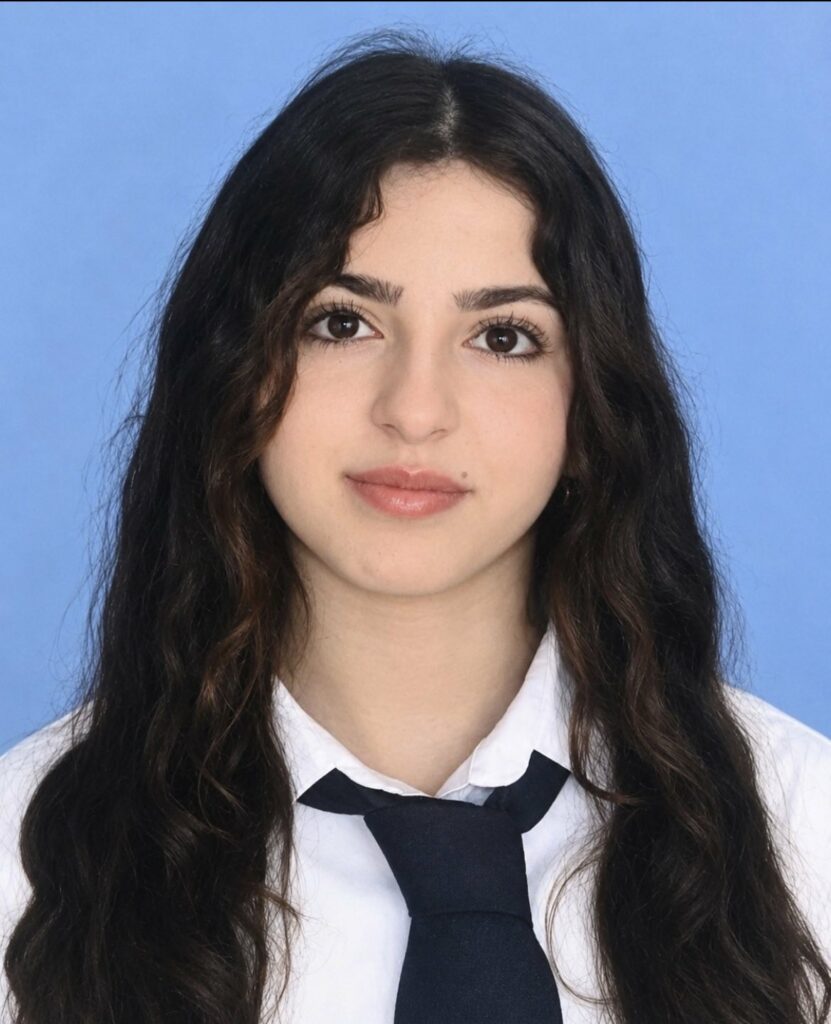
In addition, she points out, the material they have is usually based on memorization. "Even in subjects like Mathematics, which need more problem-solving and critical thinking, we learn formulas by heart."
The school in Cyprus, she points out, has lagged behind the times, is not evolving and is boring. "We learn from books from 1900. We read texts that have been the same for 20 years. Our education system has fallen so far behind that we find it difficult to be interested. Especially with the technology that has entered our lives and with social media, school seems even more boring. We are on Instagram and TikTok at home and then we come to the school that has been left in another century," she emphasizes and adds that they live in two different eras.
Children, explains the representative of PSEM, are happy to go to school mainly for their friends, rather than for learning. "It's a much more enjoyable lesson when it's done with projects and presentations, instead of a teacher talking to us for 40 minutes."
In addition, she says, "it is almost impossible for someone not to go to tutoring anymore. There is so much material that even our teachers do not have time to cover it in the classroom."
This is also the reason why the time of young people, today, is so limited, she says. "Also, many children now need to work on the weekend or some afternoons, as they have to help or support their families due to the high prices or even to keep money for their studies."
Now, she emphasizes, young people are anxious about their future, about work, about whether they will go to university. They are anxious about their daily lives. "Sometimes you see students stop trying or not doing well, that's because of the stress and fatigue, they experience burnout."
"Imagine a student who, in high school, from the age of 12, starts doing especially in the main subjects, Mathematics, Greek, Physics, History, Chemistry. In other words, he does extra classes all afternoons. At some point he will get tired and think that what he is doing is in vain. During this time we had students from Sweden in our school, through Erasmus, and I had the opportunity to talk to them. There, in order to graduate, for example, instead of taking exams, they have to do a survey as a project. They also told us that they have interactive whiteboards and tablets."
A thorn in the side of the profession and the shadow of artificial intelligence
Uncertainty and insecurity are also generated in young people by life after school. "A large percentage of students, even in the second or third grade of high school, are not sure what they want to follow. They know which subjects they like, they know which subjects they are good at. We hold seminars with school counselors and we have books on vocational education. However, the students see what is happening in the world. They see that there is difficulty in finding a job that can provide you financially and they are discouraged."
There are many students, she said, "who have dreams, they have goals - big goals - which they have the skills to achieve. But again the economic issue arises. A student may be good enough to go to a university in England, but he can't afford the cost."
As for artificial intelligence, in their daily lives, as she said, it can be a help, but there is also concern that the critical thinking of young people is weakened. "What worries us is that Artificial Intelligence can steal jobs, especially in IT and technology sectors."
As for artificial intelligence, in their daily lives, as she said, it can be a help, but there is also concern that the critical thinking of young people is weakened. "What worries us is that Artificial Intelligence can steal jobs, especially in IT and technology sectors."
Victims of bullying are immigrants
"Many times students feel pressured not to show their true selves. They can't feel comfortable talking about things they like or things they believe in, because they want to fit in with the rest," says Despina Kyprianou and adds that incidents of bullying happen in all schools.
"Many times they are also done at the expense of students who are immigrants. This is the most common we see. However, it can happen to anyone and for various reasons, even the most absurd," she says.
The need for more school psychologists
"I believe that one thing that we do not have in sufficient numbers in schools is school psychologists. They exist in schools, but I think that at the moment there is one psychologist per 1,000 students."
There are, she emphasizes, too many young people, who have difficulty with various issues, either with their friends, or with their boy/girl, or with their parents. "Having a person they can trust and talk to is very important."
I believe, the student said in conclusion, that "they should sit down and listen to us. To care about what we have to say. It doesn't mean that just because we are students, because we are not adults yet, we don't know what we are asking for, what we are claiming and what is good for us."
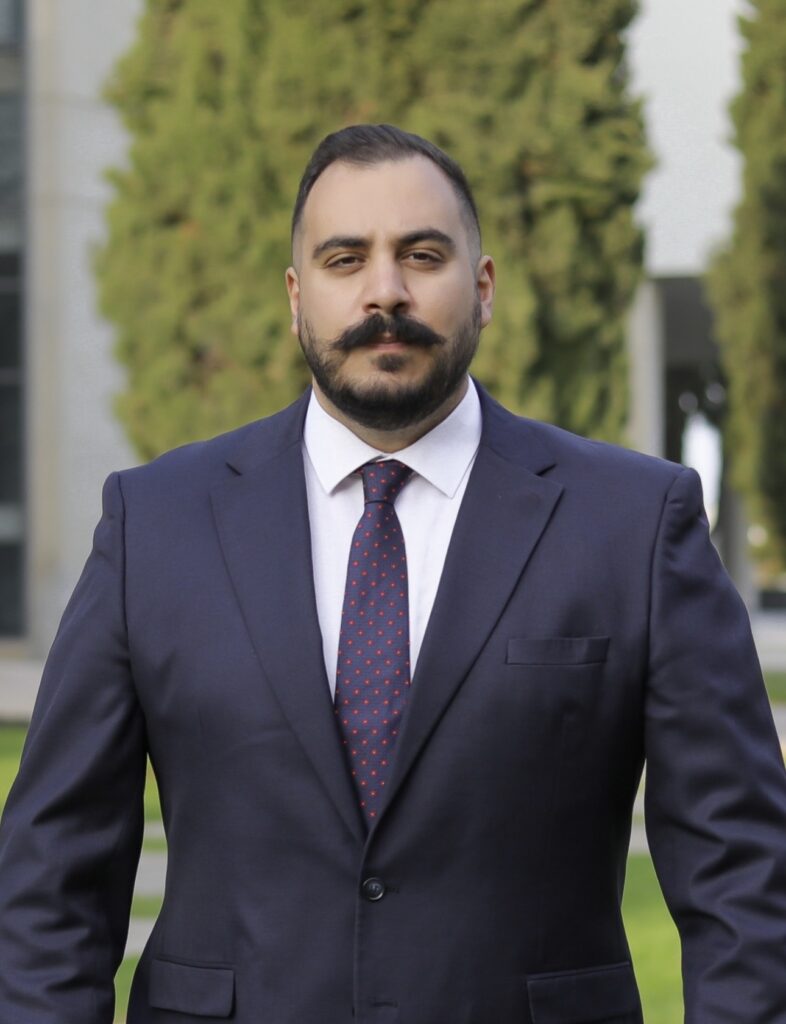
ONEK: The agony of the profession and the Career Guidance Service
"Today's generation is growing up in a world that is changing at an unprecedented speed. Technological developments and social changes create new possibilities, but also uncertainties", says the president of ONEK, Pambos Christodoulou, underlining that the age of 16 to 21 is one of the most decisive periods in a person's life.
One of the most important issues that concern young people in Cyprus is their financial security and professional prospects. "According to the findings of the 6th Neobarometer of the ONEK, low wages, high prices and housing are among the most important problems identified by young people. Vocational rehabilitation and access to affordable housing are not just financial considerations; They determine whether young people can become autonomous, create and remain in Cyprus with prospects."
In this transition, the right guidance can make a difference, he emphasizes. "Through the Career Guidance Service of the ONEK, they can receive free counselling in order to choose their educational and professional path."
Mental health issues are also of particular importance, he says. The constant demands of modern life, uncertainty about the future and intense competition create anxiety and insecurity. A survey by ONEK has shown that anxiety about the future, pressure and job insecurity are among the main emotional issues faced by young people in our country.
''Social media is, undoubtedly, an integral part of a young person's daily life. They offer knowledge, expression and participation, but they carry risks, such as misinformation, cyberbullying and comparison with unrealistic standards."
In a nationwide survey by ONEK, 74% of young people stated that social media is their main source of information, while 88% reported that they have encountered fake news. "The answer is not the demonization of technology, but the cultivation of digital literacy and critical thinking," he says.
Equally important, says Mr. Christodoulou, is the creative employment of young people. Sport, culture, volunteering and non-formal learning help young people develop skills and take initiatives. Funding programs, such as those of ONEK, enable young people to implement their ideas and contribute to their communities.
As an advisor to the state, the ONEK has the responsibility to bring the voice of young people to the decision-making centers. "Because no policy that concerns them can be complete without their participation." The young generation of Cyprus has, admittedly, significant advantages. She is tech-savvy, open to innovation, and ready to contribute to society. At ONEK, we believe that young people are not just the citizens of tomorrow, but the active citizens of today, he concludes.
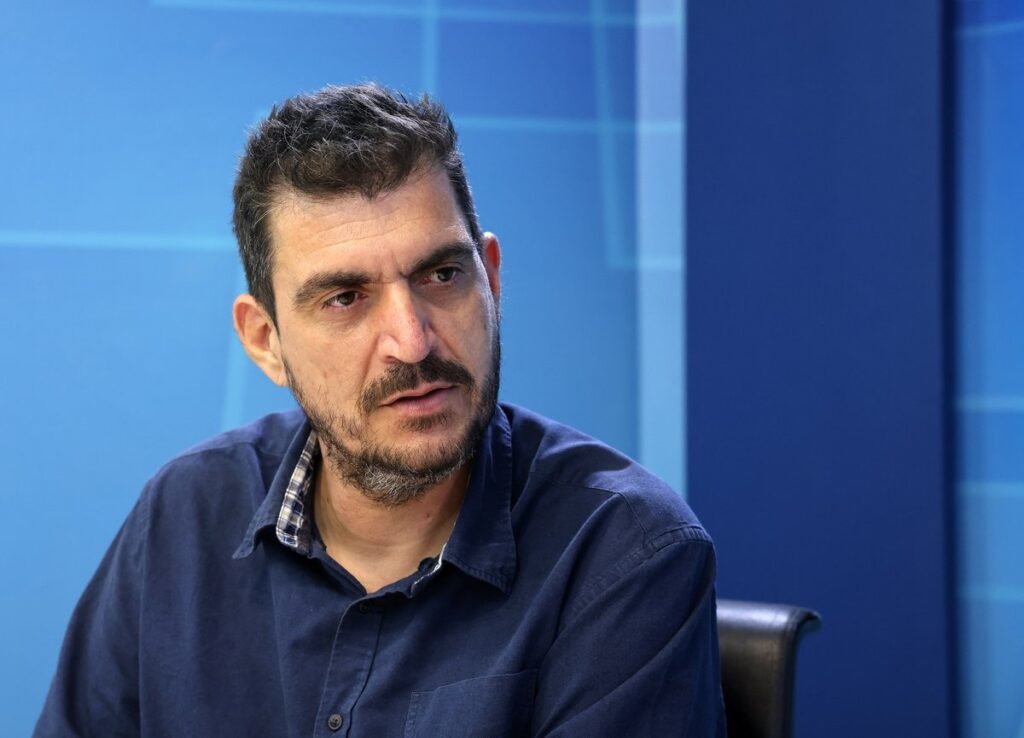
OELMEK: They choose studies for a market that they do not know how it will change
According to the president of OELMEK, Constantinos Constantinou, the young people of Cyprus are faced with the technological revolution, artificial intelligence, economic insecurity, social inequalities, the climate crisis and geopolitical conflicts, without knowing for sure how the world will be shaped.
"AI is creating a new reality for young people preparing to enter higher education or the labor market. A 17 or 18-year-old is today called upon to choose studies and professional direction for a job market that no one can predict how it will be transformed in the near future.
This creates additional stress for young people and at the same time requires even more strongly the need for our education system to transition from memorizing information to developing skills such as critical thinking, collaboration, creativity, adaptability and the ability to continuous learning," he underlines.
"Another serious challenge concerns the mental and emotional state of young people. The constant comparison on social media, the pressure to succeed in a series of exams and the need for social acceptance, form a particularly stressful environment," he says and adds that this leads to psychosomatic problems and produces delinquent behaviors.
"Therefore, prevention, early intervention, substantial psychosocial support and close cooperation between school and family are needed. A school that is only interested in what the student knows, but not in how he feels, cannot fully fulfill its pedagogical mission."
At the same time, he points out, the constant digital connection, in addition to feelings of inadequacy or insecurity, deprives young people of the real human relationship, and the sense of belonging.
"We need to focus on creating spaces of real communication. To have the space and time to express themselves without the fear of constant evaluation and criticism, away from the digital world."
Young people, he says, are also watching the rising cost of living, the difficulties of securing housing and the challenges of vocational rehabilitation. For many, financial independence seems increasingly difficult. The ability to study, work, start a family or own a home is linked to economic and social conditions that are often beyond their control.
They need to be heard
"Young people often feel that decisions that affect their lives and future are made without their own meaningful participation. In education, in society and in public life, their participation should not be limited to symbolic processes. If we want young people with responsibility and social awareness, we must first treat them as active citizens, with the possibility of making a substantial contribution", concludes Mr. Constantinou.
