
"We want to give a voice, support and information to the thousands of people in every corner of Cyprus who take care of parents, children, spouses and other loved ones every day, often without recognizing themselves as caregivers," Marios Kantaris, president of the newly established Network for the Empowerment of Informal Caregivers of Cyprus "Thalpo", which has recently officially registered as a non-profit association, told "F".
Mr. Kantaris was flanked in the interview in our newspaper by the members of the Network Magda Papadopoulou and Christina Piper, while the secretary of the association, Evi Savvidou, also spoke to us online. As we were told, "informal care refers to the unpaid care and support provided by family members, friends or other close people, to older people, people with disabilities, people with dementia, cancer, chronic or degenerative diseases, people after stroke and other conditions that create long-term care and support needs.
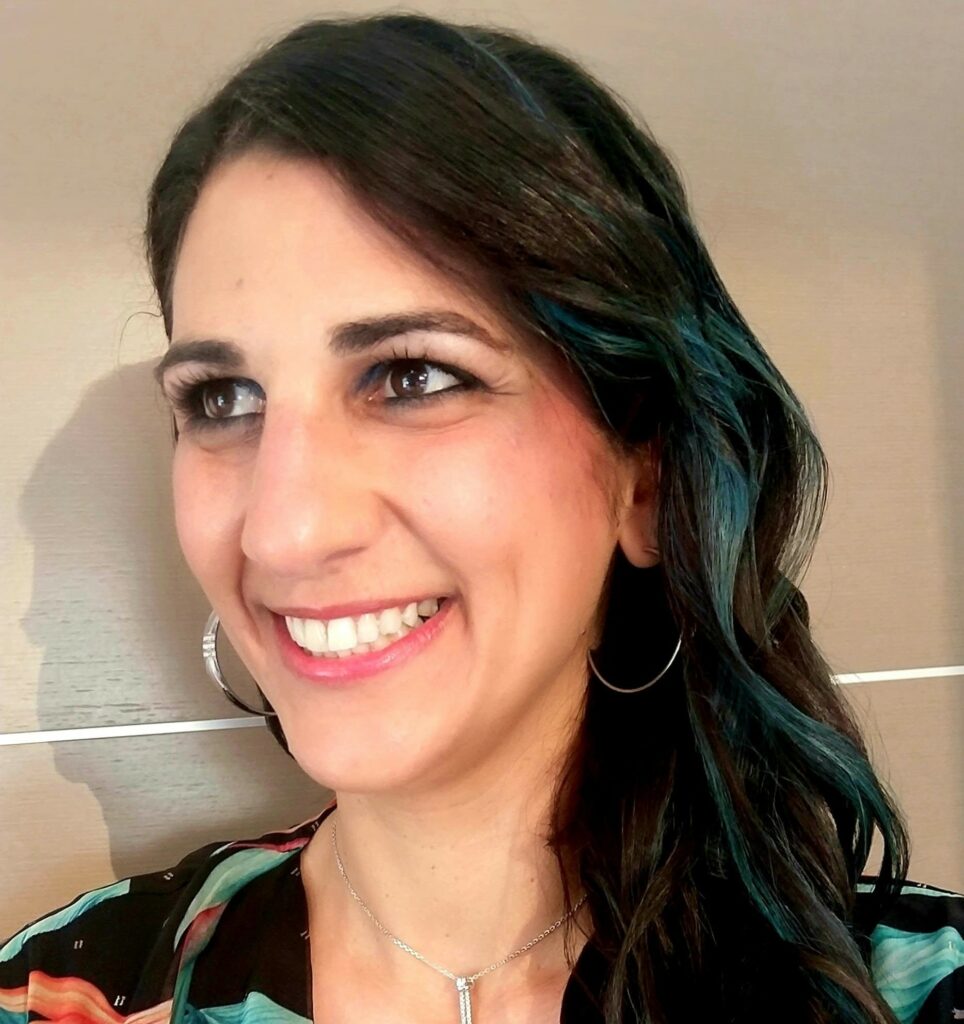 The secretary of THALPO Evi Savvidou
An informal or family caregiver is a person who provides, without a professional relationship and usually without remuneration, substantial and regular care or support to a relative, friend or other close person who needs it. It can be a spouse, parent, child, other relative, friend, or neighbour. It is an offer of inestimable social value, which often remains invisible, even though it is a key pillar of any health and social care system." Our interlocutors informed us that shortly after its official registration in the Republic of Cyprus, "Thalpo" achieved an important European distinction, as it became a full member of the European Federation of Carers (Eurocarers) which represents informal carers and their organizations throughout Europe and works with European Union institutions, national governments, research institutes and civil society organisations to promote policies that recognise, support and empower carers. We were told that "the inclusion of "Thalpo" in "Eurocarers" is a particularly important development for Cyprus, as it creates a direct connection of the country with the European movement for informal caregivers and expands access to know-how, research, good practices and international collaborations".
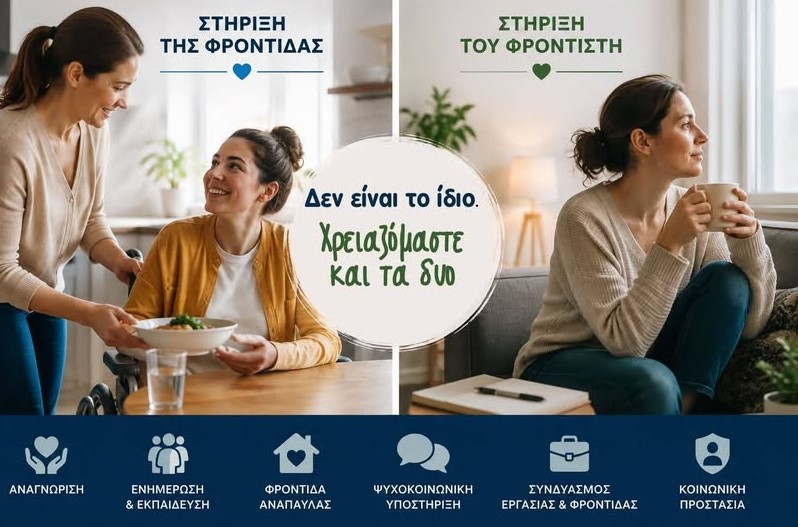
The absence of structures and inequalities
As Marios Kantaris pointed out, "Cyprus does not have satisfactory structures that adequately meet the needs of people with disabilities, or the elderly, or very young children or other people with long-term or early care needs, and so their care is undertaken, as the case may be, by children, spouses-partners, grandmothers-grandparents or close relatives, Usually women who may also be workers, who are often forced to reduce their working hours and work "part-time" or stop working. This reinforces existing income inequalities, with loss of income, contributions and future pension rights. The pension protection of caregivers is a matter of social justice and gender equality. Informal care is also borne by migrant domestic workers, who, in addition to domestic work, also undertake a significant part of the daily care of the elderly, people with disabilities or chronic diseases. Their contribution is substantial, but it is often provided in a vulnerable work context, which highlights the need for clearer regulation, appropriate training and stronger labour and social protection."
The Need for Flexibility at Work
The president of "Thalpo" pointed out that in one month the European Caregiver Day is honored, which is October 6 of each year, as determined by the European Federation of Carers. She added that "this year's message of the Day is flexibility at work and reminds us that care is unpredictable and that life around the caregiver must be able to be subject to adjustments. Flexibility at work, access to support services and a society that understands the real needs of informal caregivers is not a luxury, it is a necessity, because informal care does not follow a schedule. Care is changing, and work must also change – it can change."
The secretary of "Thalpo", Evi Savvidou, also referred to the issue of flexibility at work, stressing the need for the implementation of a policy of reconciliation of work and care. "There must be a flexible form of work, e.g. teleworking, and the hours must be adjusted accordingly. In general, work arrangements must be made, so that women are not forced to leave their jobs and retire early, because they have to take care of someone close to them."
Ms. Savvidou cited the case of an informal caregiver of a close relative, who, due to the increased responsibilities of care and the need to be able to respond to unforeseen situations, chose a professional environment that provides her with more flexibility, instead of a position with fewer possibilities for immediate adjustment of the hours. The example highlights how the absence of adequate work facilities can substantially affect the career choices of an informal caregiver.
Christina Piper also raised the issue of parenting of young carers, children who not only do not receive care, but are forced under certain circumstances to become the "parents" of their parents or siblings, taking on responsibilities disproportionately large for their age.
Good practices in Europe
Magda Papadopoulou stressed that "informal care does not follow a schedule and the schedule is unpredictable when you take care of someone, since anything can arise and you have to be absent from work at any time. So the caregiver must have this flexibility, because he wants to be good at his job, but also to be able to meet the needs of the person he cares for. And employers must understand this need and support experienced and conscientious employees. This is important for society at large, because informal care is embedded in the social system, which could not function without informal care. It must therefore be recognized, because it is a key link in the system. We have all been informal caregivers with relatives, close to us and we must realize this and not consider informal care just... our obligation".
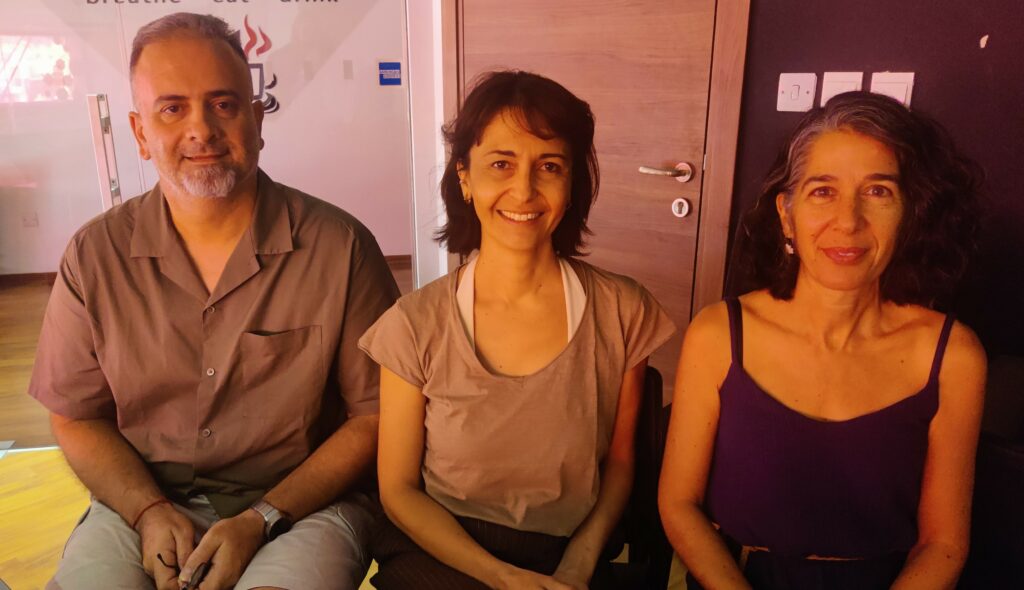 Marios Kantaris, Magda Papadopoulou and Christina Piper
On this, Marios Kantaris added that informal family caregivers must define themselves and realize that what they do is a job and that they have some rights, which in many European countries, are guaranteed. In these countries, good practices already exist and the rest will be forced to follow them, because societies are ageing and there is an increase in the dependence of older people on younger people, even on basic activities such as feeding and self-care.
In Germany, special arrangements are made for workers caring for a relative in need of long-term care. Among other things, there is the possibility of a temporary reduction in working time of up to 24 months, in the context of long-term care family leave, with a minimum working time of 15 hours per week.
In Belgium, an informal carer can temporarily reduce his or her work for a period of time, or take full leave of absence, while he or she has a statutory right to request an adjustment of his or her working hours. In addition, a comparative study by the European Union states that in Lithuania there is a possibility of reduced and flexible working hours for employees caring for a sick family member, while in Spain similar arrangements also cover the care of relatives with disabilities. In any case, the demographic pressure will increase in the coming years and according to the data concerning Cyprus, the dependency ratio of the elderly is projected to increase from 27.7% in 2024, to 32.1% in 2030 and 42.1% in 2050."
"Supporting care is one thing and supporting the caregiver is another"
Marios Kantaris described the new legislation of 2026 on Social Participation, Inclusion and Independent Living of People with Disabilities as a "very good development". As it became known, this legislation provides for an increase in the Personal Assistance and Home Care Allowance from August 1, 2026 and is disconnected from the income and property criteria of the Guaranteed Minimum Income, expanding the number of beneficiaries. For the first time, people with disabilities have the right to choose their own personal assistant or caregiver, according to their own needs. As Mr. Kantaris mentioned, "with this legislation for the first time, reference is made to informal care, but the next step must concern the informal family caregiver.
The next phase of social policy must recognize the informal or family caregiver as a person with their own needs, rights and social protection. Carer recognition must be based on the actual intensity and duration of care and the impact it has on their life, and not solely on the diagnosis or administrative category of the person receiving care.
Cyprus remains largely a family-centred care system. The limited availability and affordability of formal services, the fragmentation of responsibilities and the absence of a single long-term care framework, transfer a significant part of the day-to-day responsibility to families." He also referred to the pension reform, where, as he noted, "there is provision for informal care and it is a good step, but informal care is interconnected as retired working time, only for people who are already receiving the benefit, through disability legislation. All others are excluded, such as informal caregivers who care for elderly patients who do not receive disability benefit. Therefore, improvement is needed to make the framework more inclusive, because there are great needs for older people with a high dependence on others, in terms of cooking, cleaning, personal hygiene, or for simple socialization.
The proposed pension reform opens up for the first time more substantially the debate on the pension protection of people whose ability to work is limited because they provide long-term unpaid care. It is positive that there is greater recognition of home and informal care and that there is more individualisation of support for people in need of care and the prospect of strengthening the pension protection of carers. However, there is still a lack of an independent framework of recognition and rights for the caregiver himself, a separate assessment of his needs, wider access to respite care, education and psychosocial support, protection of the possibility of combining work and care, integrated social protection. The essential distinction is that it is one thing to support informal care and another to support the informal caregiver himself."
Respite care and coherent national policy
Our interlocutors made special reference to respite care which, as they told us, "allows another person or service to temporarily take over the care, so that the informal caregiver can rest, work, take care of his health or meet personal and family obligations
. In Cyprus – they added – there are forms of support that can act as a respite. However, the existence of a benefit does not necessarily mean that it is available, accessible and affordable to every caregiver who needs it. A more "care-centered" framework could include planned replacement of the caregiver at home, day care, short-term accommodation in appropriate facilities and emergency respite care when the caregiver is ill or temporarily unable to continue. Financial coverage alone is not enough, if there are not sufficient services and available human resources throughout Cyprus. The caregiver's rest is not a luxury, it is a prerequisite for sustainable and safe care in the long term.

"Thalpo" proposes "broad and independent recognition of caregivers, independent assessment of their needs, examination of physical and psychosocial burden and other forms of support, pension and social protection, pension credits and/or state-subsidized contributions, when long-term care limits or interrupts work. Policy must address the financial and pension costs of care that place a disproportionate burden on women. Caregivers themselves and the organizations that represent them must have an institutional involvement in the design of policies that concern them. Thalpo's position is that the individual reforms – disability, personal assistance, pension reform and long-term care – must be linked to a coherent National Policy for Informal and Family Carers. Such a policy must be integrated into the wider long-term care system and ensure that the family has real choice and support and does not take care simply because there is no other solution available. At the same time, support for informal carers should not be used as a substitute for the development of adequate formal services at home, community and long-term care."
