
The last weekend of August is one of those that will be very difficult to forget in Cyprus. Two inconceivable tragedies at sea spread grief and shocked all - at least the sane - people who live either on one side or the other of the green line. The tragic events reminded the Republic of Cyprus in the worst possible way that it must hurry and take measures as soon as possible - even in the areas where it retains control - since similar sad incidents could happen at any time.
The deadly sinking of boats in the stormy waters of Cape Greco on Saturday, where Dimis Mavropoulos breathed his last, forced the Government to speed up the procedures for the establishment of the Cypriot Coast Guard. An action that was already in its plans and for which the Ministry of Justice had prepared and presented a proposal to the Council of Ministers from March 16. Why in 2026 an island like Cyprus, an EU member state, does not yet have a coast guard service is another debate that touches all those who have governed the country to date.
Of key importance in the tragedy of Cape Greco was the absence of a prohibitive directive for the departure of boats during the hours when a dangerous and unpredictable wave of bad weather was underway. A weather disturbance whose truth is that for Cyprus and its climate the summer was from unusual to extreme. However, given the now noticeable impact of climate change on everyday life, a responsible state must listen to the bells in time and take measures to anticipate developments.
Immediate actions
The Council of Ministers decided last Wednesday on a package of interim measures that will be implemented until the establishment and operation of the Coast Guard.
The Deputy Minister of Shipping announced after the meeting of the Cabinet that existing legislation will be amended to prohibit the departure of boats from the territory of the Republic of Cyprus, as well as to their mandatory movement to a safe haven or port. In addition, the Commission for moorings was approved, the establishment of which will be promoted immediately. Representatives of the Ports Authority, the Department of Environment, the Department of Fisheries, the Port Police and local authorities will participate in it. It will be chaired by the Deputy Ministry of Shipping.
Hatzimanolis: The Government has identified the supervision gap
In her statements, Deputy Minister Marina Hatzimanoli referred to a meeting held on Tuesday at the Search and Rescue Coordination Center, with the participation of herself, the Ministers of Justice and Public Order and the Minister of Agriculture, Development and Environment. The occasion was the recent catastrophic events that occurred on August 29, due to severe weather phenomena in various areas of the Republic of Cyprus.
She noted that the meeting examined the parameters related to the prohibition of sailing in cases where adverse weather conditions prevail. Marina Hatzimanoli explained that the Shipping Deputy Ministry will prepare, in cooperation with all stakeholders, an amending bill of existing legislation or a draft of regulations under existing legislation. The sailing ban will operate based on international coastal shipping conventions and the model of Greece. The ban, as Kleanthis Nikolaidis explains to "F", will be based on the official current meteorological bulletin of the Department of Meteorology, in which there will be data on the speed and intensity of the wind, the height of the wave by area and the weather in general.
Regarding reservations that the same procedure will again be needed in Parliament, as for the Coast Guard, the Deputy Minister replied that the process is much shorter due to the existence of existing legislation and regulations. She noted that the thoughts of the Deputy Ministry are to issue regulations under the ratifying laws of the SOLAS (Safety of Human Life at Sea) convention." She pointed out that it is something they have done before for the coastal shipping law, which provides for the prohibition of sailing for boats that are equal to or greater than 300 units. "With the same process, which we consider to be shorter, we will be able to fill this gap that has been created."
Coast Guard Service: Order is finally coming to the Cypriot seas
The Minister of Justice and Public Order, Costas Fytiris, on March 16 presented before the Council of Ministers his proposal for the establishment of the Cyprus Coast Guard. The Government estimates that the biggest gap for the security of the Cypriot coast is the part of surveillance, supervision and control. The Coast Guard is coming to fill this gap and aims to end the disorder.
Based on the Fytiris' proposal, the Coast Guard will operate as an independent Service and will undertake all the responsibilities of surveillance, control and enforcement of legislation, from the coastline to the limits of responsibility of the Republic of Cyprus in the EEZ and in the Search and Rescue area.
More specifically, the main responsibilities of the new Service will include: The surveillance and control of maritime zones for all activities, the management of policing and maritime protection incidents, the fight against delinquency (smuggling, slave trade, etc.), the protection of marine facilities and the environment, as well as participation in search and rescue operations. The Coast Guard Service will have responsibility and mission in all maritime zones of responsibility of the Republic of Cyprus and powers depending on the responsibilities in each zone (territorial waters, contiguous zone and EEZ).
The establishment of the Coast Guard also aims to eliminate the complexity that exists today, with the various services dealing with the sea being dispersed and as a result there is a lack of coordination. The headquarters of the Cypriot Coast Guard is expected to be the naval base "Evangelos Florakis" in Mari.
Chapter moorings
According to the Deputy Minister of Shipping, the Committee for the moorings will examine the existing anchorages approved by the Council of Ministers, but also the other areas where the owners of the boats anchor freely at any point they wish, resulting in disorder that in some cases becomes dangerous. The point where the two ships sank in Cape Greco is not an approved anchorage of the Republic of Cyprus.
The aim of the Commission is to seek solutions to protect citizens from anchoring in inappropriate areas that pose safety risks and thus to avoid the various environmental impacts due to the uncontrolled anchoring of boats in protected areas.
The Greek model
The Cyprus Coast Guard will operate according to the model of Greece. At the top of the Greek Coast Guard is the Headquarters of the Coast Guard – Hellenic Coast Guard, headed by the Chief and two Deputy Chiefs.
Under the Headquarters there are four main branches:
Branch A: Security and Policing: maritime policing, borders, crime, etc.
Sector B: Shipping: merchant shipping, maritime and maritime operation issues.
Branch C: Ship Control: ship safety and certifications, inspections.
Branch D: Administration and e-Government: staff, administrative, technical and organizational support.
Throughout the country there is a network of Central Port Authorities, Port Authorities, Port Stations, Port Departments and Outposts.
As far as the sailing ban is concerned, in Greece when it is issued then boat operators are obliged to contact the port authorities immediately to receive instructions. As the Deputy Minister of Shipping characteristically stated in her public statements, if there is no willingness to comply with the instructions and at that moment the conditions are dangerous, then no coast guard in any part of the world would endanger its rescuers.
In relation to moorings, when someone anchors in a place that is not an official state anchorage, the competent authorities proceed with the issuance of NAVTEX. This means that it is forbidden for anyone to anchor in that area. Thus, the naval and port police are now given the power to reach out to operators who refuse to comply and proceed with arrests.
Kleanthis Georgiadis: This is how the prohibition of departure will be issued
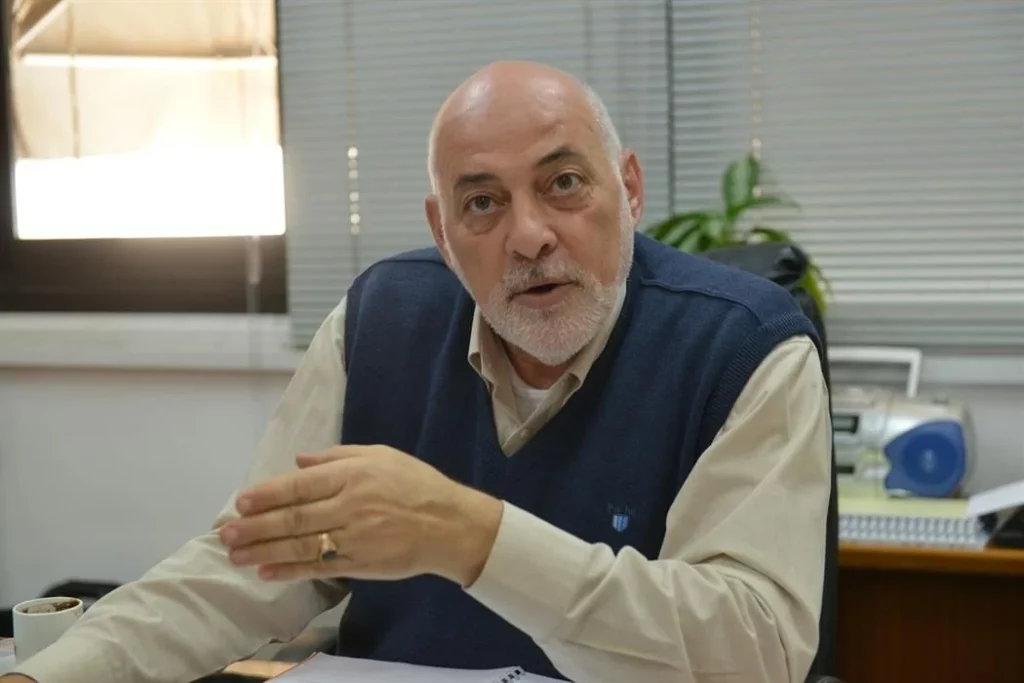 *Former Director of the Department of Meteorology
"The Department of Meteorology is the competent authority of the Republic of Cyprus under the structure of the Ministry of Agriculture, Rural Development and Environment, which has the responsibility and competence for weather management in Cyprus. As far as the sea is concerned, it has responsibility in the maritime area of the entire Eastern Mediterranean.
The Department of Meteorology produces forecasts based on mathematical and thermodynamic models. It is a department recognized through the Republic of Cyprus by the World Meteorological Organization and is the National Meteorological Authority. This matters, because its forecasts and warnings can be considered as certified.
It produces forecasts and warnings, but it is not the competent authority to implement them. The letter of the forecast does not mean anything in terms of the prohibition of boats sailing today. The bill concerning the establishment of the coast guard provides that the coast guard will be responsible for the prohibition of sailing depending on the type of ship and the state of the sea. So this important step that was missing from the issuance of the forecast in increasing its value, which is a new competent authority to be able to impose the departure, will be regulated in the future by a bill. Based on the forecasts of the National Meteorological Authority, a relevant bulletin will be issued regarding the departure. With the means available to the coast guard, it will be able to inform even those who are tied up in leeward areas about the expected state of the sea and give them instructions to dock, if required based on the warning.
The criteria that should trigger a ban are wind speed and intensity, wave height and weather. If it is a stormy activity and in it we have a variable intensity wind field, these will be criteria for the Meteorological Service to issue a warning but also for the competent authority to issue a warning for a prohibition of sailing."
Glafkos Kariolou: Constant supervision is necessary
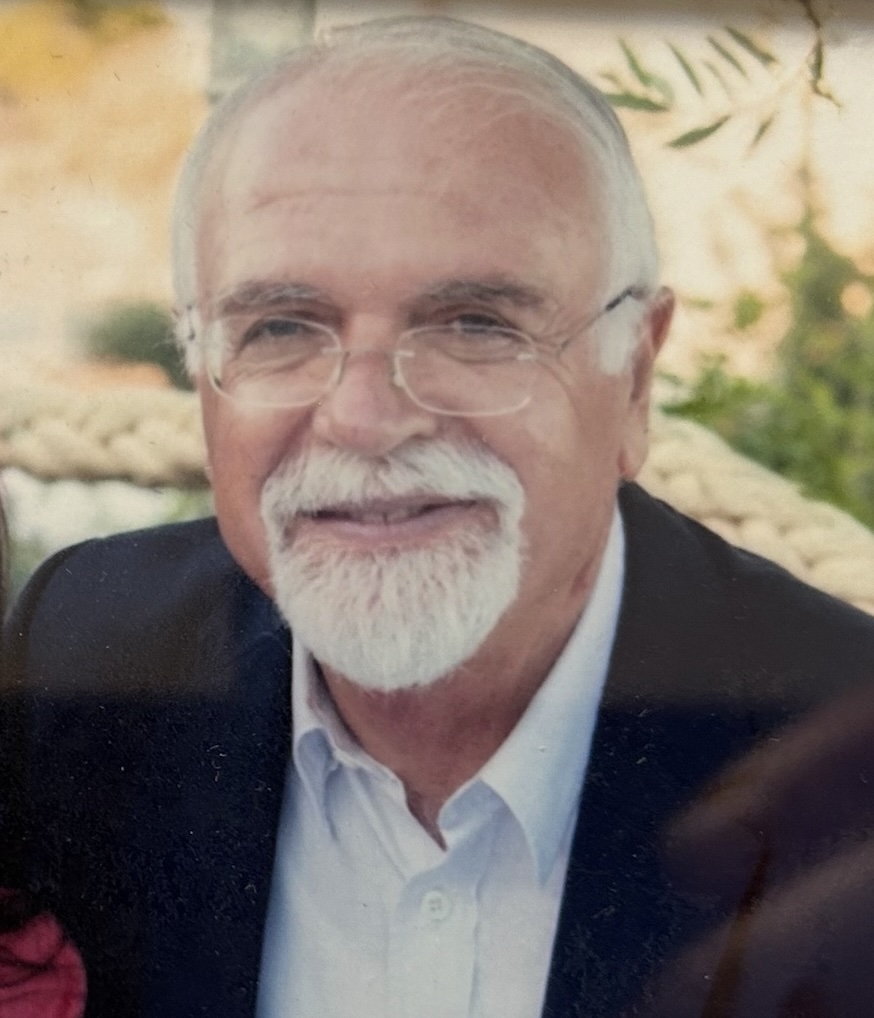 *Glafkos Kariolou is an expert in Marinas Shipbuilding Management and a Diving Instructor. Sailing Instructor of NOK. He was the Governor of "Kyrenea2" and "Kyrenia-Eleftheria"
"How can a state like Cyprus ensure the safety of man in the Cypriot seas, in terms of weather and nature?
The answer requires analysis, identification and annihilation or at least mitigation of the parameters that create risks.
But what are the dangers at sea? The biggest is human negligence, overconfidence, and lack of planning. And then the Meteorological conditions are sought!
At sea we usually use a saying of Thales of Miletus along with a strange magic word!
"KYVERNAN ESTI DIORAN" and then the word ASYPROTHERA! (i.e.: Cause-SYMPTOMS-PREVENTION-TREATMENT!) Both require knowledge, temperament, culture, discipline and empathy, that is, in a word: education!
How is it possible for a State to build in the minds of its citizens the ability to "APPOINT"? In other words, how can the citizen foresee and "construct" his own protocol of actions, having taken into account as much as possible, all the factors? How will the sea behave, how will it find where and what will blow from? Does he have an application/application on his mobile phone with the ability to PREDICT a week in terms of direction, wind speed, etc.? Does he know what 3 Beaufort or 6 Beaufort, Southwest 225 degrees means? Visibility, Rain, Wave Height? or anyway does he know that the Meteorological is given recorded on the phone 24-817998 or does he want to talk if necessary at 24-802977 so that our Meteorologists can tell him about the weather conditions? If he is a diver, does he know where the nearest diver overweight oxygen therapy chamber is? Does he reverently keep the "zero time" paintings? . Does he know that in order to anchor inshore, it is necessary to have the right weight and type of anchor for the specific seabed, with significant measures of chain and then rope with a total length of at least five (5) times the depth?
No matter how many laws and decrees the Parliament and the Cabinet prepare, nothing will be solved unless there is continuous supervision, and the strictest implementation and punishment.
The CAUSES of an accident: Overconfidence and lack of knowledge. SYMPTOMS: Drownings, destruction of the natural environment, pollution, etc.,
PREVENTION: Education, discipline, knowledge, severe punishment.
And the TREATMENT: Amplification with Technology, Satellite imagery, Appropriate elevated special cameras on the coastlines, Radar. Even training of special Judges of the Navy with knowledge of the subject!. Gradual construction of a "chain" NOT of MARINAS but of "accesses" and shelters of pleasure and sports boats for the protection of our schools' boats. It is imperative to strengthen the Sea Scouts and the Nautical Clubs. Teaching Empathy, Discipline and Acquisition of Nautical Knowledge from kindergarten!!
In this way, ALL FLOATING SHIPBUILDING WILL BE GOVERNED BY A WELL-KNOWN!"
