
Edited by: Andreas Athanasiou
Agios Sozomenos has been in the spotlight again in recent days, this time not for the history or the legends that accompany it, but for the decision to proceed with the design of the new Central Prison in the area.
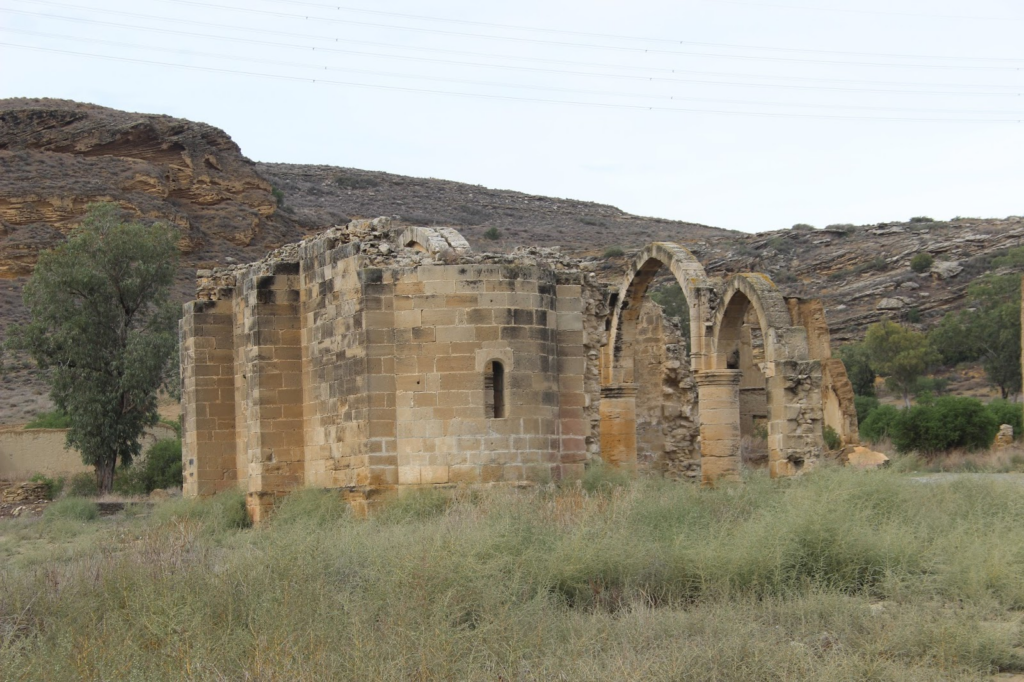
Just a few kilometers outside Nicosia and very close to Potamia, this small settlement has been abandoned for decades. Half-ruined brick houses, old school buildings, churches, the hermitage carved into the rock and the imposing, but unfinished, church of Agios Mamas are what one encounters today when arriving there.
Once upon a time, of course, it was a small mixed village, where Greek Cypriots and Turkish Cypriots lived. The life of the settlement changed dramatically in 1964, in the already tense climate of intercommunal conflicts. There were bloody incidents in the area, with deaths from both communities, and the Turkish Cypriot inhabitants subsequently fled the village. Since then, Agios Sozomenos has remained essentially deserted. Among the ruins one can still see traces of a normal community, with houses, schools and places of worship.
TIME magazine reported on February 14, 1964:
"Seven Greek Cypriots in a Land Rover approached the village. The Greeks said they wanted to start a water turbine serving a nearby village and were ambushed by the Turkish Cypriots. The Turkish Cypriots said that the Greek Cypriots on the Land Rover opened fire on Turkish Cypriot shepherds. However the "phase" began, the result was that two Greek Cypriots in the Land Rover were killed and two others were injured before they managed to leave the village.
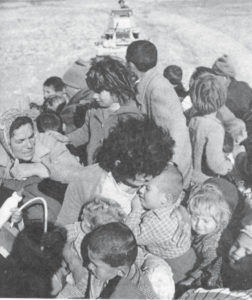
Women and children evacuating the village
But it didn't take long for them to return this time with reinforcements from the surrounding villages. They surrounded the village and there was a battle with several losses on both sides. After the battle and the arrival of peacekeepers, 50 armed Turkish Cypriots arrived in the village and transported the villagers to Louroutzina and since then the village has been abandoned.
In an article, the newspaper Haravgi, the next day, spoke of more dead Greek Cypriots than Turkish Cypriots.
Along with the abandonment came the legends over the years. One of the most famous people says that if someone is in the village at night, he can hear the screams of people who lost their lives in the clashes. Of course, it is a folk tale, without any documentation, but it has been following Agios Sozomenos for years and has contributed to its reputation as a "ghost village". After all, the scenery itself, with the ruined houses, the empty windows and the old buildings in the plain, easily leaves room for imagination.
Youtube - https://www.youtube.com/watch?v=MCKiBgcfOeI
The history of the area, however, goes back much further than the events of 1964. Excavations by the Department of Antiquities in the area of Agios Sozomenos, in the framework of the program "Survey and Excavations in the area of Agios Sozomenos" under the direction of Dr. Despina Pilides, brought to light important remains of the Late Bronze Age. At the sites of Tzirpoulos, Barsak, Nikolides and Ampelia, fortifications, workshops and facilities related to productive activities and the processing of agricultural products were found. The findings show that the wider area had an organized and intense human presence as early as thousands of years ago.
One of the buildings that stands out the most today is the unfinished church of Agios Mamas. For years there was a key question surrounding its history: who built it and why was it left in the middle? The historian and researcher Nasa Patapiou dealt extensively with the subject. In her study, she connects the church with Eugene Senator, third count of Rochas and one of the important feudal lords of the last years of the Venetian occupation. The Senator acquired the fief of Potamia, which included Agios Sozomenos, and according to her research he decided to build a church there dedicated to Saint Mamas, the patron saint of his family.
Patapiou places the beginning of the works between 1567 and the beginning of 1570. "I am fully convinced that the founder of the unfinished church of Agios Mamas is none other than Eugene Senator," she says, estimating that the Ottoman conquest of Cyprus was also the reason why the church was not completed. Eugene Senator was killed on September 9, 1570, during the fall of Nicosia, and the building was left in the middle. More than four centuries later, the temple still towers over the ruins of the village.
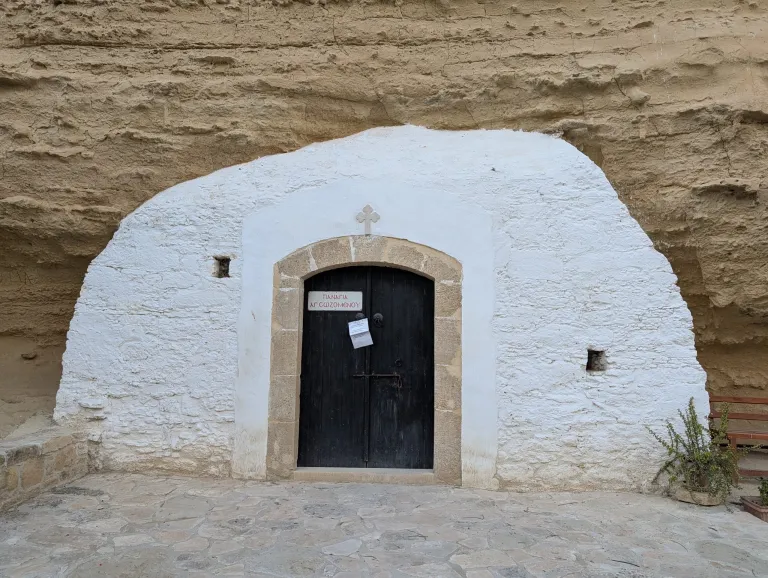
A little further up, in the rock, is the hermitage of Agios Sozomenos, which today functions as a small chapel. Inside it are preserved frescoes of different periods, several of which have suffered significant damage. In some figures of Saints, the faces and especially the eyes have been destroyed or removed.
But it didn't take long for them to return this time with reinforcements from the surrounding villages. They surrounded the village and there was a battle with several losses on both sides. After the battle and the arrival of peacekeepers, 50 armed Turkish Cypriots arrived in the village and transported the villagers to Louroutzina and since then the village has been abandoned.
In an article, the newspaper Haravgi, the next day, spoke of more dead Greek Cypriots than Turkish Cypriots.
Along with the abandonment came the legends over the years. One of the most famous people says that if someone is in the village at night, he can hear the screams of people who lost their lives in the clashes. Of course, it is a folk tale, without any documentation, but it has been following Agios Sozomenos for years and has contributed to its reputation as a "ghost village". After all, the scenery itself, with the ruined houses, the empty windows and the old buildings in the plain, easily leaves room for imagination.
Youtube - https://www.youtube.com/watch?v=MCKiBgcfOeI
The history of the area, however, goes back much further than the events of 1964. Excavations by the Department of Antiquities in the area of Agios Sozomenos, in the framework of the program "Survey and Excavations in the area of Agios Sozomenos" under the direction of Dr. Despina Pilides, brought to light important remains of the Late Bronze Age. At the sites of Tzirpoulos, Barsak, Nikolides and Ampelia, fortifications, workshops and facilities related to productive activities and the processing of agricultural products were found. The findings show that the wider area had an organized and intense human presence as early as thousands of years ago.
One of the buildings that stands out the most today is the unfinished church of Agios Mamas. For years there was a key question surrounding its history: who built it and why was it left in the middle? The historian and researcher Nasa Patapiou dealt extensively with the subject. In her study, she connects the church with Eugene Senator, third count of Rochas and one of the important feudal lords of the last years of the Venetian occupation. The Senator acquired the fief of Potamia, which included Agios Sozomenos, and according to her research he decided to build a church there dedicated to Saint Mamas, the patron saint of his family.
Patapiou places the beginning of the works between 1567 and the beginning of 1570. "I am fully convinced that the founder of the unfinished church of Agios Mamas is none other than Eugene Senator," she says, estimating that the Ottoman conquest of Cyprus was also the reason why the church was not completed. Eugene Senator was killed on September 9, 1570, during the fall of Nicosia, and the building was left in the middle. More than four centuries later, the temple still towers over the ruins of the village.
A little further up, in the rock, is the hermitage of Agios Sozomenos, which today functions as a small chapel. Inside it are preserved frescoes of different periods, several of which have suffered significant damage. In some figures of Saints, the faces and especially the eyes have been destroyed or removed.
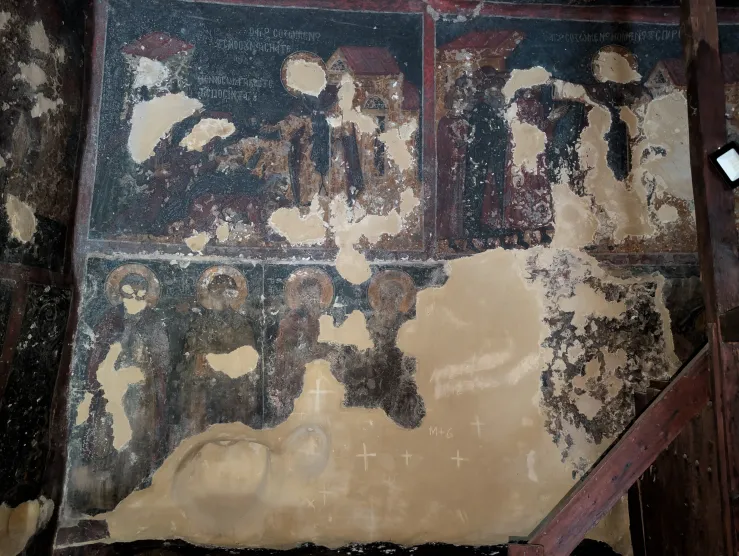 Papageorgiou writes that "the Turks destroyed many of the frescoes [...] and destroyed the eyes of the Saints."
The identity of the Saint himself is also interesting. According to the Great Cyprus Encyclopedia, there were probably two local saints named Sozomenos. One is associated with Karpasia and is also referred to as a bishop, while the second is considered one of the so-called 300 "Alamani" saints who came to Cyprus from Palestine. Saint Sozomenos of Potamia is the second. Leontios Machairas mentions him in his Chronicle as a saint who lived as an ascetic in Potamia, while tradition connects the cave with the place of his asceticism and burial. Inside there is also holy water, while the frescoes present scenes with miracles and healings attributed to him.
Despite the abandonment, Saint Sozomenos is far from forgotten. In recent years it has attracted photographers, cyclists, families, tourists, researchers and young people who discover it through social media.
In 1987, Panikos Chrysanthou recorded in the documentary "A Detail in Cyprus" testimonies of Greek Cypriots and Turkish Cypriots who had lived in the village.
Youtube - https://www.youtube.com/watch?v=DqfCEIhmLiQ
The area has returned to the fore due to the plans for the new Prisons. The decision has provoked reactions from local authorities, mainly because, as they claim, there was no substantial information or consultation. The Mayor of South Nicosia - Dali, Stavros Hatzigiannis, speaking to ANT1, said that the municipalities should be consulted before a decision of such a scale is made within their administrative boundaries. "We wanted to be asked about the Central Prisons and to ask the local authority in general about everything that will be done within its administrative boundaries," he said, saying that the local authorities were informed of the planning through the press.
Mr. Hatzigiannis also referred to the picture that exists today in the area, noting that around the proposed plot there are sewage tanks, biological stations, pigsties, livestock units and quarry zones. He even raised the issue of air quality, even for the prisoners themselves, but also the issue of the adequacy of the road network. As he said, the Municipality already had other plans for the area, with the aim of creating an organized livestock zone and the gradual transfer of existing units.
There were also reactions from the Movement of Ecologists - Citizens' Cooperation. In a statement, the Movement expresses concern about the possibility that the planning may affect a protected area of the Natura 2000 Network and notes that Agios Sozomenos cannot be treated as "no man's land" just because it is not inhabited. It calls for substantial consultation and a full environmental assessment, while pointing out that quarries, waste management areas and wastewater treatment facilities are already operating in the wider area.
For his part, the Minister of Justice Konstantinos Fytiris explains that Agios Sozomenos was chosen instead of Mathiatis, mainly because it is state land and because there is already basic infrastructure in the area. As he told Alpha Cyprus, the road network, electricity, water supply and sewerage can significantly reduce the cost of the project. He assured that the new prisons will not create a nuisance to the residents and noted that, as soon as the first plans are prepared, there will be a consultation with the local authorities. The planning, as he has said, also includes the upgrading of the historical site of Agios Sozomenos, so that it can be visited.
With information from mixanitouxronou, alioshabielenberg, Department of Antiquities
