
What the public confrontation between the Legal Service and the Independent Anti-Corruption Authority revealed, in terms of the result and the substance, is the lack of communication and the inability to reach an understanding on key issues between two leading institutions of the Republic.
It took a total of four announcements from both sides to finally reach a conclusion that under normal circumstances should have been clarified between them a long time ago, behind the spotlight. That the issue of the Assistant Attorney General's incompatibility in the case with the black van has so far not been investigated by anyone. After all, how could it have been investigated, since the references to Savvas Angelidis' incompatibility were made after the delivery of the conclusion by the independent criminal investigator, Ilias Stefanou?
Now, after the clarification, the Authority seems to intend to reopen the chapter of the black van. As far as the Assistant Attorney General is concerned, since there was no investigation, the Legal Service, even if it wanted to, does not have the authority to object to a new procedure on this matter. Its involvement at this stage is limited to answering the questions that the Anti-Corruption Authority will formally put before it.
The crucial point now is whether or not the Attorney General will raise an objection in the event that the Authority seeks to examine aspects that have already been investigated previously. This is what should be clarified, on the basis of Article 10 of the Law on the Establishment and Operation of the Independent Anti-Corruption Authority.
The first announcement of the Authority
The case came back to the fore when on September 14 the Anti-Corruption Authority announced that it would end the investigation it planned into the black van case, giving its own version of the events in chronological order.
The issue was brought before it by a complaint by the Audit Office in 2023, when Odysseas Michailidis was in the position of Auditor General. In the announcement, the Authority stated that due to continuous developments on the issue both in Cyprus and in Greece but also before European Institutions, it was monitoring the developments. Among them is the book by my colleague, Fanis Makridis, entitled "Cyprus: The navel of surveillance", which refers to two cases where the question of incompatibility may arise for the Assistant Attorney General.
Taking into account the above, the Authority decided to extend the scope of the investigation to all incidents related to the issue of the black van without exception. According to the Authority's first announcement on September 14, it was agreed with the Legal Service that it would notify its intention to the Attorney General, in order to avoid parallel investigations.
This was followed by an exchange of letters and a long meeting at the offices of the Legal Service on 29 July. The final result, as announced by the Authority, was the information on the part of the Legal Service that everything the Authority wished to investigate had already been investigated in the past. The information to the Legal Service was made through a classified letter which was sent the day after the meeting and, according to the Attorney General, answered all the questions which were formally raised in a classified letter from the Authority on July 16.
The alaloum then
The Authority, on the basis of this information, took the decision to terminate the investigation and announced it. A few hours later, Giorgos Savvidis clarified, claiming that in the classified letter of July 16, the Authority informed the Attorney General of its intention to conduct an investigation in relation to very specific aspects of the "black van" case, which were detailed in the letter in question and did not concern the handling of the case by the Legal Service. The answer given to that letter, according to the Attorney General, was that all the aspects that had been forwarded to him had been investigated again.
The Authority responded to Giorgos Savvidis, claiming that from the meeting of July 29 it had become clear that the expanded investigation would also cover a possible conflict of interest of the Assistant Attorney General. According to the Authority, Savvas Angelidis allegedly left the meeting when it became clear that the specific issue concerned him personally.
In his second announcement, the Attorney General insisted on his position by stressing that the terms of reference that the Authority would give to the proposed investigators, who were put before him in detail through a relevant letter on July 16, did not include any reference to the way the case was handled by the Legal Service or to any investigation against the Assistant Attorney General. He even called on the Anti-Corruption Authority, If he insists on his position, he should declassify the letter and make it public to prove what he claims. What Giorgos Savvidis left untouched is the claim for the departure of Savvas Angelidis when he realized that the discussion concerns him on a personal level.
Article 10 on the incompatibility Angelidis is out of the equation
During the week, the discussion focused on the interpretation of Article 10 of the Law on the Establishment and Operation of the Independent Anti-Corruption Authority. Specifically, the article states verbatim:
"The Authority, in the event that a criminal investigation has been initiated, either by the Police or by a criminal investigator, for an act of corruption which falls within the scope of its competences, after being informed by the Attorney General of the Republic, shall not initiate and/or terminate any initiated parallel action. It is understood that the Authority may request and receive information regarding the progress of the above cases from the Attorney General of the Republic".
In relation to Article 10, different interpretations have been made as to whether the Authority could open an investigation into the black van, since the matter has been investigated in the past by the Police and the independent criminal investigator.
However, the following paradox arises: The confrontation between the Attorney General and the Anti-Corruption Authority was based on the aspect that touches the Assistant Attorney General. An aspect that is de facto not affected by Article 10, since the information about the incompatibility saw the light of day after the completion and delivery of the conclusion by the independent criminal investigator, Ilias Stefanou, and therefore could not have been part of the investigation at the time.
In conclusion, it would not be an exaggeration to mention that two leading institutions of the Republic engaged in public confrontation without substantial reason or cause. The involvement of the Attorney General in the selection stage by the Authority of the issues to be investigated is limited to the answers to the questions that will be put before him. It has neither the power nor the competence to veto the intentions of the Authority, unless there is a parallel investigation on the same issue or if it is judged that the correct interpretation of Article 10 is that the Authority will not investigate cases investigated in the past by the Police. Therefore, if the Authority wishes to investigate the aspect affecting the Assistant Attorney General, no one is in a position at this time to prevent it.
The hot issues for the Assistant Attorney General
There are two main cases that have been raised in relation to the possible incompatibility of the Assistant Attorney General, Savvas Angelidis.
The first concerns the Israeli businessman Abraham Sahak Avni, who had a business relationship with his brother, Michalis Angelidis, in a plan to operate a store under the name "Spy Shop". At the same time, Savvas Angelidis was institutionally called upon to participate in the handling of the surveillance case. He had declared ignorance of his brother's activities and rejected any possibility of influence.
The second case concerns a 2023 complaint about three companies that allegedly received services from an office providing administrative services affiliated with a law firm of Savvas Angelidis' interests. In this case, too, he had rejected that any issue of incompatibility arose.
Michalis Vorkas, President of the Cyprus Bar Association : Let's look at the forest and not the tree

"The recent decision of the Independent Anti-Corruption Authority to end the process of its investigation into the well-known case of the black van has admittedly provoked the public debate.
The reason for this was, according to what has come to light, the information of the said Authority by the Legal Service that a relevant criminal investigation has already been carried out on the matter and therefore there was no longer anything to investigate.
It is legally correct to avoid the existence of a double investigation if at the same time they are investigated by the Legal Service or the Police. No person may be the subject of double investigations or a second criminal prosecution for the same criminal offence under consideration. It could therefore easily be noted that if the facts are correct, the Independent Anti-Corruption Authority did not proceed with a second investigation.
However, if there were events that have occurred in a second year and take on the character of acts of corruption, which have not been or are being investigated by the Police, nor have they been brought before a criminal Court, then nothing would prevent the Independent Anti-Corruption Authority from promoting its investigations. The issue is real without presenting legal difficulties.
The Independent Anti-Corruption Authority is a social necessity in the modern Cypriot reality with the aim of combating corruption, a phenomenon that has taken on great proportions in recent years and which affects us as a state worldwide. The state, apparently recognizing the necessity of its operation, according to official information, increased the budget of this Authority by 70%.
On the other hand, our case law has always emphasized the supreme state office with which the institution of the Attorney General is clothed, and the central role attributed to him as a defender of legality and the public interest.
Therefore, I believe that each of us, and even more so the institutions themselves, must realize the magnitude of their institutional responsibility towards the state and its citizens and seek good cooperation between them instead of confrontation, which unfortunately feeds on superficial, opportunistic, clientelistic, party and other expediencies. Let's finally see the forest, leaving the tree aside."
George Lawyer, Special Teaching Staff, Department of Law, Frederick University, : When the protection of the institutional image replaces the substance
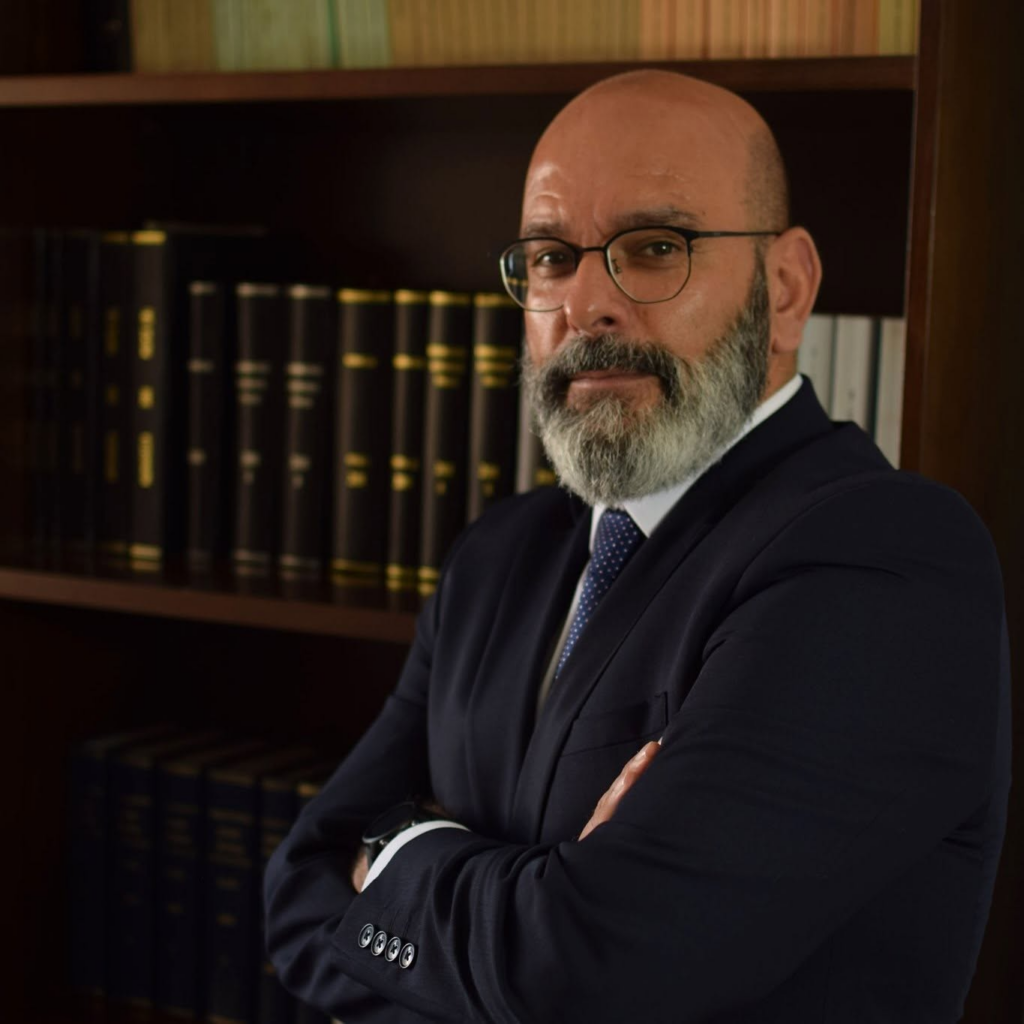
"When the protection of the institutional image replaces the substance. The public confrontation between the Attorney General and the Independent Anti-Corruption Authority over the investigation of the allegations linked to the "black van" case is a legitimate concern.
Not only because of the content of the allegations on both sides, but mainly because the discussion shifted from the substance of the case to the protection of the image and prestige of the institutions involved.
Citizens are not primarily interested in who sent which letter, how the terms of reference were interpreted or who presented a fragmentary official conversation. They are entitled to know whether serious allegations have been investigated fully, independently and effectively; whether the handling of the case by all the officials involved has been considered; and whether there are responsibilities to be attributed. The exchange of announcements not only does not strengthen trust in the institutions, but also confirms the existence of serious institutional gaps.
The problem is exacerbated by the Attorney General's extremely broad and virtually unchecked power to initiate, continue or suspend criminal proceedings. In fact, when a complaint, such as the present one, touches the Legal Service or its senior officials or even its institutional officials, the issue of institutional self-protection and conflict of roles is objectively created, regardless of the intentions of the persons.
The answer cannot be the cessation of the investigation or the continuation of a communication conflict. An independent investigation, the publication of the findings to the extent permitted by law and effective control of prosecutorial decisions are required. Institutions are not protected through announcements. They are protected when they allow the audit, are accountable and prove in practice that no one is above the investigation."
