 |
| File photo: A drone view of vessels anchored in the Strait of Hormuz as seen from Musandam, Oman |
The return of acute geopolitical risk to global energy markets is changing the way energy security is understood. The central question is no longer simply how to deliver energy as efficiently and cheaply as possible. Increasingly, it is how to ensure that energy continues to flow when normal sources, routes or infrastructure are disrupted.
This represents a shift from the economics of “just-in-time” towards the security of “just-in-case”.
For decades, energy systems increasingly prioritised efficiency: lowest-cost routes, minimal inventories, high asset utilisation and concentrated supply chains. But the disruptions affecting major energy-producing regions and maritime routes demonstrate the vulnerability of such systems. Efficient supply chains can also be brittle.
In this new environment, ‘optionality’ has economic and strategic value.
Optionality is the ability to switch between alternative suppliers, routes, infrastructure, contractual arrangements and markets when disruption occurs. These alternatives may not always be the lowest-cost options under normal conditions. Their value lies in being available when they are needed.
Two crises have changed global gas
Natural gas provides a particularly striking example.
Global gas markets have now experienced two major supply disruptions in four-years. Russia’s invasion of Ukraine in 2022 resulted in the loss of most Russian pipeline supplies to Europe. The Iran conflict has disrupted supplies from Qatar, driving LNG prices higher.
Chevron’s Global Gas president, Freeman Shaheen, drew a clear conclusion from these events: they reinforce the need for diversity both of supply and contracting structures, particularly given that the LNG spot-market is considerably less liquid than crude and products.
That is significant. Diversification is no-longer simply a government energy-security objective. It is increasingly influencing the commercial strategies of major international gas companies and their customers.
Chevron plans to expand its global LNG supply portfolio to reach around 20 million tonnes/year, while examining opportunities stretching from Argentina to the Mediterranean, Australia and Africa. Shaheen described the East Med specifically as a “very exciting area”.
The strategic commodity is therefore increasingly not just gas. It is optionality.
Europe provides the clearest example
Europe’s experience since 2022 demonstrates what this means in practice.
Europe did not respond to the loss of Russian pipeline gas simply by finding another dominant supplier. It diversified. LNG and renewables became much more important, regasification capacity expanded, Norwegian and other pipeline supplies contributed, storage assumed greater strategic importance and consumers reduced demand.
But greater LNG dependence also connects Europe more directly to disruptions elsewhere in the world. A supply interruption in the Middle East can affect European gas prices even when Europe’s own infrastructure is functioning normally.
Europe has therefore exchanged one form of vulnerability for a more diversified but increasingly global exposure.
This is an important distinction. Diversification does not mean independence from external markets. It means ensuring that the failure of one supplier or route does not disable the system.
It is in this context that the East Med becomes more interesting.
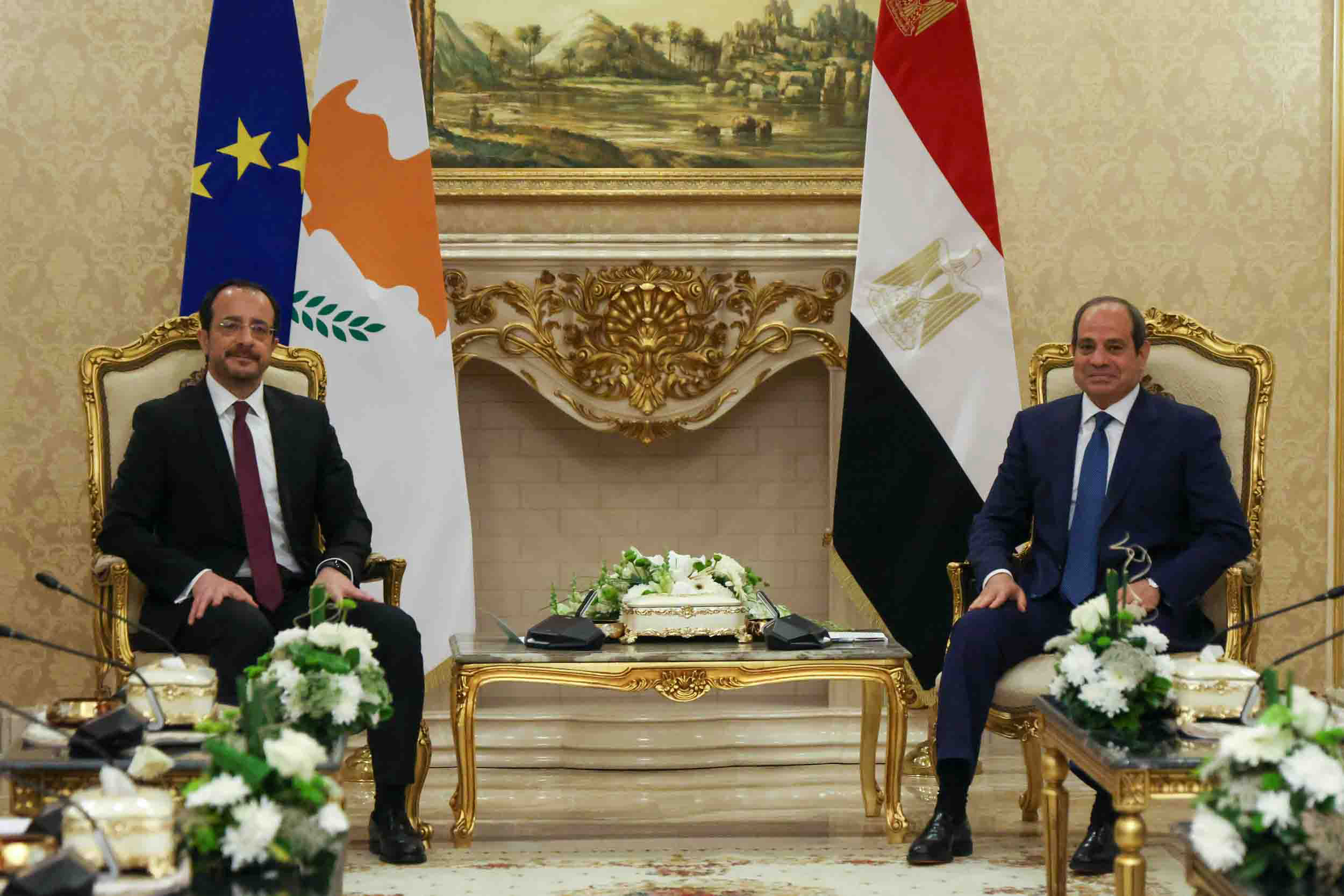 President Nikos Christodoulides with Egypt’s President Abdel Fattah el-Sisi
The East Med’s value is connectivity
The significance of the East Med lies not primarily in the scale of its resources, but in its location, infrastructure and growing connectivity.
Egypt sits at the centre of this emerging system.
Its gas production peaked at 67.8 bcm in 2021 but had fallen to 40.8 bcm by 2025, while consumption reached 61.5 bcm. The widening deficit has increased Egypt’s dependence on both Israeli pipeline gas and imported LNG.
Israel supplied around 10 bcm to Egypt in 2025, with planned expansions potentially doubling flows by around 2030. But repeated interruptions during periods of conflict have demonstrated the vulnerability of excessive dependence on a single source.
Cyprus can now provide another layer of supply. Kronos is being developed through existing Egyptian infrastructure, with Aphrodite expected to follow.
This is important not because Cypriot gas is enormous in global terms, but because it adds another source and another option.
The emerging system could therefore combine Egyptian domestic production, Israeli pipeline gas, Cypriot gas and imported LNG. Each has different economics and vulnerabilities. Together they provide greater resilience than any one source individually.
The significance of the East Med lies not primarily in the scale of its resources, but in its location, infrastructure and growing connectivity.
Egypt sits at the centre of this emerging system.
Its gas production peaked at 67.8 bcm in 2021 but had fallen to 40.8 bcm by 2025, while consumption reached 61.5 bcm. The widening deficit has increased Egypt’s dependence on both Israeli pipeline gas and imported LNG.
Israel supplied around 10 bcm to Egypt in 2025, with planned expansions potentially doubling flows by around 2030. But repeated interruptions during periods of conflict have demonstrated the vulnerability of excessive dependence on a single source.
Cyprus can now provide another layer of supply. Kronos is being developed through existing Egyptian infrastructure, with Aphrodite expected to follow.
This is important not because Cypriot gas is enormous in global terms, but because it adds another source and another option.
The emerging system could therefore combine Egyptian domestic production, Israeli pipeline gas, Cypriot gas and imported LNG. Each has different economics and vulnerabilities. Together they provide greater resilience than any one source individually.
Commercial strategy is beginning to reflect this
Chevron’s latest comments add another dimension. The company already has a major East Med position and has expanded its exploration footprint into Greece. It is now explicitly considering further Mediterranean gas opportunities as part of a broader global portfolio strategy driven partly by buyers’ increasing concern about energy security.
This suggests that the commercial logic of the region may also be evolving.
Gas does not necessarily have to be developed around a single predetermined destination. Major portfolio players increasingly have an incentive to maintain access to different producing regions and different markets. Buyers are also changing behaviour. According to Chevron, state-backed importers are becoming more willing to contract with portfolio suppliers rather than relying principally on government-to-government arrangements.
This is “just-in-case” entering commercial gas strategy.
Interdependence with redundancy
The East Med nevertheless presents a paradox. Commercial interdependence is advancing faster than political alignment.
Egypt and Israel are increasingly interconnected through gas even though political relations remain difficult. Egypt has simultaneously improved relations with Türkiye. Greece, Cyprus and Egypt continue deepening their cooperation. Cyprus needs Egyptian infrastructure to monetise its gas.
The region can no longer easily be divided into fixed geopolitical camps. The same country can be a partner in one field, competitor in another and mediator in a third.
The September 2026 Egypt-Greece-Cyprus meeting at El Alamein illustrates how this new geometry can work. Energy security was reaffirmed as a pillar of cooperation. This is cooperation built around practical interests rather than geopolitical exclusion.
That may provide a more durable model.
Turning optionality into strategic value
There remain formidable obstacles: maritime disputes, political risk, security shocks, infrastructure mismatches and Europe’s declining long-term gas demand. These favour commercially disciplined developments using existing infrastructure rather than grand projects dependent on decades of continuously rising European gas consumption.
But that does not diminish the East Med’s strategic significance. It helps define it.
The objective should be to develop commercially viable gas, maximise use of existing infrastructure, maintain access to LNG and international markets, strengthen electricity and trade connections and avoid creating new single-source dependencies.
The East Med’s opportunity is not based on becoming a huge new energy province. It is to become one increasingly useful node in a diversified global and regional gas system.
Its strategic value comes from providing additional gas, suppliers, infrastructure, routes and markets – and from connecting them.
This is what the transition from “just-in-time” to “just-in-case” ultimately means.
Resilience does not require eliminating interdependence. It requires interdependence with redundancy. And for the East Med, that may be the most important opportunity created by the new global energy-security environment.
