
An important dimension of dementia and Alzheimer's is that behind every diagnosis there is a person, but also a family that needs information, guidance and support, say the "Ithaca" Foundation and the Pancyprian Association of Alzheimer's and Related Dementias "Don't Forget Me", in their interventions to "F" on the occasion of World Alzheimer's Day, which is September 21 of each year.
The administrative officer of the "Ithaca" Foundation in Limassol, Maria Symeonidou, told us that according to data from the World Health Organization and the Dementia in Europe Yearbook, in Cyprus today there are about 17 thousand active cases of dementia, while there is a huge increasing trend for the coming years. He stressed that "these data highlight the need for early diagnosis, information, prevention and, above all, for structures that can offer substantial support, both to people living with dementia and to their families".
These data show that tens of thousands of families in Cyprus are facing the problem, if the families of children and other close relatives who live with patients and have the responsibility of caring for them are taken into account. As underlined by Alexia Karaiskaki Achilleos, president of the Alzheimer's and Related Dementias Association "Don't Forget Me" Larnaca, the message of the Alzheimer's Disease International for 2026, emphasizes that "The sooner you know, the more you can do".
The president of the Pancyprian Alzheimer's and Related Dementias Association "Don't-Me-Forget" Noni Diakou calls on the state "to assume its responsibilities and create memory clinics in all provinces, where all tests for prevention and diagnosis of the disease will be carried out and psychological support will be provided, in one place". He added that "both patients and caregivers should receive financial support, while the Ministry of Health should proceed immediately together with the Associations to create a Strategic Plan for dementia".
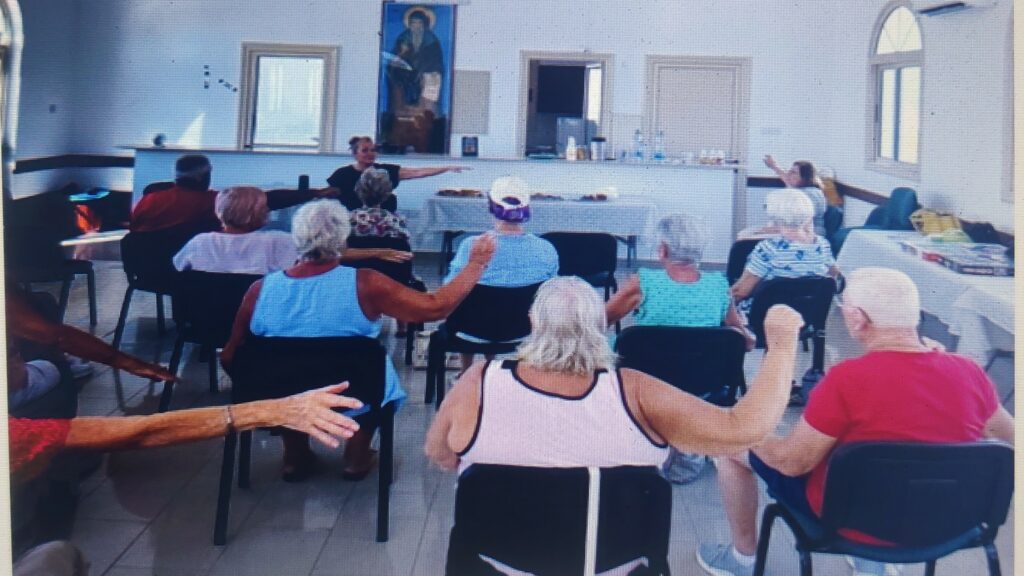 Support for people with dementia in Paphos
The importance of prevention on the occasion of World Alzheimer's Day is also highlighted by the Dementia Center of the Cyprus Institute of Neurology and Genetics, informing about the "11 pillars of dementia prevention". In addition, Frederick University and the Kaimakli Shelter "Archangel Michael" announced that they have agreed to develop and implement a new information and awareness campaign on Alzheimer's disease, within the framework of the Frederick University Living Lab (FULL). They stated that "the campaign aims to enhance the understanding of Alzheimer's disease and especially to highlight the person behind the diagnosis".
The major problem and the 11 pillars of prevention
It is noted that dementia is not a normal part of aging, it is a general term for a series of diseases that affect a person's memory, thinking, behaviour and ability to respond to their daily life. Alzheimer's disease is the most common form of dementia and is a major medical, social and economic problem for developed societies with a long life expectancy. The disease affects 5% of people over the age of 65 and 25% over the age of 85, while it is found that women have a higher risk of Alzheimer's, especially in the population over 85 years of age. The term "dementia" refers to the decline of mental functions, initially of memory and then of speech, judgment and personality as a whole. About 44 million people around the world have dementia and this rate will double by 2030 and more than double by 2050. We have been told by our interlocutors that the number of people even under the age of 50 who suffer from dementia is increasing. We were told that "caregivers of patients are often forced to change their life planning, their schedules, while they are burdened not only financially, but also psychologically and emotionally". The Dementia Center of the Cyprus Institute of Neurology and Genetics has announced that it is following the revised guidelines of the World Health Organization for 2026 regarding the reduction of the risk of cognitive decline and dementia. The guidelines are for adults who do not suffer from dementia, including those with normal cognitive function, or mild cognitive impairment, as well as people in whom these conditions coexist with another condition." The announcement adds that "focusing on various factors of a healthy lifestyle at the same time offers the greatest benefit for maintaining cognitive health and reducing the risk of dementia. This can be achieved with cognitive activity that mobilizes the mind, with social activity, with regular physical exercise, with alcohol restriction and smoking cessation, with a healthy and balanced diet, with control of cardiovascular factors, with care and protection of hearing and vision, with treatment of depression, with good sleep that enhances memory and brain health, protecting against head injuries and reducing exposure to air pollution." In this context, the CING "recalls its participation in the pan-European COMFORTage network where, with 37 other centers, it is exploring targeted solutions for the prevention, monitoring and management of the progression of dementia and fragility. People over 60 years of age who have been diagnosed with mild memory loss can participate in the study, the purpose of which is to compare people who show symptoms of memory loss with people who do not show such symptoms. For more information and to register for the study, you can contact 22392847 phone or email comfortage@cing.ac.cy.
A safe and supportive environment
As Alexia Karaiskaki Achilleos told us, "early diagnosis is not just a medical procedure, but gives the person and their family time to understand what is happening, to seek the appropriate support, to organize care, to make the necessary legal and financial arrangements and, above all, to make decisions, as long as the person can still actively participate in them. In Larnaca – he added – we are taking another important step. Our Association operates a Day Care Center for people with dementia, with the aim of providing a safe, creative and supportive environment, where people can stay active, socialize and maintain their abilities as much as possible. Our multidisciplinary team supports the patient, but also the caregiver. It gives him some time to breathe, work, take care of himself, or just rest.
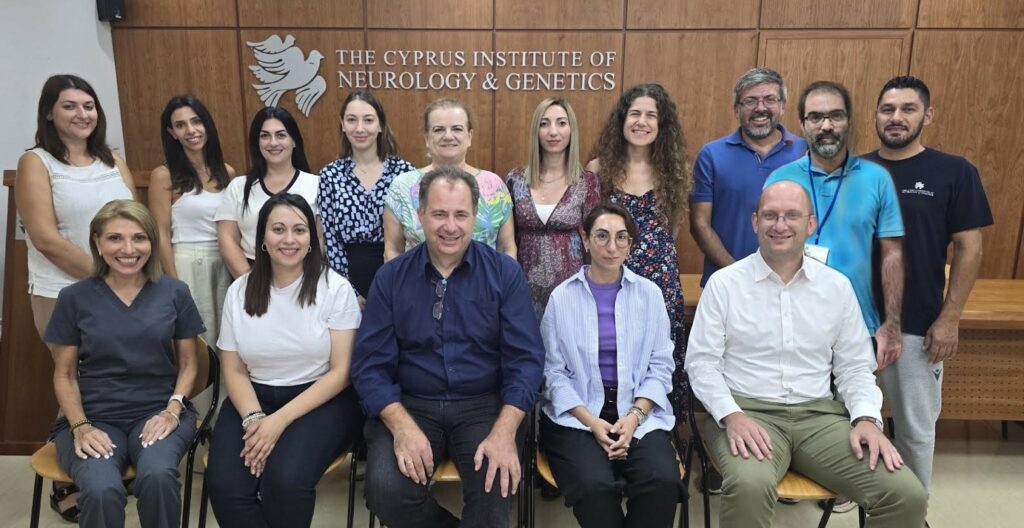 CING team of scientists working on COMFORTage
Memory and mental functions exercises, individual and group activities, psychological support, caregiver counselling, occupational therapy, physiotherapy, exercise, music therapy, creative activities and social participation are provided. As a voluntary Association, we try every day to keep these services alive, through private initiatives, donations, events and the great contribution of our volunteers. But this cannot be a permanent solution. Dementia needs state policy, funding, coordination and cooperation. We need the support of the Deputy Ministry of Social Welfare, the Ministry of Health, the Ministry of Transport, Communications and Works, the Ministry of Education, the Ministry of Finance and the Parliament for different, but equally important reasons.
We need a health system that recognises dementia as a disability and social protection issue, invests in early diagnosis, trains health professionals in recognising early symptoms and creates appropriate services for people with dementia. We need transport and public services that are friendly and accessible, schools that teach children what dementia means and how to treat a person with respect. And we need a legal framework that protects these individuals and their families in a timely manner. We are not asking for privileges, we are asking for rights. People living with dementia today are people who worked, created families, contributed to society and contributed to the development of this place. But when the time comes when the disease no longer allows them to claim their rights on their own, the responsibility falls on their caregivers. And the caregivers are already exhausted. This is the big gap that we need to fill as a society. We, as the Alzheimer's and Related Dementias Association "Don't Forget Me", will continue to inform, support, claim and stand by people with dementia and their families. But in order to be able to continue, we need both the State and society by our side. Early knowledge gives choices, while early action gives time – and time can make a difference."
"Ithaca" and the personal experience of dementia
"The Ithaca Foundation, a non-profit organization founded in 2011, has as its main purpose the support of people living with dementia and their families," said the foundation's administrative officer Maria Symeonidou and added: "The Foundation operates two Day Centers, in Limassol and Nicosia, which serve about 100 people every day, providing an organized and supportive environment with the input of a multidisciplinary team of professionals. At the same time, through the Mobile Unit, home care services are provided, so that support can reach people who have difficulty moving.
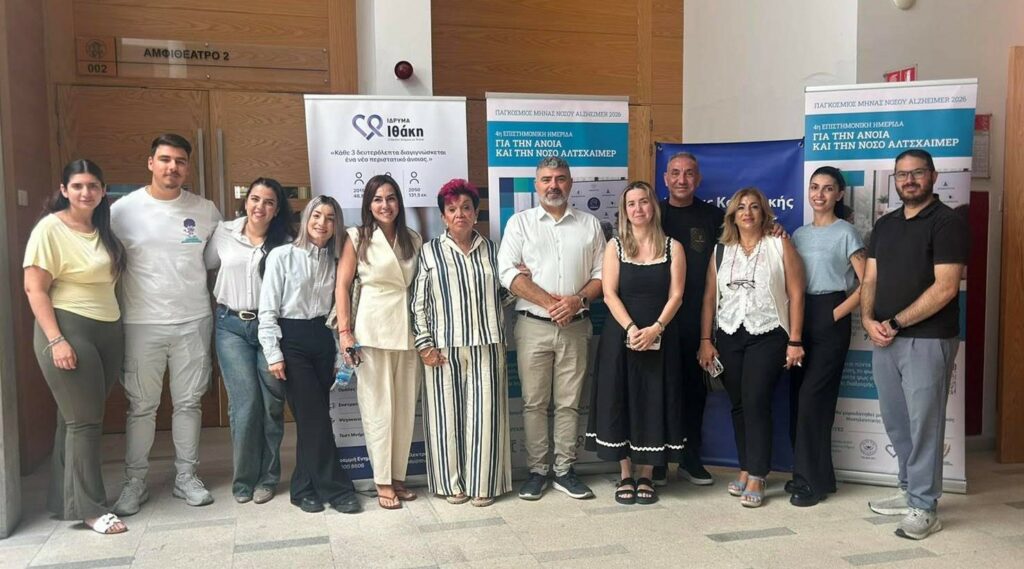 Professionals of ITHACA at a conference at CUT 10 days ago
The institution also offers services to caregivers, who are often called upon to manage a demanding and long-term reality. Psychoeducation appointments, counselling and guidance are provided, with the aim of families having the necessary information and support at every stage of the course of the disease. At the same time, "Ithaca" carries out informative events, seminars and lectures on dementia, prevention and early recognition, as well as recreational and social activities aimed at raising awareness in society and addressing stigma. As pointed out by the Foundation itself, people living with dementia maintain their personality, feelings, needs and rights and need an environment that treats them with understanding, respect and dignity." Maria Symeonidou stressed that "for families, the experience of dementia is deeply personal and Zoe Afami, president of the Limassol District Committee of the "Ithaca" Foundation, knows this reality first hand, as her mother lives with dementia and is a member of the Foundation."
As Zoe Afami said, "the disease of dementia and Alzheimer's, just to hear it seemed shocking. But seeing your loved one face this disease every day, then the perspective changes. In the place of shock comes love, patience, care for your man, for the parent who has brought you into this life. Personally, I have found a lot of help and support from "Ithaca", where my mother is a member and I have seen the difference she has made since the day she joined the "Ithaca" unit. All the staff of the Foundation embraces patients with love and, through the activities it offers, we see positive change in our people. I want to say a big thank you to the whole team for the very good work they do, for the love and care they give to our own people, but also for all the support and guidance they give to us caregivers. Without 'Ithaca', I don't know how and how quickly my mother's disease could have progressed."
Coffee mornings and joyful meetings!
As Chrystalla Kontou, president of the Alzheimer's and Related Dementias Association "Don't Forget Me" Paphos, told us, "our team provides support for people suffering from dementia in the Paphos region, through home care, borrowing equipment such as wheelchairs and actively participating in caregiver and regular member meetings.
Meetings are held regularly accompanied by morning coffee, as an important part of our work, giving the opportunity to all team members, family members, patients and caregivers to meet for a "fun chair" practice. After practice, fun follows with soft drinks, music and dancing. These coffee mornings offer a smile to all team members and the opportunity to meet with people who face the same problems, socialize, discuss and feel relief from the isolation they feel due to the disease.
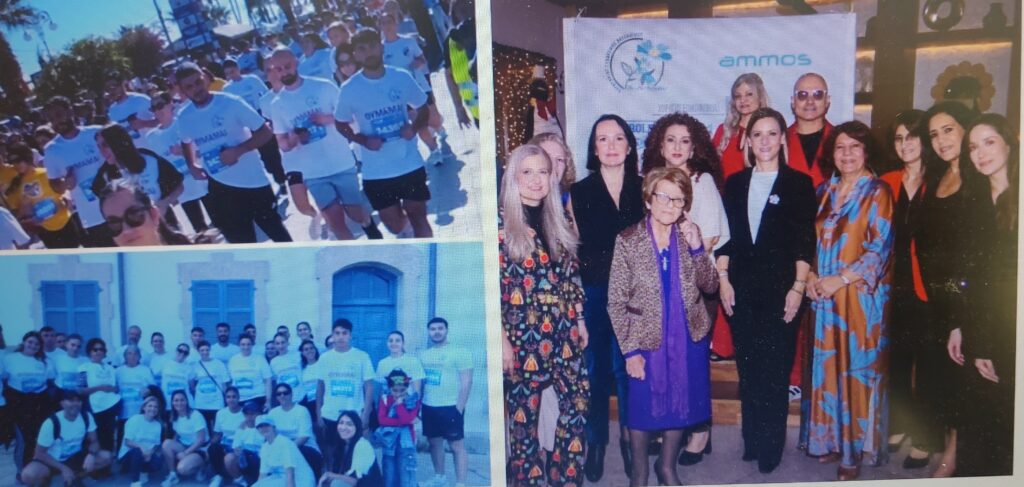 Snapshots from the actions of the Alzheimer's Association of Larnaca
In the morning meetings, phones are exchanged and even long-term friendships are formed. Our team receives significant services from dedicated professional gymnasts, two dance teachers, yoga teachers, and music entertainers, who volunteer, for the great benefit of the team members. Songs and dances have a positive effect on memory and provide pleasure to patients and their family. Caregivers relax for a while, have fun, dance and sing with their loved ones. Leaving the meetings, everyone knows that next month there will be another meeting of joy!"
