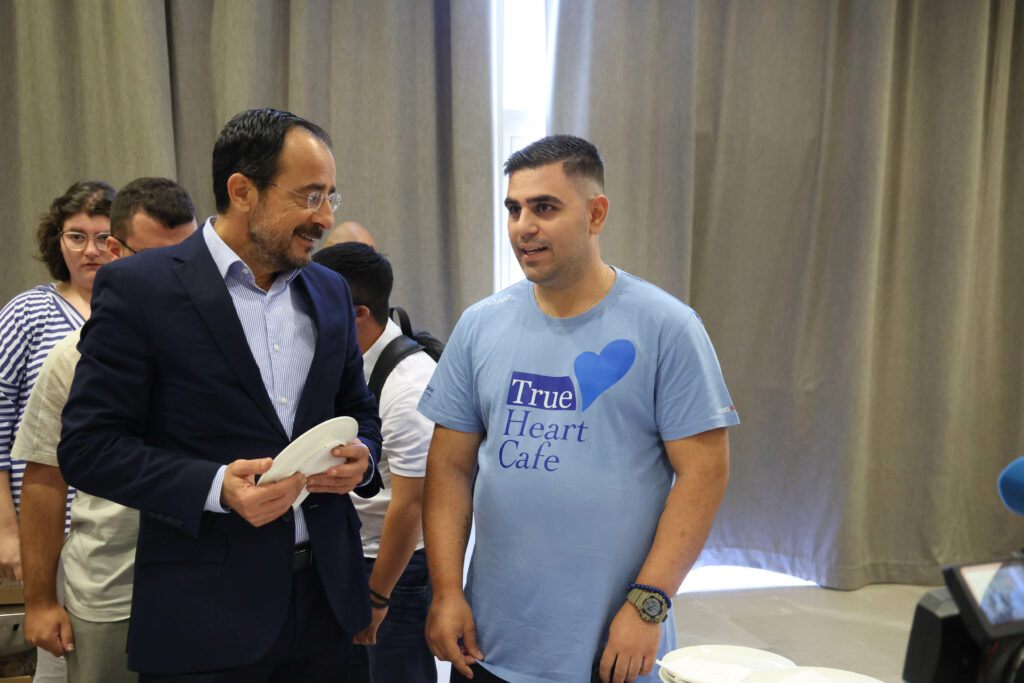
President: A new path of cooperation, trust, equal opportunities and choices is opening up where every person, every child will be able to move forward with dignity, with hope
Vocational education, training, employment and care for adults with special needs. These are the main pillars of the New Policy Framework recently presented by the President of the Republic Nikos Christodoulides. The President, acknowledging the challenges of the whole effort, stressed the spirit of cooperation and mutual disposition "for permanent and holistic choices for our children is the greatest guarantee of success in the implementation of the new Policy Framework".
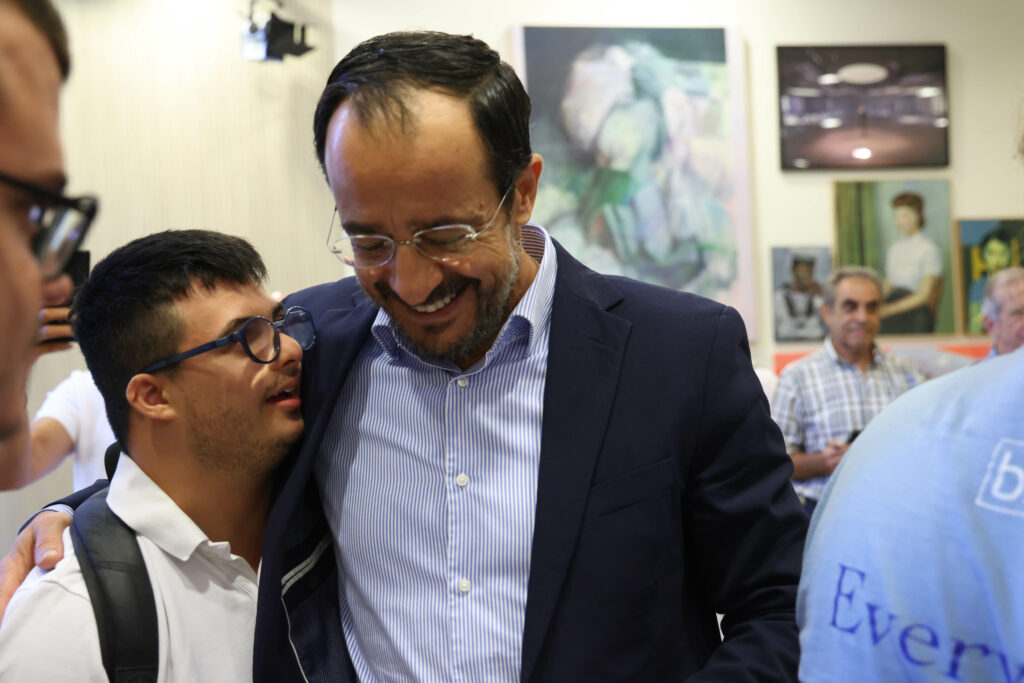
As a government, the President said, in the presentation of the new policy plan, we are sending a clear message in practice: "We see you, we hear you, we count on you, we appreciate you. And we are here to do whatever it takes, so that you can actively participate in the economic, educational, social life of the place, in every aspect of everyday life.
We believe in your capabilities. Those who have had the opportunity to see these possibilities will be surprised by the results. We believe that you have the right to plan your life like any other child in this place.
And that's the real point of inclusion. Our society becomes better when no one, but no one, is left behind. When everyone has choices and has the same opportunities.
No policy is completed on the day it is announced. In fact, on the day it is announced, another big challenge begins. The success of the new Policy and Action Plan will be measured in practice, in the value it will add to every human life. To the young person who will acquire professional skills, to the young woman who will find her first job, to our young people who will participate in a creative environment of activities and of course to the family who will feel more secure for their child's future, to the employer who will discover an excellent partner and to our society that will become more inclusive and more humane in practice. This is the measure of the success of this policy."
President Christodoulides spoke of a clear goal: "We want our young people with special needs to participate fully in our society, with equal opportunities for education, training, employment, development and social integration, with full respect for their right to choose and their dignity.
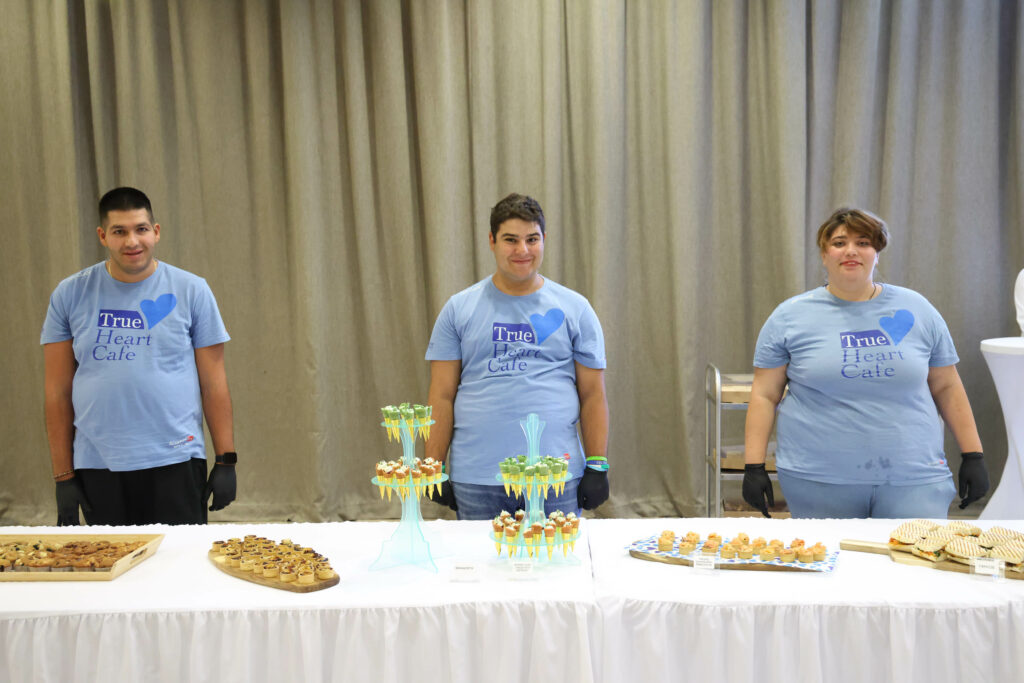
This is not just a political goal. It is a moral obligation that we have as a state.
Today, therefore, we are not closing a circle, but we are opening a new path of cooperation, trust, equal opportunities and choices. A path where every person, every child will be able to move forward with dignity, with hope and with real choices. I promise you that we will travel this road together.
Today we are essentially presenting a new, different approach to how the State, as it should, really stands by young people with disabilities who graduate from school and will transition to adult life. It is a new approach that proves in practice that as a Government we stand by the parents and families of these children, who are justifiably anxious about their future.
With the assumption of governance, we received a system with several Structures and Services for the integration of our graduates from special education, but with a critical gap that justifiably created uncertainty: The interconnection between education, training, employment and care was limited, resulting in a significant number of our graduates with disabilities, after graduating from special education, they were not included in higher education programs, nor in work, nor in Day Centers. As a result, a significant number of our children remained out of active social and economic participation with all that this entails for the children themselves and their families.
This serious void was first conveyed to us by those who experienced it: our children with special needs, but also their parents. My friend Nektarios from Paralimni, who is here with us today, was one of those children who, speaking with his heart, was the first to explain this gap to me in practice. And he explained to me that he was finishing school in a few months and he didn't know about his future, he wanted to stay in school.
In order to immediately partially address this gap, we decided last year to extend attendance at the special school until the age of 22, instead of until 21 as was the case at the time, until we find a permanent solution.
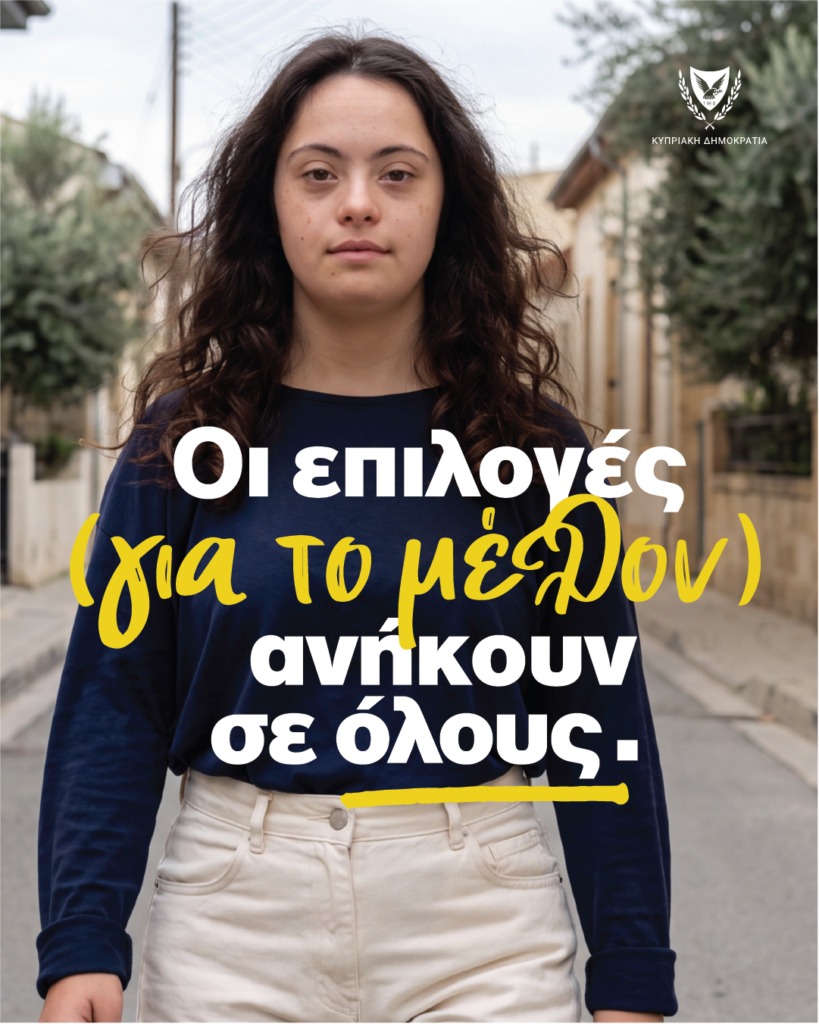
At the same time, we started the preparatory work to find a permanent solution, as we have an obligation. We worked methodically and in a coordinated manner and today - I am happy, I am very proud - we present a comprehensive and long-term policy that includes options for each of our children who finish special school."
More specifically, the new action plan states, as the President explained:
>>For those of our children who will choose to continue learning, from September this year we will offer a new Inclusion and Professional Empowerment program at the Post-Secondary Institutes of Vocational Education and Training (MIEEK) of the Ministry of Education, in all cities. These children will be given a diploma.
>>For those of our children who will choose to join productive employment in the open labor market, from September new Supported Employment Programs will operate, as well as new preparation programs for inclusion in social enterprises. We see how successful this model is.
>>For those of our children who will choose creative employment and care, we are proceeding with the upgrading and modernization of the upgrading programs and actions provided by the Day Centers.
For the first time we are offering a single system of options for our children - they have the right to choose as all children - who graduate from school. A system that does not decide for them, but gives them the opportunity to choose. As I mentioned above, the new Framework is based on three specific options.
>>>The first concerns the post-secondary vocational education and training of our children, after the age of 22.
For the first time, an organized route is being created that allows our graduates of special education to continue to develop skills and prepare for the labour market.
>>>The second concerns those children who immediately want to go to productive employment, to the open labour market.
We do not want these children to be on the margins of the economic and social life of our country. We want them to work, create, contribute, be recognised for their many skills and have equal opportunities in the open labour market.
>>The third concerns creative employment and care.
And I am referring to our children who need different forms of support and we offer them the same right to quality of life, social participation and above all to dignity.
None of the three aforementioned options is superior to the others. All three options are equal. The right choice for each child is the one that responds, individually, to each child individually.
This is exactly what our new policy serves. In personalization according to what each child chooses.
At the same time, another very important element is the fact that with the new policy, the state functions as a single whole. There are no parallel policies.
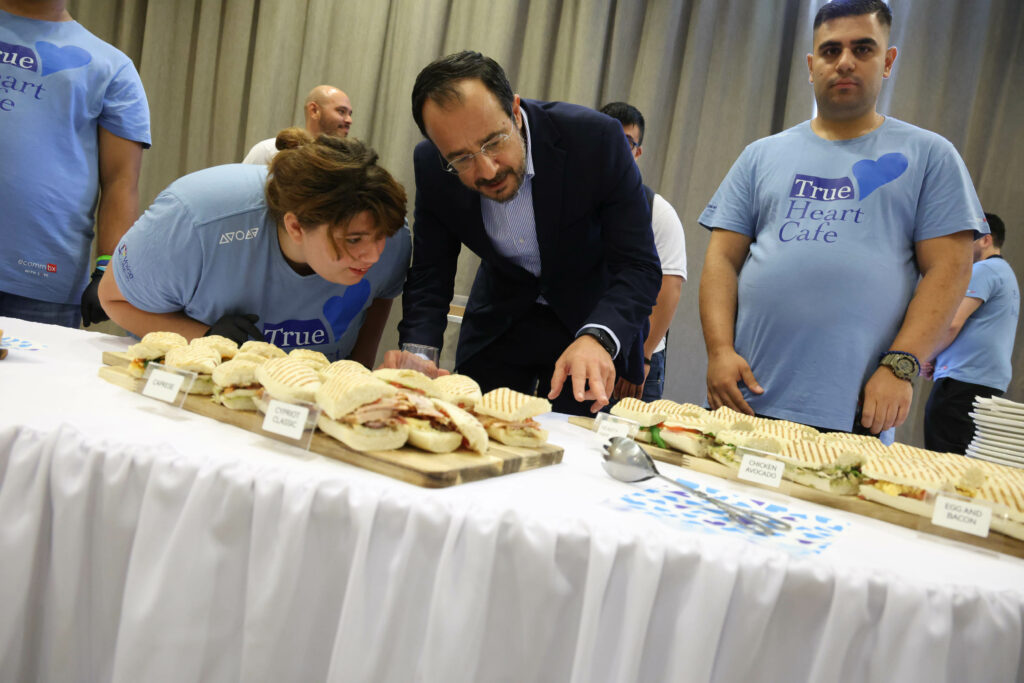
Five Ministries, together with the Deputy Minister to the President and the Deputy Minister of Social Welfare, coordinated this great effort, cooperated systematically, with a common goal and common planning."
The President of the Republic described as important the fact that with the new policy, the state functions as a whole, without parallel policies. "Five Ministries together with the Deputy Minister to the President and the Deputy Ministry of Social Welfare, who coordinated the whole effort, cooperated systematically, with a common goal and common planning, and I will dare to say, knowing what the challenges of this effort were, this spirit of cooperation and mutual willingness for permanent and holistic choices, is the greatest guarantee of success in the implementation of the new Policy Framework" he said, expressing congratulations to all those who worked to reach this result and all those who will participate in the implementation of the new actions.
He addressed special thanks to the families, parents and young people themselves, for whom the policies announced were made: "Today is first and foremost yours. As a government we send a clear message: We see you, we hear you, we count on you, we appreciate you. We believe in your capabilities. We believe that you have the right to plan your life like any other citizen. And that's the real point of inclusion. Society becomes better when no one, but no one, is left behind. When everyone has choices, and they have the same opportunities", concluded the President of the Republic.