
MOST FORMS OF VIOLENCE ALSO OCCUR BEHIND SCREENS - DANGERS AND RIGHTS IN THE AGE OF ARTIFICIAL INTELLIGENCE - Filenews 9/8 by Marios Demetriou
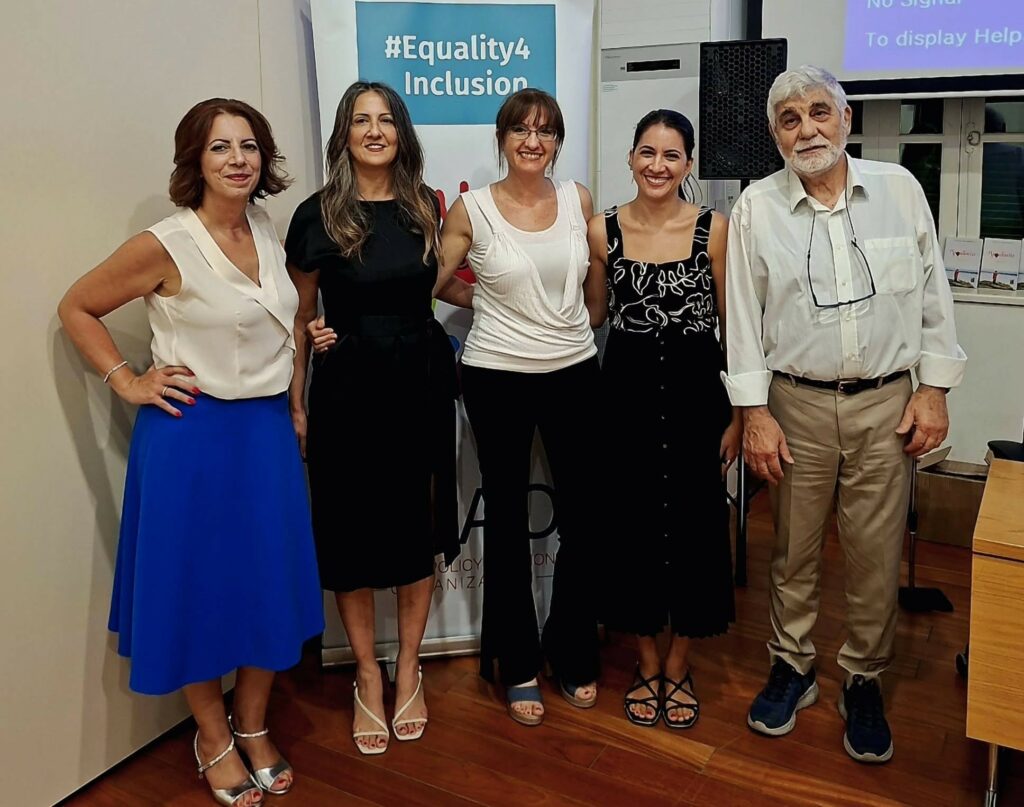
"Digital well-being is not only about technology, it is about quality of life, dignity, human rights and the ability of every human being, regardless of any specific characteristics, to participate equally in the digital society," said Ifigenia Katsi, executive and scientific director of the non-governmental Organization for Social Policy and Action.
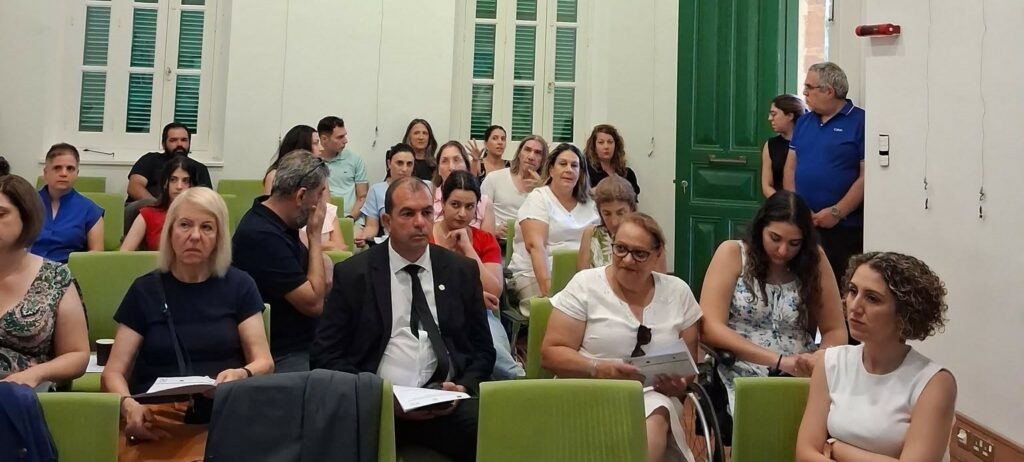
Addressing the first conference entitled "Digital well-being, equality, social inclusion and justice" that the organization held on July 28, 2026 at the Strovolos Cultural Center, she referred to the HEART project in the context of which the conference was organized, which aims, as he said, to develop an innovative comprehensive guide for the prevention and treatment of online bullying (online mobbing ).
She added that "the HEART (Health, Equity and Respect in the Team) project highlighted the effects of cyberbullying on mental health and the need to create healthy and safe digital work environments". The conference was attended by professionals (psychiatrists, psychologists, lawyers), academics, representatives of civil society organizations, but also public organizations, young people and discussed with the aim of formulating policy proposals and practical solutions for Cyprus.
The conference consisted of three themes – the first was on digital well-being and mental health, the second on safe digital spaces, and the third on digital equality, inclusion and justice. The coordinators of the topics were Vicky Agapiou and Theodora Evangelou and the conference officer was Maria Kalogirou.
Prevention from an early age
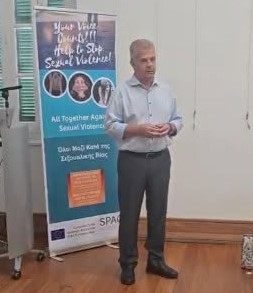
The conference was opened by the Minister of Justice and Public Order, Costas Fytiris, who, among other things, underlined that the government, in the context of the Cyprus Presidency of the Council of the European Union, "set as one of our main priorities, the prevention and combating of gender-based online violence against girls". She referred to the study by the European Institute for Gender Equality, which involved 133 girls aged 13 to 18 from ten member states, and underlined that "the findings are worrying, as online harassment, humiliation, non-consensual sharing of personal images and other forms of online violence are now part of the experience of many young people. Even more worrying - he added - is that many children are starting to consider such behaviours as something normal. That is why we need to invest more in prevention, information, digital literacy and respect from a very young age."
Toxicity, authoritarianism and psychological shielding
Speaking on the topic "Understanding workplace bullying (mobbing)", the registered counseling psychologist, psychotherapist and author Louisa Theofanous emphasized, among other things, that it has also appeared in recent years at work as cyber-bullying.
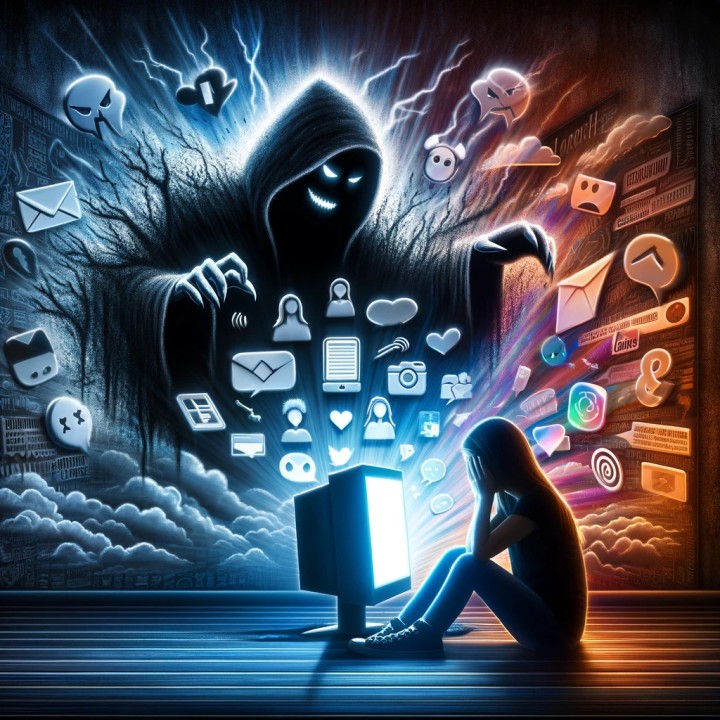
"Most if not all forms of violence - he added - now appear behind screens, named or anonymous, and bullying can also take the form of electronic surveillance and persecution (cyber-stalking). Emails, private messages, various platforms, and social media are used.
"Most if not all forms of violence - she added - now appear behind screens, named or anonymous, and bullying can also take the form of electronic surveillance and persecution (cyber-stalking). Emails, private messages, various platforms, and social media are used.
Bullying of this kind is often easier without visual/personal contact, seemingly more impersonal, especially when it is anonymous and is equally traumatic." In relation to the main causes of mobbing related to the character of the abuser, she mentioned "his authoritarian personality and his belief that he has the right to exercise violence, the limited ability to self-control and insufficient self-criticism. Sometimes – she said – addictions and/or narcissistic personality or other personality disorders coexist."
Regarding the causes of mobbing related to the work environment, Mrs. Theofanous underlined that "all or some of the above may be true, along with a toxic work environment with authoritarian management and poor organization, unclear roles and increased competition. There may also be pressure conditions with excessive workload and suffocating, unreasonable demands, as well as job insecurity. As far as supervisors and employers in particular are concerned, the end goal is often to force them to resign." Regarding the factors of victimization and the characteristics of victims in the workplace, she said that people with some diversity, people with high competence and dedication who become objects of envy of colleagues or inadequate supervisors who feel threatened are usually targeted, and finally people with a timid, submissive character, with difficulty in setting boundaries."
In his own statement on the effects of cyberbullying on mental health and therapeutic interventions, psychiatrist Dr. Savvas Neocleous sent the message that "the protection of mental health is not a technical process, it is an act of self-respect, it is the decision not to let fear define our identity". He added: "Cyberbullying can be persistent, but human resilience runs deeper. And when people are supported, informed and connected, then the digital world cannot become a threat, it simply becomes a space that we learn to manage with strength and awareness.
The search for healing is not a sign of weakness, but an act of self-care. When a person experiences cyberbullying, they don't have to deal with it alone. Seeking help early can prevent serious psychological consequences and contribute to the full recovery of his mental health and professional life." In relation to the prevention of cyberbullying, he said that "security is built on three levels, namely with psychological shielding, with practical protection in the digital space (with the storage of evidence, blocking accounts, reporting to platforms, informing competent bodies) and with social connection with friends, family, mental health professionals, which creates a network of protection that dramatically reduces the effects."
Digital Charter of Rights
In the context of the second theme of the conference, AKEL-Left-Social Alliance MP Dr. Anastasia Hasikou, Deputy Chair of the Parliamentary Committee on Human Rights, presented the Parliament's initiative for the formulation of a Digital Rights Charter in Cyprus. She said that "the next steps of the Parliament to this end are to capture the views of all stakeholders, to identify the gaps in the existing framework, to formulate common principles for a national strategy, to conclude the adoption of a Cyprus Digital Rights Charter, inspired by European best practices, but adapted to the needs of Cyprus. How we regulate the digital transition, protect personal data, ensure the transparency of algorithms and strengthen digital literacy, will determine the quality of our democracy in the years to come."
Risks and Rights in the Age of Artificial Intelligence
''The protection of human rights in the age of Artificial Intelligence (AI)" was the topic of the position of Angelica Solomonidou, lawyer and legal advisor, external legal expert at the AI Act Service Desk which is a support service of the European Commission providing guidance on the implementation of the European Artificial Intelligence Act (EU AI Act).
Ms. Solomonidou clarified that she presents her personal legal opinion and interpretation, which is not an official position of the European Commission. She first presented examples of how AI affects human rights and then spoke about the Artificial Intelligence Act (AI Act) in the European Union. It said that this legislation "takes seriously the risks arising from the use of AI systems and makes efforts to protect human rights".
She added that the AI Act "does not apply to all AI systems, but to general-purpose AI systems and models". She also referred to prohibited practices, such as "AI systems that develop subliminal techniques beyond a person's consciousness or deliberately manipulative or deceptive techniques, such as the substantial distortion of a person's behaviour and the reduction of their ability to make informed decisions". A prohibited practice is also "AI systems that exploit any of the vulnerabilities of a natural person or a specific group of persons due to their age, disability or a particular social or economic situation, since the material distortion of the behaviour of the person belonging to that group is likely to cause significant harm to that person or to another person". She referred to the Infringement Reporting Mechanism and "the right of any natural or legal person who has reason to believe that a provision of the AI Act has been violated, to lodge a complaint with the relevant market surveillance authority".
*It is noted that in the context of the 2nd theme of the conference, the counselling psychologist and trainer Haris Charalambous presented the topic entitled "Facing the "monster" of cyberbullying: lessons from a personal experience".
"When technology learns from the choices we made in the past, can it lead us to a fairer future? Or will it make our old prejudices faster, more effective, and much harder to detect?" This question was posed by the consultant, trainer and researcher Anna Prodromou speaking on the topic of ethical Artificial Intelligence.
"This - she said - is not a speech against Artificial Intelligence, on the contrary, I believe deeply in its potential. AI can make information accessible, convert speech into text and text into voice, describe an image to someone who can't see it, simplify a difficult text, translate, tailor an educational experience to the needs of different people, and even help us identify inequalities that an organization has learned to consider normal. AI can become one of the most powerful tools of inclusion, as long as we design and use it responsibly. Because AI ethics is not just a technological issue, it is a matter of leadership, culture, governance and organizational responsibility.
Organizations must first know where AI is already being used.
Second, consider not only whether a tool works, but also who it works for.
Third, organizations need training and guidance. Not just technical training on how to write a good prompt.
People who can recognize bias and understand the consequences of an automated decision are needed. We need leaders who do not see ethics as an obstacle to innovation, but as a prerequisite for sustainable and reliable innovation."
Online Teen Experiences in Cyprus
"The negative online experiences of adolescents in Cyprus are not universal, but they are real and often difficult to identify," said Panagiota Polykarpou, director and co-founder of the Be an Ally Foundation, speaking on the topic of gender equality and the digital world in adolescence, mapping attitudes and challenges in Cyprus.
"Parents and teachers – he added – try to intervene, but often do not have the vocabulary, the tools or the full picture of the digital world of young people. So prevention must change. "Internet safety is not enough", digital literacy and education are needed on issues of gender equality, consent, critical thinking and the ability to react and seek help."
Ms. Polykarpou referred to ReclaimTheFeed, a project implemented by the Be an Ally Foundation and concerns the use of social networks by teenagers (13-18 years old) in Cyprus. "We want - he said - to explore questions such as:
- How do teenagers use social media in their daily lives?
- What kind of pressures or stereotypes appear online related to gender and equality issues?
- How can we create safer and more inclusive digital spaces?"
He said, among other things, that "girls are more exposed to content around image, lifestyle and social norms, while boys are more exposed to gaming and entertainment content. Both groups encounter messages that can reinforce limiting perceptions of gender, appearance, and behaviour. The digital life of teenagers is not gender-neutral. Social media is a key space for socialization, identity, information and integration. The general acceptance of equality does not mean that stereotypes have been deconstructed. Boys and girls experience different, but parallel pressures: girls in relation to appearance, body, social acceptance, sexualization and boys in relation to strength, success, fitness and hierarchical standards of masculinity."
