
KONSTANTINOS MAKRIS - THE INCREASE IN CHILDHOOD CANCER IN THE LAST 10 YEARS IN OUR COUNTRY IS WORRYING - IT IS IMPERATIVE TO INVESTIGATE THE CAUSES - Filenews 9/8 by Xania Turki
The increase in new cases of childhood cancer in Cyprus in the last decade rings a resounding alarm bell. At a time when a similar trend is not recorded in other European countries, the data of the International Agency for Research on Cancer of the World Health Organization (IARC-WHO) bring our island face to face with a critical question: why are more and more children and adolescents up to the age of 19 developing cancer?
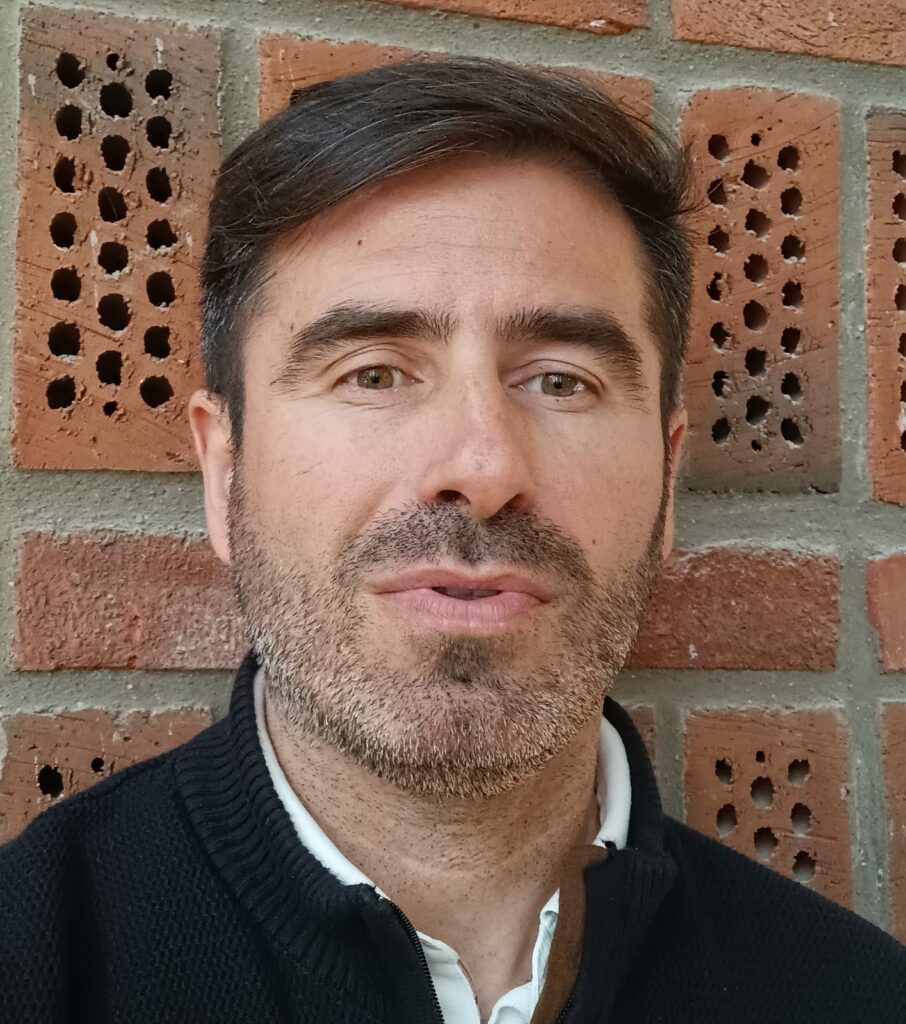
Speaking to Fileleftheros, Konstantinos Makris, Professor of Environmental Health, Laboratory of Exposure and Personalized Health and Director of the Cyprus International Institute for Environmental and Public Health at the Cyprus University of Technology, pointed out that the increase in new cases is of great concern, however the reasons behind the increasing trend remain unknown.
The interest, as he explains, turns to the interest in the "exposure" of the child: that is, in all the environmental factors, habits and exposures that affect his life from conception. The air we breathe, the water we drink, diet, sedentary lifestyle, radiation and contact with chemicals such as pesticides may interact and contribute to carcinogenesis. Without sufficient and systematic data, however, the scientific community continues to walk blindly. "Without these data, there is no substantial primary prevention in the Cypriot child population and we do not know what the root of the evil is to hit it."
Therefore, immediate measures must be taken and Konstantinos Makris insists on the creation of observatories for the health and exposure of children, in order to identify the factors associated with the occurrence of the disease and to plan essential primary prevention. He warns, in fact, that Cyprus has failed to date in this area and calls on the state to change course, investing not only in treatment, but also in the search for the causes that make our children sick.
- In a recent article you talk about unpleasant data about childhood cancer. Let's talk about the IARC-WHO study from which you drew information.
-This is not the first time that IARC-WHO has carried out such a study, it has been carried out systematically in recent years. All types of cancers are mapped and how they are distributed around the world, by country, by population, if there are temporal trends of change, by age group and by gender. On the basis of this analysis we have data on what is happening in each country. For Cyprus, the Cancer Registry collects all the data on new cases and deaths and sends them to IARC-WHO. What has been observed in Cyprus in recent years is that there has been a stabilization in the number of deaths with cancer as the main cause in both children and adults. We would, however, like to see a decrease taking into account that knowledge and new services have increased at the diagnostic level and of course at the therapeutic level. On the other hand, the fact that there is no increase in deaths is a positive thing, considering that new cases have increased. Especially in childhood cancer, however, we see that there is an increase in new cases, and this is particularly worrying.
- Does this increase concern specific areas or Cyprus as a whole?
-Unfortunately, we cannot know this because the data given to the World Health Organization are for the entire territory of Cyprus. Possibly, if someone asks for these numbers from the Ministry of Health, they will be able to draw such conclusions.
- Do we know, which forms of cancer seem to occur most often?
-For childhood cancer we are talking about leukaemia, non-Hodgkin's lymphoma and cancer of the brain/central nervous system). It is usually one of the most common types of childhood cancer (0-19 years). I will insist, however, on the fact that in the last ten years, instead of there has been a stabilization in the number of new cases, an increase has been recorded.
- What is particularly worrying is that the upward trend is not observed to the same extent in other European countries. How do you interpret this difference?
-This is a particularly aggravating element. It is a bell that we must pay great attention to. The increase concerns the last ten years and is something relatively recent. Possibly, it is due to a combination of factors, which we cannot identify, we are walking blindly at this stage. These factors interact with each other with the daily life of the child as well as their family, causing and developing this excessive neoplasia of cancer cells, i.e. carcinogenesis. Perhaps, it is some new factors combined with some old ones.
- What are the classic factors? And who could the young people be?
– Classic factors are all kinds of radiation, obesity, poor diet, some chemicals such as pesticides. The new factors obviously have to do with the child's environment, because genes cannot change in ten or twenty years to be responsible for them. Therefore, we must look for them in the child's daily life. There are many speculations, but we need to move away from speculation and move forward with data.
- And how can this be done?
-To get away from speculation, we must start looking for possible causes of carcinogenesis and this will be done in an epidemiologically, scientifically correct way. We need special data to look for the environment of the child's daily life such as the water he drinks, the air he breathes, the foods he consumes, what kind of lifestyle he and his family have. After all, the process of carcinogenesis in childhood is likely to start even from the conception of the fetus. All these years, from pregnancy to the age when a child is unfortunately diagnosed with some type of cancer, it is very important to monitor what lifestyle he leads, what his daily life is, what kind of factors he is exposed to whether they are chemical, e.g. pesticides, natural e.g. climate, or biological such as some germs. We need to take a thorough look at the child's daily life, which is now scientifically called the "exposure" of the child, i.e. all his choices and behaviours that determine a person's life from the moment he is conceived in his mother's womb until his death.
- Is there a relationship between exposure and genome?
-The exposure comes in proportion and in correspondence with the genome. If you remember in 2000 when the genome was discovered, scientists said that the time was coming when all chronic diseases would be cured, because all human genes were mapped. But, almost thirty years later, we haven't gotten there. Not only have we not reduced the new cases, but we also see in some countries such as Cyprus that they are increasing. Perhaps we should change course and we should study the primary prevention of childhood cancer more seriously. Childhood cancer in many cases is curable, of course, but perhaps we should give more weight to prevention and in this we need the assistance of the entire Cypriot society so that we can start systematically studying the daily life of our children. This is how prevention works. If we want to understand the root of the evil and do not spend ourselves on therapeutic protocols, which are very important, but we have them when something has already happened, if we want to find out why some children are sick and some others fortunately do not, we must investigate the environment and the daily life of children.
We have failed on the issue of primary prevention for children
- What are the effects of the lack of production and collection of relevant data, especially on young populations in Cyprus regarding cancer?
-It is precisely the lack of health and environmental data of children that does not allow us to understand what is the reason for the increase in cases. I will come back to the subject and say that so-called observatories should be made which will collect data from very early in a person's life, so that in a few years we will know which people developed cancer, and which did not. In this way, we will then be able to compare the exposure of children who got sick and those who didn't. Without these data, there is no substantial primary prevention in the Cypriot child population and we do not know what the root of the evil is to hit it. Therefore, I would say that we have failed on the issue of primary prevention for children. It is a failure, especially when we see that new cases are increasing. That is why we need to change course and take the issue very seriously. Because as we proceed now, I do not believe that we are in a position to reduce or stabilize the new incidents in the coming years.
- Therefore, more information will allow us to proceed with the fight against it.
– Exactly, that is why I currently liken the exhibition to a black box. There is no other way to be able to discover from the many possible incriminating factors of carcinogenesis what is really true in the case of Cyprus. Of course, maintaining confidentiality, protection of personal data, security with the sole aim of what exactly it is that makes our children sick. The educational programs that recommend to citizens, for example, that we should exercise, watch our weight, but we also need children's health observatories to collect data that will be used by decision-makers. Indicatively, diet, sedentary lifestyle, long hours in front of screens, chemicals, and all the factors of exposure must be looked at cumulatively and together to better understand the chances a child has to develop cancer. We can't go piecemeal and say, it's the air's fault, it's something else's fault. Cancer is a multifactorial disease and this is how we should study it. The scientific tools of human exposure now exist to achieve this.
- In this way, so we will see a difference?
-Yes, with the collection of data, the black box of the exhibition will begin to be illuminated, with data that we will use not only for the children of today but also for the children of the future. Cyprus has a high level of education, and a good standard of living. It is indeed a great pity that it does not give the necessary importance to prevention for future generations. We need to stop thinking about development only in economic terms and start thinking about what makes a family smile and be happy, what gives it a quality of life and a satisfactory level of well-being. This means that we are starting to take health issues, social health issues very seriously. These, as it is understood, are new concepts and practices and politicians must realize their importance, make the necessary investments and together with health professionals begin their implementation. This will not happen overnight.
- Do you see some efforts being made for better data collection or are we not even there?
– There is an initiative of the Health Monitoring Unit in the works. It is a bill that is now being discussed by the Parliament and Cypriot society and this is a very good effort to be able to observe more systematically and collect health data for everyone. When this initiative is institutionalized, we will have a good record of the various diseases and the health status of the healthy population. In addition, however, we also need these observatories of children's exposure in order to be able to stop the increase in childhood cancer, but also in other carcinogenicity factors, such as childhood obesity.
