
"Older people must be recognized as equal bearers of rights, whose autonomy, self-activity and dignity require clear legal guarantees," said the executive president of the Cyprus Observatory for the Elderly, Dimos Antoniou, speaking last Tuesday (14/7) at the 1st Session of the UN Intergovernmental Working Group on Older People ('Intergovernmental Working Group on Older Persons') held in Geneva, Switzerland, 13-17 July 2026.
In addition to Mr. Antoniou, the senior officer of the Cyprus Observatory for the Elderly, Maria Peter, participated in the Cypriot delegation. Representing Cyprus in this global consultation, we conveyed the voice and challenges of Cypriot society, actively contributing to the co-shaping of global policies and joining forces with international bodies, claiming a better tomorrow", Mr. Antoniou told "F". "As an Observatory," he added, "together with other organizations from around the world, we want the law-convention that the UN is now preparing to be enacted, which will determine what rights the elderly have and how countries should act to protect these rights, in order to improve the lives of older people." We note that the Cyprus Observatory for the Elderly is a non-profit, non-profit and non-governmental organization based in Limassol that has been operating and offering for the last ten years.
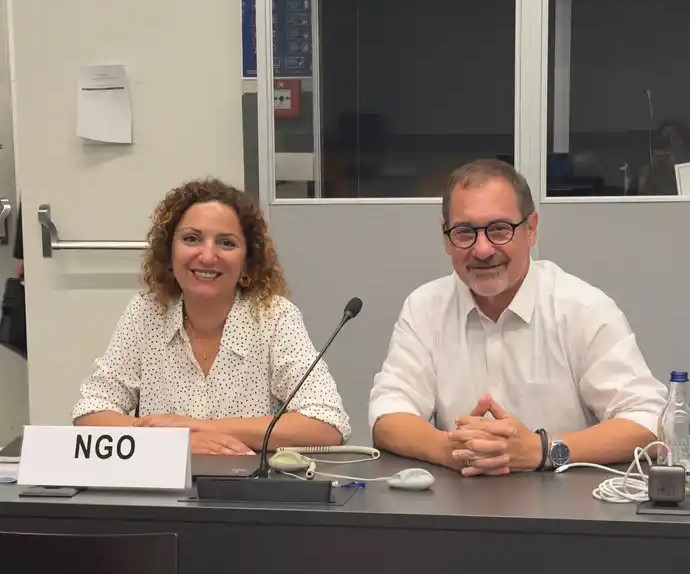
In binding obligations
"We support and align ourselves with the GAROP (Global Alliance For the Rights of Older People) statement," Dimos Antoniou said from the podium of the summit in Geneva and added: "This Intergovernmental Working Group exists today because for decades states have failed to recognize older people as holders of rights. This failure had serious consequences, including preventable poverty, deaths that could have been avoided, and daily humiliation for many older people. It is time for states to stop relying on inadequate agreements and piecemeal protection measures. They must commit resolutely to establishing a strong convention on the human rights of older people, not only for those who are already at an advanced age, but also for future generations."
As the president of the Cyprus Observatory for the Elderly underlined in his speech, "for years now, ageism has been a structural factor of violations against older people and is manifested in laws, policies, institutions, and even in our language regarding aging. However, many states have tolerated it as an acceptable form of prejudice. Member States have already developed sophisticated human rights architectures for many groups, and this process now offers a unique opportunity to bring the same level of ambition and regulatory clarity to the elderly. And this can only be done by moving beyond policy declarations and action plans towards strong, binding commitments that decisively address ageism and the systemic barriers that create situations of vulnerability and exclusion in older people."
No to a "toothless" contract
Dimos Antoniou pointed out that "states can no longer invoke ignorance and added: "Data from UN bodies, national institutions, civil society and older people themselves, highlight critical gaps: lack of protection due to age in non-discrimination clauses, inadequate safeguards against violence in care settings, inadequate standards of long-term care, exclusion from digitalisation and artificial intelligence, inaccessible justice and complaint mechanisms, and social protection systems that leave many insecure in old age. This first summit must therefore be a turning point.
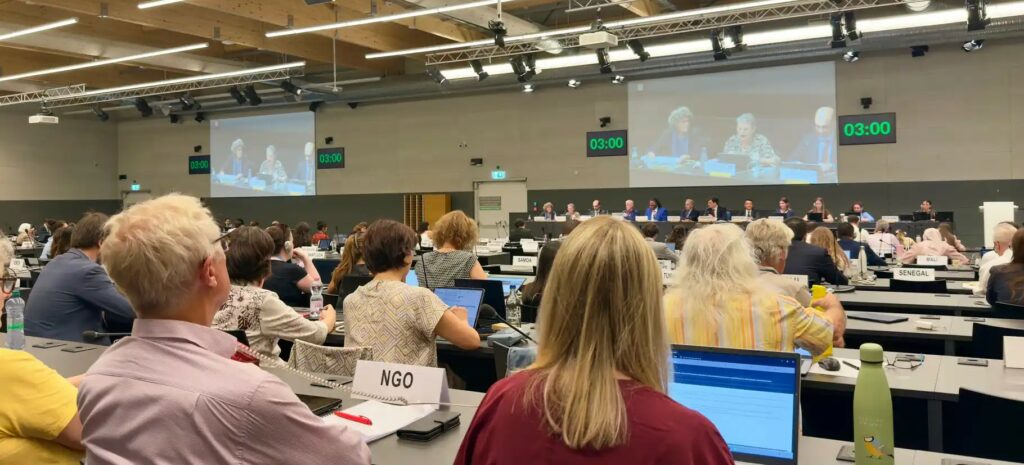
The question is no longer whether a convention is needed, the question is whether states are willing to accept real obligations, with real monitoring and real consequences. A "toothless" convention is a watered-down text that restates existing rights, without clarifying their application to the elderly, avoids ageism and bypasses long-term care, digital rights, emergencies and access to justice. A "toothless" contract would be yet another act of neglect, dressed in the cloak of progress."
Why do we need a new law?
The president of the Cyprus Observatory for the Elderly told us that two main issues were discussed at the Geneva summit:
>Firstly, why do we need a new law on the rights of older people?
>Secondly, how should this new law be and how should it be implemented in order to improve the situation for the elderly around the world?
As for the first question, we answer that the elderly should enjoy the same rights and the same opportunities in life as everyone else. Unfortunately, however, they often face discrimination, are often treated unfairly or excluded from many things in life, because of their age and unfortunately this phenomenon is evident. That is why the World Health Organization shows that 1 in 6 people over the age of 65 has been abused. For example, older people may not receive the support they need to live independently and make their own choices in life, and they may be fired from their jobs simply because they are getting older. Countries may also not take into account the needs and rights of older people when making laws and making decisions. In dangerous situations, such as wars, floods and earthquakes, the elderly may be left behind. Also, some people may be treated unfairly early in life, i.e. when they are still young and then the impact of this unfavourable situation is even greater, as they get older. We need a law that clearly defines what rights older people have and how countries should act to protect those rights. We need a strong UN Convention on the Rights of Older People."
What will the new contract include?
On the second question about what the UN Convention should look like, Mr. Antoniou told us: "We want the UN to listen to our ideas and enact a strong law that will make a real difference in the lives of older people around the world.
Among other things, this new law should explain in detail all the rights that older people have, make use of any good laws that already exist and never take away rights that older people already have, take into account the problems that lead them to isolation, take measures to combat age discrimination, recognise that older people should have the same rights and opportunities in life as everyone else, take into account their daily experiences of being treated unfairly and excluded.
The new law should also recognise their right to enjoy life, to make their own choices and to participate in society. The increased risk faced by older people in certain situations should be taken into account and protected, all forms of discrimination against them should be recognised and it should be ensured that they can make a complaint, if they feel they are being treated unfairly because of their age."
The "musts" of the UN Convention on the Obligations of the Elderly
Dimos Antoniou also stressed that "the UN Convention should clearly explain what obligations countries have regarding the rights of older people. Among other things, countries should be audited for the work they do to implement this law, and older people and their organisations should be involved in these audits. States must protect their rights and help them live well. They must also ensure that everyone else respects the rights of older people and treats them with respect as well. States must involve older people and their organisations in all decisions concerning their lives, they must take into account their rights in all new laws and the plans they draw up, and they must also amend any existing laws that contravene the rights of older people. Finally, states should organize campaigns to raise awareness about the problems that lead to the exclusion of older people and promote their rights, and also to conduct studies and collect useful information about them."
The report on abuse and discrimination
The president of the organization referred to the report of the Cyprus Observatory for the Elderly, which records and documents the hard daily life of many older people in our country, speaking to "F". The report concerns, as he told us, "the abuse, neglect, economic exploitation and obvious ageism in Cyprus. The responsibility – he added – is collective and must be assumed by everyone. The state must create protection and early intervention mechanisms, services must have adequacy, training and coordination, society must not "turn a blind eye" and families must seek help in time and not let the burnout of the caregiver turn into a danger for the elderly. In this context, we have publicly called for the development of mechanisms against violence and mistreatment of older people and the institutional shielding of their protection. The Observatory reminds daily that there are forms of abuse that do not leave obvious signs, such as neglect, indifference, psychological violence and isolation and systematically calls for an awakening, because it is not a private issue, but an institutional and social problem that is often covered up or not recorded. The mistreatment of the elderly in Cyprus is a painful reality that should not be silenced."
Education and bridging the generation gap
Describing intergenerational cohesion as "the backbone of fairer and more sustainable societies", the president of the Observatory recalled his specific proposals to the Minister of Education, with the aim of combating age discrimination through education. "Our proposals - he said - include a comprehensive framework, such as the inclusion and strengthening of thematic age discrimination in the school curriculum with experiential actions, training of teachers for age awareness and intergenerational cooperation, the promotion of intergenerational learning with mentoring programs, joint projects of students and the elderly and school events with the participation of people of all ages, revision of educational material so that to avoid negative stereotypes, digital empowerment programs for the elderly with the participation of younger people in the teaching of basic skills, the creation of digital collaboration platforms that unite generations in common cultural and educational projects".
The truths that hurt us...
We remind you that the "Stella Soulioti" Human Rights Award for 2025 was awarded to the Cyprus Observatory for the Elderly at an honorary event on December 17, 2025. The award was given to the Ministry of Foreign Affairs, which established this annual award for the last five years to honour individuals and organizations that have distinguished themselves for their contribution to the protection of human rights in our country. In his greeting at the event on behalf of the Observatory, the Municipality of Antoniou said, among other things: "Ten years ago we started with a simple but imperative observation: that many elderly people, while they have given everything – family, work, effort, values – often, even today, end up feeling invisible and often are invisible. Loneliness, exclusion, age discrimination, fear, neglect, abuse, economic exploitation. These are truths that hurt us as a society and realities that are not easily told, but... exist...".
