
The new amending legislation on Renewable Energy Sources (RES) published on May 8, 2026, drastically changes the scene of the licensing of commercial projects in Cyprus. After an intense political background, the "On the Promotion and Encouragement of the Use of Renewable Energy Sources (Amendment) (No. 2) Law of 2026" (Law 114(I)/2026) was officially published in the Official Gazette of the Republic, putting into force strict restrictions.
Asked about this by "F", the Director of the Department of Urban Planning and Housing referred to the next steps, but also the impact on the existing procedures.
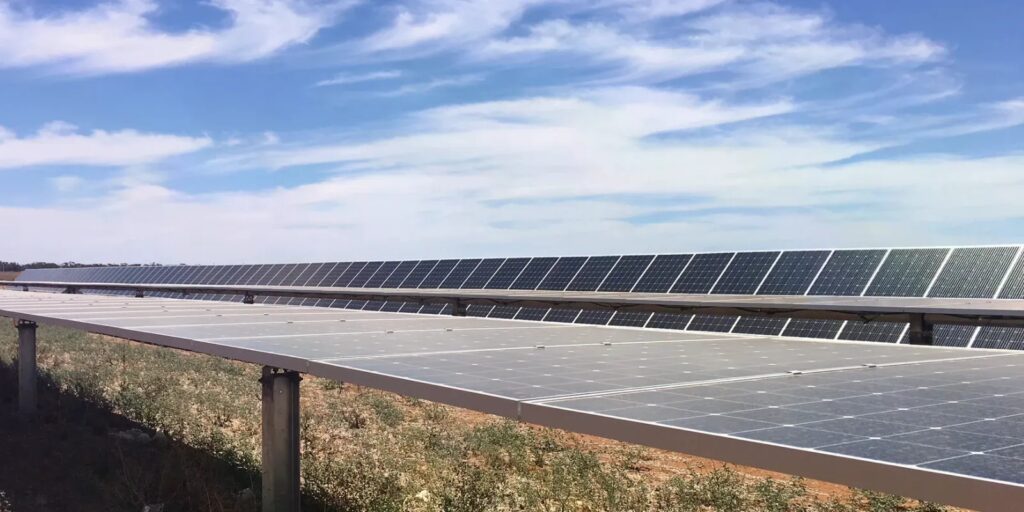
According to official data, a total of 145 applications for planning permission for RES projects are pending. At the moment, both the Director of the Department and the relevant District Local Government Organizations (EOA), as the competent Urban Planning Authorities for projects with a capacity of up to 3MW, are carrying out thorough checks on all pending applications.
These checks are carried out regardless of whether the applications have already secured a positive Environmental Opinion. If it appears that the proposed plots fall within the restricted zones, the applications will be automatically rejected, as the new law prevails over the previous opinions.
The new legislation introduces a horizontal, strict ban on the installation of RES installations for commercial purposes within agricultural land belonging to specific categories. More specifically, it is forbidden to siting in:
• Fertile and/or permanently irrigated land, as characterized after examination by the Department of Agriculture.
• Land that falls under irrigated, dry or mixed land consolidation, as well as in areas irrigated by government projects.
• Land within an Urban Protection Zone, as defined in the Development Plans.
• Land within Natura 2000 areas for nature protection and management or within Special Protection Areas for wild birds and game.
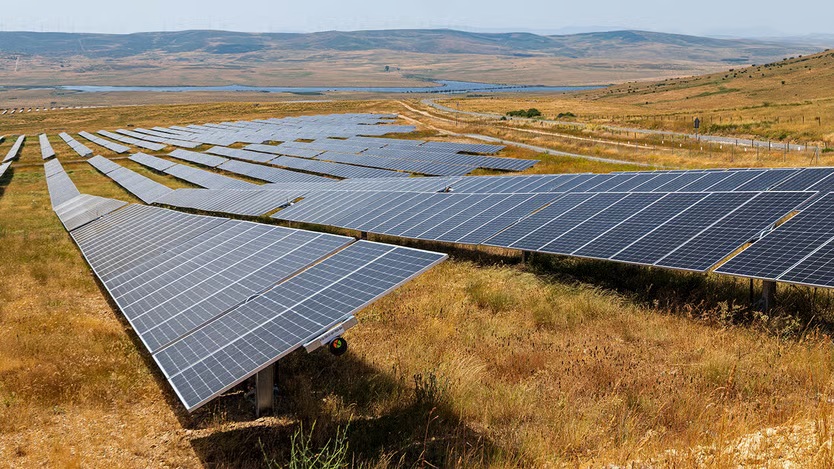
Projects outside agricultural land are excluded, as the legislation only affects rural and protected areas.
Also, professional farmers and livestock breeders, who reserve the right to install photovoltaic systems for their own needs (e.g. operation of boreholes or agricultural warehouses), are completely excluded.
As an alternative way out for applications concerning agricultural land, their modification into agrovoltaic parks is preferred. In these cases, dual use is allowed, i.e. the production of energy through raised frames while maintaining the crop in the ground.
This law essentially prohibits the installation of renewable energy installations for commercial purposes on agricultural land, without affecting the possibility of installing photovoltaic systems for the benefit of the agricultural and livestock sector.
It is noted that the Government had submitted its reservations, which, however, were not accepted by the Plenary Session of the Parliament. It is also stated that as far as paragraph (c) of the subsection (3) is concerned, the Protection Zones are determined on the basis of heterogeneous factors and include areas of forests, protected mineral resources, motorway protection zones, etc. Indicatively, it is stated that, e.g. the Protection Zone Z1 is a Mild Protection Zone, and includes large areas of land that are not necessarily related to the agricultural sector, as referred to in paragraph 3, nor with the protection of the natural environment, without further ado. Similarly, the reference to land located within the Natura 2000 network, or to a special protection area, does not refer in an absolute and/or unequivocal manner to parcels of zero growth potential or to land that is necessarily 'agricultural land', in the spirit of the provisions proposed in the Referenced Law. Therefore, there is also a risk that the proposed provisions will clash with already applicable provisions, which at the same time, as more specific provisions, also claim their validity and application.
It is noted that the Republic together with the other Member States collectively ensure that the share of energy from renewable sources in the Union's gross final energy consumption amounts to at least 32% for the year 2030 or to any other share determined by the Union.
The share of energy from renewable sources in the gross final energy consumption in the Republic from January 1, 2021 onwards is not less than 13%.
The Council of Ministers, following a proposal by the Minister of Energy, takes all necessary measures to ensure that the basic reference share of 13% is achieved.
The rejection of the referral back
The passage of the law went through troubles. On April 16, 2026, the President of the Republic exercised his constitutional right under Article 51.1 and proceeded to refer back the law, which had initially been passed on March 26, 2026 following a law proposal by AKEL.
However, on 23 April 2026, the Plenary Session of the Parliament rejected the referral of the President, refusing to accept the objections of the executive branch. At that time, the chairman of the Parliamentary Committee on Agriculture, Giannakis Gabriel, welcomed the decision, stressing that the Parliament put a "brake on impunity" and called on the government to listen to the society that asks for the protection of fertile land.
In his multi-page letter, the President of the Republic presented a series of legal, constitutional and practical arguments, asking the legislature not to stick to its decision. The main reasons were:
1. Violation of the separation of powers: The President argued that the formulation of urban planning and energy policy belongs exclusively to the Executive Power. Citing rich case law of the Supreme Court, he stressed that the Parliament interfered unorthodoxly in the work of the government.
2. Legal Ambiguity and Legal Uncertainty: It was noted that the law does not include clear definitions of key concepts. For example, there is no precise definition of what constitutes "fertile land", which will be judged on a case-by-case basis by the Department of Agriculture, nor what constitutes "establishment for commercial purposes", creating risks of confusion even for self-consumption systems.
3. Risk to national energy targets: The basic law is a harmonizing tool with European directives. The executive has expressed fears that horizontal restrictions will shrink the available land for renewables, jeopardizing Cyprus' binding 2030 targets, as set out in the National Energy and Climate Plan (NECP).
4. Circumvention of urban planning legislation: The government emphasized that zoning issues are already regulated in detail and with the necessary flexibility through Order 1/2024 of the Minister of the Interior. The introduction of urban planning restrictions in another law deprives citizens of the right to submit objections and overturns a tried and tested process.
5. Restriction of the right to property: Reservations were raised about the compatibility of the law with Article 23 of the Constitution, as restrictions on property are introduced without adequately explaining the observance of the principle of proportionality.
