
Public shaming no longer needs a square. All it takes is a post, a photo, a name and a few lines of accusatory speech to put a person before an informal digital court. In most cases, without proof, without the possibility of an immediate answer and without restoring the truth if the allegations are false.
In Cyprus of 2026, the balance between freedom of speech and the protection of human dignity is being tested daily on social media. People's courts are set up in a matter of minutes, often with irreparable consequences for the people who are targeted each time.
Legally, the framework in Cyprus allows for certain restrictions on freedom of expression to protect the reputation or rights of others. In practice, however, the mechanism that will monitor digital activity and detect violations is absent so that they can be brought to justice.
At the same time, even if the victim is vindicated in court, the damage may already have been done. That is why the development of critical thinking among citizens is becoming an imperative, in order to distinguish criticism, which is beneficial to democracy, from the deliberate attempt to exterminate persons with foreign motives.
On the legal aspect of the issue in Cyprus, lawyer Elias Stefanou takes a position in Sunday's "F". For his part, psychiatrist Dr. George Mikellidis approaches the issue in its psychiatric dimension and explains how the ability to filter information is not only an element of critical thinking, but also a factor in protecting mental health.
The legal framework in Cyprus
In Cyprus, freedom of expression is enshrined in Article 19 of the Constitution. Everyone has the right to freedom of speech and expression in any way. This right includes freedom of opinion, as well as the freedom to receive and impart information and ideas without interference by any public authority and regardless of borders.
The exercise of the rights provided for in paragraphs 1 and 2 of this Article may be subject to the formalities, conditions, restrictions or penalties described in paragraph 3. These are provided for by law and are necessary only in the interest of the security of the Republic or the constitutional order or public security or public order or public health or public morals, or for the protection of the reputation or rights of third parties, or to prevent the disclosure of information obtained confidentially, or to preserve the prestige and impartiality of the judiciary.
For defamatory content, Cypriot law is mainly based on the Civil Offences Law, Cap. 148. As lawyer Elias Stefanou points out, the criminal provisions on defamation in the Criminal Code were abolished in 2003. As a result, classic defamation today moves primarily in the civil field, with a claim for damages or other legal remedies.
However, in the event that online expression turns into a tool for spreading hatred, then it enters the sphere of criminal law. "Under Law 134(I)/2011 and Article 99A of the Penal Code, the author of a post, who intentionally publicly incites violence or hatred on the grounds of race, religion, disability, sexual orientation or gender identity, commits a criminal offence, punishable by imprisonment of up to five years, a fine of up to €10,000 or both," explains Elias Stefanou.
In addition, as an EU Member State, Cyprus also operates within the framework of the Digital Services Act. The DSA does not replace national law on defamation or harassment, but imposes on large platforms mechanisms for reporting illegal content, transparency in decisions to remove content and possibilities for users to appeal. The issue in this case is, as mentioned above, the absence of an implementation mechanism. While countless comments are posted on social media platforms that may violate the prescribed restrictions, there are no structures that will have the responsibility to immediately identify, evaluate and report them.
The question that now arises is not whether the affected person can appeal to Justice, but whether the State has mechanisms that are fast and effective enough to prevent a post from turning into digital vilification. The protection of freedom of expression remains the foundation of democracy. However, the privacy and rights of others cannot be left unprotected.
The debate in Cyprus about fake news and the internet
Fake news and its ramifications are not the first time that the State has been of great concern. The debate in Parliament highlighted, in essence, the impasse in which Cyprus is moving. On the one hand, it was recognized that false or malicious posts can lead to vilification, intimidation, and real harm. On the other hand, the attempt to criminalize it has come up against serious objections to freedom of expression and freedom of the press, as the term "fake news" can be interpreted widely and even reach bona fide journalistic or public criticism.
During the tenure of Emily Gioliti at the Ministry of Justice, in 2021 a relevant bill was submitted, which had been returned to the Legal Committee during the current government as well. It was not only about fake news, but also about threats, insults, as well as the dissemination of obscene photos or images on the internet, with provision for the conversion of such behaviours from civil to criminal offenses and with a prison sentence.
The issue was forwarded for discussion in 2024, but stumbled upon strong reactions expressed in the Legal Committee of the Parliament by various bodies, including the journalistic world. The objections focused on the risk that the proposal, as formulated, would lead to an indirect criminalization of journalistic work and affect freedom of expression and freedom of the press.
Political forces have pointed out that they can accept the need to fill the gap, but they cannot vote in favour of a regulation that criminalizes publications or posts because they may be considered offensive. As a result, the Ministry of Justice, in August 2024, requested a postponement of the discussion and proceeded to form a group of lawyers to work out solutions, with the aim of seeking a broader consensus.
What is at stake today is to find the golden mean, so that phenomena such as malicious targeting, threats and attempted character assassination can be effectively dealt with, while maintaining respect for the universal right to freedom of expression. The aim is for criticism to be exercised in a decent and humane context, with a discourse that will not expose anyone to digital stoning due to arbitrary publications or accusations.
The shielding of citizens by the State can be attempted by obligations to the platforms for the immediate removal of posts that pillory people, but also by investing in digital literacy, so that society learns to separate control and criticism from slander and cannibalism. A mechanism for monitoring content on social media, which will be able to detect interventions that cross the red line, is also considered crucial.
Tsiridou: We need to modernize

The need for modernization is highlighted in her statements to "F tis Kyriakis" by the former deputy chairman of the Parliament's Legal Committee, Fotini Tsiridou.
The MP of the Democratic Rally states that phenomena such as cyberbullying, harassment, violation of personal data, hate speech and the spread of fake news have been recorded for years, noting that they are now taking on alarming proportions at a global level. She also notes that the issue was raised for discussion in the Committee on Legal Affairs, Justice and Public Order, where a proposed framework for the incorporation into Cypriot law of provisions that will contribute to a smoother and safer operation of social media was examined. According to her, the aim of the regulations is for citizens to be able to express themselves and interact on the internet more safely, as has already happened in other European countries.
In the meantime, last January, Fotini Tsiridou also submitted a proposal for a law on the Teaching of Digital Citizenship and Safe Behaviour on Social Media. The aim of the initiative is to make relevant education compulsory in public and private schools of all levels. Through it, students will be equipped with basic knowledge of what constitutes legal and illegal behaviour in the digital environment, before mistakes turn into criminal, social or mental traumas. In addition, they will learn to move responsibly on social media, to respect the privacy, personal data and rights of others, but also to develop mental resilience and the ability to ask for help when they need it.
Elias Stefanou: When the keyboard violates the law

The ease of use of social media has created the illusion that in the digital environment freedom of speech is unlimited. From the outset, it is emphasized that freedom of expression is one of the foundations of any democratic society and protects not only information or ideas that are easily accepted, but also those that offend, shock or worry. But this does not mean that the right of expression is unbridled and unaccountable. It may be restricted to protect public order, national security or the reputation and rights of others.
In Cyprus, online defamation is a civil offense aimed at remedying the victim's harm through financial compensation. Defamation is the publication of allegations that attribute criminal or inappropriate behaviour to another person, harm his professional or social status or may expose him or her to hatred, contempt or ridicule. It is emphasized that any user who reproduces a rumour or cites a third person as a source is also responsible. The victim can legally obtain, through civil proceedings, the immediate deletion of posts through the issuance of court orders, the disclosure of anonymous users' details by the platforms, as well as the award of financial compensation.
The former criminal offence of libel (i.e. the publication of defamatory material intended to damage a person's reputation) was abolished in 2003. However, online expression enters the realm of criminal law when it turns into a hate tool. Here, the aim of the law changes and seeks the severe punishment of the perpetrator for the social disdain of his act. Under Law 134(I)/2011 and Article 99A of the Penal Code, the author of a post, who intentionally publicly incites violence or hatred on the grounds of race, religion, disability, sexual orientation or gender identity, commits a criminal offence, punishable by imprisonment of up to five years, a fine of up to €10,000 or both.
As the European Court of Human Rights has confirmed, when the keyboard sows hatred, the protection of society takes precedence over freedom of speech.
Dr. Giorgos Mikellidis: Character assassination in the age of social media
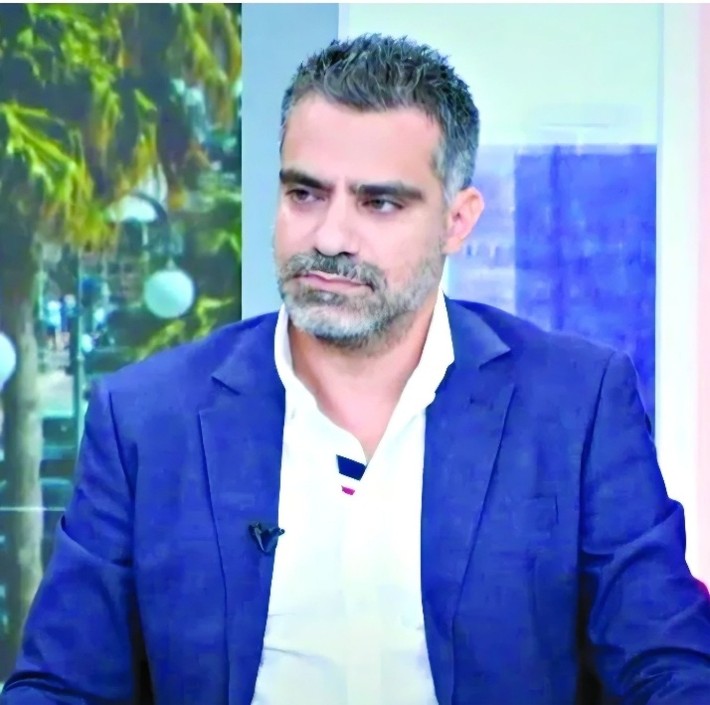 *MD, PhD, FRCPsych, CCT (UK) Psychiatrist – Director at the Centre for Transcranial Magnetic Stimulation, Cyprus rTMS – Clinical Associate Professor, University of Nicosia
The age of social media has offered unprecedented possibilities for communication, information and expression. At the same time, however, it has created an environment in which public pillorying and so-called "character assassination" can occur with unprecedented speed and intensity. A comment, a photo, a video or a category can be disseminated to thousands of people within a few hours, often without a substantial check on the accuracy of the information.
From a psychiatric and psychological point of view, social rejection is one of the most painful human experiences. The human brain has evolved within social groups, and the need for acceptance is deeply rooted in our biology. Studies have shown that social rejection activates areas of the brain associated with experiencing physical pain. For this reason, public humiliation, ridicule or online targeting are not just unpleasant experiences, but can cause real mental anguish.
In clinical practice we meet people who, after online attacks or public exposure, show symptoms of anxiety, insomnia, depressed mood, panic attacks, social withdrawal and a strong feeling of shame. In some cases, particularly when it comes to young people or people with pre-existing mental difficulties, the effects can be serious and long-lasting.
An additional problem is that social media often favours an immediate emotional reaction at the expense of a cool evaluation. Man tends to quickly form impressions and seek information that confirms his already existing beliefs. Thus, a rumour or fragmentary information can turn into "truth" in the eyes of many people before the real facts are examined.
In today's era, the ability to filter information is not only an element of critical thinking but also a factor in protecting mental health. Before we reproduce a news story or participate in the condemnation of a person, we must ask ourselves if we know all the facts and if our reaction is based on facts or emotional impulses. Empathy, responsibility and respect for human dignity are the foundations of a mature society. In a world where information travels at the speed of light, prudence and humanity remain more essential than ever.
