
The mercury rises and with the summer come the snakes. It is not uncommon for us to see posts on social media from citizens who had unwanted visitors in their yards or premises.
According to experts, snakes are attracted to sources of water or food. So there is a way to prevent it and you can take your measures. If you still encounter a snake either in the countryside or in a residential area, there are specific steps you need to take to protect yourself.
The first step is to be able to recognize the snake species so that you know how to react. In Cyprus there are 8 species of snakes, three of which have venom but only one of them is dangerous to humans. This is the fina, which is a tubular snake which means that it carries venom on the front teeth.
The 8 species of snakes in Cyprus and their characteristics
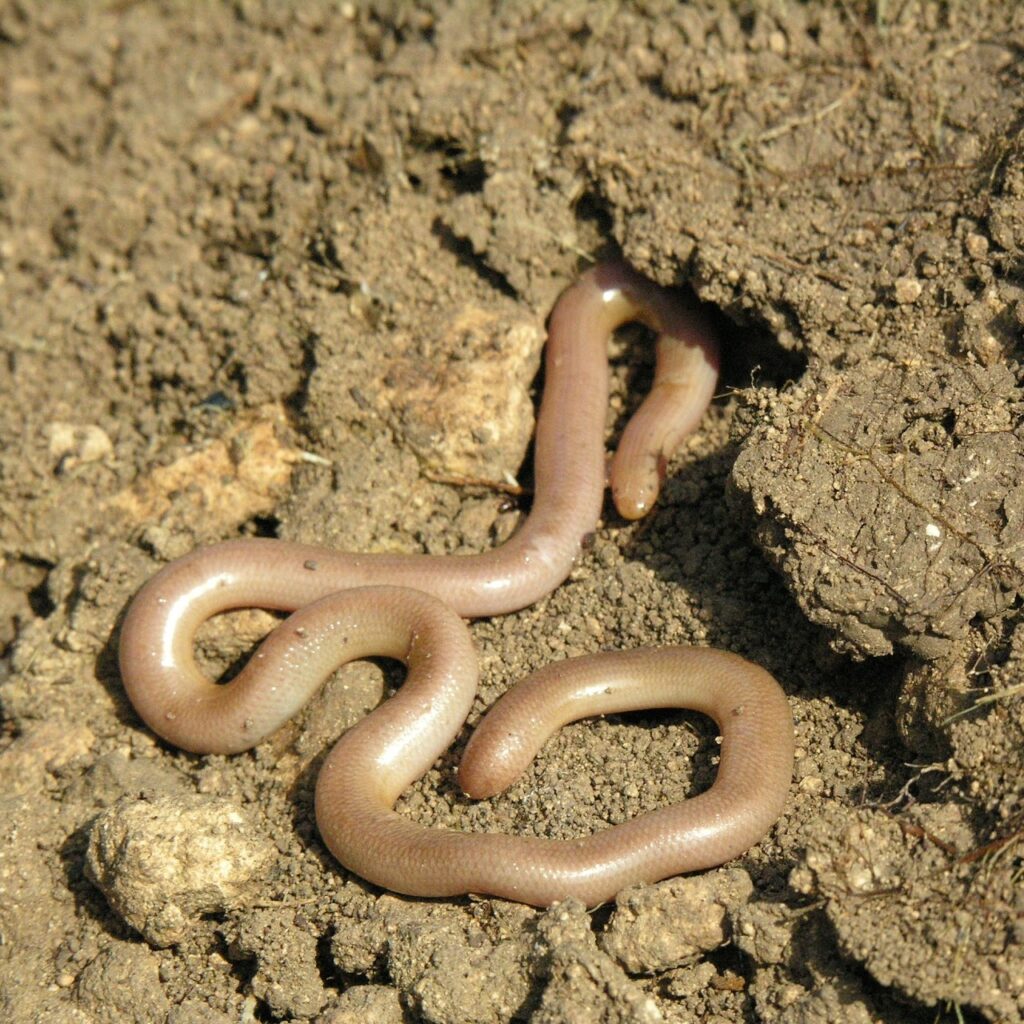
Sunflower (Typhlops vermicularis)
According to the Atlas of Reptiles and Amphibians of Cyprus (HerpAtlas.cy), it is the smallest snake in Cyprus, since its length does not exceed 30-35 cm. Although it has two small eyes, it is almost blind, as it only sees the fluctuations of light. It is beige in colour or in some cases pink, while it lives in galleries in the ground. It does not carry poison and eats ants, termites and their eggs. We find it in various areas of Cyprus, from beaches to an altitude of 600 meters.
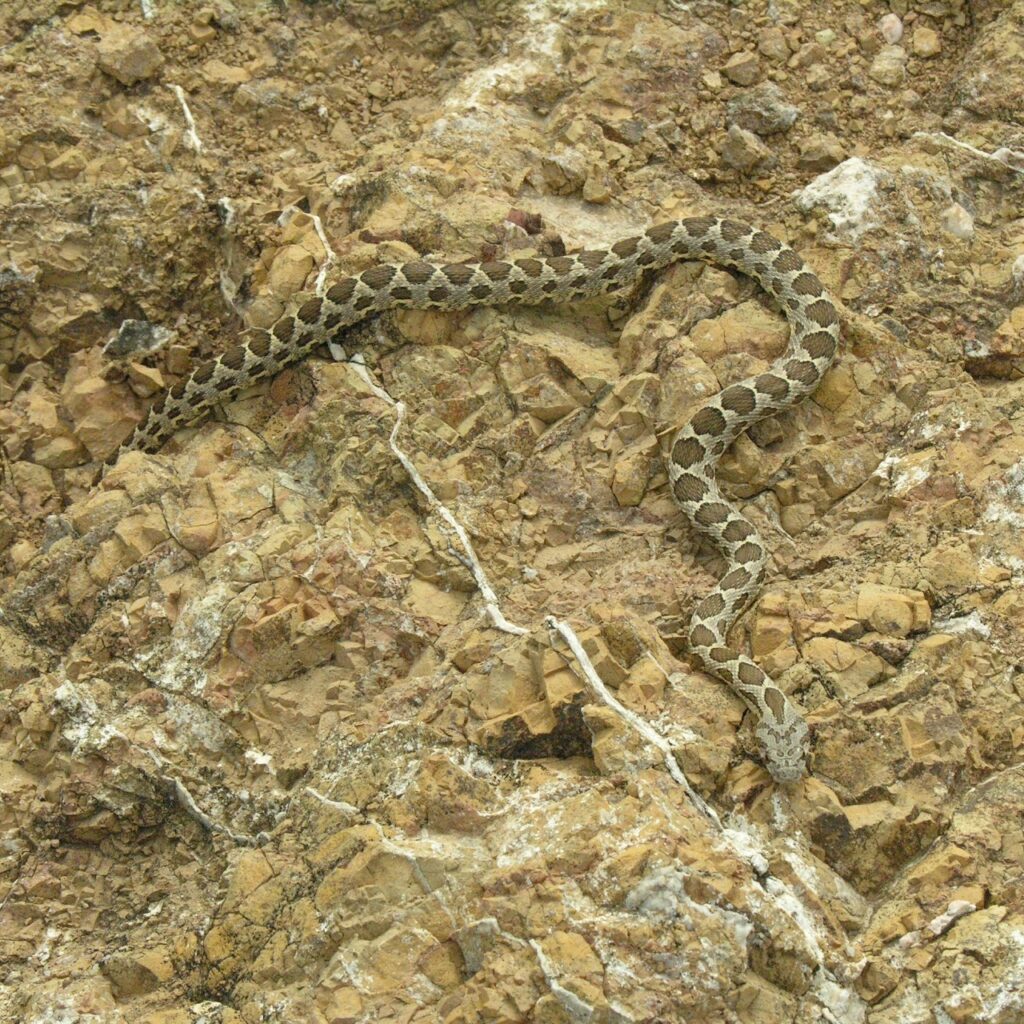
Dropis (Hemorrhois nummifer)
It stands out for its brown colour and the special formations it has on its back in the form of a rhombus and a darker colour. It is an embossed snake, without venom, so it is considered harmless to humans, however it can have aggressive behaviour if we disturb it. Its length can reach 150 cm, while we find it in rocky areas with sparse vegetation, from coastal areas up to 1700 meters. It eats birds, lizards and large insects.
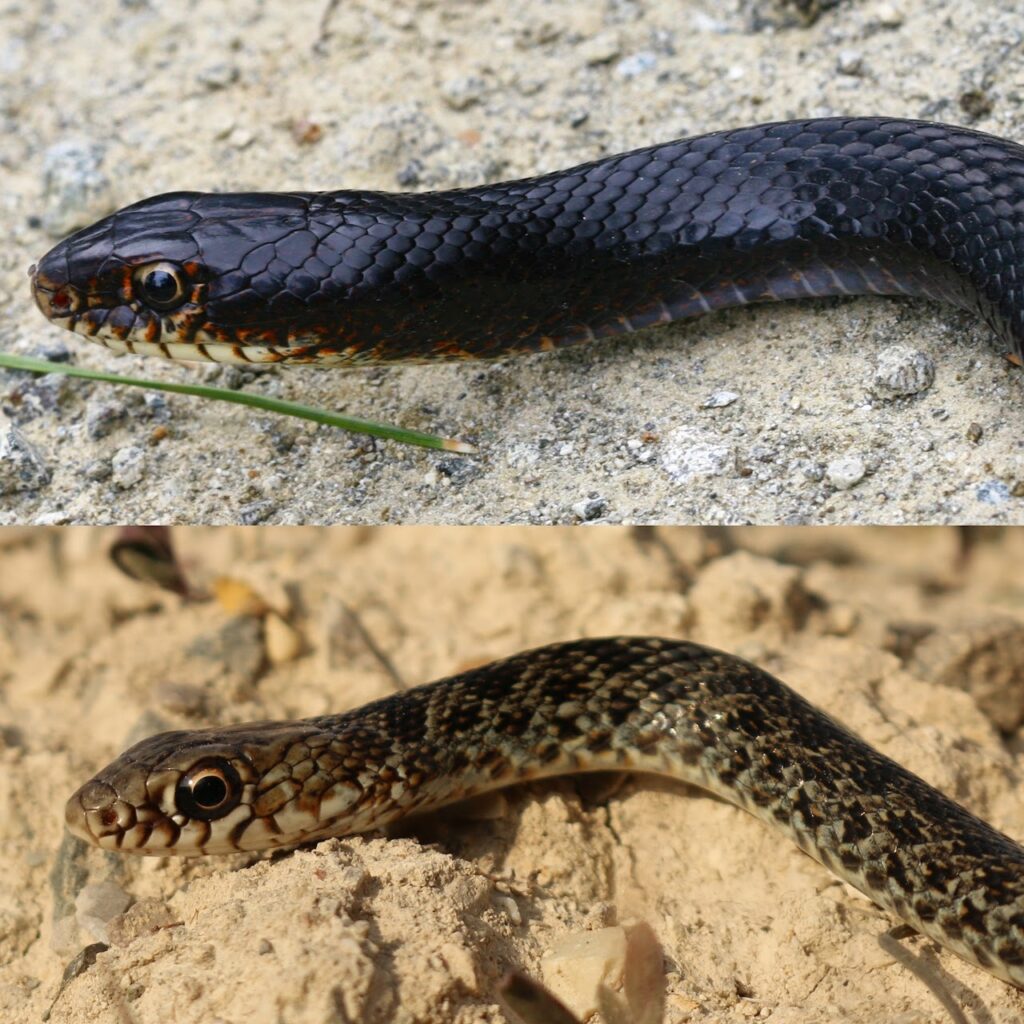
Therco (Dolichophis jugularis)
The black snake, with a wide distribution throughout the island, is the largest species of snake in Europe, since its length can reach 3 meters. The young thercas are olive-green in colour with brown flakes, while during their adulthood, around 3 to 4 years, they change colour and become black with an iridescent white belly. It eats birds, lizards and other snakes, while it does not carry poison.
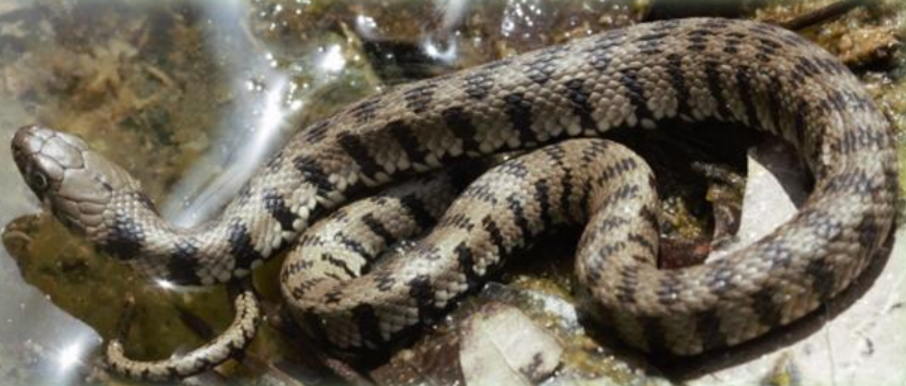
Cyprus Water Snake (Natrix natrix cypriaca)
It is a rare endemic to Cyprus. It is small in size since it does not exceed one meter. Its typical colour is grey with white-yellow and black dots or lines, while the dark crescent behind the cheeks is characteristic. It is also found in a single black coloration or even black colour with faint white spots. It lives in lakes and rivers with lush vegetation, while it feeds on frogs, and small fish. It has no poison and is harmless to humans, however when it defends itself it secretes a foul-smelling liquid.
Cyprus snake (Hierophis cypriensis)
Another endemic species of Cyprus, not particularly common or even rare. It is textured, does not carry poison and is not considered dangerous to humans. It is a very thin snake that reaches only one meter. Juveniles are olive-green in colour, while adults are black with white transverse streaks on the back and a white ring around the eye. It is usually found in areas with dense vegetation which are located near streams, rivers and ravines. It was initially detected in forest areas but seems to have a wider spread. It feeds on small mammals, lizards, frogs and large insects.
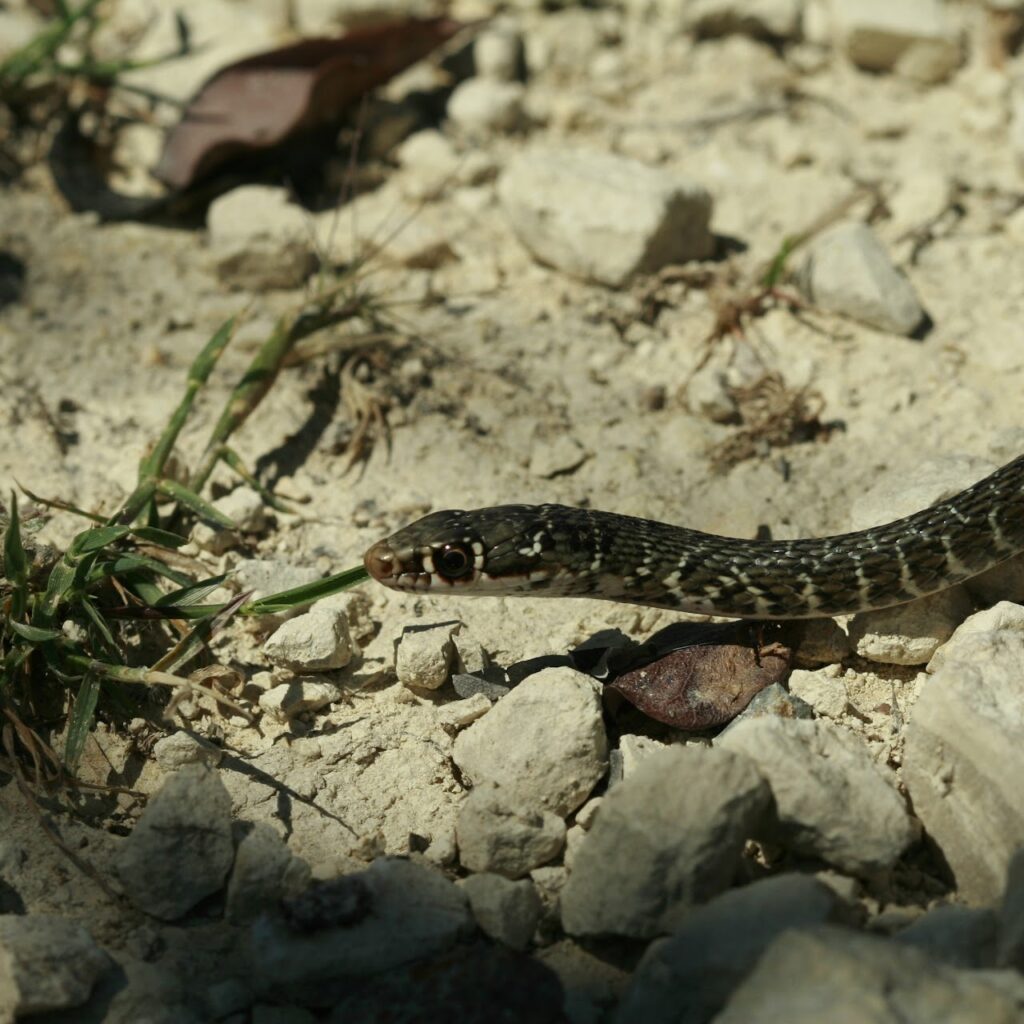
Woodpecker (Telescopus fallax)
Small slender snake that only reaches one meter. It is grey-beige with wide dark lines with a wide spread from the coast to the highest peaks of Troodos. It lives in dry stony soils, is active morning and night, while eating lizards and large insects. It is retroglyph which means it carries poison on the back teeth. It is harmless to humans, however when bothered it curls up, hisses and tries to bite.
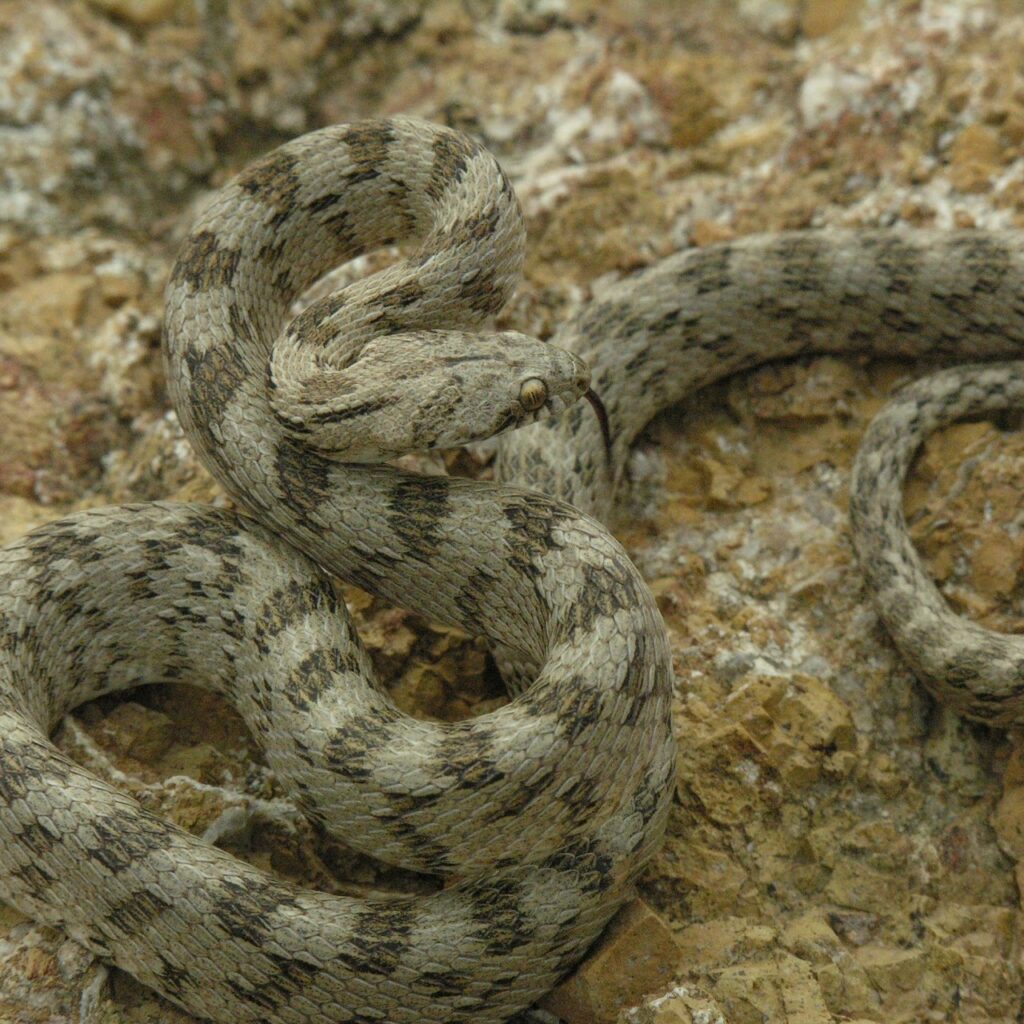
Saitta (Malpolon insignitus)
Another rear-carved snake, which carries venom but on its hind teeth and is harmless to humans. It is a common, large and strong reptile that reaches up to two meters. Juveniles are brown with dotted white or yellow streaks, while adults are grey to olive-green with white specks on the chin and yellow belly. It is found all over Cyprus from the coastal areas to the higher mountains, both in dry soils and in forests. It feeds on small mammals, lizards, but also smaller snakes.
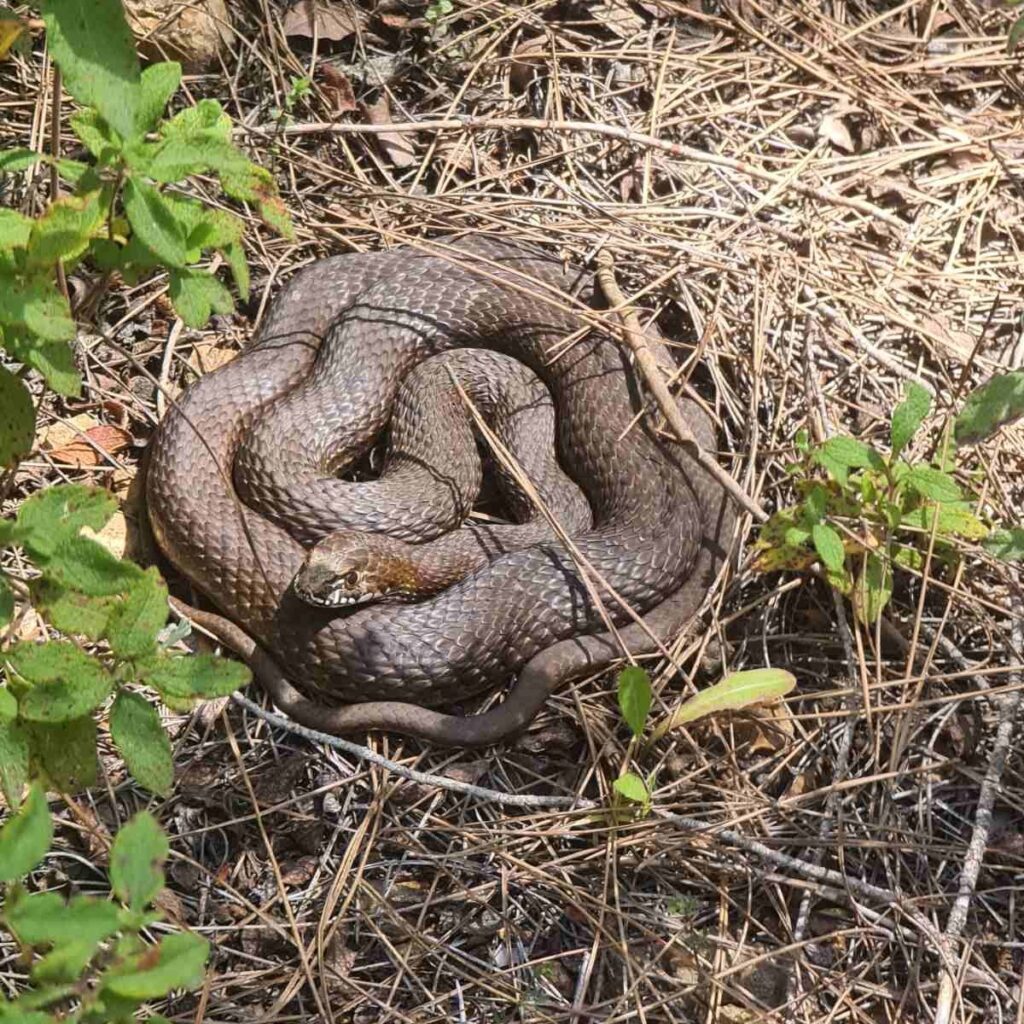
Fina (Macrovipera lebetinus)
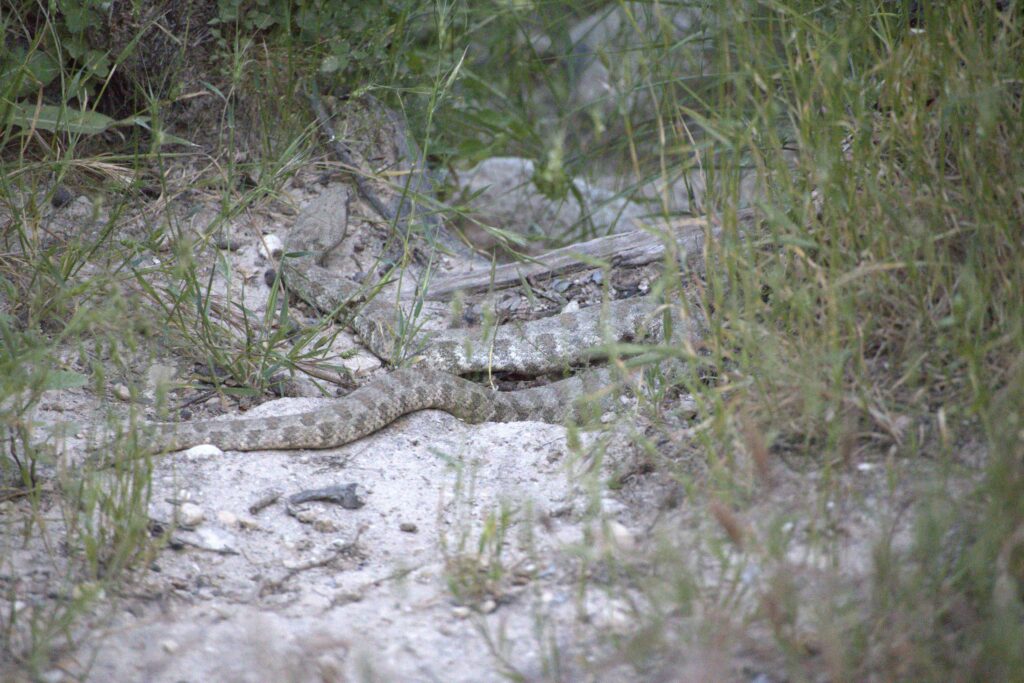
The only snake in Cyprus that is dangerous to humans, since it is a pipe reef, i.e. it carries venom on the front teeth. Cyprus is the only EU country to host this species. Its spread is wide from the coast to the high peaks of Troodos. It stands out for its thick body compared to the rest of the snakes on the island, its short tail, while it has the colour of sand with dark brown rectangular formations in an alternating pattern on the back. It has a thick triangular head with two characteristic black dots in its middle. It is found all over the island, from forests, beaches, rocky soils, usually near water sources. Very often we find it in residential areas. It eats rats, small mammals, birds, lizards, large insects, but also smaller snakes.
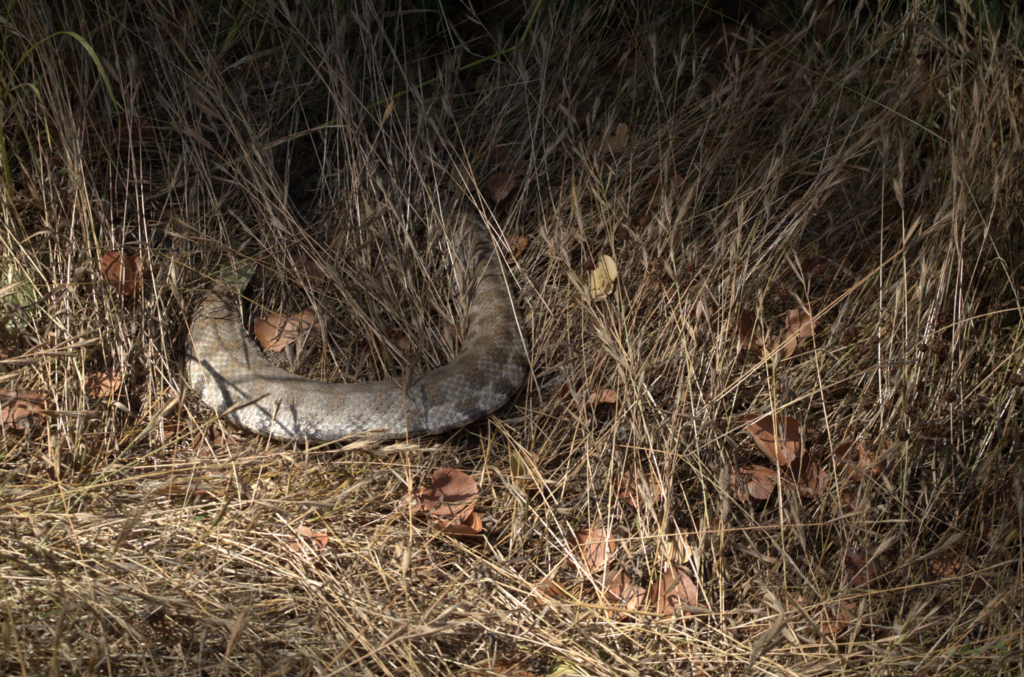
What do we do if we see a snake: The instructions of the Herpetological Association of Cyprus
According to Marilena Stamatiou, member of the Board of Directors of the Herpetological Association of Cyprus, the basic steps that one must follow if faced with a snake are the following: calmness, distance and proper identification of the species.
As she explains speaking to Filenews, the reaction always depends on the context in which the meeting takes place. If someone is out in nature, the presence of snakes is considered completely normal. In most cases, the snake will either try to move away or stand still, as it is afraid of humans, whom it perceives as a large predator.
In such cases, the instruction is clear: leave the snake alone and move away without disturbing it.
The management is different when the snake is found in a property, yard or other place where it should not be. The first step is to identify it, with special attention to the fina, also known as viper, kontonoura or kofi, which is the only dangerous snake in Cyprus.
Under no circumstances, Ms. Stamatiou emphasizes, should one touch the fina or try to squeeze it. If the snake is just in the middle of a yard, it is likely to run away on its own. However, if it is trapped or is in a place where it cannot stay, the removal must be done with great care.
In the case of the fine, one can, keeping a distance of about one to one and a half meters, attempt with a broom to guide it away. If it is another snake, a dustpan can be used to remove it, as the rest of the snakes in Cyprus are not considered dangerous to humans, even if they bite.
The Herpetological Association of Cyprus receives calls from citizens about such incidents, with Ms. Stamatiou noting that its members are volunteers and respond depending on their availability. In some cases, an on-site visit is made, while in others telephone instructions are given. Often, citizens also turn to the Fire Brigade, which then contacts the Association. As she states, there is no official state agency or official telephone line exclusively for the removal of snakes.
Prevention measures
In summer, when vegetation dries up and yards have water, snakes may be attracted to residential areas. For this reason, prevention is considered important.
According to Ms. Stamatiou, snakes approach a space either because they find water or because they find food. Citizens are asked to limit water sources, such as dripping pipes or taps, tidy up warehouses and areas where mice or rats may be present, and remove dense vegetation.
As she explains, snakes that appear in chicken coops are not attracted to chickens, but usually to the rats and mice that may be present in the area. Indirectly, sprays to contain insects and rodents help reduce the likelihood of snakes appearing.
Ms. Stamatiou clarifies that there is no special spray that effectively repels snakes. Chemical preparations advertised as repellents, she says, can cause damage to the ecosystem, killing not only snakes but also other organisms.
How dangerous is fina venom?
In the event of a snake bite, the basic instruction is to keep calm and go to the hospital immediately. She points out that in recent years tight binding at the site of the bite has not been advisable.
The venom of the fina is dangerous, but it is considered weaker than the venom of other snakes that exist abroad. However, as Ms. Stamatiou states, every bite is different and each organism reacts in a different way. There are, as he says, cases where children reacted well, while healthy adults presented a more serious picture.
As she explains, the amount of venom injected by the snake is not always the same. It can bite defensively without injecting venom or injecting a larger amount. Therefore, no incident should be underestimated.
The instruction is to go to the hospital immediately, ideally with another person driving. Panic should be avoided, as faster blood circulation can contribute to the faster spread of the poison.
According to Ms. Stamatiou, common symptoms include swelling, fluids, redness, and severe pain. In severe cases, necrosis can occur near the site of the bite, although this is not common, and rarely, there may be complications that may even require dialysis.
A specific protocol is applied in the hospital, which begins with the administration of serum and, if necessary, cortisone, as is done in cases of an allergic reaction. Antivenous serum is used only in exceptional cases. According to Ms. Stamatiou, it is available in hospitals, but it is rarely required to be administered.
The fina's bite is usually identified by two small holes in the skin, while the bites of other snakes have a more curved arrangement. Retroglyph snakes do not possess venom capable of causing serious harm to humans and, according to the Herpetological Association, no deaths or serious injuries from them have been recorded in Cyprus or abroad.
Severe cases of finches bite are often associated with a delay in getting to the hospital or secondary factors, such as dizziness or falling. "The sooner, the better" is the basic guideline according to Ms. Stamatiou.
The Herpetological Association of Cyprus can provide instructions to citizens by phone in the 95546634, depending on the availability of its volunteers.
*Images and more information about the reptiles of Cyprus HERE - https://www.philenews.com/wp-content/uploads/2026/06/A5_Mini_field_guide_V3.pdf
Snake Removal - Paphos area:
Kouklia Snake & Animal Park 99 598589 Christouchrist@hotmail.com,
https://www.facebook.com/profile.php?id=100066879680410
Safe removal 99 554801 or 99 987685
