
An impressive growth course has been recorded in the last two decades by organic farming in Cyprus. What started in 2002 as a limited agricultural sector with only 0.3% of the total cultivated land, has now evolved into an important pillar of the country's agricultural policy and sustainable development, covering 8.76% of agricultural land for 2024. Now, the big goal is to increase organic areas to 10% by 2030.
The Ministry of Agriculture, Rural Development and Environment sets as its primary goal the formation of a new culture of organic production and consumption, while maintaining the strict reliability of the control and certification system.
Organic production is an integrated system based on natural methods, excluding the use of synthetic pesticides, chemical fertilizers and genetically modified organisms. In Cyprus, the landscape is as follows:
For 2024, 1,462 certified organic production units and about 109,940 decares of organic land are recorded. The form of cultivation remains mainly extensive.
Grain occupies the lion's share with about 60% of the area. Traditional Cypriot crops also hold an important place, with olives covering 18% of organic areas. Vines account for 4.5%, however, they are considered extremely important for their quality value. Nuts, fruit trees, carob trees and aromatic plants have a smaller but noticeable presence.
Although smaller-scale, organic livestock farming is developing in an organized way by offering raw materials for organic milk, yogurt and halloumi PDO. Sheep and goat farming is the main pillar with 27 units (8,088 goats and 6,150 sheep), while, at the same time, 4 milk production units operate with 338 dairy cows. In the poultry sector, 4 egg production units and 1 meat production unit are recorded.
The National Action Plan is in place
Furthermore, the National Action Plan for organic production in Cyprus was implemented in September 2023 and includes 16 targeted actions, harmonized with the European Green Deal and the "Farm to Fork" strategy. The intermediate target of covering 7.5% of land by 2027 has already been achieved. At the same time, the Plan aims to:
>> Ensuring the reliability of the system.
>> Strengthening the competitiveness of organic products.
>> Support farmers, livestock breeders and beekeepers through financial incentives.
>> The protection of the environment, biodiversity and natural resources.
The National Action Plan of Cyprus is a key tool for the development of organic farming, fully harmonized with European policy. It aims to boost both the production and demand for organic products, while contributing to the green transition and the sustainable development of the agricultural sector.
A review presented in early May 2026 showed significant progress. In terms of informing consumers, campaigns were carried out in supermarkets and two major festivals of organic products (Denia 2023, Limassol Old Port 2024).
In order to shape environmental and consumer awareness among the new generation, organic raisins were included in Primary Schools through the European School Program (fruits, vegetables and milk in schools), while a poster competition was announced in Gymnasiums as part of the biology course.
The CAP Strategic Plan 2023–2027 remains the main financial support tool for the transition and maintenance of biological plants.
The role of Cyprus in European politics
Cyprus, during the Cyprus Presidency of the Council of the European Union, achieved a great political victory. It undertook the difficult file of amending and simplifying the basic Regulation (EU) 2018/848 on organic production.
The Council's position places particular emphasis on simplification and flexibility for small producers and businesses, through reduced administrative burdens and exemptions from certification in specific cases, such as for small online retailers of pre-packaged organic products. At the same time, the rules on imported organic products and the use of the European organic logo are clarified, with the aim of maintaining consumer confidence and facilitating trade. In addition, the agreement provides for transitional arrangements to avoid market turbulence, as well as temporary flexibility in the use of non-organic inputs in specific sectors, with a gradual withdrawal of derogations.
On 11 May 2026, the Cyprus presidency sealed its efforts by reaching a common negotiating position within the Special Committee on Agriculture. Cyprus' proposal drastically reduces bureaucracy and administrative burdens for small producers and businesses (such as small online retailers), without lowering the EU's high quality standards. The speed of completion of the process (which had only started in the last quarter of 2025) is considered one of the most important achievements of our country.
In recognition of this active role, the European Commissioner for Agriculture, Christoph Hansen, awarded Cyprus an honorary position in the jury of the European Organic Awards.
In the framework of the Cyprus Presidency, Cyprus welcomed the National Ambassadors of Organic Farming of the EU. The mission was guided to four model Cypriot units: "Ygea Farm" in Mathiatis which is an organic egg production unit. "Therapeutic Community of Agia Skepi" in Filani, which is active in the production of organic bread and vegetables. Agricultural unit "Atsas Organic Products" in the Buffer Zone in the Petra area, which is active in the production of high polyphenol extra virgin olive oil. "Bio-Solea Apianthos" in Temvria, which is an organic beekeeping and honey standardization unit.
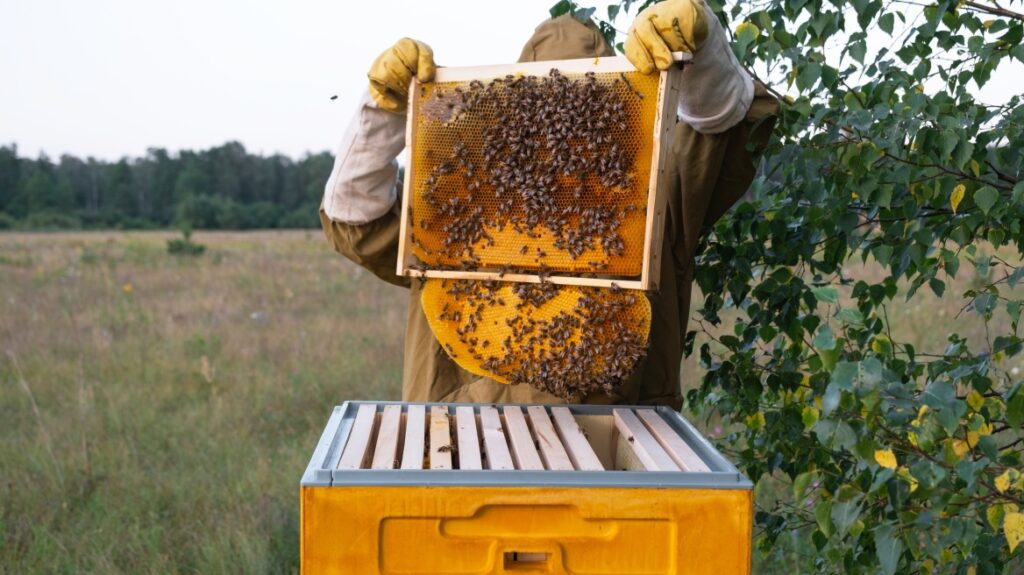
The visit concluded with a historic, hybrid workshop under the auspices of the Minister of Agriculture, which was the first extensive discussion at EU level on the revision of the European Action Plan.
Despite the brilliant course, the road is not without obstacles. Cypriot producers are faced with the small size of the domestic market, the higher production costs and the intense climatic peculiarities of the island. However, the ever-increasing shift of consumers towards a healthy lifestyle, combined with continuous European and national financial support, offer fertile ground for the future. Cyprus is no longer just following the developments, but is actively shaping Europe's agricultural policy, strengthening its international image as a reliable and green partner.
