
More than a thousand drug users have been welcomed without religious, ideological or social discrimination by the closed rehabilitation treatment community "Agia Skepi" since 1999 when it began to accept the first guests, the clinical director of "Agia Skepi" psychologist Tina Pavlou told "F". She added that "more than 73% of those who complete the program manage to rebuild their lives away from drugs."
Mrs. Pavlou spoke to us on the occasion of the World Day Against Drugs and Illicit Trafficking established by the UN on June 26 of each year. She stressed that "in the last 20 years, the number of people who are in use has tripled in Cyprus, while along with the high availability that now exists in our country, the average age of onset of substance use has dropped significantly. This year, for the first time, we accepted into the program for teenage users, a 12-year-old boy who had been using substances for a year before we met him. The increase in substance use among our young people is a "silent epidemic" that should scare and motivate us."
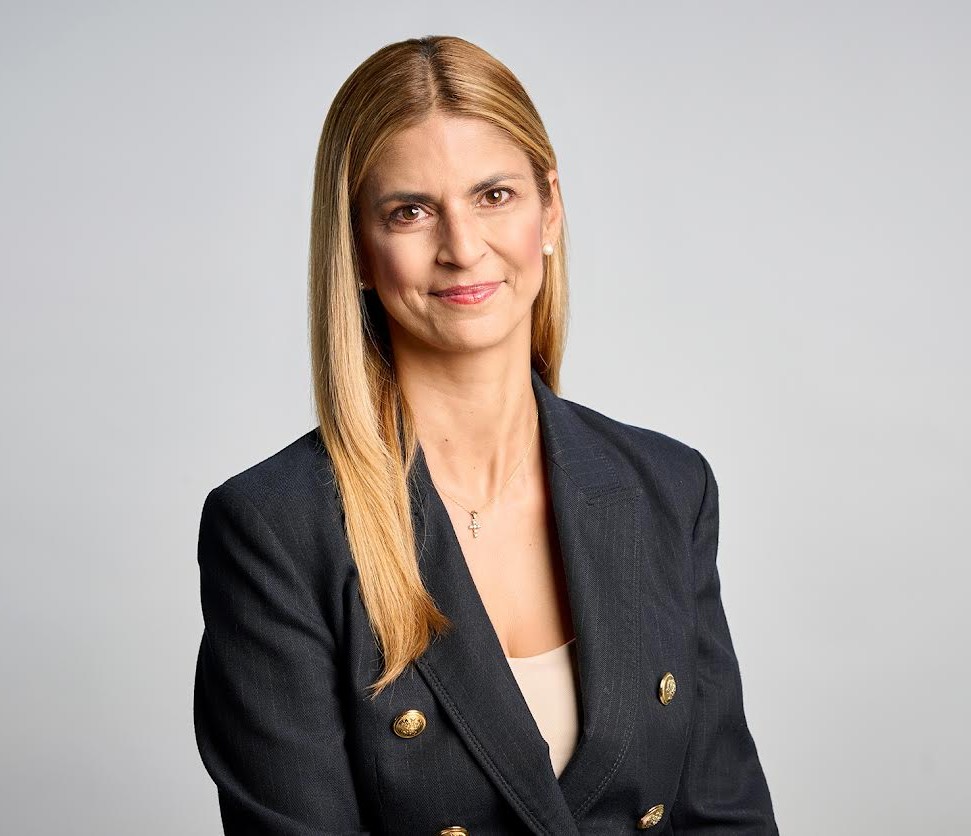 Tina Pavlou
On the occasion of yesterday's World Day Against Drugs, we also spoke with the executive director of KENTHEA (Center for Information and Treatment of Addicted Individuals), counselling psychologist Elena Zarouna, who presented us with ACHILLEION, a new intensive addiction treatment program by KENTHEUS. Mrs. Zarouna is scientifically responsible for the program aimed at adults from all over Cyprus with moderate or severe intensity of substance and/or alcohol addiction disorder and is based in Paralimni.
 Elena Zarouna
Men and women in separate wings
As Tina Pavlou told us, "the closed rehabilitation treatment community "Agia Skepi" is aimed at both long-term adult users of addictive substances and adolescent users of illegal substances – it is the first and only one of its kind in Cyprus to date. On the initiative of the then Abbot of the Holy Monastery of Machairas and now His Eminence Metropolitan of Limassol, Mr. Athanasios, it began its action based in Filani, near the village of Politiko, in 1999, where the first admissions took place. Today it is the largest rehabilitation organization in our country." Mrs. Pavlou added the following in relation to the programs offered by the community: "Along the way, "Agia Skepi" has expanded its services by offering the program of a counselling station in Nicosia and Limassol for mobilization and preparation for the closed phase of treatment and the program of internal rehabilitation therapy for men and women in separate wards in Filani."
The mother and child program
Referring to the women's program that includes a mother and child program, Tina Pavlou told us that "mothers who are in the program can stay in specially designed rooms with their young children who receive services based on their own developmental needs. Mothers also attend parenting skills groups and creative play groups in their therapeutic program. The mother and child program also includes pregnant women. In addition to treatment for rehabilitation, expectant mothers have the opportunity to receive psychological services related to the preparation for childbirth, their new identity as mothers, their respective duties and obligations, as well as the strengthening of their parental motivation with the aim of detoxification". Mrs. Pavlou stated that "the separation of the two sexes is important for the success of the rehabilitation program, as women, some of whom are mothers, have gone through different experiences. These special needs are met by therapeutic staff staffed by women. In the phase of social reintegration, graduates of both sexes are called upon to coexist in the context of therapy."
A father with his child
The clinical director of "Agia Skepi" revealed to us that "recently and for the first time we hosted a father with his infant for treatment. The effort – she said – was very successful, reinforcing the fact that when man is properly supported, steadily and continuously, his life and the lives of those he influences, can be positively overturned. I should mention that after a pan-European survey involving 18 European countries, it turned out that it was the only incident in all of Europe where a father completed a long-term rehabilitation program with his child." Answering our relevant questions, Mrs. Pavlou stated that this man had been in use for 20 years and that he asked to be admitted to "Agia Skepi" together with his infant for rehabilitation. The constant care of this father towards his child, who is now two and a half years old, is very moving."
The adolescent, reintegration and family programs
"From the beginning of 2019, in collaboration and with a grant from the Cyprus Addictions Authority, "Agia Skepi" started the operation of a separate program especially for teenage users aged 13-19, while this year for the first time we accepted a 12-year-old boy who had been using substances for 1 year before we met him," Tina Pavlou told us and added: "In the last 20 years, the number of people in use has tripled. Along with the high availability that now exists in our country, the average age of starting substance use has dropped significantly. The adolescent program currently hosts 19 teenagers and has a waiting list of 5 people. The increase in substance use among our young people is a "silent epidemic" that should scare and motivate us."
She then referred to the social reintegration program which is, as he said, "one of the most important steps". She added the following: "It is where theory becomes practice. A critical period when the former substance user must survive economically, socially, emotionally. Several times people do not have a supportive framework outside the program, so we become his family, his long-term support. People stay in our own shelter, until they find a job, save a little money for their own accommodation and thus make a new start."
Mrs. Pavlou also spoke to us about the family program in Nicosia and Limassol, "which is aimed at both parents whose children are in the closed phase for treatment, and parents whose children are still in use and need support. The family program – he continued – also serves partners of people who are in treatment. The contribution of the family is extremely important, which, with proper guidance and support, can strengthen the treatment of the person struggling with addictions, to go along and make the changes needed for quality communication and deeper connection within the family context."
Daily actions and relationship development
According to the clinical director of "Agia Skepi", the community is a member of the European Federation of Therapeutic Communities and follows the cognitive behavioural model of psychotherapy. "During their stay in the community," she said, "members acquire skills necessary to cope with their emotional difficulties, to heal traumatic experiences and to acquire a new identity as healthy and functional members of society. Work and relationship development are an integral part of therapy, as they enhance the future employment prospects of patients. Daily activities, in addition to therapeutic sessions and groups, include organic farming, packaging, baking, cooking, gardening and sports."
Tina Pavlou underlined that "for the last two years we have now had a permanent waiting list, which is extremely painful because we are well aware that for chronic drug users, this can cost them their own lives". She added that "after a large donation we have received from a Cypriot individual, we have started expanding our facilities in Filani, so that we can offer more treatment opportunities to our fellow human beings. It is also important to mention that for the first time in our 28-year history, we have signed a special purpose agreement with the state this year, which ensures our community €1.3 million, which is almost 2/3 of our budget. This ensures the continuation of the work of "Agia Skepi", which until today has never had enough money to cover beyond 3 months of its operation."
Mobilization to stop use
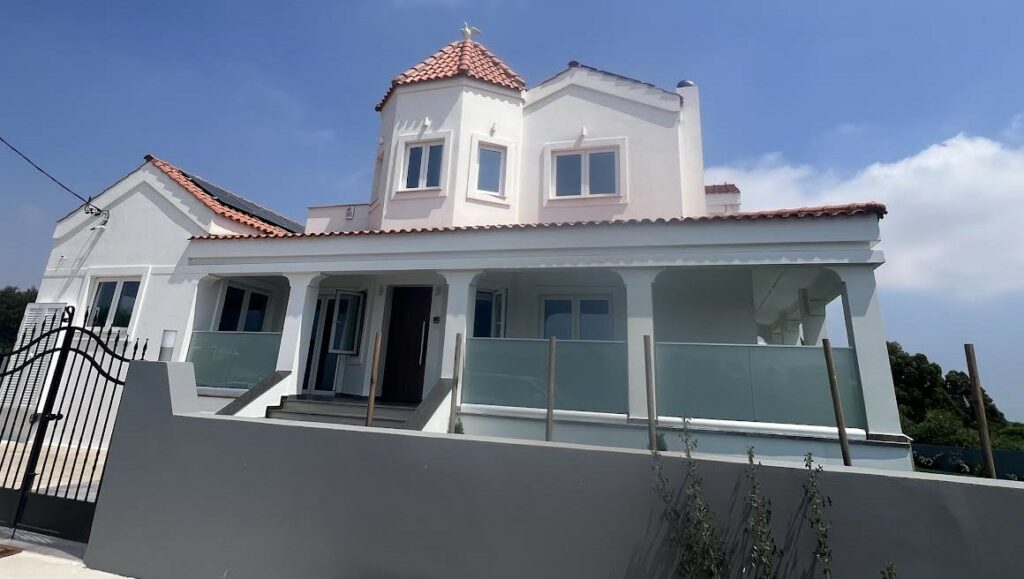
"ACHILLEION is an intensive addiction treatment program of KENTHEA based in Paralimni and operates with the licensing of the Cyprus Addictions Authority, while it is financially supported by the company "Allwyn" told us the scientific director of KENTHEA, counselling psychologist Elena Zarouna. He added that "the aim of the program is complete abstinence from addictive substances, the consolidation of interpersonal relationships, the acquisition/improvement of communication skills and social reintegration, including work rehabilitation. The program consists of four phases. During the first phase, which lasts 1-3 months, the individual participates in individual and/or group meetings with the aim of increasing motivation to stop use. Family counselling is also provided, with the aim of providing psychoeducation on addiction issues and recognizing co-dependence behaviours. In the case of applicants for treatment who are detained in prisons and/or police detention centers and after the Advisory Committee recommends their evaluation for inclusion in this program, arrangements are made for on-site evaluation and mobilization visits, so that they can meet the criteria for transition to the second phase on the date of issuance of the relevant decree."
A new social microcosm
Ms. Zarouna stated that "when the person completes the preparation, he is referred to the second phase which is essentially the basic intervention and lasts 6-9 months. In this phase the individuals have a daily program of interventions, starting with the entrance group where the challenges of the previous day are discussed. Subsequently, based on the program, they participate in group therapy and educational groups with a variety of topics, such as financial literacy, the road behaviour and safety group and the health care team. Patients take part in sports and artistic activities and in occupational therapy and music therapy groups. In the context of the main phase, the patients are monitored weekly by the center's psychiatrist, while every day before leaving, they participate in the exit team where a relapse management plan is made. In our center during the second phase, food is provided, while twice a month a joint excursion to the community is organized in places of culture, museums, natural environment, etc. The aim of this phase is for individuals to develop self-awareness, learn communication skills, adequately recognize and manage their emotions, acquire life skills and manage any psychopathological issues. Adapting them to the rules is essential. Their relationships with the staff and the rest of the patients constitute a new social microcosm, where individuals will learn anew to live adaptively, healthily and enjoy the warmth of personal connection." It is noted that the clinical social worker Maria Theofanous and the special psychologist Irene Theocharous are responsible for the first and second phases respectively."
Finding a job and post-treatment care
"In the third phase, which lasts 3-6 months, the person continues the treatment at a less intensive pace (3-6 hours per week), while special emphasis is placed on his social and work rehabilitation," Elena Zarouna told us and added: "In this phase, counselling interventions are also provided to find a job, as well as legal support where needed. Finally, after the person completes the first three phases, he is included in the fourth phase of post-treatment care. In this phase, individual counselling is provided to patients with the possibility of online monitoring, if a sufficient number is not filled in the area of residence. The program has a means of transport to facilitate people coming from other cities. For more information, those interested can contact the program at 23740001."
