
More than 60,000 seedlings have been planted in the last six years (after 2020) by the Department of Forests, while in the context of the various actions that mainly concern organized groups and individuals, additional more than 400,000 seedlings have been granted by the Department during the same period.
On the occasion of the issue of reforestation, the Department of Forests is making efforts through various actions to achieve to the maximum extent possible the target set by the EU for the planting of 1,000,000 saplings in Cyprus during the decade 2020-2030 in the context of dealing with climate change/crisis.
In the request of "F" for information on the issue of reforestation, the Department of Forests points out that as the competent Authority mandated to protect, develop and manage state forests, it proceeds – among other things – to carry out reforestation (sowing or planting), in areas within state forests, which have been proven to be unable to regenerate on their own after a natural or man-made disaster, such as after a fire.
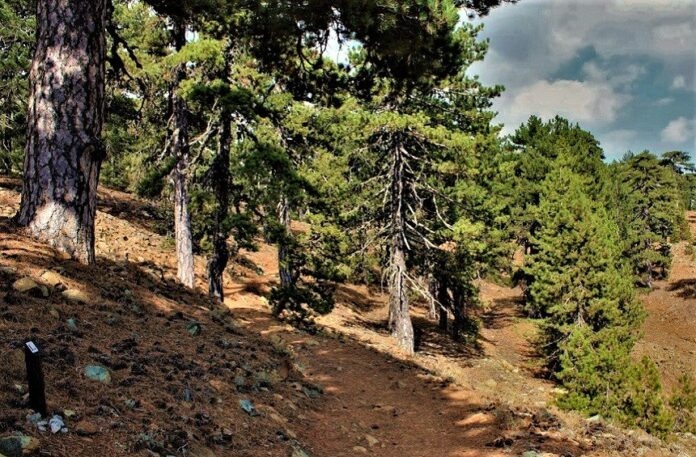
When do the reforestations take place?
According to the Department of Forests, reforestation works are limited in time within the planting season, which essentially starts from the beginning of November of each year and lasts until the end of February of the following year. This period can be partially differentiated, since it is directly dependent on the weather conditions (to ensure maximum success in the installation of seedlings or seedlings (i.e., young plants, intended for transplanting), satisfactory rainfall is necessary both before and after their installation, as well as the prevalence of appropriate temperatures.
It is important to mention that in the higher mountainous areas, reforestation can start earlier than in the lowlands, always in relation to the two climatic parameters of the abiotic environment mentioned above (temperature and humidity/precipitation).
Where is the reforestation taking place?
Regarding the areas where reforestation is carried out over time, the Department of Forests clarifies that smaller-scale reforestation works can be implemented, in special cases and outside state forests by organized groups through the "Plant for the Climate" Program, after obtaining the prior permission of the owner of the land (individual/organization or other state Service) intended to be reforested and after this action will benefit the wider public.
In most cases, reforestation takes place in areas destroyed by fire and unable after two to three years to regenerate on their own, or in areas that have been degraded by various causes, mainly anthropogenic, such as the restoration of vegetation in inactive/old quarries/mines, etc.
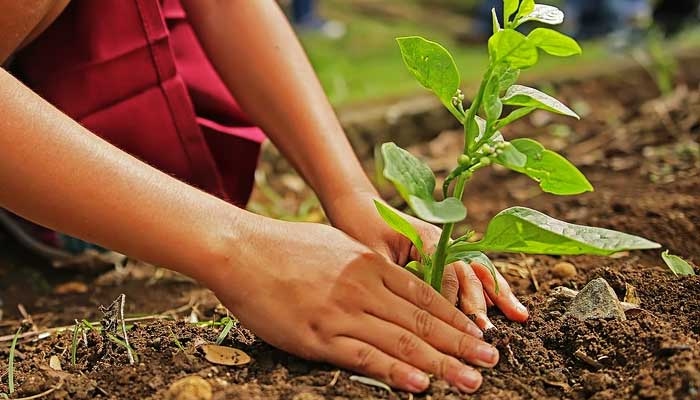
The legal framework through the vision and mission of the Department of Forests
Regarding the legal framework that arises for reforestation, according to the "Forests Law of 2012", there is no explicit provision that regulates reforestation exclusively. However, the legal framework for reforestation arises indirectly but clearly through all the provisions concerning the vision and mission of the Department of Forests for the development, rational management, protection and restoration of forests.
The responsibilities of the Department of Forests for the management of state forests and the adoption of measures aimed at the preservation and enhancement of forest vegetation are broad.
In this context, the reforestation of an area is included, either through artificial plantings or through the support of natural regeneration, in order to increase and improve forests and, by extension, the natural environment.
The seedlings used in reforestation work
An interesting element regarding the reforestation work is the fact that the seedlings/seedlings used consist of native and/or endemic species of the Cypriot forest flora, which have adapted to the adverse climatic/soil conditions of Cyprus, through the process of their natural evolution over time.
It should be noted that these seedlings/seedlings are provided by the nurseries of the Department of Forests, which follow appropriate production protocols based on applied forest research. It is also noted that the Department of Forests, in some cases, proceeds to replace the fire-loving resin pines with other suitable broadleaf species (such as oaks, terepaths, tereiths, etc.), which are suitable for the area under restoration.
The responsibility for irrigation of seedlings
The responsibility for irrigating the seedlings, until they are successfully installed (three to four years after planting), within the state forests, lies with the Department itself.
However, in cases where the reforestation work is outside the state forests, then the irrigation responsibility lies with the owner of the land or the community that manages it.
The goal is to plant 1,000,000 seedlings
As previously written, in the last six years the Department of Forests has planted more than 60,000 saplings.
At the same time, in the context of various actions in which the Department of Forests participates by providing free seedlings, such as the "Plant for the Climate" program, which mainly concerns organized groups and the "Tree Week" for individuals, additional more than 400,000 seedlings have been granted in the last six years.
It is also noted that the Department of Forests is making every effort, through various actions, to achieve to the maximum extent possible the target set by the EU for the planting of 1,000,000 saplings in Cyprus during the decade 2020 – 2030, in the context of dealing with climate change/crisis.
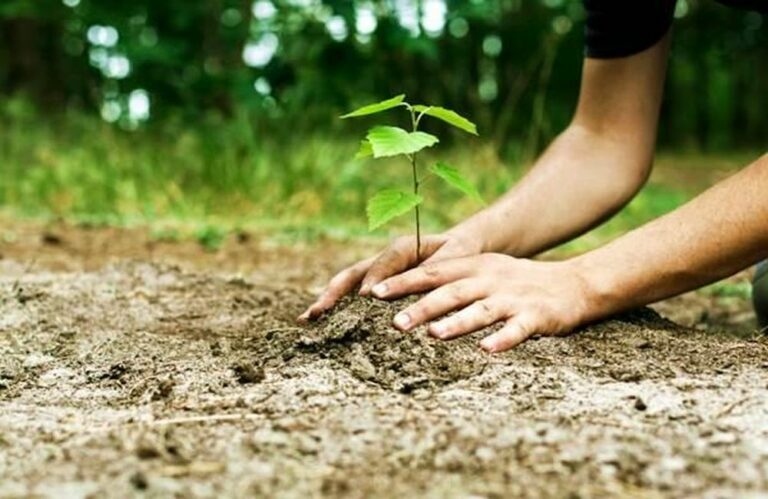
Basic priorities of the Department in relation to the restoration of burned or degraded areas
Regarding the burned or degraded areas, the Department of Forests emphasizes to "F" that "the areas that have been burned certainly fall under the first restoration priorities because, among other things, with the construction of flood protection works and after the installation of the plants (reforestation), a reduction in soil erosion is achieved and the reduction of flooding phenomena from the rainfall expected in the next winter after the fire".
As for the degraded areas, according to the Department of Forests, "careful selection of the plants to be planted is made so that they can withstand the adverse environment they are planted and grow successfully".
In addition, in the most difficult, barren areas with poor soils, the Department of Forests is even proceeding with pilot programs with new planting techniques that have been developed in recent years. "In the event that these planting techniques are deemed successful, the Department of Forests does not hesitate to adopt them and apply them to large degraded areas of state forest land," notes the competent Department.
It should be noted that there are no planned reforestation actions or campaigns open to the public in the coming period. According to the Department of Forests, all relevant works are expected to resume during the next planting season, i.e. next November.
