
Marine biodiversity in Europe is at a critical crossroads, and political inaction is the biggest threat, warns Vera Coelho, Executive Director and Vice President of Oceana in Europe, in an in-depth interview. On the occasion of the European Law on Nature Restoration and the recent research of the international organization, Mrs. Coelho sounds the alarm about the future of our seas, focusing in particular on the burning issues facing Cyprus.
Mrs. Coelho, analyzes how destructive practices, such as bottom trawling, and the lack of transparency around "flags of convenience" and hidden corporate interests, fuel illegal fishing, which costs billions to the global economy. At the same time, it conveys the voice of Cypriot fishermen, who are faced with the aging of the profession, the reduction of stocks and the rapid spread of alien species, such as the pufferfish. Sending a clear message to the Cypriot government ahead of the international conference "Our Ocean", Mrs. Coelho emphasizes that Cyprus now has a historic opportunity to take a leading role in the EU, introducing strict transparency measures that will protect both the marine ecosystem and traditional coastal fisheries.
– Mrs Coelho, with almost 20 years of experience in environmental NGOs and having lived and worked in six European countries, how would you describe the current state of marine biodiversity in Europe? What are the biggest threats we face today?
– Marine biodiversity in Europe is at a critical juncture. The biggest challenge remains political inaction and the failure to recognise that protecting and restoring the seas is not only an ecological necessity, but also a prerequisite for jobs, food security and Europe's resilience in an environment of geopolitical instability.
Progress has been made in recent years. Strong legislation has led to tangible results, such as the creation of marine protected areas and the recovery of some overfished stocks. Today, however, pressure for deregulation and growing environmental threats are putting these achievements at risk.
We need a new development approach for the seas. By restoring fish populations, particularly in the Mediterranean, we can support fishermen and strengthen coastal communities. Climate change, the destruction of marine habitats and overfishing remain the main threats. Effective management plans for marine protected areas are therefore urgently needed, including a ban on bottom trawling within them.
The battle for the Restoration Law
– Since joining Oceana in April 2020, you have contributed to more than 20 political victories for Europe's waters. What do you consider to be your most important achievement so far and what is the biggest battle pending?
– Oceana is an organization with a clear orientation in campaigns that lead to substantial and measurable changes for the protection of the seas. I am particularly proud of our contribution to the formulation of important European legislation, the creation of new marine protected areas and the strengthening of actions against illegal fishing.
If I had to single out one achievement, it would be our role in the adoption of the European Nature Restoration Law in 2024, the first major EU biodiversity legislation in the last 30 years. The law obliges Member States to implement restoration measures in at least 20% of the EU's marine areas by 2030 and in all ecosystems in need of restoration by 2050.
According to the European Commission, every euro invested in nature restoration can yield between €8 and €38 in economic return, making it one of the most cost-effective investments for member states.
Equally important, the law recognizes that restoration efforts must be protected from destructive practices, such as bottom trawling. The battle, however, continues. Despite the adoption of this important legislation, several political and institutional actors are now calling for its repeal. The big challenge now is its effective implementation, despite political pressures.
– How can a small island country such as Cyprus steer the European Union towards the restoration of the seas and what concrete measures does Oceana expect from the Cypriot government?
– Cyprus is at the forefront of the impacts of climate change, overfishing, degradation of marine habitats and the decline of marine life. Its first-hand experience of these challenges gives it a strong basis to make a substantial contribution to shaping and strengthening European maritime policies.
With a presence at a leading European level, including Commissioner Costas Kadis, Cyprus has the opportunity to highlight this experience more dynamically on the European political agenda. By leveraging its role in the Council of the EU, it can promote solutions with a real impact for the Mediterranean.
At national level, this means supporting small-scale fishermen, with measures such as a ban on bottom trawling in coastal and protected areas. It also means greater transparency and a level playing field, with the publication of the beneficial owners of foreign-flagged vessels linked to Cyprus.
At European level, Cyprus can contribute to the recovery of Mediterranean fish stocks, to the strengthening of traceability rules for imported and processed seafood products, as well as to the full implementation of the Common Fisheries Policy.
– Oceana openly called on the Minister of Agriculture, Rural Development and Environment to put Cyprus at the forefront of the international fight against illegal fishing at the "Our Ocean" Conference in Kenya. What message do you want to convey in view of this international meeting?
– Transparency is key to tackling illegal fishing, a borderless activity that causes losses of up to €23 billion annually to the global economy. It limits the resources available to fishing communities, creates unfair competition and is often linked to cross-border crimes, such as tax fraud, money laundering, labour exploitation and drug trafficking.
One of the key challenges is that illegal fishing operates in the dark. Those involved often operate across national borders and hide behind opaque corporate structures, making it difficult for European authorities to identify those really responsible and ensure accountability.
Cyprus now has an important opportunity to take a leading role by starting the collection and publication of data on individuals and companies that own fishing vessels under the flags of third countries, which is currently not required. If it proves that this level of transparency is achievable, it can encourage other EU Member States, as well as countries internationally, to follow suit.
Such a move would help identify the real people behind fishing operations and strengthen the accountability of those who profit from illegal activities. The Our Ocean conference from 16 to 18 June is an ideal international forum for Cyprus to highlight this initiative on a global level.
The thorn of the flag of convenience
– Recently Oceana released data linking Cypriot corporate interests to high-risk fishing vessels, registered in non-EU countries with lax regulations, such as Belize and Equatorial Guinea. Why is it a threat to marine ecosystems and legal fishing?
– Some countries offer so-called "flags of convenience", with lax registration requirements, low taxation and limited supervision. This often allows shell companies to be set up that conceal the real beneficiaries of fishing activities.
These conditions make these countries attractive to operators seeking to evade regulations and controls. As a result, many vessels are changing flags and registering in jurisdictions where monitoring of fishing activities and working conditions is inadequate. This creates an environment in which illegal fishing can develop uncontrollably.
Illegal fishing activities violate conservation measures, employ destructive methods, and target vulnerable species, accelerating environmental degradation and disrupting marine ecosystems. At the same time, they are severely affecting small-scale fishing communities that depend on fishing for their livelihoods, particularly in the countries of the Global South.
– The Department of Fisheries and Marine Research (DFMR) of Cyprus replied that the examination of the data does not show any indication of illegal activity or violation of the law. How do you comment on this position?
– We welcome the thorough investigation by the Cypriot authorities into the vessels we have identified. However, it is not just about detecting illegal activities at a given time, but above all about preventing the conditions that allow them. The focus should be on addressing high-risk practices and closing existing regulatory gaps.
It is positive that, according to the reply of the Department of Fisheries and Marine Research, discussions are under way to create a register of companies operating in the fisheries sector under the flags of third countries. Equally important is the commitment to utilize all available information in the monitoring of activities related to Cypriot vessels, citizens or companies.
– (EL) In your report you say that at least 105 EU-owned vessels have been identified in high-risk countries, and almost a third are exporting their catches back to the European market. What changes need to be made to close these windows?
– The current European legislation is clear: EU citizens and companies are not allowed to engage in or profit from illegal fishing. However, in many cases the beneficial owners of fishing vessels remain unknown, which makes it difficult to implement the legislation.
Oceana is calling on the European Commission to publish an annual list of EU citizens and companies owning fishing vessels under the flags of third countries. This would enhance transparency, help ensure that EU citizens do not benefit from illegal fishing and reduce the risk of illegally caught seafood entering the European market.
While the EU officially declares 244 long-distance fishing vessels, Oceana has identified another 344 vessels of European interests under the flags of more than 40 countries.
– Oceana carried out an extensive survey in 6 fishing shelters in Cyprus. What are the main conclusions?
– We had the opportunity to talk to small-scale fishermen across Cyprus and listen to their experiences. About three-quarters identified the decline of fish stocks as one of the biggest challenges they face. They also referred to the impacts of climate change and invasive species, while expressing clear concern about insufficient government support.
A more effective implementation of the Common Fisheries Policy could contribute both to the protection of the marine environment and to the economic viability of the sector. Seasonal closures to restore stocks, protect critical marine habitats and tighten enforcement of existing rules would benefit fisheries as a whole.
For small-scale fishermen, it is important to have more opportunities to catch commercially valuable species such as tuna and swordfish, as well as privileged access to coastal fishing grounds.
Fishermen stress the need for more effective interventions to ensure that fisheries remain sustainable. They call for a clear national action plan, combining environmental remediation, socio-economic support and a long-term strategy. Oceana supports this request.
Cry of anguish from Cypriot fishermen
– Cypriot fishermen report intense pressures from climate change and the rapid spread of alien species, such as the pufferfish. How can the EU and Cyprus turn this environmental problem into an economic outlet for fishermen?
– Alien species are appearing more and more frequently in the Mediterranean, with a direct impact on Cypriot fishermen. In our consultations, they reported that they encounter them more frequently and that they constitute an increasing proportion of their catches. About 85% called for stronger government intervention.
There are already positive examples for further action. In Cyprus, fishermen find compensation schemes for catching species such as pufferfish particularly useful, although their implementation remains limited. Strengthening and expanding them could provide a more stable supplementary income and limit the spread of alien species.
At the same time, some alien species that are safe for consumption present commercial prospects. Lionfish, now featured on restaurant menus, shows how targeted fishing can create new economic opportunities, boosting the local market and tourism.
– One of the most worrying elements of your research is the aging of the industry (64% are over 55 years old and only 2% are under 34). If no action is taken, is traditional coastal fishing in Cyprus at risk of disappearing?
– Cyprus reflects a broader trend observed in many European fishing communities. Young people will hardly choose a sector where catches are falling, costs are rising, compensation is delayed and income prospects remain uncertain.
The deeper problem often concerns political will. It is easier to agree on objectives than to implement measures that require consistency and long-term commitment. Fishermen need something beyond commitments on paper. They need substantial protection at sea and a clear national action plan, with a vision and strategic direction for the future of the sector.
Without immediate interventions, there is a real risk that traditional small-scale coastal fisheries will be gradually lost from Cyprus, along with the cultural heritage, knowledge and identity of the coastal communities that support it.
A total ban on destructive bottom trawling
– In the context of the European Maritime Day, Oceana presents a new analysis on bottom trawling in Cyprus. What is the alternative model you propose to safeguard the coastal waters of the island?
– Bottom trawling is considered one of the most destructive forms of fishing. Heavy nets are dragged across the seabed, indiscriminately destroying everything in their path, from sensitive habitats to iconic and endangered species, which may never recover.
Trawling destroys critical marine habitats, where fish breed and feed, such as coral ecosystems. At the same time, due to its non-selective nature, it traps and kills juvenile fish, undermining the long-term health of fish stocks.
Oceana proposes to prioritise low-impact fisheries, such as artisanal and small-scale fisheries, over industrial fishing in territorial waters, up to 12 nautical miles from the coast. Removing this pressure would strengthen coastal fishermen and the resilience of coastal marine ecosystems.
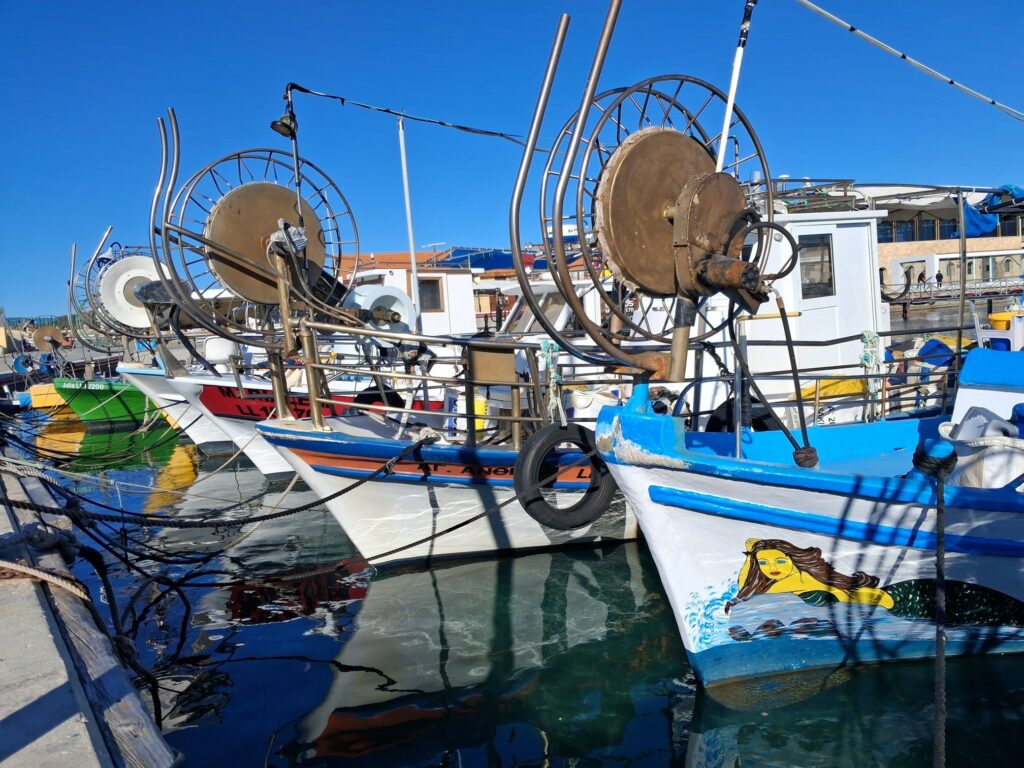
There are several alternative methods to bottom trawling, more selective and less harmful to the seabed. These include kofinella, traps, gillnets, trammel nets and longlines, which are already used by small-scale Cypriot fishermen.
– Oceana's slogan states that "restoring the oceans means that 1 billion people can enjoy a healthy seafood meal every day, forever." How close or far are we from this goal?
– We are still quite far from this goal. Globally, FAO data show that the number of fish stocks that are unsustainably exploited continues to increase. At the same time, increasing seafood production through aquaculture is not an essential solution in itself, especially when it is based on species that feed on other fish.
Oceana's vision is a healthy and rich sea, for the benefit of people and the planet. This is what we serve every day through our campaigns and actions.
