
Proposed legislation that attempts to put order in the mess that prevails in the management of municipal waste in Cyprus through the introduction of a landfill tax, is being discussed in the parliamentary Committee on the Environment and must be adopted by the Plenary before the closing of the Parliament for the summer holidays.
It is part of the green tax reform and commitment in the National Recovery and Resilience Plan, with a completion milestone of June 30, 2026.
This is essentially a commitment made in 2021 by the Government, as part of the green tax reform in order to receive more than €1 billion by the European Commission. If the relevant regulations, concerning the imposition of taxation on the final disposal of municipal waste in landfills and the introduction of offences and penalties, are not approved, by 31 August, Cyprus will lose an allocation of €23 million. It is noted that there is no obligation to harmonize with European legislation.
It is pointed out that the Ministry of Finance was called upon to shape the final form of the green tax reform, where taxes are preferred in relevant bills / regulations. Regarding the issue of waste management in particular, the municipal waste landfill tax was chosen, pointing out the high percentage of municipal waste landfill and the need to achieve the European target of 10% for municipal waste landfill by 2035. Based on data from the Department of Environment, 68% of household waste currently ends up in landfill.
Specifically, only with the introduction of this taxation, an amount of €23 million will be disbursed, through the Recovery and Resilience Mechanism. This amount will be added to the €25 million committed to the Cohesion Policy Programme "THALIA" for the programme of sorting at source and separate collection (PDO) of waste in the Local Government Authorities (ATA). Therefore, an amount of €48 million will be available for actions related to the adaptation of the ATA for the implementation of their action plans, regarding the Pay As You Throw (PDO).
The revenues from the landfill tax will be deposited in an article of the Budget of the Department of Environment, and may: (a) Subsidize the cost of collecting garbage or recyclable materials or organic waste, and (b) be invested in projects and actions by the ATA for the rational management of waste.
The landfill tax is an environmental policy tool that aims to align the country with its European obligations, strengthen the circular economy and ensure a gradual and socially just transition, with a return of revenues for the benefit of citizens and local communities.
The amount of the tax burden, per ton of waste, will be imposed in stages, i.e. it will start from €10 per ton and will gradually increase to €70 per ton, until 2039, giving time for the development of infrastructure for waste management. Specifically, the tax per ton of municipal waste will be imposed as follows:
1. With the entry into force of the proposed regulations and until 31/12/2027, the disposal of municipal waste in landfills is taxed at a rate of €10 per ton of municipal waste, disposed of in Landfills (Landfills).
2. As of 1/1/2028, the disposal of municipal waste in landfills will be taxed at a rate, which will increase annually by €5, per ton of municipal waste, disposed of in the landfill, with a maximum rate of €70, per ton of municipal waste. That is, until 2027 it will be €10, in 2028 €15, in 2029 €20, in 2030 €25, in 2031 €30, in 2032 €35, in 2033 €40, in 2034 €45, in 2035 €50, in 2036 €55, in 2037 €60, in 2038 €65 and finally in 2039 €70.
3. Landfill tax with the introduction of PDO: With the introduction of PDO, organic waste will be collected separately, while the separate collection of recyclable materials is also expected to increase significantly. Therefore, only residual waste is expected to end up in landfills.
It is underlined that the range of prices is based on scenarios and the fluctuation of the population/households in relation to the production of all municipal waste. From 2030-2032 onwards, a significant reduction in the quantities of waste that will be taken to landfills for final disposal is expected, due to the substantial efficiency of source sorting programs and separate collection (PDO).
Therefore, despite the annual staggered increase in the tax rate per ton of landfill, from €10 per ton with the adoption of the Regulations to €70 in 2039, due to the reduction in the quantities of waste that are projected to end up in landfill, the total amount will be proportionally much smaller.
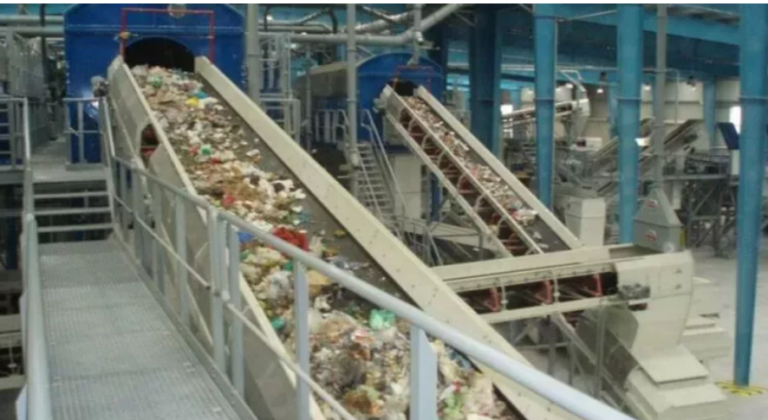
Disagreement from municipalities and communities
Concern, but also disagreement of those involved is recorded with the draft Regulations for the implementation of a landfill tax due to cost and other infrastructure that should precede (e.g. the implementation of the pay as you throw PDO) and operate before the implementation of the tax.
It is emphasized that the representatives of the Union of Municipalities, but also of the Communities, do not consent to the introduction of the proposed taxation, stating that the implementation by the State of the necessary infrastructure and policies that will lead to a substantial reduction in the percentage of waste, which is led for final disposal to landfills, must precede and then the proposed taxation must be implemented.
According to the municipalities, the mishandling and the lack of timely planning led to sanctions against the Republic of Cyprus and now the price of these failures is now being passed on to households.
Based on the plans, the Landfill Tax will be paid by the Local Government Authorities (ATA) to the landfill manager and then, the manager will pay the tax in an appropriate revenue article of the Budget of the Department of Environment, so that with these credits compensatory measures will be promoted, which will act as reciprocal, for the financing of investments, grants, sponsorships and activities of the ATA related to the rational management of waste.
The revenues from the Tax will function in return, as compensatory measures, to finance investments, subsidies, sponsorships and activities of the ATA for the management of municipal waste. They concern investments in facilities, equipment and services for municipal solid waste management that promote the circular economy in the context of the implementation of the Pay As You Throw (PDO) system.
It is noted that Cyprus is among the Member States of the European Union with a high per capita production of waste and a particularly increased percentage of municipal waste disposal in Landfills and remains far from the European target of limiting landfilling to less than 10% of municipal waste by 2035.
