
The Republic of Cyprus is among the member states of the European Union that are immediately proceeding with the utilization of the European technical proposal for age verification in the online space. As announced by the President of the Republic, the proposal is expected to be integrated within the year in the national application "Digital Citizen", which is under the Deputy Ministry of Research, Innovation and Digital Policy.
At the same time, the Government is going one step further, putting on the table the setting of the age of 15 as the minimum limit for creating and maintaining an account on social media platforms. The aim is to protect minors, strengthen the role of the family and make the platforms themselves more compliant.
The relevant bill, which is currently being drafted, is expected to define the scope, the obligation to verify age, the penalties in case of non-compliance, as well as the necessary transitional provisions.
Europe-wide mobilization
Governments across Europe are rushing to exclude children under the age of 15 from social media. France has already approved its ban. Denmark reached a political agreement. Spain is considering a stricter age limit of 16. Greece, which is expected to implement its own ban from 2027, as well as other countries, have put pressure on Brussels for a unified European approach. This pressure seems to be paying off, after the President of the European Commission made it clear on platforms that "there are no more excuses" for not protecting children online and announced that the EU's own age verification app is technically ready to be implemented.
The app asks users to confirm their age with official documents or digital IDs. It then issues a confirmation using zero-knowledge proofs, providing platforms with proof of age without exposing any personal data. It is open-source software, designed to integrate with national digital wallets, and is already ready for TikTok, Instagram, Facebook and Snapchat.
The European Commission has issued a recommendation calling on Member States to speed up the use of the app so that it is available to citizens by the end of the year.
All four platforms mentioned above are already under EU investigation for failing to protect minors, with the Commission's committee on child safety to reserve its conclusion next summer.
The plan of Cyprus
The Deputy Minister of Research, Innovation and Digital Policy, Nikodimos Damianou, speaking the other day on Alpha TV, clarified that the 15-year limit promoted in our country will not be just a formal "consent", but an active access barrier. The verification process will be based on the use of the "Digital Citizen", where the user, when logging into a platform, will scan a QR code. The application, drawing certified data from the Population Registry, will confirm age without revealing additional personal information, ensuring privacy. It is considered important that the platforms will draw the information from the Civil Registry and therefore it will not be able to be altered.
In terms of the implementation schedule, the Republic of Cyprus aims for full operational readiness within 2026 or at the latest in early 2027, in line with the planning of the rest of the European states. "The legislation we are working on will be in line with the Digital Services Act and the GDPR, ensuring that the penalties for non-compliant platforms will be substantial and dissuasive," noted Mr. Damianou.
Experiences and challenges
The experience of other EU member states highlights a series of challenges, which the Cypriot State is called upon to manage. The main concern of human rights experts and organizations concerns the collection and management of sensitive personal data. Age verification - whether through government applications or through third-party providers - requires the processing of data that, in the event of a leak or cyberattack, jeopardizes the digital security of minors. "We must not trade one risk for another," analysts warn, underlining that a child's "digital file" will remain online forever.
Detours are a headache
The part of technical bypasses is the thorn in the side of any attempt to restrict the access of minors. Despite the implementation of strict state verification mechanisms, the nature of the internet and the ingenuity of young people are constantly creating "windows" for which the Cypriot State must be prepared.
First, the use of a VPN, which allows the user to hide their location, transferring the connection to countries where restrictions are non-existent. Second, the use of third-party accounts, where teenagers use the credentials of older siblings or parents to "trick" the verification system. Third, the transition to "shadow" content platforms, smaller and less regulated applications, which offer similar social networking services away from strict filters. Finally, the disabling of digital authentication, where users exploit security gaps in online versions of browsers, which often present less stringent controls compared to official applications.
These simple techniques that are listed make it clear that no digital wall is impenetrable.
The key is the technical implementation of the measure
The critical role of the technical implementation in the success of the project is underlined by the internet expert, Dinos Pastos, speaking to "F tis Kyriakis". He even points out that the use of the "Digital Citizen" is the most appropriate solution for the interconnection of a real identity and a digital account.
Mr. Pastos noted that if the system requires full identity and account matching through the Digital Citizen, security is significantly enhanced. He also expressed the view that in order to be effective, the measure should limit the ability of an adult to maintain multiple accounts.
Regarding the use of VPNs, through which minors may attempt to create accounts in foreign countries where there will be no strict filters, Dinos Pastos admitted that this is not excluded. However, he believes that for prevention purposes, social media platforms will universally apply the identification policy. He also explained that checking IP and geolocation will make the task of minors looking for alternatives very difficult. A bet for him is also the use of third-party accounts, which will be particularly difficult to control.
Dinos Pastos, however, appears realistic and emphasizes that in such matters there is no 100% success. And if there is universal success, this will be done in stages. The goal is mass deterrence from popular platforms today. If the security policy of states and companies is coordinated, then circumventing the measures will be significantly more difficult for the most... inventive minors who will attempt to go against the ban.
Regarding personal data, Dinos Pastos clarifies that under certain conditions, the use of the "Digital Citizen" can offer safeguards, as the platform will only be able to receive confirmation of age and not all of the user's details. The crucial question remains the scope of the data that will be exchanged, so it all depends on how the measure will be implemented.
It is worth noting that in his public statements, the Deputy Minister of Research stated that the Republic of Cyprus will be able to impose sanctions on platforms that will not comply with the regulation that will be implemented.
Fotini Tsiridou: The protection of children is the obligation of all of us
 Member of Parliament for Limassol DISY
The discussion about setting a minimum age limit on social media is necessary, but it certainly cannot be exhausted in the number of the limit. The limit is definitely needed. International experience, however, shows that simple prohibitions are easily circumvented and create an illusion of protection.
Platforms are designed environments that leverage data and behavioural influence mechanisms to maintain attention. When the user is a minor, the imbalance is a given.
The question, therefore, is not only what age will be set as a limit, but how the protection of children is ensured in practice.
My position is clear.
>First, it requires the implementation of reliable age confirmation mechanisms by the platforms themselves.
>Second, parental controls should be enabled as the default for minors.
>Third, the state must effectively implement the Digital Services Act, with controls and penalties where there is a violation.
>Fourth, digital citizenship must be systematically integrated into education, so that children understand the environment in which they move.
Responsibility cannot be shifted solely to families. A functional institutional framework is needed that responds to the reality of the digital age.
The legislative proposal I submitted
The bill I submitted to the Parliament for the education of our children aims to provide tools, not prohibitions. To help them understand the digital world they already live in instead of letting them navigate without a compass. Education in digital citizenship is now a necessity. The school has a responsibility to prepare students for real life. And today, real life includes the internet. Reality is faced with knowledge, not just with prohibitions.
Children are underage citizens and their protection is an obligation for all of us.
Pavlos Mylonas: Legislation alone cannot achieve the desired results
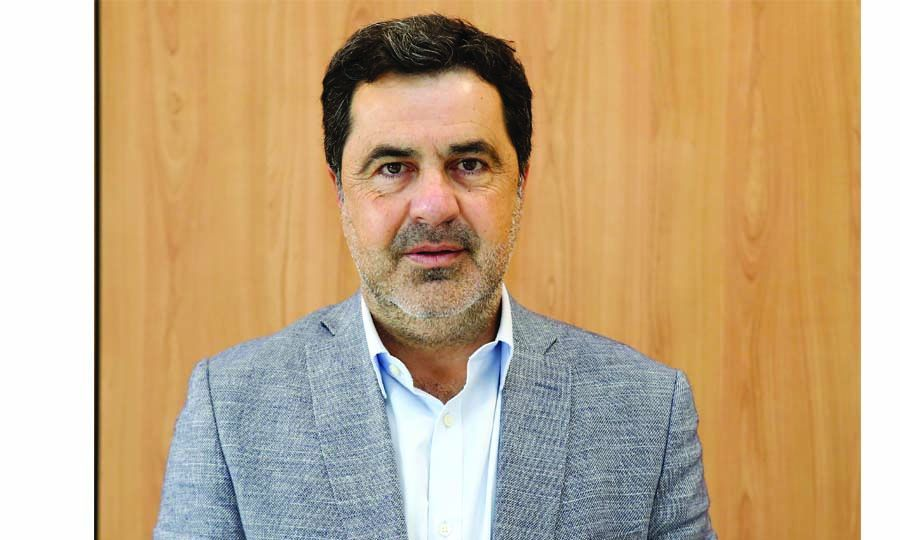 Member of Parliament for Limassol DIKO
The negative effect of the screen either by phone or tablet on humans is scientifically documented. Addiction, isolation, anger and the absence of any social poetry of man. That is, human-to-human interaction. Conversation, hearing, smells, feelings. The virtual world deliberately causes addiction. Even worse when we are talking about children from the age of 5, even earlier, to adulthood.
Infancy up to 9-10 years, according to scientific research, determines personalities, characters and especially mental development. These documented data have long been sounding the alarm for those who are still fighting for the continuation of the human species as we know it. Neither profit nor the need for survival can justify the criminal mistake of parents to leave our children in front of screens. All research confirms the importance of children's contact with nature and the environment and in particular the interactive relationship between father, mother and child.
8 months ago I took an initiative to control the use of the internet for children under the age of 15. A little later, other colleagues took a similar initiative. Then the government announced its intention to submit a government bill on this issue. The EU has also begun to realise the magnitude of the problem by taking action to limit the use of the internet by children.
Unfortunately, the government bill was not submitted to the outgoing Parliament. I hope and expect that soon the legislation will protect our children by giving them the opportunity, along with the knowledge of technology, to learn that a person needs interaction, emotions, boundaries and education of the soul, entertainment in their real lives and not in fake worlds. In saying this, I should remind parents in particular that legislation alone cannot achieve the desired results.
