
"Guided by science and ethics and an ally of the whole society, we can make Cyprus a model country where every patient will enjoy the best possible care and respect through a person-centred health care" stressed the President of the National Bioethics Committee of Cyprus, Professor Constantinos Fellas, welcoming the event entitled "Person-Centred Health Care" organized by the Committee on April 21, 2026 at the University of Nicosia in collaboration with the Cyprus Medical Association, the Cyprus Federation of Patients' Associations, the newly established National Centre for Clinical Documentation and Quality of Health Services and the International Centre for Compassionate Care.
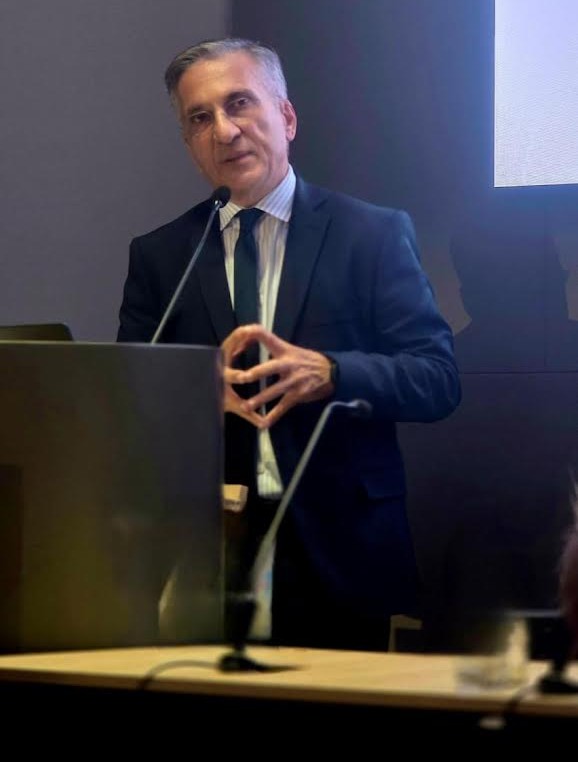 Professor Konstantinos Fellas
The conference was held on the occasion of the European Patients' Rights Day, which is the 18th of April each year and concerned the recognition of the problems that arise in the relationship between doctors and patients, examining the role of medical science, (bio)ethics and humanities in improving their dialogical relationship. "It is not enough for today's doctor to be only an excellent scientist, he must also be a companion, to be able to explain in simple words, to listen, to inspire confidence and to empower the patient to participate substantially in decisions concerning his health", stressed the president of the Pancyprian Medical Association, Dr. Petros Agathangelou, in his own intervention.
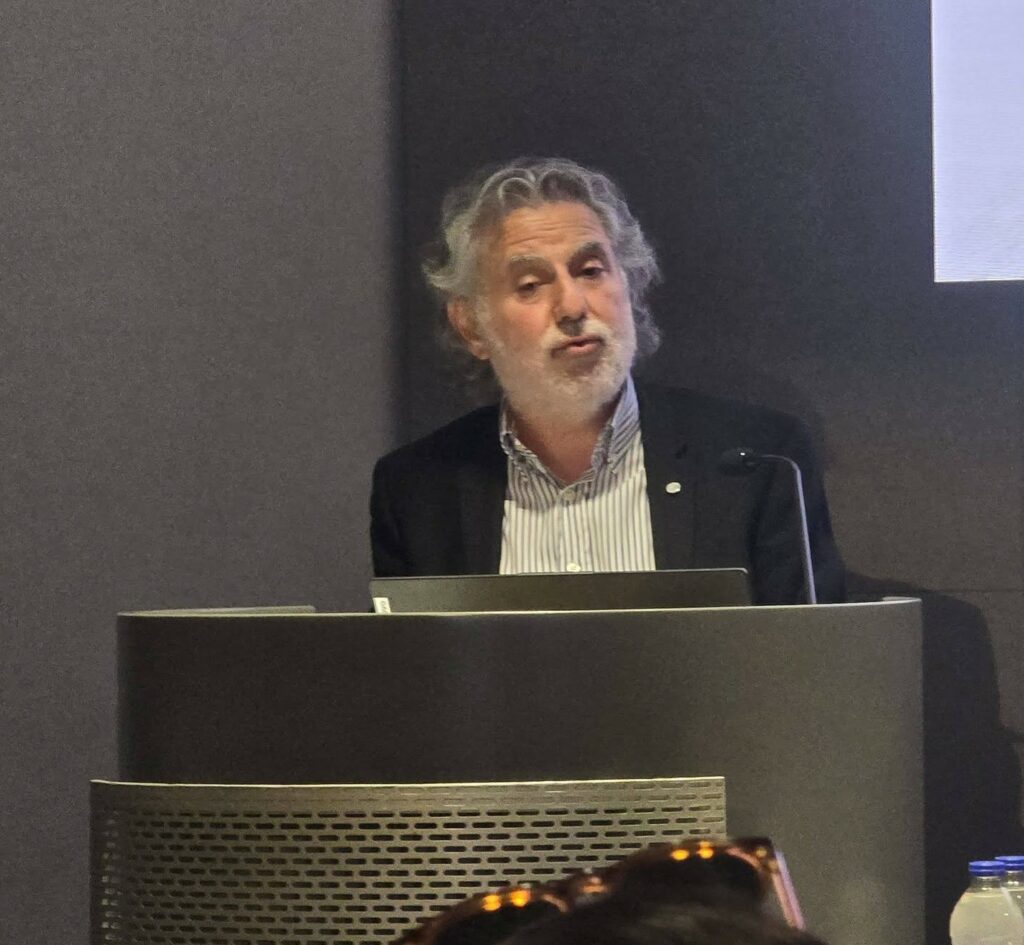 Dr. Petros Agathangelou
"Our common goal is a Health System that is not limited to treating patients, but that responds to the real needs of society and is constantly evolving, always focusing on the beneficiary and his needs," said the general director of the Health Insurance Organization, Efi Kammitsi, in her own greeting. Present was the Minister of Health, Neophytos Charalambidis, who congratulated the organizers and especially the scientific committee for the formulation of the policy document for the development of Person-Centred Care presented at the end of the conference. He also referred to the institutionalization of the Patient Ombudsman by the government, "a fixed request of organized patients", as he said. He added that "this is an independent institution that will ensure the protection of rights, strengthen the voice of patients and contribute to transparency and accountability in the health system."
 Efi Kammitsi
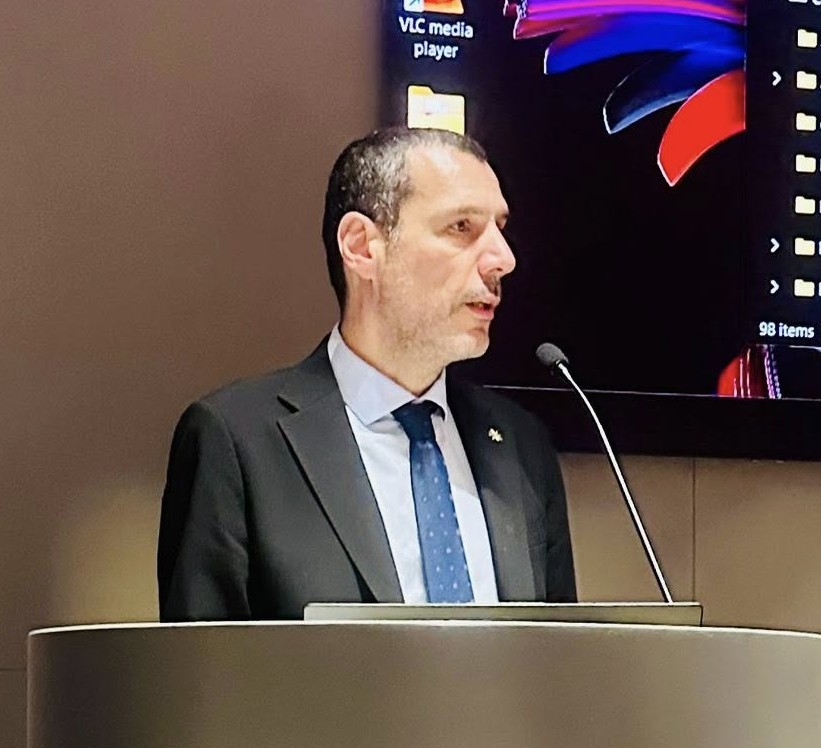 Minister of Health Neophytos Charalambidis
Greetings were also addressed by the Deputy Minister of Social Welfare Klea Hatzistefanou Papaellina, the President of OSAK Charalambos Papadopoulos, the Secretary of the Federation and President of the Pancyprian Thalassaemia Association Miltos Miltiadous, the Director of the International Institute of Compassionate Care Panikos Panagiotou and Professor Father Georgios Samoutis Chairman of the Coordinating Committee of the National Center for Clinical Documentation and Quality of Health Services. The moderator of the conference was Dr. Mary Kyriakou, an advanced practice nurse, who also coordinated the discussion that followed, together with the honorary president of OSAK, Mario Kouloumas.
During the event, Professors K. Fellas and G. Samoutis awarded an honorary plaque to the Emeritus Professor of General Medicine at the Medical School of the University of Crete, Christos Lionis, for his great contribution to the creation of the National Center for Clinical Documentation and Quality of Health Services, since he has been an external partner of the Ministry of Health of Cyprus for the last 8 years offering his expertise and knowledge for this purpose free of charge.
The unique relationship between doctor and patient
"The essence of the practice of medicine and the generating factor of medical research continue to exist in the unique relationship that develops between a doctor and a patient, who in order to be cured must trust his doctor" said Professor Fellas and added: "Without trust, no therapeutic relationship (and not only) can proceed. At the same time, the doctor must listen carefully to the patient's narrative, which may be the quintessence of the treatment. The attentive doctor will learn a lot about himself and his art by listening to his patients.
Human medicine cannot develop and act in an inhospitable environment – it requires the expression of humility and gratitude on both sides and is an integral part of the patient's person-centred health care. Bioethics, as an important pillar of scientific research but mainly as a defender of social well-being, wishes and expects to contribute with its own intervention to the strengthening of scientific research and the improvement of social cohesion, values and institutions that promote dignified and quality living and the promotion of a person-centred health care in our country. As the Cyprus National Bioethics Committee – he continued – we recognize the importance of humanitarian medicine and aim to disseminate ideas, knowledge and suggestions on this issue as an official member of the Board of Directors of the National Clinical Documentation Centre".
The bioethical dimension in every aspect of the disease
"The bioethical dimension is present in every aspect of any disease," said Professor Konstantinos Fellas and continued: "From the right to access innovative treatments, to end-of-life support in cases of incurable conditions, the principles of Bioethics – respect for autonomy, fairness in the allocation of resources, beneficence (promotion of good) – must guide our decisions. The moral consideration ensures that progress serves man without instrumentalizing him. The Cyprus National Bioethics Committee has a key role in bringing these ethical principles to the center of the discussion about person-centred healthcare, so that our society can deal with various diseases with humanity, empathy, humility, prudence and responsibility.
The management of diseases in modern society through the prism of person-centred patient health care is a multi-level challenge. Medically, we are called upon to provide effective treatment and monitoring over time. Socially, we must support patients so that they can be integrated equally into society, without stigma and discrimination. And ethically, we face critical questions: How are limited resources distributed fairly to care for all? How do we balance the prevention of new cases with the care of those already living with the disease? How do we ensure that the patient has a voice and autonomy in decisions about his treatment, even when it extends throughout his life? Addressing the above challenges requires joining forces.
No single agency alone can provide all the solutions. State policy, the scientific community, health professionals, patients and their families and voluntary organizations, we are all links in a chain that, if worked in a coordinated manner, can bring about the much-needed change for the benefit of patients."
