
TRAFFICKING IN CYPRUS IS NOT A 'PROBLEM OF OTHERS' . . . - Filenews 11/4 by Marios Demetriou
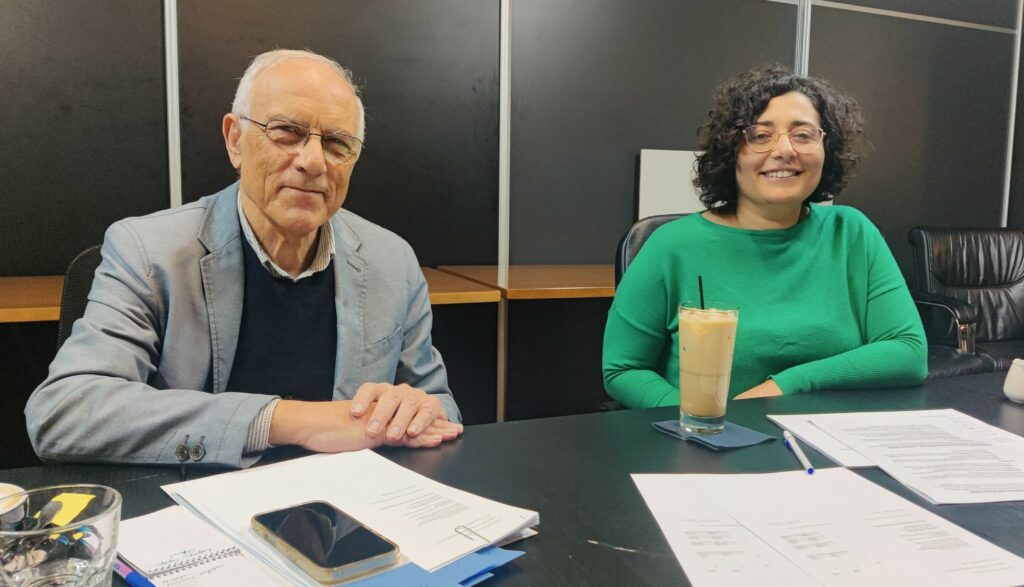
"Trafficking in Cyprus is not a 'problem of others', it is a crime that happens in our apartment building, on our child's mobile phone," said the executive president of the humanitarian non-governmental organization Cyprus STOP Trafficking (CST) Paraskevi Tzeou speaking at the general assembly of the organization that took place on March 31, 2026 in Nicosia. She said that "labour exploitation remains the most prevalent form of human trafficking in Cyprus (32% of cases), with the vast majority of victims being third-country nationals who are victimised through fraudulent online ads, while data from recent years for Cyprus show a clear shift towards cybercrime". She added that "the sexual exploitation of women victims of trafficking has moved from the cabarets of the past to private apartments (Airbnb/Booking), where booking and advertising are done exclusively online, making the crime 'invisible' to neighbours.
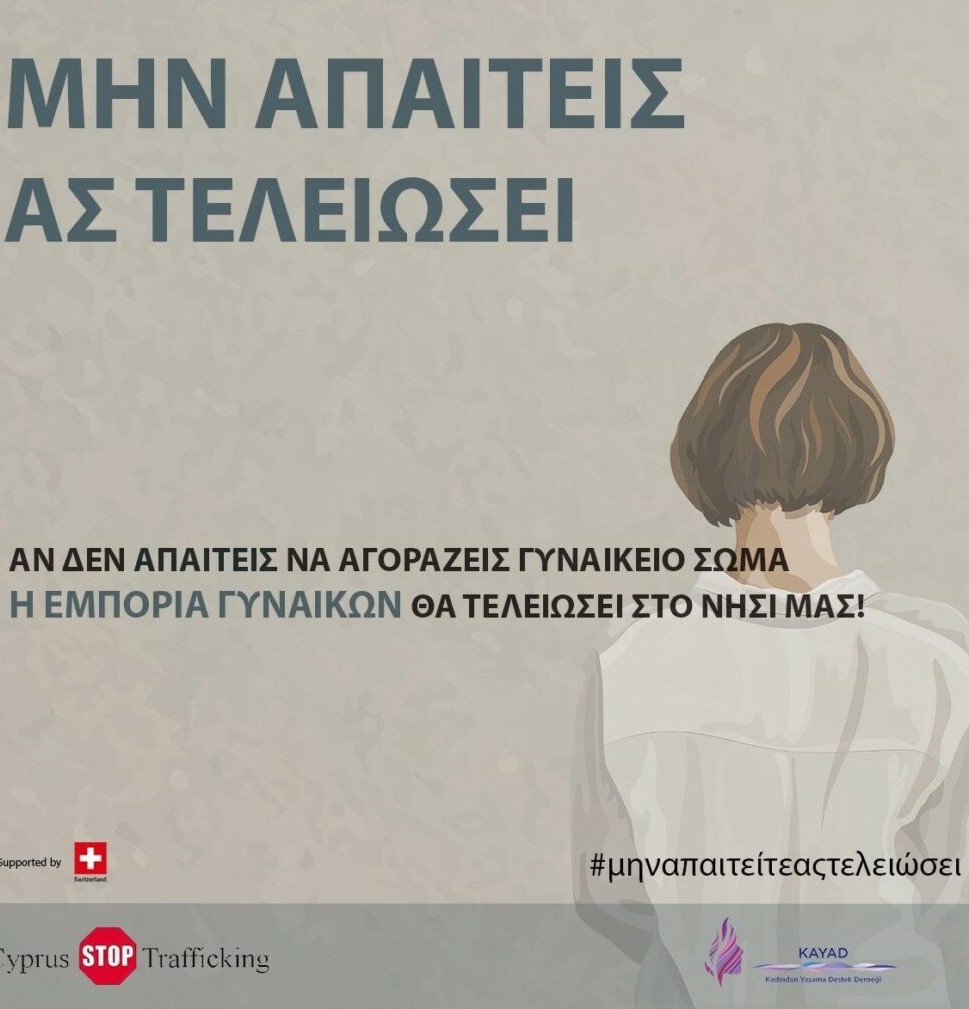
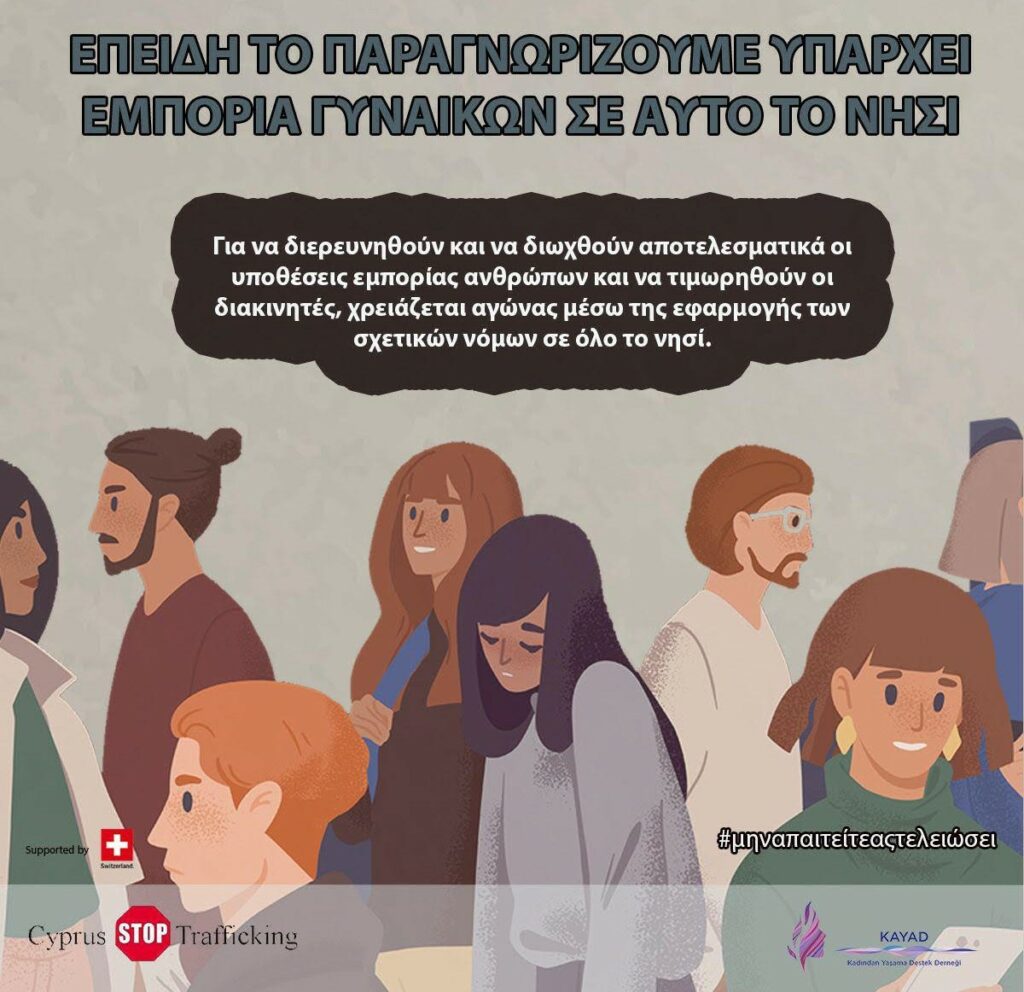
It is a challenge for the Authorities – she continued – that the National Action Plan 2023-2026 for the Prevention and Combating of Trafficking in Human Beings and for the Protection of Victims now focuses more on the digital literacy of the Police and citizens." Ms. Tzeou cited as a positive development the recent transfer (February 2026) of the responsibility for handling human trafficking cases, from the Deputy Ministry of Migration to the Ministry of Justice, "after intense pressure from NGOs that denounced institutional inaction" as she underlined. Giving a brief overview of the organization's activities from the previous general assembly, Paraskevi Tzeou recalled the offer of assistance to recognized victims in Cyprus and abroad (financial or otherwise), "on the initiative of the organization or at the request of the Police" as she said. She also referred to the referral of possible cases of human trafficking to the Police and the completion of the joint information campaign with the Turkish Cypriot organization KAYAD that was carried out with the financial support of the Swiss embassy in Nicosia.
Focus on the work of enlightenment
We note that Cyprus STOP Trafficking was founded in 2007 by the current honorary president Androula Christofidou Henriques and for several years until recently, it had three shelters for the hospitality and protection of victims of trafficking. Today the organization has focused on the work of enlightening the public and special groups and participates in various actions together with other non-governmental organizations, as well as with organizations in the occupied territories that support women victims of trafficking and gender-based violence. CST participated in the Multidisciplinary Coordination Group against Trafficking in Human Beings in Cyprus which is the main mechanism for the supervision, coordination and implementation of anti-trafficking policies and is composed of officials of government departments and representatives of non-governmental organizations. The executive chairwoman of the organization referred to the positive assessment of the Republic of Cyprus in the context of the US Department of State's annual Report on trafficking in human beings worldwide, published in September 2025 (TIP Report 2025), where Cyprus remains in Tier 1. This means – she added – that the government meets the minimum standards for the eradication of human trafficking and continues to make serious efforts, with an increase in the convictions of traffickers and the granting of compensation to victims directly by the perpetrators, through court decisions."
Now psychological manipulation instead of violent abduction...
As Paraskevi Tzeou said, "in the past, recruitment required physical presence and direct contact. Today, traffickers use the internet to cover their tracks and maximize control over their victims. Forced abduction has been replaced by psychological manipulation. Traffickers create fake social media profiles, gain the trust of victims (often minors or vulnerable young people), and lure them in with promises of a relationship, career, or financial aid. Perpetrators use the data we ourselves share (location, interests, financial status) to identify who is most vulnerable. TikTok, Instagram, and Facebook have unfortunately become the modern search grounds for victims. Even when the victim is exploited, control is exercised digitally. Traffickers use GPS to track victims' movements and encrypted communication applications to give orders, making it extremely difficult for police to locate them." Referring to the ways to protect the public, she said: "Firstly, we never send sensitive material to people we only met online, secondly, we always cross-check the details of a company before accepting a job in Cyprus or abroad, and thirdly, we talk to our children about the dangers of the internet without fear, but with knowledge."
The five online traps
The executive chairwoman of the CST stressed that "the most common traps encountered on the island include websites promoting 'massage services' or 'escorts' in Nicosia or Limassol, which are often the frontrunner for forced sexual exploitation of women. Victims are screened via GPS and digital apps, making them "invisible" imprisoned in simple apartments. Also, organized networks approach vulnerable women mainly through Facebook, offering them money for a "typical" wedding in Cyprus, which, however, ends in physical and psychological abuse." Regarding labour exploitation, she said that "many young people from third countries arrive in Cyprus with promises of studies and jobs that they found on the internet, only to find themselves "in debt" to traffickers who confiscate their passports and force them to work under miserable conditions in agriculture or livestock."
Referring to the "five biggest dangers of the internet today", Ms. Tzeou first spoke about sextortion. "The perpetrators," she said, "take nude photos and then threaten to publish them if the victim does not obey orders of sexual or economic exploitation." She also referred to fake job ad scams mainly for models, sales promoters or domestic workers in Cyprus, where "the victim arrives at the workplace and discovers that he is imprisoned". She went on to refer to exploitation through live internet connections (live streaming), where "victims are coerced into sexual acts in front of a camera (cyber-trafficking) for viewers who pay with cryptocurrencies".
She also spoke about the approach of children and adolescents (grooming), through gaming platforms where "the trafficker gains the trust of the child by playing with him". Finally, she referred to financial control and the use of digital wallets and cryptocurrencies for the movement of black money, which makes the profits of traffickers untraceable."
"Criminalization" of a victim – the case of Ayia Napa
Paraskevi Tzeou made special reference to the memorandum on labour exploitation and human trafficking in the tourism industry that the organization submitted to the Parliament (to the Human Rights and Labour Committees) on January 26, 2026. The occasion was the British Channel 4 documentary that had been broadcast a few days earlier and had revealed the systematic labour exploitation and sexual harassment of British women in Ayia Napa, who come to Cyprus with promises of work in hotels or restaurants, but end up in human trafficking rings, where they are forced to work without legal contracts, to be paid little or nothing, living in squalid rooms and receiving threats or sexual harassment.
"These testimonies are not isolated incidents, but highlight a gap in the supervision of the tourism industry that allows the action of modern slavery rings," the CST memorandum emphasizes, among other things. It is added that "this case goes beyond the limits of labour disputes and falls under the provisions of Law 60(I)/2014 on Trafficking in Human Beings.
The evidence recorded includes recruitment through deception with misleading promises about working conditions and remuneration, financial coercion (debt bondage) with the trapping of victims through artificial debts for accommodation, abuse of a vulnerable position by exploiting ignorance of their rights and their young age. Gaps in the National Referral Mechanism (NRM) and a delay in the identification and identification of victims by the Police's Anti-Trafficking Bureau were also recorded, leaving individuals exposed to their exploiters."
According to the memorandum, "there is understaffing of the Social Welfare Services and although the Police can locate a victim, the SWS are often unable to offer immediate specialized support or appropriate housing, as a result of which the victim remains in a vulnerable situation. Labour exploitation (as in the case of Ayia Napa) is often downgraded to a "labour dispute", with the result that victims do not receive the protection they are entitled to as victims of trafficking. The continuing trend of downgrading trafficking in human beings, from a matter of flagrant violation of human rights to a matter of migration management, "criminalizes" the victim and amnesties the trafficker. The investigation of the cases must be completely disconnected from the migrant status of the workers and focused on the criminal prosecution of those who exploit human life for profit."
Sexual slavery and forced labour
Paraskevi Tzeou referred in particular to the joint report authored by researchers Christina Kaili (MIGS) and Mine Yucel (Prologue Consulting) based on their research that lasted from April to July 2025. The research was carried out in the framework of the United Action Against Human Trafficking Programme funded by the European Union and implemented by the Turkish Cypriot civil society Refugee Rights Association and the Greek Cypriot Caritas Cyprus.
As far as the free areas are concerned, the survey underlines that "trafficking in human beings in Cyprus does not only concern sexual exploitation, but to a large extent forced labour in the field of domestic employment". It is emphasized that "the current system of issuing work permits, which links the legal residence of the employee with a specific employer, creates conditions of "modern slavery".
The survey also emphasizes that "women who work and live in private homes are the most vulnerable, as the authorities' access to screening is limited, making it difficult to identify victims." Regarding the bi-communal aspect of the investigation, it is pointed out that "traffickers take advantage of the special legal status and the lack of official cooperation between the two communities and in view of this, many victims are transferred from the occupied areas to the free areas".
The research refers to the need to implement a unified strategy that goes beyond the political problem by focusing on the protection of the human rights of victims on both sides of the dividing line. Human trafficking in the occupied areas of Cyprus is essentially uncontrolled, since according to the research of Christina Kaili and Mine Yucel, the occupying regime has only recently criminalized the crime of human trafficking and does not have fundamental structures for the protection of victims and the criminal prosecution of perpetrators, unlike the Republic of Cyprus which has a well-developed legislative framework and national mechanisms against trafficking in human beings.
As Nelson Neocleous, a member of the board of directors of CST, pointed out, "in addition to the promotion of women through the internet, it is known that on the Nicosia-Morphou road there are "fortified" cabarets where many young women are sold as sex slaves, but also in general the situation of human trafficking in the occupied territories is clearly worse, such as are recognized by both Turkish Cypriot activists and the US State Department Report."
Training of judges and "immigration" management
The memorandum expresses the organization's concern that "the judiciary in Cyprus often finds it difficult to recognize modern, 'invisible' forms of coercion". It is added that "to stop the impunity of exploiters in Ayia Napa and elsewhere, judges must be trained in recognizing psychological coercion and abuse of vulnerable position, because trafficking does not always require physical violence or chains, since the threat of deportation or artificial debt are equally strong shackles. Also, the judicial process must protect the victim from re-traumatization.
The comparison between the victim and the perpetrator and the questioning of the credibility of the victim based on his immigration status must stop and the penalties imposed must be proportional to the seriousness of the crime. Finally, the provisions of the law for the immediate payment of compensation to victims from the confiscated income of the exploiters must be activated. As Cyprus Stop Trafficking, we are sounding the alarm about the systematic slide of the state into a "migrant" management of human trafficking. This approach invalidates the essence of Law 60(I)/2014. When the authorities focus on whether a worker in Ayia Napa has "legal documents" instead of investigating whether he lives in slavery, then the state becomes the unwitting accomplice of the exploiter. We call for the complete decoupling of the protection of victims from their immigration status. Human trafficking is a crime against humanity, not an administrative violation of borders."
