
NIKOLAS IOANNIDIS REVEALS TO 'F' - BLUE CARD, DIGITAL NOMADS AND 'NAUCRATES' AGAINST IRREGULAR MIGRATION - Filenews 11/4 by Michalis Chatzivasilis
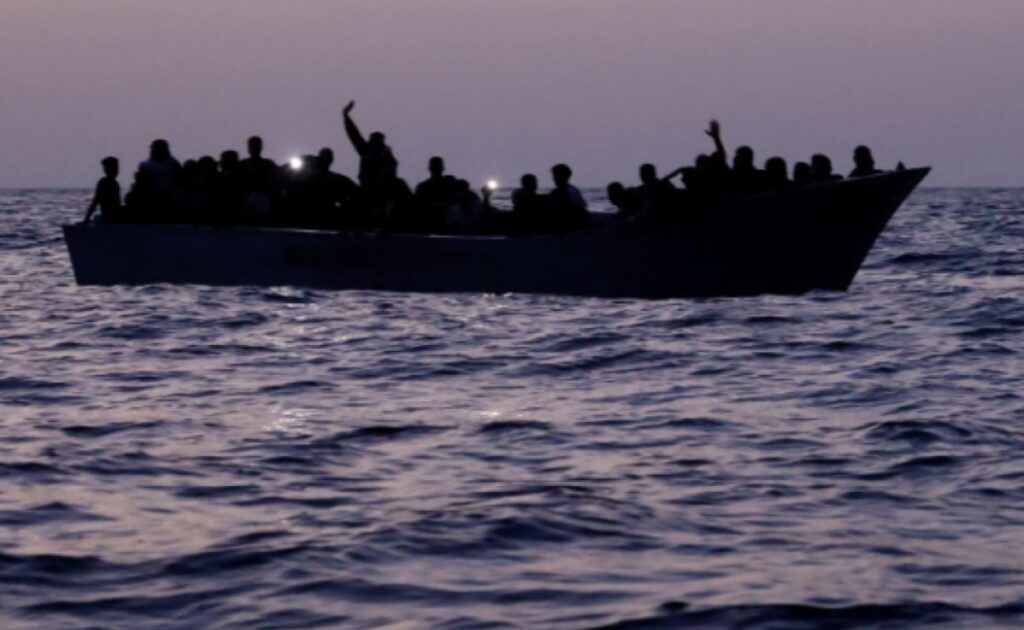
On an organized basis with structures, strategy and plans that changed the unprecedented situation of 2020-2022, the policy to deal with irregular migration is moving, with the numbers being reversed to unprecedented levels. However, the challenges are many, which is why the Deputy Minister of Migration and Asylum, Nikolas Ioannidis, is on constant alert due to the change in the political situation in our region. The Deputy Minister emphasizes to "F" that irregular migration no longer means long-term stay, he gives the stigma that the reduction of flows must continue and legal migration must be better managed. He calls on Syrian nationals who are in Cyprus to participate in the voluntary repatriation program, since most of them no longer seem to meet the conditions for asylum. It announces that programs for legal work such as the blue card, digital nomads, the visitor program and the digital platform EU talent pool are coming.
– What challenges is Cyprus currently facing in relation to migration?
We are living in a period of intense international uncertainty, successive crises and geopolitical upheavals. This inevitably affects migration as well, which is not an isolated issue, but a multidimensional, horizontal issue that is interconnected with social cohesion, public order, national security, the credibility of the state and, of course, with the economy. Society today asks the state for stability, predictability and security. That is why citizens' expectations of immigration policy are quite justifiably high.
The main challenge for Cyprus is to reduce irregular flows, further enhance returns, implement the new European framework on migration and asylum in a timely and effective manner and, at the same time, streamline legal migration, with a view to strengthening the country's economy. From the first day of our government, we set a clear goal: to turn migration from a problem into a solution. In other words, to move from passive management to organized politics, with clear goals, institutional tools and measurable results.
The establishment of the Deputy Ministry of Migration and International Protection, in June 2024, by the Christodoulides Government, was an institutional step that strengthened the coordination, specialization and faster implementation of the Government's migration policy. 2025 was the year in which this course was captured in the clearest way, as shown by the results I mention below. Now, 2026 is a year in which we are called upon to consolidate the changes, with the same seriousness and without experimentation or populism.
In short, our goals for 2026 are to continue measures to reduce illegal flows, to keep returns at high numbers, to reduce pending asylum applications, mainly from Syrians, and to improve services related to legal migration, with the aim of further strengthening the economy.
– Recently, the policy of deportation has been implemented for persons with subsidiary protection status if they are found to pose a security risk or if they have been convicted. What is the philosophy of this measure?;
– Security is an integral part of migration policy. International protection is a serious institution, which should be given only to those who are really entitled to it, and not turned into cover for persons who pose a danger to public order or national security. The Republic of Cyprus has an obligation to ensure both the protection of the truly vulnerable and the safety of its citizens at the same time.
For this reason, we submitted to the House of Representatives and passed a relevant amendment to the Refugee Law, which now allows the Republic to remove supplementary protection status when foreigners pose a danger to public order and security. This is a necessary, institutionally correct and fully harmonized intervention with the European framework. This new tool strengthens the ability of the state to act where there are reasons of public order and security and not to allow the abusive invocation of asylum. The framework is already applied in cases where the prescribed legal conditions are met, in cooperation with the competent services of the Republic. What I want to emphasize is that asylum seekers and holders are not above the law and that the Republic of Cyprus now has a clear and modern legal tool to deal with security-related cases.
– What are the plans for the immediate future in relation to irregular migrants?
Our plan is clear: to keep irregular flows at very low levels, to further strengthen returns and to complete the country's full adaptation to the European Pact on Migration and Asylum. This means the continuation of increased surveillance of sea borders and the Green Line, faster asylum procedures, management and strengthening of return mechanisms.
At the same time, in 2026 we are placing special emphasis on the issue of Syrians, who are the largest population group of asylum seekers and beneficiaries of protection. The resumption of the examination of their requests was appropriate, in the light of the developments in Syria. Now, both the rejections of applications that do not meet the legal criteria and the procedures for withdrawal of status where the legal conditions are met are proceeding.
At the same time, a new plan for the voluntary repatriation of Syrians is being prepared, which will allow a family member to remain in Cyprus to work, after withdrawing an asylum application / revoking asylum status, while the rest of the family will have to return to Syria. I call on Syrian nationals to participate in the programme, since most of them no longer seem to qualify for asylum.
I want to make it clear that anyone who is not entitled to remain in the Republic of Cyprus should be returned through legal, fast and effective procedures. This is necessary both for the credibility of the asylum system and for the protection of social cohesion. The state cannot give the message that irregular entry or abuse of asylum ultimately leads to long-term stay. On the contrary, the message is that legal immigration is the route to be followed, not illegal entry through criminal networks that smuggle people.
– The Deputy Ministry of Migration is one of the arms on the issue of legal employment. In which areas could immigrants help and how can those who are legally in Cyprus be utilized?
– The Deputy Ministry also has a clear developmental role. Cyprus is in need of labour and specialized personnel in specific sectors of the economy. Our aim is not to allow irregular immigration to replace legal routes, but to better organise legal immigration so that the real needs of the labour market are met in a rational way.
In this direction, we are in close cooperation with the Ministry of Labour and Social Insurance, with other competent ministries and with the social partners, such as the CCCI, the OEB, the OSEOK, the PASYXE, the STEK and other bodies, so that legal migration policies are aligned with the real needs of the labour market, always within the framework of the relevant legislation. At the same time, we are also moving on a bilateral level, with countries such as Egypt and India, in order to form more organized, safe and functional channels of employee mobility.
In addition to the European Blue Card, there are also additional tools, such as Digital Nomads and the pilot project "Visitor – Program Attendance" for maritime and aviation training. Of particular importance is the recent final approval of the EU Talent Platform, the EU Talent Pool, during the period of the Cyprus Presidency. It is a new European digital platform that will connect employers in the EU with jobseekers from third countries who have the skills needed by European economies. The platform will provide clear information on procedures, candidates' rights, fair recruitment principles and decent work conditions, and will complement national immigration procedures and not replace them. It is expected to be fully operational by 2027. This tool is of particular value because it strengthens legal migration routes, helps to cover labour shortages and limits the scope for exploitation by smuggling networks.
I would like to emphasise once again our position that legal immigration routes are the best way to meet the needs of the economy, to curb the abuse of asylum and to crack down on human trafficking rings.
-What is the European Blue Card and who does it concern?
– The European Blue Card is a special residence and work permit for highly qualified third-country nationals. It is a tool for legal migration and is aimed at people who have the necessary qualifications or skills to meet the needs of the labour market in highly skilled sectors.
Its implementation in Cyprus started in 2025 and is considered a tool of strategic importance, because it links migration policy to growth, the competitiveness of the economy, the needs of the labour market and the strengthening of the country's productive and technological footprint. In the Republic of Cyprus, the Blue Card currently concerns highly skilled employment, mainly in the fields of Information and Communication Technologies, the pharmaceutical industry and shipping. For us, the Blue Card is of particular importance, because it is precisely this kind of legal avenue that must be strengthened if we want to curb the abuse of asylum. Simply put, it concerns people who can come and work in Cyprus legally, transparently and with real value for our economy and society.
– What does the National Emergency Plan provide for migration?
– The National Emergency Plan was drawn up in the context of the preparation of the Republic of Cyprus for the implementation of the European Pact on Migration and Asylum and aims to strengthen the state's preparedness against possible scenarios of increased migratory pressures or crisis. It does not only concern the first reception, but covers the entire migration flow management chain.
The plan takes into account three escalation scenarios: normal flows, increased pressure and crisis, and for each stage identifies exactly what needs to be activated. It has already been submitted to the European Commission and is expected to be approved by the Council of Ministers before June 12, 2026. The broader preparedness planning also includes the National Special Plan "Naucratis" for the management of the mass arrival of people in need of protection. Our approach is simple: serious preparation before the crisis, not improvisation when the crisis has already broken out.
In relation to the possibility of refugee crises in the future, I should emphasize that we have repeatedly raised with the European Commission the issue of practical European solidarity, which is our firm position. Cyprus, a small front-line state, with its northern part under occupation by Turkey, cannot accept any more migratory pressure. That is why, in the event of a new crisis, it is necessary to take emergency measures to protect social cohesion and the infrastructure of the Republic.
12,029 returns in one year
– The program for voluntary departure seems to be working with positive results. How many have left and to which countries?
– Indeed, voluntary departure programmes are working well and are a key part of our overall return policy. 70% of the 2025 repatriations concerned persons who made use of assisted voluntary return programmes. This shows that when there is a serious, reliable and effective return system, the incentives for voluntary compliance also increase.
In total, in 2025 we achieved 11,610 returns of third-country nationals, while together with relocations, departures reached 12,029. This is the largest number of repatriations that the Republic of Cyprus has ever achieved. In the first quarter of 2026, returns have already exceeded 2,000, indicating that this momentum continues.
In terms of the main countries of return, Syria is in first place, followed by countries such as India, Nigeria, Pakistan, Nepal and Bangladesh. The essential thing, however, is that Cyprus is now considered, at the European level, a country with a particularly effective return policy. The European Commission itself has acknowledged the performance of the Republic of Cyprus in this area, as we are among the top three EU Member States in absolute numbers of returns.
– What is the reason for the continuous decreases in arrivals and the increase in departures, which makes our country a model within the EU?
– The continuous decreases in arrivals and the increase in departures are not due to a single factor, but to a combination of targeted measures that have been implemented consistently over the last three years. These include increased surveillance of maritime borders and the Green Line, the use of cameras and drones, faster processing of asylum applications, enlightenment campaigns in countries of origin and a significant improvement in the efficiency of the return system.
This set of policies sent a clear message to smuggling networks and to those attempting to abuse the asylum system that Cyprus is no longer an attractive destination for illegal immigration. The numbers capture this change of course in the clearest way. Compared to 2022, irregular arrivals decreased by 86%, new asylum applications by 87%, while returns set a new record in 2025. At the same time, we have reduced the number of pending asylum applications below 15,000, from almost 24,000 when the Deputy Ministry was established, while our goal by the end of 2026 is to reduce them even more.
Legal immigrants at 186,000
– What about legal immigration and how could it be integrated into Cypriot society so that we do not have the phenomena of ghettoization and rivalry between citizens of the same nationality?
-As I have mentioned, immigration should not be a problem but a solution. However, it must be part of a serious state strategy, which serves social cohesion, public order/security, stability and smooth coexistence. Today, 186,000 people reside legally in Cyprus.
That is why we proceeded with the elaboration of the first comprehensive National Strategy for the integration of legally residing immigrants. This strategy emphasizes learning the Greek language, developing skills, connecting with the legal labour market, and familiarizing oneself with the way of life and culture of Cyprus.
At the same time, better management of accommodation structures and the avoidance of unregulated concentration of populations contribute to the prevention of ghettoization phenomena. Infrastructure such as the Accommodation Center in Limnes will help to make the accommodation of asylum seekers more organized and on better terms, avoiding the uncontrolled concentration of populations in inappropriate conditions in cities.
At the same time, I want to reiterate what I have stated many times: anyone who resides legally in the Republic of Cyprus must respect the legal and social framework of the country. Inclusion and security are not opposite concepts. They are two sides of the same serious immigration policy. This is exactly what our model is: legal immigration with rules, integration with rights and obligations, social cohesion, combating ghettoization and zero tolerance for delinquent behaviour.
