
"Migrant women in Cyprus are navigating a landscape shaped by their resilience, but also by the weight of constant systemic obstacles, as many are exposed to exploitation and very often to abuse, while they struggle to secure basic rights such as safe housing, employment, health care and legal guidance, in conditions of endless bureaucracy and strict work restrictions for asylum seekers," she told "F" Alaa Halawi, integration coordinator of the non-profit organization Generation for Change CY (GfC).
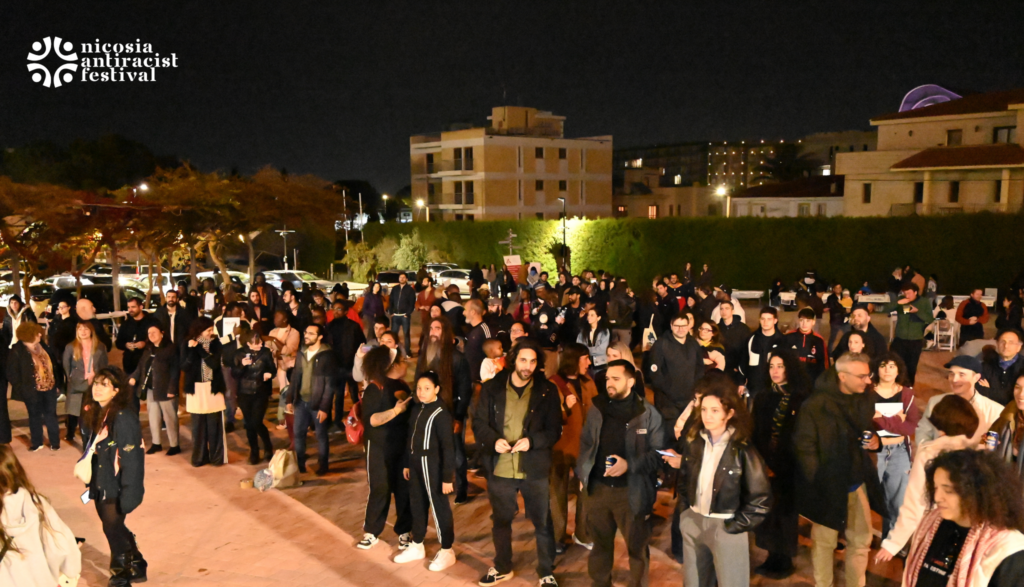
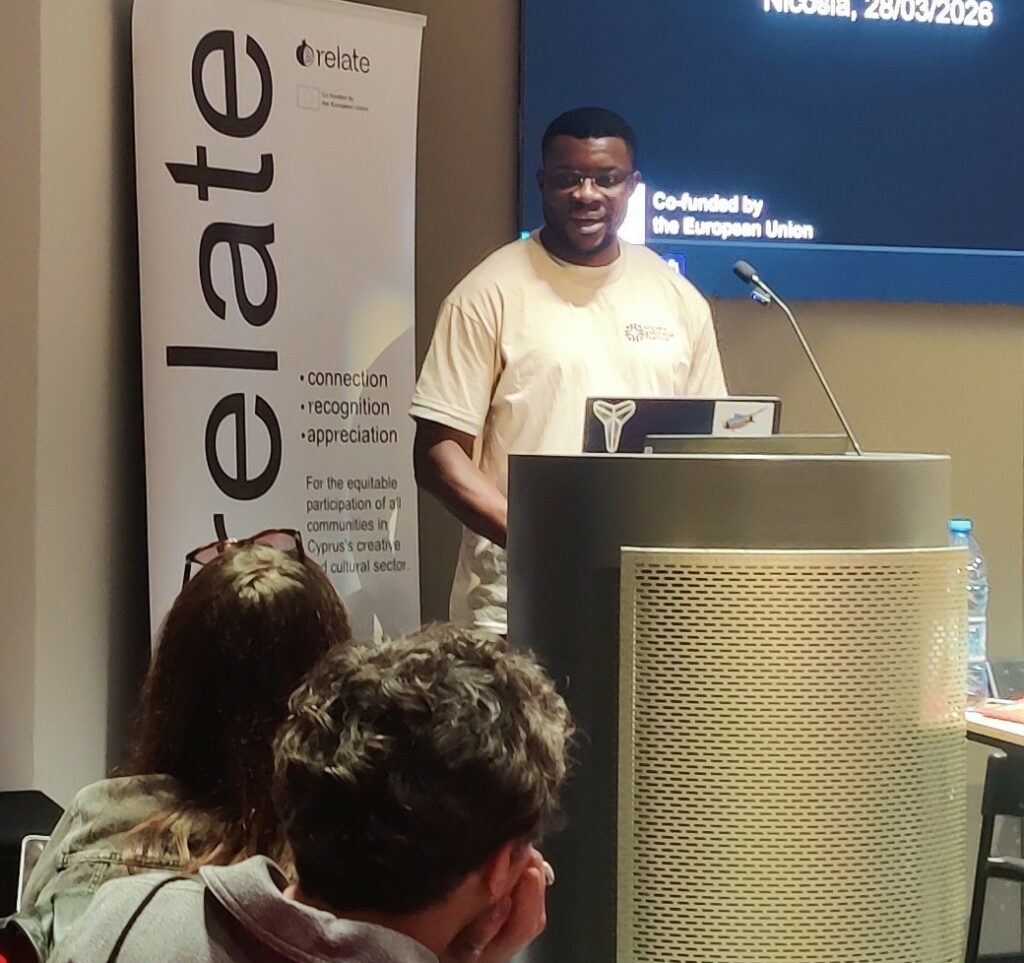
The occasion was the two-day anti-racism festival that GfC organized on 27-28 March 2026 at the premises of the University of Nicosia in collaboration with other organizations and collectives, bringing together hundreds of people in two days of dialogue, cultural and community interaction, with workshops, discussions, dance performances and other artistic events. As GfC CEO Etinosa Erevbenagie-Johnbull told "F", "the expression of solidarity and support for migrants and refugees, as highlighted through the festival, is not only about facing challenges, but also about creating spaces and opportunities to actively participate and be recognized as equal members of Cypriot society."
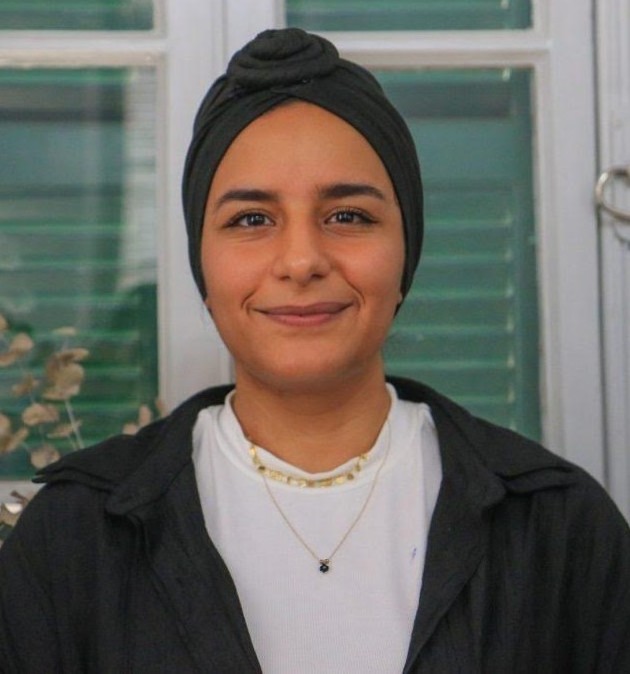
27-year-old Alaa Halawi is originally from Iraq but grew up in Cyprus and has long been closely associated with migrant communities. 32-year-old Etinosa Johnbull comes from Nigeria and is a postgraduate student in Psychology at the University of Nicosia. She also holds Greek citizenship since she lived in Greece since 2004 at the age of 10. In December 2023, she received from the Ministry of Foreign Affairs the Commendation awarded to Generation for Change CY for its contribution to the defense of the human rights of refugees and migrants on the island. The Commendation was given in the context of the awarding of the annual "Stella Soulioti" Human Rights Award established by the Ministry of Foreign Affairs of the Republic. Both Etinosa Johnbull and Alaa Halawi are fluent in the Greek language.
Experiencing harassment, hunger and deprivation
The harsh realities of migrant women in Cyprus become particularly visible through the narratives of four women from Congo, the Philippines and Syria who spoke to "F" during the anti-racism festival, with the help of Alaa Halawi. The first story is about Alfreda, a 26-year-old asylum seeker from the Republic of Congo who fled her home for fear of persecution because of her sexual orientation.
"In my country - she said - being a member of the LGBTQI+ community is considered a shame and I came here to ask for protection." But she quickly realized that security is not always immediate. She said her first months in Cyprus were marked by uncertainty and isolation. When she left the first reception center, she had to find her own home without a support network or adequate resources. "I had to rely on people I didn't know, even people from my country who I couldn't tell who I was. I was afraid that they would reject me too."
She added that everyday life has become a struggle for survival, since she has no right to work and spoke of days without food, constant anxiety about rent, fear of what the next few days will bring in a complex system where she has to find her own way.
"I don't eat for days and sometimes I don't have a single euro," she told us. At the same time, an appeal against the rejection of her asylum application is pending. "It is - she continued - an expensive process that requires legal support and I can barely afford it."
She also revealed that as a migrant she has faced harassment and repeated attempts at exploitation, particularly while seeking domestic work, as she was approached by men for sex for a monetary fee. They call you to clean their house, but... They are asking for something else," she said characteristically, adding that one day someone touched her "inappropriately" on a bus. "In such cases," she said, "you don't know how to react, you're afraid to speak, but you know you shouldn't be silent."
Despite these challenges, Alfreda continues to fight for her right to a life of stability and a sense of belonging. "Back home," she told us, "I fought with my family for the right to live freely. In Cyprus the struggle has changed, but it continues. Now I'm fighting to survive, but it's still a fight for the right to live fully." She said that the support from local organizations helped to lighten some of the burden, by offering food and small moments of relief. "What I want most - she concluded - is to be seen beyond labels and stereotypes. I'm not a monster, I'm not a thief, I'm not a prostitute, I've just been through something difficult and I'm trying to survive. And despite the difficulties, I maintain hope for myself and for others. I want to do something meaningful, I want to help people. I don't know now how I'm going to do it, I'm afraid of a lot of things, but I'm sure I'll do it anyway."
From housework to event coordination
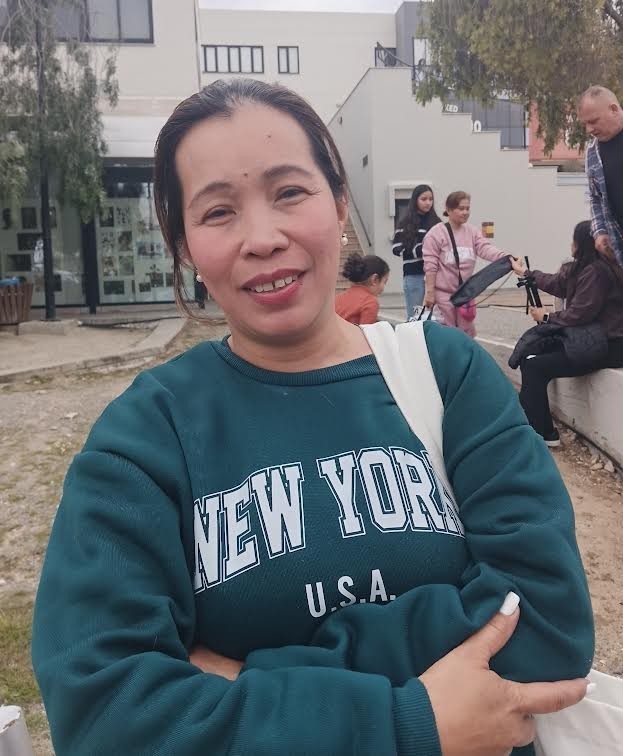
Gina Laurino is originally from the Philippines and shared with us her experience in Cyprus as a domestic worker. She told us that her first days and months on the island were marked by the effort to adapt and by uncertainty, as is the case with many migrant workers. She said that she did not personally face serious discrimination, but the situation was initially very difficult, until she got to know the new environment and some support systems better. "We are leaving our homeland - she added - and we are coming here for the future of our family, for our children. For me, the first year was a shock. The food, the environment, everything was different. I found myself alone in a completely new culture, as I had never left my homeland before. Even things that are common to others, such as the long summer days and the pace of life, I felt overwhelmingly pressured at first, since I didn't know the country and its people."
However, over time she gradually learned to adapt and become familiar with her environment. She said that the support she received from her employer played an important role in improving her life. Sixteen years later, she no longer works as a domestic worker, but as a coordinator of small events. She has also started a family in Cyprus after getting married to her Romanian partner and they are now raising their daughter.
Over the years, she has also been able to feel a sense of community since as she observed, being part of local groups has helped her feel less alone and more connected. What does she hope for the future? "I want peace for the whole world. And considering how I got here and how difficult my journey was, I want people in need to get the help they need."
The burden of starting over...
Asylum seeker Kholod Al-Sagir from Syria arrived in Cyprus two years ago seeking safety and dignity and carrying with her, beyond her personal difficulties, the experiences of a country in crisis. She described her daily life in Cyprus, where, as she commented, "it is perhaps even more difficult to survive than in her homeland, because you have to wait for everything, since everything takes a long time to happen. You have to wait and fight for every basic need, for jobs, for securing documents, for services, for housing... Nothing comes quickly and easily. You have to constantly try, especially to find stable housing and a decent job without being treated as an object of exploitation."
In addition to trying to secure some basic material goods and amenities, Kholod also addressed the emotional burden of starting over. "Social life – she told us – is limited. There is isolation since you cannot easily build strong connections. With many people around you fighting for survival, relationships often remain distant. While everyone is busy trying to manage their lives, you end up having very few close friends. I know that every place has its own challenges and difficulties and its own uniqueness and I can't say that here in Cyprus it is better or elsewhere it is better. Personally, I hope and fight every day for a decent life for my family, for my children – for a simple life, without so many complications. And I want to send the message that asylum is a legitimate right, and when people ask for it, it means they really need it. We are human beings and it is very sad that some people treat us as enemies."
One day we will live the life we want...
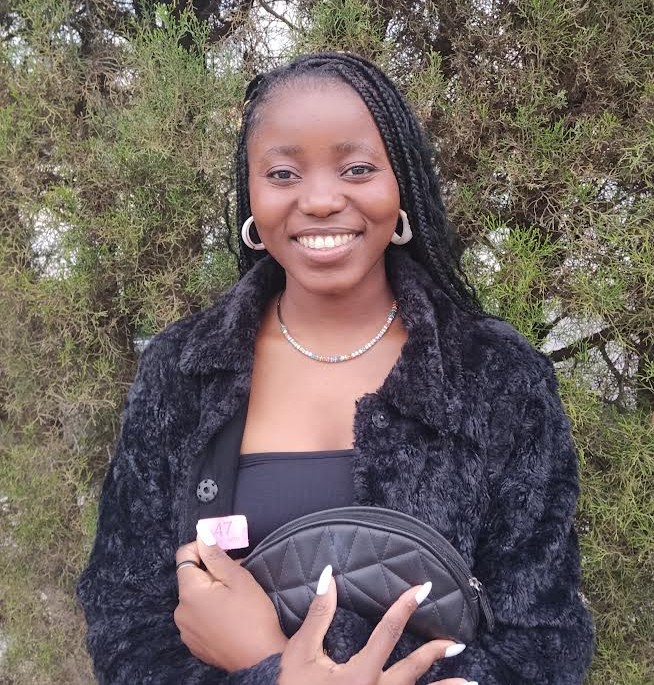
23-year-old Monika Kobi (Monica Kobi Katsunga) comes from the Republic of Congo and has been living in Cyprus for almost four years. She arrived alone as an asylum seeker, hoping to find safety, after personal difficulties that, as she told us, she faced in her homeland. Today she works in a café, but the difficulties she faced especially in the early days, when everything was unknown and uncertain to her, are fresh in her memory. "As soon as I arrived in Cyprus," she said, "I was transferred to a reception center where I stayed for two weeks and then I was released, without having a clear plan for what I would do next. They just left me out of the center and I had no money, I didn't know where I was going and what I was going to do."
She added that he managed to find a temporary place to stay with the help of someone she met at the reception center, but the first few months were a constant struggle as she moved around various places while trying to understand a country she didn't know yet. "For a long time," she continued, "I was just fighting to survive, I used to walk around and ask for all kinds of work, sometimes cleaning houses, just to secure a plate of food and some basic necessities.
I went everywhere and asked if they needed someone... Sometimes they told me no they don't need to... Sometimes I've been lucky. Little by little, I started to find a little stability, people from my community and some locals supported me when I had nothing." She referred to some very painful moments when she experienced rejection in a very abrupt way, when she went to look for a job or when she lost job opportunities due to her situation as an asylum seeker. She also remembers that she tried to attend Greek classes, but felt she was not welcome when she said she was an asylum seeker. "You feel it even when they don't say it directly, you get it," she remarked.
Today Monica works and lives more independently and with greater freedom. "Today - she said - I feel that I have and I feel the freedom that I did not have and did not feel at the beginning and finally I can breathe a little. To be honest, of course, I have to say that my life is not yet where I want it to be. I dream of going back to university one day and doing something that really interests me. I want to send a message, that we did not choose this life, we did not choose to leave our countries. There must be understanding and respect for people seeking safety. And I want to tell those who are still struggling like me in the early days, to hold their heads up high because things are changing and one day we will live the life we want."
