
REVEALING - CONCLUSION OF THE EUROPEAN VETERINARY GROUP ON FOOT & MOUTH - VETERINARY SERVICES UNDER ENORMOUS PRESSURE - WHAT THE EUROPEAN EXPERTS SAW IN CYPRUS - Filenews 22/3 by Angelos Nikolaou
The recent descent of the European Veterinary Emergency Team (EUVET) to Cyprus (24-27 February 2026) sheds light on the true dimensions of the problem, the sources of infection and the strategy to be followed to prevent a total destruction of the food sector in our country.
It all started in December 2025, when outbreaks of cattle were reported in occupied Lapathos. Despite the mobilization of the Veterinary Services and the information of international organizations, the disease passed to the free areas. The first case was confirmed on February 19, 2026 in a cow unit in Livadia, where a sharp decrease in milk production and typical symptoms in the animals were observed.
To date, the epidemiological picture is alarming: 42 cow, sheep and goat units have been affected, affecting more than 30,000 animals. The outbreaks are located in the areas of Livadia, Oroklini, Dromolaxia, Troulloi and Aradippou in the province of Larnaca, as well as in Geri and Dali in the province of Nicosia.
According to the EUVET report, the infection in sheep and goats in Oroklini appears to have been spreading sub-clinically (without obvious symptoms) for weeks, even from the beginning of 2026, which makes the risk invisible and greater.
The experts suggest the immediate reinforcement of the laboratory with staff and reagents, the strict observance of the "standstill" (ban on movement) throughout the island and the intensification of controls on the Green Line in cooperation with the Police and the Peacekeeping Force.
The experts' findings
The EUVET team, led by the German Klaus Depner and with the participation of the Director of Veterinary Services of Slovakia (the country that faced the disease in 2025), recorded a difficult reality. Although the Veterinary Services apply the European protocols (killing of infected animals, 3km protection zones and 10km surveillance), experts are sounding the alarm on two main issues:
>Political and social pressures: The report explicitly states that the Veterinary Services work under "enormous external pressure" from agricultural organizations, livestock breeders' groups and political groups. Experts emphasize that scientists should be left to work undistracted, without interference from economic or political interests. Because of this pressure, the killings had slowed down due to the reactions observed and the obstruction of the execution of the work of the Veterinary Services.
>Green Line: Although crossing points are controlled, the report highlights that unauthorized movements of animals or products (such as rumours of contaminated hay), which undermine the measures, cannot be ruled out.
Preparatory meeting
A preparatory meeting was held on 24 February, ahead of the first discussions with local authorities. During this meeting, EUVET experts reviewed the available background information, identified the key data needs related to the mission's objectives and agreed on the information to be requested by the competent authority (e.g. composition, structure and distribution of the livestock population, maps and diagrams, summary of measures implemented and surveillance data). The meeting also served to confirm the administrative arrangements, roles and responsibilities within the team, as well as the methodological approach to be followed during the field visit.
Information meeting
An information meeting was held on 27 February, following the final discussions with the local authorities. During this meeting, EUVET experts consolidated the information collected during the mission, provided a full briefing on the main findings, and identified priority actions and key messages to be conveyed to the European Commission.
Key Issues During Shipping
The mission team focused on the following aspects:
• What are the critical issues and what measures need to be taken urgently and immediately, especially with regard to vaccination, in order to control the CA in the Republic of Cyprus?
• What measures should the Republic of Cyprus take to mitigate the risk of the spread of the HPV virus in unaffected areas of Cyprus and to detect and respond quickly to such an event?
Epidemiological background and current situation
In December 2025, several outbreaks of CA in cattle north of the Green Line were reported in the areas of Cyprus that are not under the effective control of the Government of the Republic of Cyprus.
The Green Line defines the de facto demarcation line between the areas of Cyprus that are not under the effective control of the Government of the Republic of Cyprus and the areas of Cyprus that are under the effective control of the Government of the Republic of Cyprus. People, vehicles and goods allowed to cross the Green Line are checked at the specific crossing points. However, it appears that unauthorised movements of live animals and their products through the Green Line cannot be ruled out.
The first clinical symptoms of BP in the Republic of Cyprus, south of the Green Line, were reported on 19 February in a cattle farm north of Larnaca, in an area with a high livestock population density. Initially, a sharp decrease in milk production was observed, followed by the identification of animals showing typical BP symptoms (blisters in the mouth and feet, excessive salivation and lameness, etc.). BP virus infection was diagnosed by PCR and confirmed and characterized as SAT1 serotype. Samples were sent to EURL for the CA in France, where the diagnosis made in Cyprus was confirmed and where further characterization (topo-typing) will now be carried out.
In the following days, between February 20 and 24, another 10 sheep and goat farms in the same area tested positive for the AP. The farms were checked because they had direct or indirect contact with positive cattle breeding. However, no typical or suspected BP clinical symptoms were reported in these herds. The high percentage of HIV-positive animals was impressive, while only a few animals tested positive on PCR. In the week following the end of this EUVET mission, a further 11 CA-positive sheep and goat herds were detected, bringing the total number of outbreaks reported by 4 March to 22 (one cattle farm and 21 sheep and goat farms).
Immediately after the confirmation of the SC by the National Reference Laboratory in Nicosia, a protection and surveillance zone was established and strict standstill measures were implemented. The lockdown measures affect the whole of Cyprus (south of the Green Line), with movement permits only for animals taken to slaughterhouses. In the 10 km radius restricted zone, there are about 30,000 cattle, 96,000 sheep and goats, and 67,000 pigs. The total number of farmed animals vulnerable to the CA virus in the territory under the effective control of the Government of the Republic of Cyprus is: 85,000 cattle, 460,000 sheep and goats and 350,000 pigs.
Epidemiological situation
Reliable information on the outbreaks as well as the epidemiological situation of the SC was difficult to obtain at the time of the EUVET visit. So far, clinical symptoms of BP have only been observed in cattle farming. The situation with regard to sheep and goats remains unclear. Serological findings from the initial 10 positive sheep and goat farms clearly suggest that the infection has spread sub-clinically and that many more sheep and goat herds may have been infected. It must be taken for granted that the infection has probably been spreading unnoticed for several weeks, possibly as early as the beginning of the year. It can be assumed that one of the HIV-positive sheep and goat herds was the source of infection for the cattle herd.
The origin of the virus is also unclear. Rumours are circulating among breeders that contaminated hay from the northern part of the island may have been smuggled into the south. However, we were unable to obtain any concrete data on this during our short visit.
In our opinion, the condition of BP in sheep and goats poses the greatest risk of unnoticed spread, which increases the risk of infection for cattle and pig herds on the island. Realistically, we have to assume that more areas of the island are contaminated and should be considered high-risk areas. Nothing can be ruled out at this stage.
Disease control measures
Active and passive surveillance of cattle, sheep and goats should be carried out as soon as possible in Cyprus
The Veterinary Services of Cyprus are implementing all measures regarding the management of the outbreaks without significant delays, the report points out. The measures as set out in Union legislation and in particular Commission Delegated Regulation (EU) 2020/687 are in place. Killing and disposal (by burial) of sensitive livestock, as well as preliminary cleaning and disinfection are to be implemented for all outbreaks (also for those confirmed by NSP ELISA) shortly after confirmation. EUVET clearly identified that all work has to be done by a limited number of veterinary staff. In addition, we have unfortunately noticed that the veterinary service is under enormous external pressure, e.g. from agricultural associations or political groups, which has a negative impact on its work.
As the epidemiological situation is unclear, active and passive surveillance of cattle, sheep and goats should be carried out as soon as possible in Cyprus. This includes targeted sampling and screening of animals showing suspicious symptoms. In the absence of overt clinical signs in sheep and goats, a statistically significant number of randomly selected animals per farm should be clinically examined for lesions and oral swabs and serum samples taken for PCR and NSP ELISA tests, respectively. The latest test can detect BP infections that occurred more than a week ago and can be used to detect infections in vaccinated populations (DIVA test). If laboratory capacity is limited, priority should be given to samples from animals with suspected clinical signs.
A vaccination campaign should be launched to contain BP as soon as possible. The approach should be based on risk factors, with sensitive animals in restricted areas vaccinated first. However, it should always be borne in mind that vaccination is only one of many tools for controlling epidemics. Effective immobilization, increased biosecurity in farms and the rapid killing of infected herds remain the most important disease control measures.
As there is currently no HPV vaccine available for pigs, pig farms must be protected with the highest possible biosecurity measures. The competent authority should investigate all possibilities for the procurement of a vaccine for pigs as soon as possible. The proximity and concentration of facilities with susceptible animals increases the risk of the virus escaping. Therefore, the identification of epidemiological units and preventive killing should be discussed.
The movement of animals was considered as a danger and a route of transmission of the AP. Unauthorised movements of animals can jeopardise the effectiveness of veterinary measures. Support is provided by the police (checkpoints) to ensure compliance with the curfew.
Implementation of all measures without political or other influences
Laboratory – Our overall impression, stated in the report, was that the laboratory conducts all analyses with precision and has dedicated staff. In practice, three staff members are currently performing all the tests. The need for additional support in administrative tasks and the organisation of shift work were discussed. The laboratory has a strong ELISA testing capacity and has ordered over 50,000 tests, but there have been concerns about the availability of some PCR reagents. EURL will explore the possibility of sending additional reagents.
Samples from the positive cattle breeding were sent to the EURL for confirmation and were classified as SAT1/III, similar to the virus detected in the areas not under Government control.
Recommendations:
• It is recommended to set up central, regional and local disease control centres, an operational team of experts and a contact person for daily information to the media and stakeholders.
• The above groups must operate without influence from political or economic interests.
• It is recommended to set up an epidemiological investigation team to identify the origin and spread of the virus.
• Emergency vaccination of ruminants should be carried out as soon as possible in stages (cattle in the control zones, sheep/goats near pigsties, and then in the rest).
• Procurement of vaccines for pigs as soon as possible.
• Maximization of biosecurity measures in pig farms and consideration of preventive slaughter in restricted zones.
• Effective implementation and monitoring of standstill at national level.
• Sending positive samples to EURL for further characterization.
• Creation of a platform for the exchange of technical information between the stakeholders involved.
• Immediate killing of infected herds or suppression vaccination if killing is delayed.
• Destruction of milk from contaminated farms.
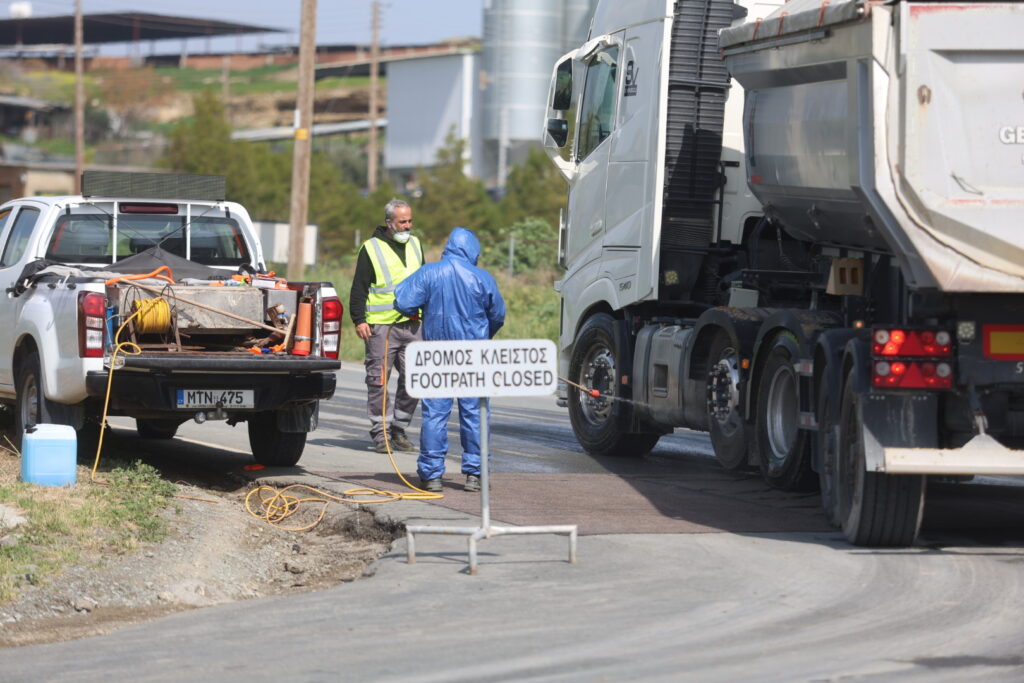
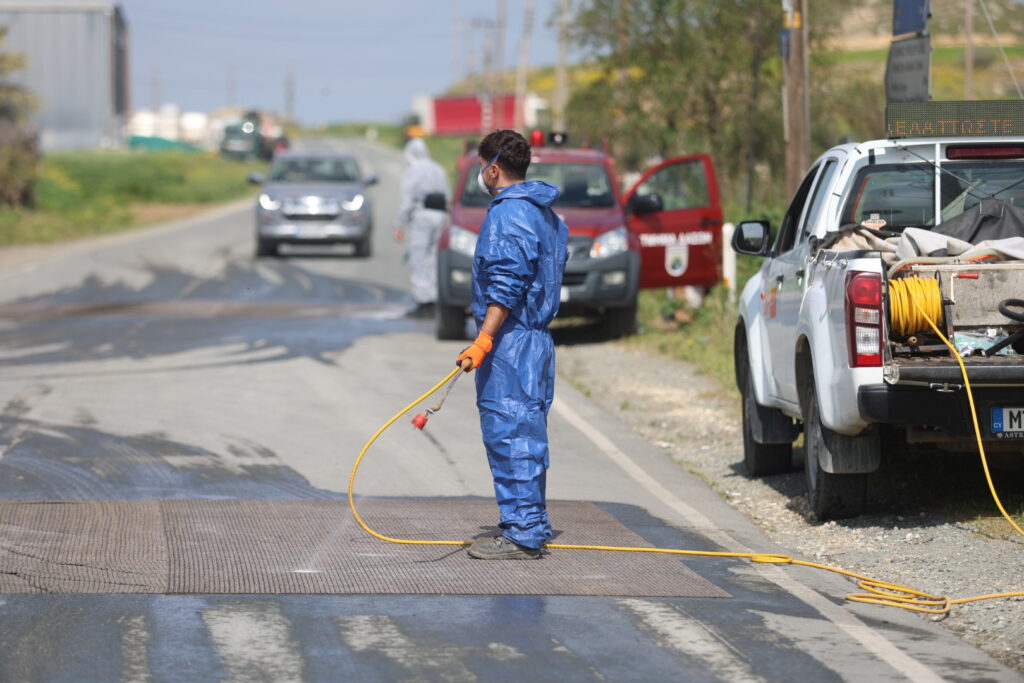
• Implementation of a system for disinfecting vehicles leaving the restricted zones.
• Inspection of all farms within the zones for the absence of BP within the next two weeks and strengthening of passive surveillance throughout Cyprus.
• Raising awareness among livestock farmers and veterinarians on biosecurity and early detection issues.
• Strengthening controls for unauthorized movements through the Green Line.
• Drafting biosecurity plans for zoos.
