
NO NEED FOR PANIC - IMAGES ON SOCIAL MEDIA OF EMPTY SUPERMARKET SHELVES AND QUEUES FOR FUEL. CLIMATE OF UNCERTAINTY REMINISCENT OF A PANDEMIC SCENARIO - Filenews 7/3 by Angelos Nikolaou
The current situation in the Cypriot market composes a scene that society has not experienced since the days of the coronavirus pandemic and lockdowns.
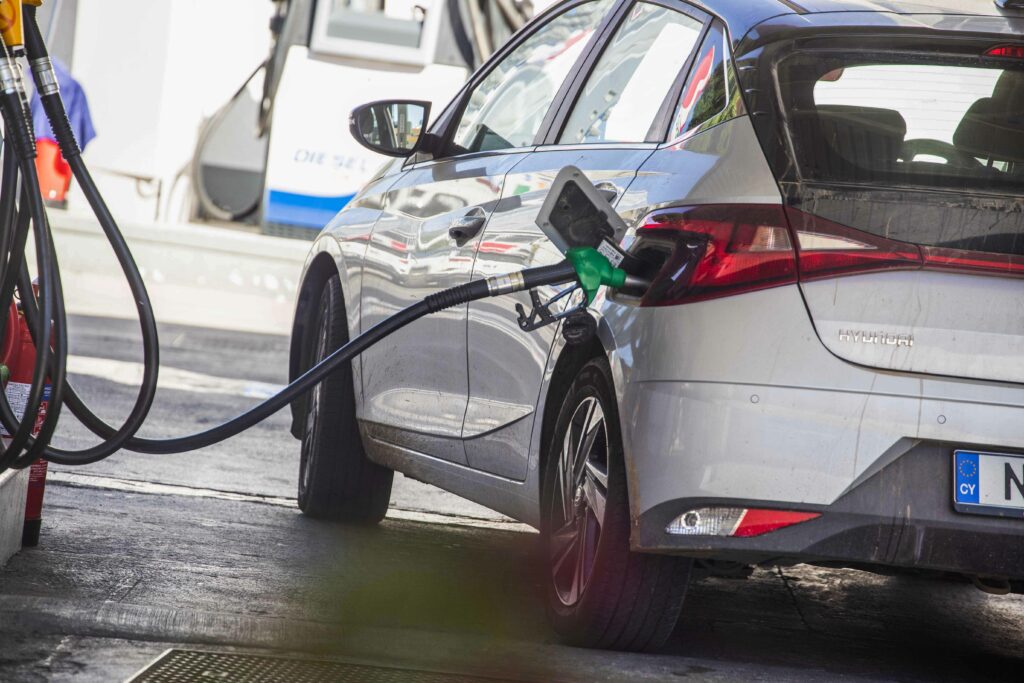
The image of citizens rushing en masse to "stock" basic goods, the empty shelves that temporarily appear in basic necessities and the endless queues at gas stations, awaken strong memories of 2020.
Back then it was the invisible enemy of the coronavirus, today it is the sound of the drums of war in our neighbourhood that triggers the same feeling of uncertainty and fear of scarcity. Intense concern that leads to unprecedented behaviours, such as the rushed supply of heating fuel in the middle of spring, and the purchase of products in an effort to shield the household.
Consumers are looking for protection from the upcoming wave of high prices, but mainly from what we have been experiencing in recent days with the feeling of insecurity being exacerbated by the recent instructions and messages in relation to the protocols in case of an alarm. Furthermore, the noise surrounding the state of the shelters and the need for preparedness are a complete reality for modern Cyprus, reinforcing the panic that drives citizens rushed to gas stations and supermarkets.
The director of the Consumer Protection Service, Konstantinos Karagiorgis, described the situation to "F" in black colours, but called for calm. According to Mr. Karagiorgis, the market is facing multiple fronts, as the prices of refined products are growing rapidly.
Particular emphasis was placed on the fluctuation of the Platts Basis Italy index, which is the pricing basis for Cyprus. The data of the last week (27/2 to 5/3) cause vertigo. In 95-octane gasoline there is an increase in refinery prices by 20% – 25%. On the contrary, for diesel and heating oil, there is a 40-45% price jump.
Yesterday, the average selling price of unleaded 95-octane gasoline was €1,334 per liter, diesel the average price was €1.40 and heating oil €0.981 per liter. At the beginning of the week, the price of gasoline was €1,318, diesel €1,418 and heating oil €0,95.
It is noted that oil prices record a high rise, with Brent headed for the biggest weekly increase since 2022, as the war conflict in the Middle East causes serious disruptions to the global energy market and an almost complete halt to navigation in the Strait of Hormuz. Notably, Brent is up about 18% on a weekly basis, with futures hovering above $85 per barrel.
"We see strong upward differentiations with increasing trends," noted Mr. Karagiorgis, explaining that retail prices will be directly affected with the arrival of the next cargoes. In addition to international prices, the dollar-euro exchange rate and the sharp increase in ship insurance premiums due to the danger of the routes play a catalytic role. Gas station owners' estimates converge on further increases of 6-7 cents per liter in the next 24 hours.
The concern is not limited to the rise in the price of fuel, but extends to the entire spectrum of the economy. The director of the Consumer Protection Service underlined that fuel and food prices are interrelated. " Trade and commodity prices may be affected if the current situation continues," he warned, adding that the Service systematically monitors whether any increases are justified.
According to Mr. Karagiorgis, the Consumer Protection Service remains vigilant to crack down on speculation.
In the midst of this uncertainty, the Consumer Protection Service calls on citizens to take advantage of information tools, such as the "Price Observatory" and the "e-Kalathi".
"It is also the responsibility of consumers to observe fluctuations and choose the most advantageous prices," concluded Mr. Karagiorgis, stressing that competition remains active despite the pressures.
Consumers fill the baskets - They stock spaghetti, rice, even diapers and milk powders for children
In the same vein, but with an emphasis on the impact on retail trade and livestock, the general secretary of the Pancyprian Retail Trade Association (PASYLIE), Marios Antoniou, made statements to "F", sounding the alarm about adequacy in specific sectors.
Since the beginning of the week, traffic in supermarkets has increased sharply. Consumers fill their baskets mainly with dry food, such as spaghetti, rice, legumes and canned food, while particularly increased mobility is observed in basic necessities for infants, such as diapers and baby milk powders.
Videos circulating on social media, depicting empty shelves or long queues, seem to exacerbate the phenomenon, despite the fact that shortages are often temporary and are solely due to the time it takes to replenish products.
Speaking about the situation, Mr. Antoniou appeared reassuring regarding the adequacy of goods. "There is no question of shortages. Orders on basic products cover a stock of at least 30 days. Any gap observed in the shelves is a matter of replenishment time from the warehouses and not a shortage of products", stressed Mr. Antoniou.
At the same time, he assured that there is no justification for an increase in prices due to the current situation. He added that the inspectors of the Ministry of Commerce are in the market every day, recording prices and ensuring that there is no speculation.
Despite the reassuring picture for the food market, thanks to... war, Mr. Antoniou expressed strong concern about another front: The appearance of foot-and-mouth disease. He described the data as "extremely unpleasant", as in this case the effects on the supply chain are immediate and it does not take time to see the results.
"Unfortunately, the supply chain and sufficiency will be disrupted, while the risk of increased meat prices is visible," he noted. The market is currently served by domestic production, however the need for a "Plan B" is imperative, with the possibility of exploiting increased orders to meet demand.
In addition to the retail trade, Mr. Antoniou sounded the alarm for tourism, which is a key lung of the Cypriot economy. Already, he said, "incredible cancellations" are being recorded ahead of Catholic Easter, mainly from the English market.
He explained that the duration of the war is what will determine the extent of the damage. He underlined that retail trade is reaping the benefits of tourism and any decline in bookings directly affects the turnover of the market.
