
FOOT AND MOUTH DISEASE IS A NIGHTMARE - CASES IN 32 UNITS, MORE THAN 30,000 ANIMALS KILLED - Filenews 7/3 by Angelos Nikolaou
Cypriot livestock farming and the food industry are on red alert, as the spread of foot-and-mouth disease is taking on alarming proportions. The new data from the disease front, combined with market pressures, compose a suffocation scenario for the primary sector.
Already the invisible enemy of foot-and-mouth disease is spreading rapidly in the livestock areas of Larnaca. With 32 units already affected, 30,000 animals being killed and more than 170,000 at the heart of the crisis, the government and livestock farmers are fighting an unequal battle against time, the bureaucracy of Brussels and the risk of the total extinction of livestock.
The situation is getting worse every day, as nine new cases were confirmed yesterday in the areas of Livadia and Dromolaxia. Infected units have been identified in a total of five areas: Municipality of Aradippou, Livadia Larnaca, Troulloi, Oroklini and Dromolaxia. Around each positive unit, a protection zone of 3 km is demarcated.
However, the detection of cases of foot-and-mouth disease in cows located on illegal premises in the area of Livadia is causing concern.
The case is now taking on criminal dimensions, as it is being investigated jointly by the Veterinary Services and the Police. It is noted that the premises in question did not have a code from the Veterinary Services, while the way of transporting the animals is also being investigated.
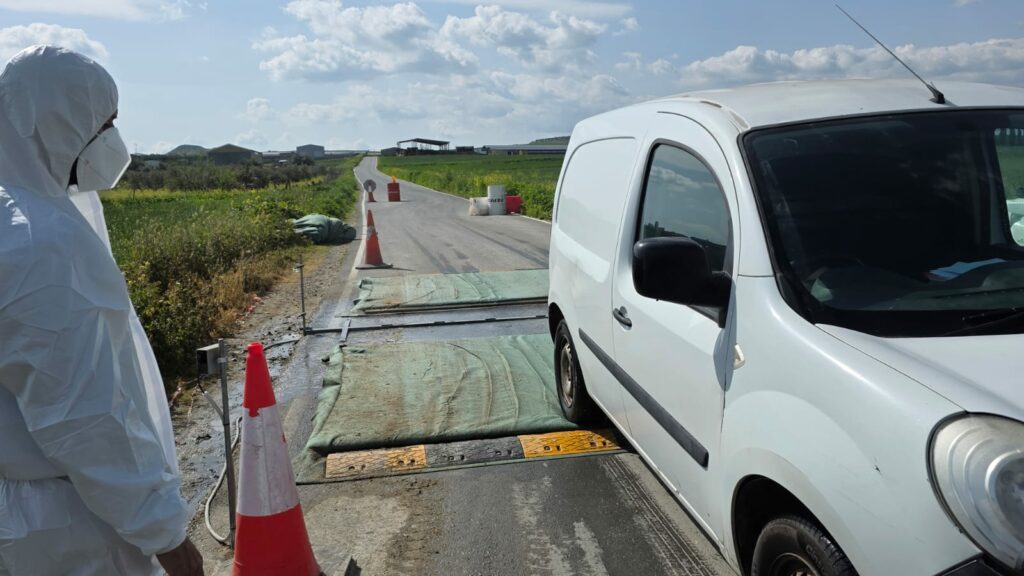
It is noted that after the detection of the cases in Oroklini, the area was mapped, protection and surveillance zones of 3 km and 10 km were determined, respectively, with exclusions of the affected areas, crews with sprayers were moved to disinfect all incoming vehicles in these zones, through assistance from other Services.
This development causes despair among livestock farmers, as the implementation of European protocols is relentless. The EU imposes the killing of all animals in the affected units to limit transmission. Producers see their livelihoods being lost, while the uncertainty about the next day and the amount of compensation intensifies insecurity.
At the same time, the Cyprus Cheesemakers Association intervenes dynamically, sending a letter to the competent Ministries requesting immediate preventive measures. According to the Association, the protection of public health and economic stability makes it imperative to tighten controls, especially in areas where the Republic of Cyprus does not exercise full control.
The Association requests the suspension of the operation of units in the Dead Zone. Specifically, it calls for the temporary closure of livestock units in or around the Dead Zone (Pergamon area), until their full compliance with bioprotection protocols is ensured. Furthermore, it calls for intensification of surveillance to prevent illegal trafficking of animals, feed or materials that may carry the virus, as well as continuous control at the Pergamon crossing point, as the owners of units there operate outside the controlled areas, making supervision more difficult.
Cheesemakers emphasize that the indications converge on the transmission of the virus through the occupied areas. They warn that if there is no timely and coordinated action, the credibility of Cypriot products in international markets and the very viability of cheese making, which is a key pillar of the Cypriot economy, are at stake.
From the occupied territories to the free areas
>The authorities are trying to limit the spread of the disease and support the affected livestock farmers
The confirmation of the first case in Livadia, Larnaca on February 20, 2026 sounded the alarm, while on December 15, 2025, the virus was detected in the occupied territories.
The suspicion that the disease passed through the buffer zone is reinforced by the fact that the virus is thriving in the occupied territories, where controls are non-existent. Despite the receipt of 60,000 doses of vaccines from the Turkish Cypriot side (which were initially provided by the Republic) and 529,000 doses from the EU, the situation remains critical. The vaccination of all animals within the critical zone of 10 km has already been completed and since yesterday vaccinations have been carried out throughout Cyprus.
With a new Decree published on March 5, 2026, the government imposes draconian measures:
• A total ban on the movement of cloven hoofed animals (cattle, sheep, pigs, goats).
• No one enters the protection zones without a special permit ("pass").
• Suspension of feed harvest until March 21.
• Prohibition of hunting and training dogs in the affected areas to avoid dispersion.
The thorniest issue remains the killing of animals. While the livestock organizations in a letter to the President of the Republic, Nikos Christodoulides, speak of "eradication of livestock instead of the virus", the Veterinary Services clarify that "the killing of all animals in an infected unit is not an option, but a strict obligation arising from European Regulation 2020/687".
Already four crews are working feverishly to bury the animals in specially selected areas, so as not to pollute the aquifer.
In an effort to appease the anger and despair of producers, the Council of Ministers on Thursday approved an advance payment of up to €50,000 per unit for loss of income, as well as the establishment of a Special Committee to determine individualized compensation packages.
Furthermore, according to information from "F", purchases from France and Spain are being considered for the import of new animals, as soon as the areas are cleaned, a process that can take at least six months.
Checkpoints in Larnaca District
In order to prevent the further spread of the virus and to deal with the existing cases of foot-and-mouth disease, 16 Services cooperate, with the total employment of at least 513 people per 24 hours.
A meeting of the Coordinating Group is held daily, which includes: Veterinary Services, Department of Agriculture, Cyprus Police, Fire Service, National Guard, Civil Defence, Game and Fauna Service, Department of Public Works, Health Services, Water Development Department, Department of Environment, Department of Forests, Department of Geological Survey, Larnaca District Administration, Land Registry Department, British Bases.
Twenty-four-hour control and disinfection points have been installed in the protection and surveillance zones, specifically in the livestock units of the area of Aradippou, Livadia, Kellia, Troulloi, Oroklini. In addition, control and disinfection points have been installed in the areas of Alethriko, Klavdia, Anglisides, Kofino, Kalo Chorio, Larnaca, Athienou and Avdellero.
The controls and disinfections include the closure of the area (Oroklini, Livadia and Aradippou), where no one enters without permission from the veterinary services. For these audits, a notification was prepared and published on 26/02/2026 in the Official Gazette of the Republic.
In addition, Protection-Surveillance Control Points have been created at the exits of Oroklini, Livadia, Avdellero, Pyla and on the old Athienou – Koshi road. The controls concern permission to enter livestock areas through main roads to avoid illegal transport of animals and/or feed and other related products and materials.
It is noted that the virus is not transmitted to humans. The consumption of animal products is safe, while PDO halloumi does not appear to be affected by the developments, despite concerns about the decline in milk production.
