
EU-MERCOSUR AGREEMENT - STRATEGIC PROSPECTS AND SHIELDING OF CYPRIOT MARKET - ABSOLUTE DEPENDENCE OF CYPRUS ON SOYABEAN MEAL FROM ARGENTINA - COVERS 96% OF IMPORTED QUANTITY WITH €63 million - Filenews 2/3 by Angelos Nikolaou
At a critical juncture for international trade, the EU-Mercosur Agreement is emerging as a strategic priority for the European Union, aiming to strengthen strategic autonomy and create one of the largest free trade zones in the world. The EU-Mercosur Agreement was referred to the European Court of Justice by decision of the European Parliament. It provides for the phasing out of tariffs on most Mercosur products, about 92% of trade lines, within 10 years.
Overall, tariffs currently range from 10%-20% for most agricultural and agri-food products. At the same time, quotas and safeguard mechanisms will allow for the temporary reintroduction of tariffs in sensitive categories if there is a sharp increase in imports or damage to EU producers.
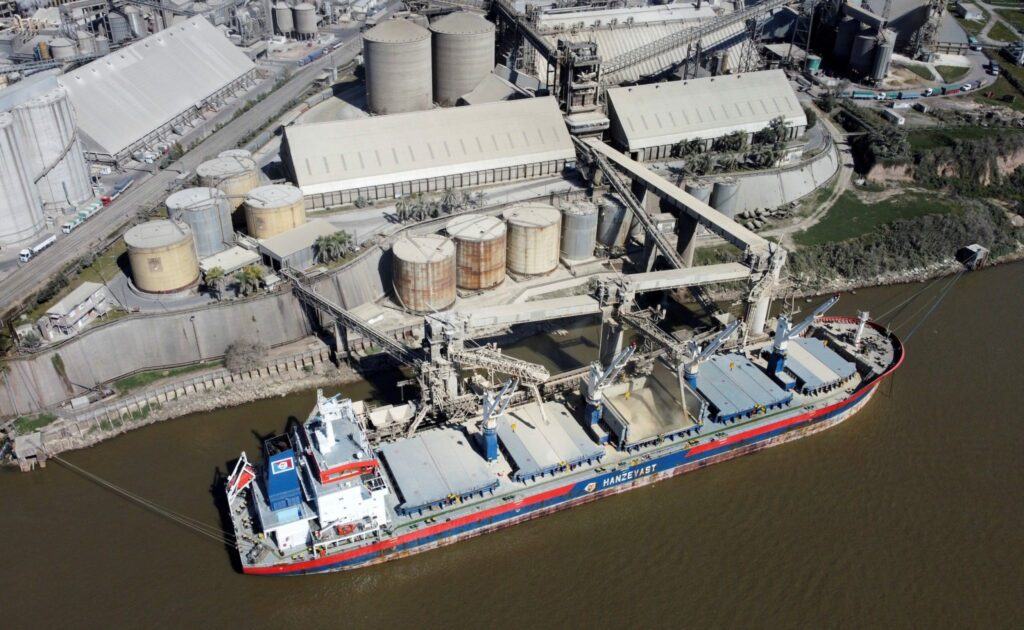
The Ministry of Commerce's 2024 figures reveal an already deep-rooted trade relationship with Argentina, which focuses on critical raw materials. The total value of imports amounted to €64.8 million, with soybean meal for animal feed being the absolute dominant. Argentina covers 96.2% of Cyprus' needs for soybean meal for exclusive use in livestock farming, with imports worth €63 million. and over 138,000 tons. Imports from Brazil amounted to €15.18 million. for 2024 and focuses mainly on coffee and concentrated juice.
Soybean meal is currently subject to a tariff of 10-14%, while the future tariff is planned to be gradually reduced from 5% until completely abolished at the end of the 10-year transition period. This is a product that belongs to the majority of agricultural goods that will see full exemption from tariffs.
In addition to soybean meal, imports of agricultural products from Argentina are clearly smaller and have a limited share of the total imports of Cyprus. In the category of shelled peanuts (peanuts), Argentina accounts for about 54.36% of the imported quantity. Peanuts currently have a tariff of 10-12% and the future tariff is planned to be gradually reduced from 5% to 0% within 10 years.
Similarly, in lemons (fresh or dried), Argentina's share amounts to 14.8%, while in citrus juices – concentrated the percentage reaches 18.77% they complement domestic production. Lemons currently bear a tariff of 15-20%, with a gradual reduction of up to 0% within 10 years. Similarly, lemon juices currently have a 15% tariff and a phasing out of 5% to 0% is planned over a period of about 10 years.
In the category of beverages and spirits, imports from Argentina account for 7.88% of the total imported quantity, which confirms that the country's presence in the Cypriot market remains limited and without systemic effects.
Spirits currently have a tariff of 12-20%, while the future tariff will be reduced from 10% to 0% over a period of 10 years, with the possible implementation of safeguard mechanisms to protect domestic production.
Argentina's share of frozen poultry is limited to 4.1%, which does not pose a threat to domestic poultry farming.
Corn imports from Argentina account for just 0.055% of the total imported quantity. Imports of dried kidney beans (Phaseolus vulgaris) are of similar limited importance, with a share of only 1.37%.
In terms of industrial products, Argentina appears as the exclusive supplier in a specialized category of pipes and drilling casings for oil or gas.
Overall, the import data for 2024 show that the trade relationship between Cyprus and Argentina is characterized by a targeted dependence on a key product of strategic importance for livestock farming, while in most other sectors the exposure of the Cypriot market remains limited. The data of the Ministry of Commerce do not substantiate scenarios of mass penetration of agricultural or animal products that could destabilize domestic production. On the contrary, they provide a documented and realistic basis for assessing the impact of the possible EU-Mercosur Agreement, under which Cyprus already maintains substantial trade relations with countries in the region under the current European regulatory and health framework.
Cyprus' export data to Argentina for the year 2024 show that bilateral trade in the export sector remains very limited in volume and value.
In the pharmaceuticals sector, Cyprus' exports in 2024 amounted to €237,921. In the field of plastic fittings for pipes and pipes, Cyprus' exports amounted to €94,762. Similarly, in exports of plastic construction toys, the value reached €40,225.
Finally, exports of machinery and equipment for water filtration or purification were limited to €16,765, in a market with total imports of particularly high value.
The eventual entry into force of the EU-Mercosur Agreement, which provides for the phasing out of tariffs on around 91% of EU exports to Mercosur within a period of 10 years, could improve the conditions of access to the Argentine market for selected Cypriot products.
Brazil: Source of raw materials and industrial goods – Supplies 80% of the value of coffee and 62% of concentrated orange juice
Imports from Brazil, amounting to €15.18 million. for 2024, are characterized by a diversified portfolio that focuses on goods that are not produced in Cyprus.
Brazil supplies 80.06% of the total imported value of unroasted coffee (€4.37 million) to Cyprus and a net mass value of 1,147,940 kg and 62.10% of concentrated orange juice (€6.35 million) and a quantity of 1,429,911 kg, which is a raw material for the local juice and soft drinks industry. In pineapple juices, imports from Brazil amounted to €587,000, representing 15.46% of the total imported value of the category.
In the footwear category, imports from Brazil amounted to €862,000, out of total imports of approximately €120 million, i.e. only 0.87% of the total imported value.
Significant is the presence in goods transport vehicles with imports worth €510,000 (7%), wood products worth €486,000 (14.86%) and construction machinery €337,000 (6.05%).
In poultry, Brazil's presence is almost negligible, covering only 0.32% (€89,700) of the total imported quantity. For 2024, imports from Brazil amounted to 27,000 kg, out of a total import of 8,240,130 kg.
Finally, in the cow peas category, imports from Brazil amounted to 74,144 kg and €65,000, covering 31.28% of the total imported quantity.
Today, imports from Brazil are subject to the EU's common tariffs: Coffee 0%, fruit juices 12-20% (depending on the degree of concentration and sugar content), footwear 8-17%, vehicles and machinery 4-10%, poultry 15-20% and strict quotas.
The bet of Cypriot exports
Total exports (domestic exports and re-exports) to Brazil amounted to €1,784,866, of which €1,630,154 were domestic exports and €107,192 re-exports.
The most important export sector is machinery and mechanical equipment, with a value of domestic exports of €942,825, corresponding to more than 55% of total domestic exports.
This is followed by plastics and plastic artefacts, with exports amounting to €655,929, which are the second main pillar of Cypriot exports to Brazil.
The rest of the domestic exports (optical and medical instruments, electrical equipment, printed products) are at marginal levels, which confirms the absence of diversification and critical mass in bilateral trade.
In the machinery sector, tariffs typically range between 12% and 20%, while plastic products are subject to tariffs in the range of 14%-18%. For electrical equipment and optical and medical instruments, tariffs generally range between 14% and 20%, often combined with additional certification requirements.
