Filenews 17 January 2026 - by Angelos Nikolaou

Cyprus is experiencing one of the most difficult water crises in recent decades, with 2025 already recorded as the 8th worst year in terms of inflows since 1901. The seriousness of the situation led last Wednesday to an extraordinary meeting under the President of the Republic, Nikos Christodoulides, where the Department of Water Development (WDD) presented a roadmap for saving the reserves, with the aim of preventing painful cuts in water supply.
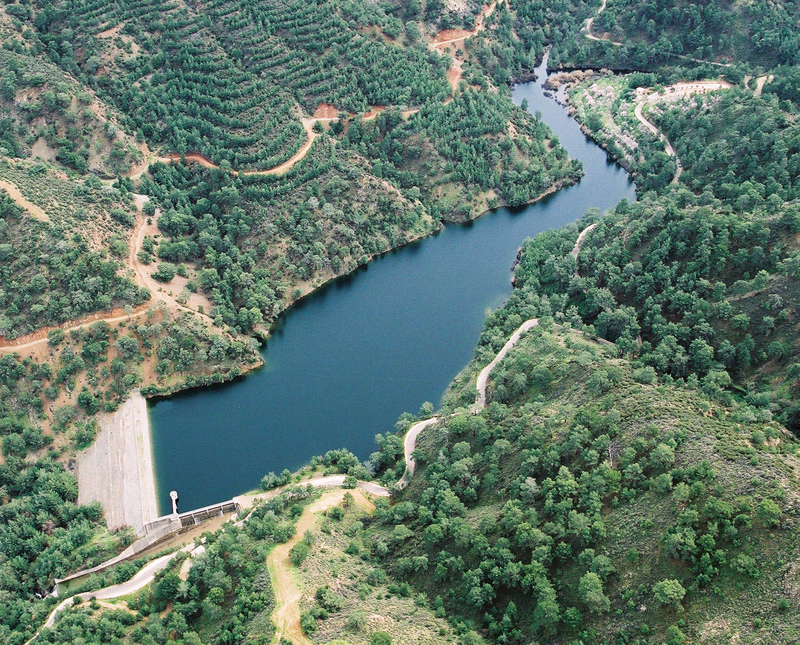
The picture presented to President Christodoulidis is dramatic. The total water reserves in the large dams have fallen to 10.8% (only 31.2 ECU), when in the corresponding period last year they were at 26.6% (77.4 ECU). This winter, so far, is proving to be the worst in history in terms of inflows for the Southern Pipeline system.
According to the WDD, over time, the limited allocation or non-timely approval of credits, in order to utilize the maximum possible production capacity of desalination plants, has led to periods of time when units remain in reserve. As it is characteristically noted: if the desalination plants were operating at full capacity during the period 2019-2022, an amount of 110 ECM would have been added to the water balance.
To deal with the crisis, the government is investing massively in the production of desalinated water. The plan includes:
Mobile Desalination Plants (CMA): In addition to the existing ones in Moni and Kissonerga, Garyllis and the Port of Limassol enter the battle in February. These are units with a total daily capacity of 47,000 / cubic meters per day, contributing an additional approximately 15.5 ECU/year. Therefore, the total capacity of all permanent (Paphos, Episkopi, Vasiliko, Larnaca and Dhekelia) and mobile desalination plants (Kissonerga, Moni, Garylli and Limassol Port) will amount to 282,000 cubic meters of water per day, i.e. more than 92.5 CMM per year. These projects add a 20% increase in desalinated water production capacity to the previous production capacity of 77 ECU per year. A quantity that covers 80% of today's water supply needs.
In addition, tenders have been announced for the construction of another 3 CMAs with a capacity of 30,000 cubic meters/day, which will contribute an additional approximately 10 ECU/year, after the first half of the year. Specifically, the KMA Episkopi was awarded, and tenders for mobile units are underway in Ayia Napa and Vasiliko.
The possibility of producing additional quantities of water from the existing infrastructure is being studied, specifically from 10,000 cubic meters of water to 15,000 cubic meters of water for the mobile units of Episkopi and Ayia Napa and 20,000 cubic meters for the mobile unit of Vasilikos.
In addition, the WDD decided to proceed with a new CMA with a capacity of 20,000 cubic meters/day in Mazotos.
Floating unit in Germasogeia: The installation of a floating desalination plant in the area where the underwater pipeline for the transport of water from Greece was installed in 2008 is being considered.
Agreement with the UAE: Contacts are underway for the disposal of desalination equipment from the United Arab Emirates (PAL company), within the framework of an interstate agreement. A relevant request has already been forwarded and it is now expected whether there is the possibility of allocating a number of units, as was done in the case of the Monastery.
Permanent solutions: Two new permanent units are being launched in the province of Famagusta and eastern Limassol by 2029, which will operate with Renewable Energy Sources. It is noted that the CMA in Ayia Napa will also be converted into a permanent one. Their operation will cover 100% of the current water supply needs from desalinated water in the areas served by government water supply systems.
The battle for water is decided at the tap
>10% reduction in consumption, immediate measures and an enlightenment campaign to avoid the depletion of dams
The most critical pillar of the plan is demand management. The WDD warns that if consumption is not reduced by 10% compared to 2025, the depletion of dams is inevitable. Therefore, the WDD considers it extremely urgent and important to implement actions to manage demand and reduce consumption. Actions that are expected to yield immediate results, in contrast to infrastructure projects which de facto take months to complete. "There are citizens who consume up to 700 liters per day, when the average should be 120 liters," Department sources say. From the WDD they hope that if the citizens consume 120 liters, then all the required time will be given for the implementation of the projects without emptying the dams.
The measures that we will see immediately in our daily lives in February that will start in parallel with a targeted enlightenment campaign are:
Free Nozzles: All households, businesses, the public and semi-government sectors will be supplied with special fittings for faucets that reduce water flow.
"Dropper" Campaign: Use of the application by the "KIOS" Center of Excellence to check consumption per household, to see if water consumption is within satisfactory limits or overconsuming.
Education: Weekly actions in schools for water and placement of special constructions-indicators in the central squares of the cities that will show the progress of each province to the goal of -10%.
Problem with network losses
Outdated networks remain a chronic problem. The government has approved an allocation of €10.5 million to the District Local Government Organizations (EOA) for the replacement of pipelines to reduce losses. In addition, it was decided to provide a grant of €300,000 to each HOC for the purchase of immediate fault repair services, with the aim of responding within 12 hours.
It is noted that the implementation of the first in-depth study has begun, which will be completed in 2027, which will demonstrate the actual losses in the WDD and EOA networks and all the corrections that need to be made, in order to improve the management of corresponding crises, on the basis of a stable planning. To date, the losses are located by calculation.
For 2026, the budget for water projects increases to €195.7 million, the largest amount ever allocated, with €140 million to concern exclusively the purchase of water from desalination. The government is also proceeding with the study for the creation of a single Water Authority by 2027, in order to end the fragmentation of responsibilities and to have central, effective management.
