Filenews 5 January 2026 - by Robert Burgess

Investors are turning their eyes to their accounts these days to see if they will spend the holidays with champagne and caviar or with beer and chips. The MSCI USA index's 16.3% gains could mean that the menu has champagne and caviar, but beer and chips may be more appropriate.
Despite the rise in US stocks, the overall picture cannot easily validate US President Donald Trump's repeated claim that the US is the "hottest" country in the world. Compared to the rest of the world, America's stock market seems to be lagging behind: MSCI USA's earnings pale in comparison to the 29.2% rise in the MSCI All Country World Index (which does not include the US).
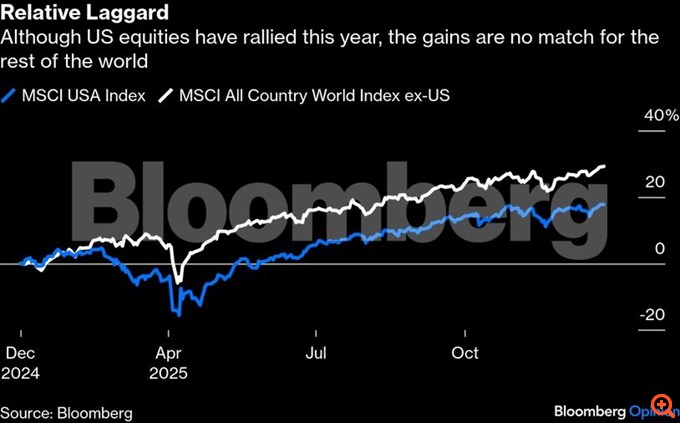
To understand how bad this performance is, it is enough to consider that these figures have not been recorded since 2009, when the global economy began to recover from the economic crisis.
The best explanation for why investors rejected U.S. assets so soon after The Economist magazine reported that the whole world was "envious" of the U.S. economy may lie in the latest OECD forecasts. At the start of 2025, the Organization had predicted that the US economy would grow by 2.4% for the year as a whole, surpassing the rest of the developed world's 1.9%. Now, the OECD – less optimistic – sees growth of 2%. At the same time, it expects a further downward trend in 2026, estimating that US GDP will grow by 1.7%.
The picture is similar in terms of inflation. As 2024 ended with Joe Biden in power, the OECD estimated that price increases were under control, predicting a growth rate of 2.1% in 2025. Now, it considers that consumer prices probably increased by 2.7% in 2025 and in 2026 the increase will reach 3%.
In other words, the U.S. economic lead has disappeared. And it's not hard to see why. Whether it's tariffs, foreign policy, health care, immigration, national security, energy, education, or, indeed, any issue that affects both businesses and households, the Trump administration has wreaked havoc. Perhaps it was unwise to elect a "businessman" whose campaign focused on retaliating against those he felt wronged, both domestically and internationally, and who put a tax on imports and consumption at the center of his economic agenda.
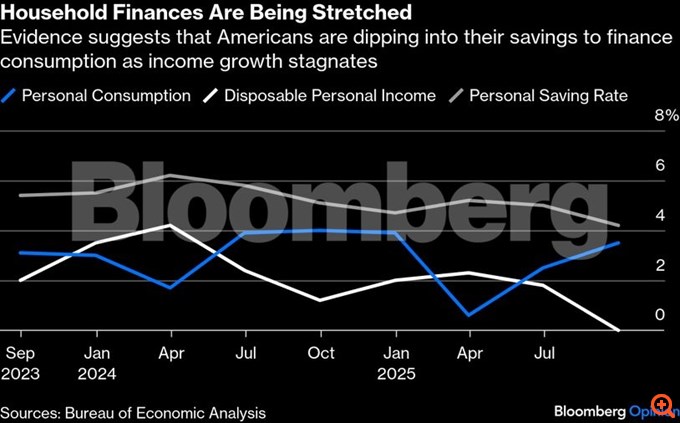
But what about the third-quarter GDP report, which showed that the economy grew at an annual rate of 4.3%, exceeding the average estimate of economists? Let's think about the troubling internal elements. Profit was fuelled by a 3.5% increase in personal consumption, while real disposable incomes remained unchanged. Such a discrepancy suggests that households are spending money from their savings to make ends meet. This cannot last long. In fact, the personal savings rate has fallen to 4%, the lowest since 2022, when inflation was raging.
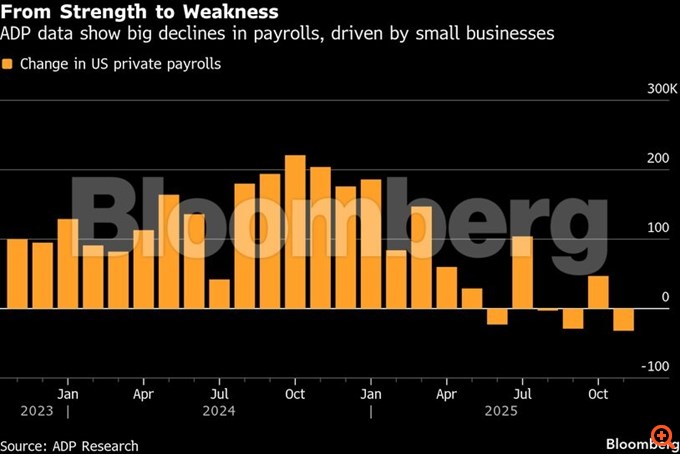
For businesses it is almost impossible to make plans that policies are so unpredictable. The latest survey by the country's financial directors from Duke University and the Federal Reserve in Richmond shows that optimism about the economy is no different than it was at the beginning of 2020, when the global pandemic was on the rise and everyone was worried about the possibility of a recession. Small businesses lead to the increase in jobs. The problem is that employers, both in the goods and services sectors, are reducing staff, according to November data. Businesses with fewer than 50 employees are cutting 120,000 jobs, the biggest monthly drop since May 2020.
Although the profits of listed companies are strong and growing, this is not the case for most other companies. The latest official data released suggests a 5.6% contraction in earnings in the period through June, according to JPMorgan.
"There's not much going on right now, and we think it's all connected to the chaos and uncertainty coming from Washington," said one of the participants in the Fed's monthly survey of the Fed's manufacturing sector in Dallas. Indeed, according to the "Washington Post", at least 717 companies filed for bankruptcy from 2025 to November, based on data from S&P Global Market Intelligence, marking the highest number since 2010.
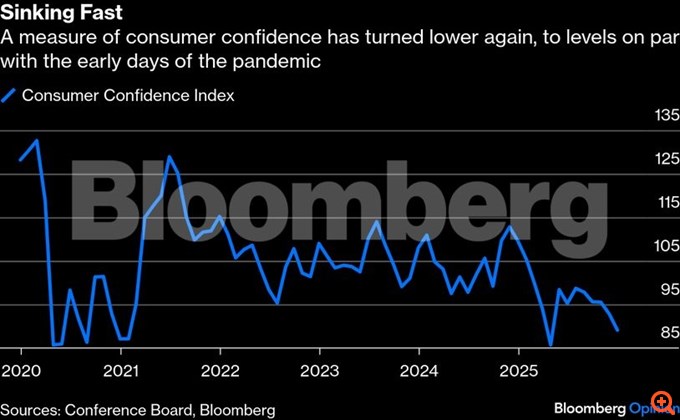
After all, it's no wonder that households are worried. The Conference Board's consumer confidence index has fallen to levels similar to the first months when Covid-19 plagued the world. "Written consumer responses about factors affecting the economy continued to be driven by references to prices and inflation, tariffs and trade, and policy, with increased reports of the federal government shutdown," said Dana Peterson, chief economist of the Conference Board.
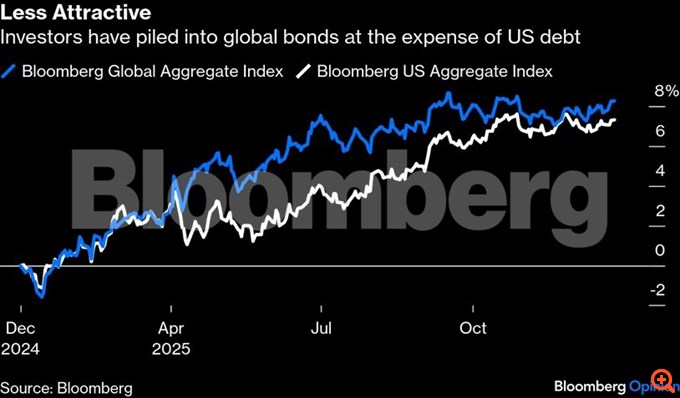
In the bond market, yields on U.S. fixed-income assets were lower than globally. Despite the U.S. Federal Reserve cutting interest rates three times since mid-September, investors have taken the unusual step of raising long-term yields amid concern about a potential acceleration in inflation. As a result, the Bloomberg US Aggregate index (which tracks global bond yields) rose by 7.30% in 2025, lagging behind the Bloomberg Global Aggregate's 8.17% gain.
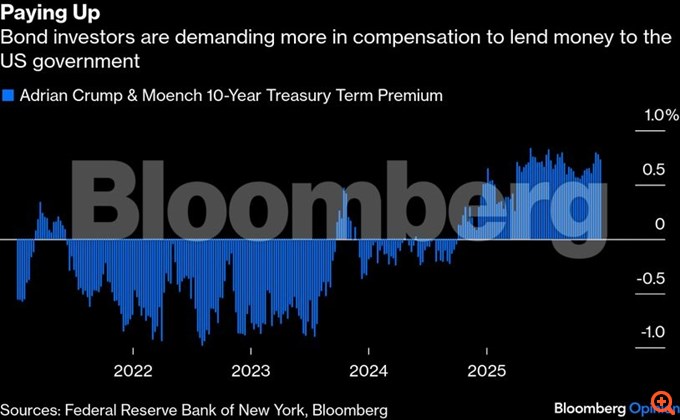
A look at the fine print reveals some worrying trends. First, there is ample evidence that borrowers are demanding more than is usual to lend to the U.S. government in the long term.
This comes amid signs that foreign official bodies, such as central banks and sovereign wealth funds, are moving away from America's sovereign debt. "Official" holdings in US bonds fell by $25 billion in October, after a decrease of €27 billion in the whole of 2024.
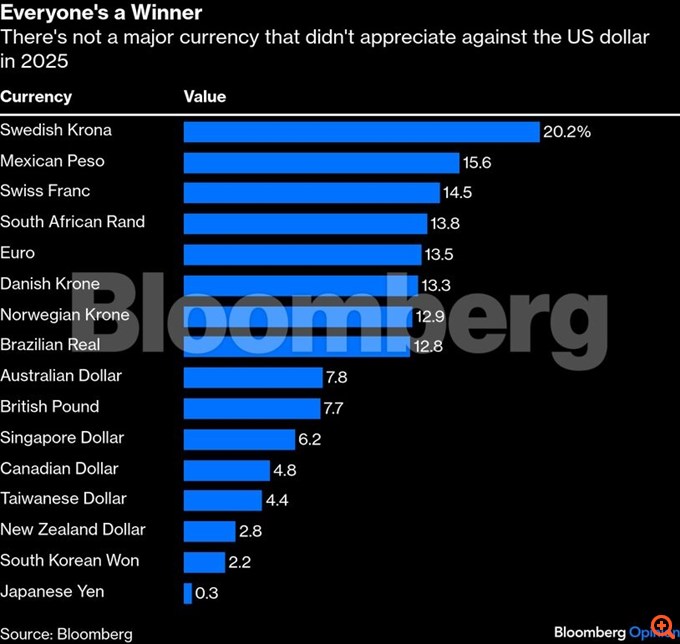
A country's currency is not much different from a company's stock price, as it is probably the best indicator of psychology. If so, the U.S. is in trouble. The Bloomberg Dollar Spot Index, which measures the currency against its main competitors, fell by about 8%, experiencing its worst performance since 2017 – the first year of Trump's first term. The dollar depreciated against all 16 of the world's most traded currencies, as recorded by Bloomberg, in a clear indication that investors are reacting to the Trump administration's policies.
A weaker currency makes exports more competitive, but increases inflation, making imports relatively more expensive. Thus, while exports for the period to September increased by 4.7% to 1.62 trillion. Imports rose 7.4% to $2.60 trillion.
The sad thing is that the Trump administration is aware of the negative effects of its policies, with top officials, including Treasury Secretary Scott Bessed and Commerce Secretary Howard Lutnick, repeatedly postponing the economy's boom, going from "definitely in 2025" to "sometime in 2026." Instead of a new "Golden Age", it increasingly seems that they sold the Americans "seaweed for silk ribbons"
