Filenews 30 January 2026 - by Marilena Panayi

With a law, the Health Insurance Organization will attempt to "tidy up" the General Health System and, at the same time, to ensure the coverage of the real needs of the beneficiaries/patients.
Simply put, and as the Parliament was informed yesterday, the relevant amendment of the legislation is already being worked on and will concern, both the demand and securing of specific services, as well as the controlled integration of new providers (of all specialties) in a way that covers, on the one hand, the various gaps that are currently observed in the offer of services to patients (e.g. services in remote areas) and on the other hand to put an end to the uncontrolled registration of natural and legal entities (providers) in the GHS.
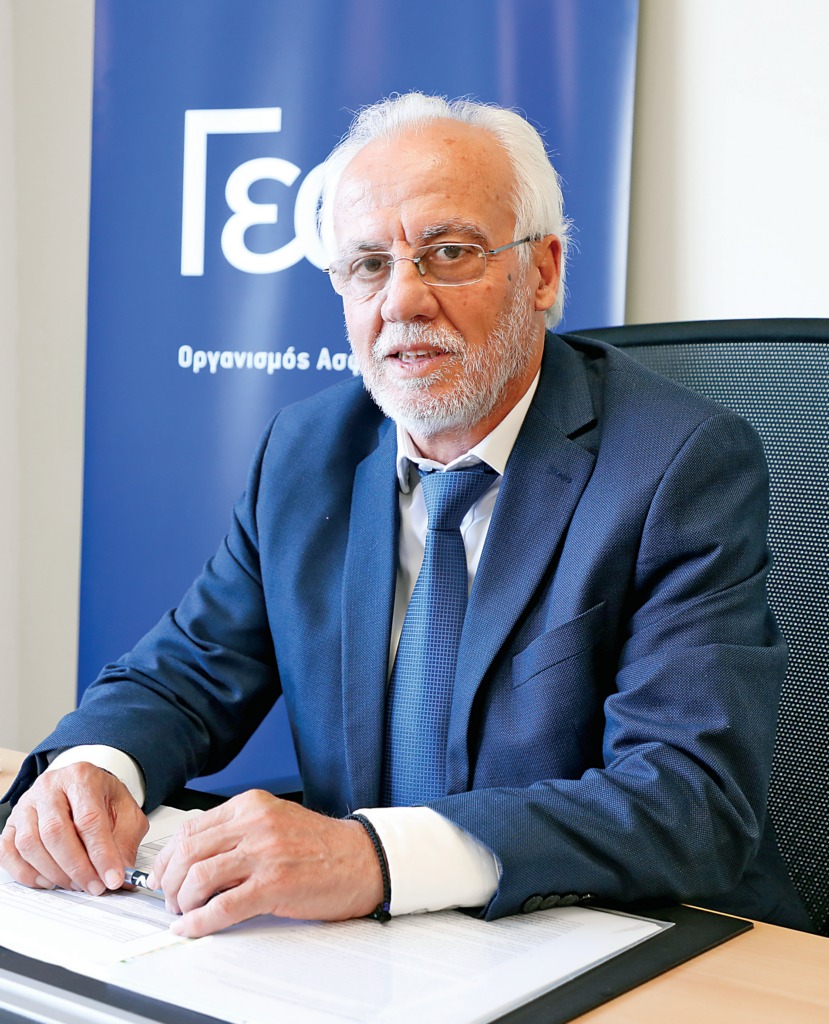
Specifically, and as the chairman of the board of directors of the OAU, Stavros Michael, explained to the parliamentary committee on Health, in response to a relevant question from MPs, "capacity planning (study to identify needs and existing services) should be done by the Ministry of Health before the start of the implementation of the GHS in order to record both the needs, the gaps that exist, as well as the services and the potential we have. It didn't happen. We are now trying to take the measures that we need and we judge that they should be taken." The Organization, he added, "has done studies in order to identify the right answers and it is most likely that very soon we will come to Parliament for an amendment to the legislation."
The amendment will give an answer to whether "we will be able to acquire the right to deny someone membership. That is, to say "no" to another hospital that will come to ask for its inclusion in the GHS, because we judge that in an area we are covered by beds and services."
On the other hand, however, "the point is for the Organization to acquire the right, to be able to go out and say, for example: In the mountains we still need 20 beds, another hospital or we need thalassemia or dialysis services in such and such an area. To map the needs and aim to meet them."
At the moment, said Mr. Michael, "we are talking about an amendment that is being worked on and we are studying various scenarios, because things need to be led in the right direction. I am not in a position to answer whether the Ministry of Health agrees with this position of ours. We must prepare our proposal first and then apply to the Ministry of Health."
The president of the HIO also proceeded to link the quality of services with the phenomenon of abuses recorded in the System. If he said, a provider is abusive, it is largely lowering the level of services it provides. The Organization has the right to impose fines or even suspend a contract or even expel the provider from the GHS. "And this is part of what we want to ensure and promote."
The president of the HIO made these statements in the context of the discussion of the GHS budget for the year 2026 by the parliamentary committee on Health.
Everything of the software is difficult
Regarding the issues related to the GHS IT system and the problems observed both in its management by the contractor company and in the smooth operation of the software, the president of the HIO revealed that "thoughts are being made for us to take over the software from next May when the contract with the company expires".
"Our thought is to let the subcontractors continue and we to take over the coordination. Already, other semi-governmental organizations, such as the Telecommunications Authority, apply such an arrangement."
However, he said, "we have difficulties in this issue as well, because it is a very large contract which will be transferred from the contractor to the contracting authority. We hope," he said, addressing the MPs of the parliamentary committee on Health, "that we will overcome the problems, because there are also legal problems and if we need your help we must come here and help us."
"When you set criteria, some people will protest"
Issues related to the field of medicines and specifically specialized treatments and the process of nominal requests, were also raised by the MPs, as a consequence of the recent complaints about a large number of rejections by the competent committees of the HIO.
The Organization, said Mr. Michael, undertook this process at the beginning of last year and in June "we proceeded with a revision of our criteria to satisfy more patients".
For several months now, he said, "we have not had any complaints about delays in the examination of requests. However, certainly, when you set criteria and evaluate based on criteria, no matter how small the percentage of rejections is, those who are rejected will protest."
Regarding the sending of patients abroad, Mr. Michael said that "there the process does not seem to present any problems so far".
Risk Assessment Report
Answering questions about the 24 possible risks recorded in the risk assessment report submitted to the Parliament, the president of the HIO said that "this is one of the most important tools that an important Organization must have in its hands in order to take its measures. For this purpose, the competent department of the HIO has been strengthened with staff so that we can constantly monitor the situation."
Regarding the financial viability of the GHS, Mr. Michael reiterated that "there is a significant reserve, €700 million, which is enough to cover needs of 4.5 months, which is a period longer than the 3 months that should exist, according to international practices followed by other health systems".
Budget €2.129 billion – Emphasis on the administrative and technological strengthening of the Agency
According to the data submitted, the HIO's budget for 2026 is balanced, with total revenues and expenses of €2.129 billion.
The largest part of the expenditure, amounting to €2.046 billion, directly concerns the cost of providing health services, including provider fees, medicines, inpatient care, laboratory tests, Accident and Emergency Departments, as well as patient missions abroad.
As mentioned by the HIO, the remuneration of providers continues to be determined through global budgets, with the aim of controlling expenditure and preventing abuses.
Particular emphasis is also placed on the administrative and technological strengthening of the HIO, with provision for new staff positions, increased expenses for abuse control and upgrading of the GHS Information System, as well as significant development costs concerning, among other things, the construction of a privately owned building and the renewal of the digital infrastructure of the Organization.
The HIO budget for 2026 will continue to be examined by the parliamentary committee on Health in the context of the discussion of state budgets.
