Filenews 25 January 2026 - by Ernest Moussos

In a deregulated international environment that becomes increasingly unpredictable in 2026, the concept of collective security is urgently back on the European table. From developments in the war in Ukraine and the questioning of fundamental rules of International Law, to the interventionist moves of the United States in Latin America and Donald Trump's repeated statements about American claims in Greenland, the post-Cold War security framework seems to be collapsing.
In this fluid environment, in which the law of the strong seems to prevail over any other parameter and in which the United States under Donald Trump is anything but a guarantee of security, trust and stability today, the European Union is looking for ways to move forward with greater independence towards the future, strengthening its deterrent capacity. The SAFE (Security Action for Europe) program comes to offer member states a common framework for defense support, with the European Commission having approved last week from Limassol, among other countries, the national plan for Cyprus, amounting to €1.18 billion.
What is the SAFE program?
In May last year, the European Council adopted a regulation establishing the 'instrument for action' for security in Europe, the so-called SAFE. This is a new financial tool that aims to support member states that wish to invest in defence industrial production through joint procurement, with an emphasis on priority capabilities.
SAFE will finance urgent and large-scale investments in the European defence industrial and technological base. The aim is to strengthen production capacity, so that defence equipment is available when needed, but also to fill existing gaps, with the ultimate result of strengthening the overall defence readiness of the European Union.
According to official EU figures, up to €150 billion will be made available, which will be disbursed to the interested member states upon request and on the basis of national plans. The disbursements will take the form of long-term loans on competitive terms, which will be repaid by the beneficiary member states.
A key condition is that joint procurement concerns, in principle, at least two participating countries in order to be eligible for funding. However, due to the current geopolitical situation and the urgent need to strengthen defence capabilities, SAFE will also allow, for a limited period of time, procurements involving only one member state.
Participation of third countries
The SAFE programme marks a new phase in the European Union's cooperation with third countries in the field of defence. Ukraine, as well as the countries participating in the European Economic Area and the European Free Trade Association (EEA-EFTA), will be effectively treated on terms equivalent to those of EU member states. This means that they will be able not only to participate in joint European procurement of defense equipment, but also to stock products from their own defense industries.
In parallel, SAFE provides for the participation of other countries, such as countries in the process of joining the EU, candidate and potential candidate countries, as well as countries that have established specific partnerships with the Union in the field of security and defence, including the United Kingdom. These countries will be able to participate in joint armament schemes, without however being fully equated with the member states.
The SAFE framework also leaves open the possibility of concluding additional bilateral or multilateral agreements with third countries, through which the conditions of participation and eligibility can be broadened, depending on the political decisions taken at European level.
Product Categories
The SAFE programme will finance defence activities that fall within the priority areas identified by the European Union. The products are divided into two categories. The first concerns more "classic" defense means, such as ammunition, missiles, artillery systems, soldiers' equipment, critical infrastructure protection, cybersecurity and military mobility.
The second category includes more advanced systems, such as air and missile defense, naval capabilities, drones, space assets, artificial intelligence and electronic warfare, and will be subject to stricter eligibility conditions. In all cases, the participation of components from non-EU countries will be limited to 35%, while SAFE will be complementary to NATO and in the context of transatlantic cooperation.
Turkey Chapter
With suffocating pressure until the last minute from some EU member states, such as Germany, Turkey failed to secure its membership in the lending mechanism. Along with Ankara, Great Britain and South Korea were left out, among others. London did not accept the high price demanded by the European Union (€4-€6.5 billion according to international reports) for its full participation, while Ankara and Seoul were effectively excluded because their demands were not evaluated. Turkey's case was difficult from the beginning, despite the strong desire mainly of Berlin, as it was widely known that certain states would not respond positively. As a result, the Commission ultimately never submitted for evaluation the relevant request it had received from Ankara last summer, as it would have come up against the Cyprus-Greece veto and France's serious reservations.
The only way to access SAFE now for Turkey and Great Britain is bilateral defense cooperation with member states of the bloc. However, only up to 35% of a project funded by the mechanism can come from Britain or Turkey. For the remaining 65%, a special, bilateral agreement with the EU is required, which is no longer feasible for the two countries.
This is how Cyprus intends to equip itself
On 15 January, at a meeting in Limassol, the College of Commissioners of the European Commission approved, among other things, the national defence plan of Cyprus, paving the way for the release of low-interest, long-term loans under the SAFE initiative. Cyprus received approval to borrow the amount it requested, i.e. €1.18 billion, with a development horizon of 2030. The investment plan of Cyprus was among the first 8, which were approved with the first package, while the remaining 11 are expected to be approved in the next period of time with the second and third packages.
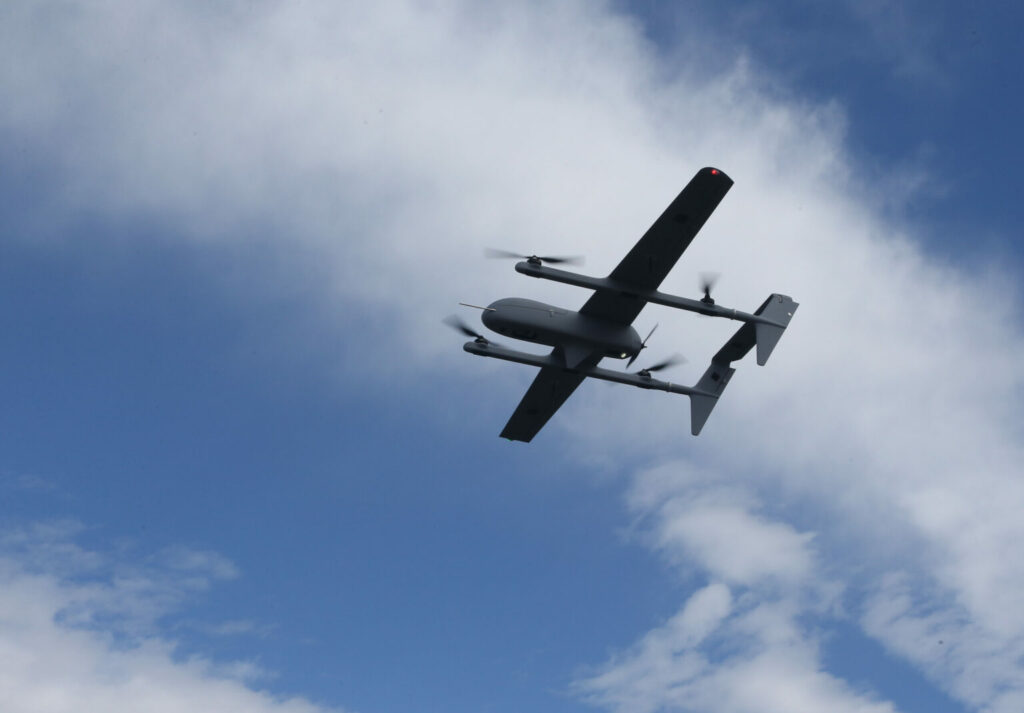
The Minister of Defense Vassilis Palmas clarified from the beginning that in no case are weapons systems that refer to the aggressive intentions of the Republic of Cyprus included in the list submitted. As "F" wrote, the list prepared by the Ministry of Defense includes drones, anti-tank missiles and ammunition. According to information, options are included that, based on the needs of the National Guard, meet modern military needs, taking into account the available fund for Cyprus.
The French military industry covers 85% of the defense equipment that the Republic of Cyprus has included in its application. This includes the strengthening and upgrading of the Air Force of the National Guard, as well as the communication systems. There is also an intention to purchase French wheeled armoured personnel carriers (IFVs), which will have heavy armament and can also meet the specifications of armoured fighting vehicles (IFVs). In addition, as "F" revealed in the previous weeks, by utilizing SAFE, the Republic aims to purchase unmanned surface craft (USV) for naval command, while it is expected that all army corps and command levels will be equipped with drones from Cypriot companies. The possibility of upgrading the entire fleet of "Leonidas" armoured vehicles through a modernization program with Greece is also open. However, the green light from Athens is pending.
The procedure to be followed is as follows: The Ministry of Defence in cooperation with the Ministry of Finance will decide and approve the amount that will be drawn from the low-interest loan offered to Cyprus by the SAFE regulation, will be deposited in the budget of the Ministry of Defence and then the Parliament will be called upon to approve these amounts to strengthen the defence shielding of the state.
Haris Georgiadis: SAFE and us
After the end of the Cold War, expectations were created for a new international order with more security and stability. Some even spoke of the "end of history" and lasting peace. In this international environment, the states of Europe felt so comfortable as to cut their defense spending in half and create a relationship of energy dependence on Putin's Russia.
This illusion of lasting peace has been violently terminated, and the international order – with all its imperfections – is being directly challenged by forces of revisionism and authoritarianism, culminating of course in the Russian invasion of Ukraine. At the same time, the United States, under Trump's leadership, appears unwilling to exercise its traditional role as the pre-eminent security provider for the West.
Against this backdrop, Europe is awkwardly rushing to regroup. The SAFE financial mechanism is Europe's response to the realization that peace and security are unfortunately not guaranteed by simply invoking law and principles, but by force. Something that in our own country we should know very well.
The Left is, once again, opposed. He prefers more spending on social policy than on defense. However, without security, there can be neither social care nor prosperity.
It should be clarified, of course, that SAFE is not a monetary donation. It is a possibility of borrowing, with a burden on the public debt of the states and with the ultimate goal of developing the European defense industry. The obligation of states to ensure their defence, through their own budgets, remains. The fact that Cyprus continues to spend no more than 1.7% of GDP on defence – while Greece has twice as much – is unacceptable. This is the first thing that needs to be corrected in a state facing the intense Turkish threat, so that we can then take advantage of the opportunity of SAFE.
Valentinos Fakontis: We are worried about the developments
The SAFE Program is a financial program that concerns the financing of investments in the field of defense and armaments of the Member States of the European Union.
As is well known, after the end of the Brussels Summit in October 2025, Turkey was formally excluded from participating in the SAFE program. This development has been given special emphasis by the Government of Nikos Christodoulides, but, unfortunately, the back door and the window for the participation of Turkey remains open, which has managed to ensure its participation through the back door.
Ankara has long managed to lock in partnerships and joint ventures of its defense industry with European companies. And the worst thing is that this was done with the encouragement of NATO and powerful member states of the European Union, but also with the unacceptable tolerance of the leadership of the European Union.
As AKEL we are rightly concerned about the developments! We are concerned because Turkey, which illegally occupies the territory of the Republic of Cyprus, is as if it is being "rewarded" with its participation - even indirectly - in the SAFE program, through collaborations with European companies.
We are concerned because both Cypriot citizens and the citizens of Europe will be asked to pay billions of euros to turn Europe's economy into a "war economy". More than €800 billion, instead of being channelled into spending on education, health, social policy, innovation and the environment, is unfortunately being invested in transforming the European economy into a "war economy".
