Filenews 3 January 2026 - by Angelos Nikolaou

With an eye on the complete reform of waste management, the Ministry of Agriculture, Rural Development and Environment is intensively proceeding with the planning for the implementation of the Pay As You Throw (PDO) system. According to the roadmap that has been drawn up, 2026 is a landmark year, as from the second half of the year the so-called "large and specialty producers" are placed under the new regime.
The government, recognizing the challenges and delays experienced in previous years, decided to gradually introduce the system:
Phase A (July 1, 2026): The implementation is launched in a targeted manner by the large producers within the municipalities. Emphasis is placed on sorting at the source for organic waste and recyclable materials. At the same time, the separate collection, which is already applied, for recyclable materials, will be strengthened in households in municipalities and community clusters. For Phase A, it is estimated that €15 million will be required.
Phase B (Early 2027): The system now becomes universal, covering every premises and household in all municipalities and communities of Cyprus. For the second Phase B, it is estimated that €30 million will be required.
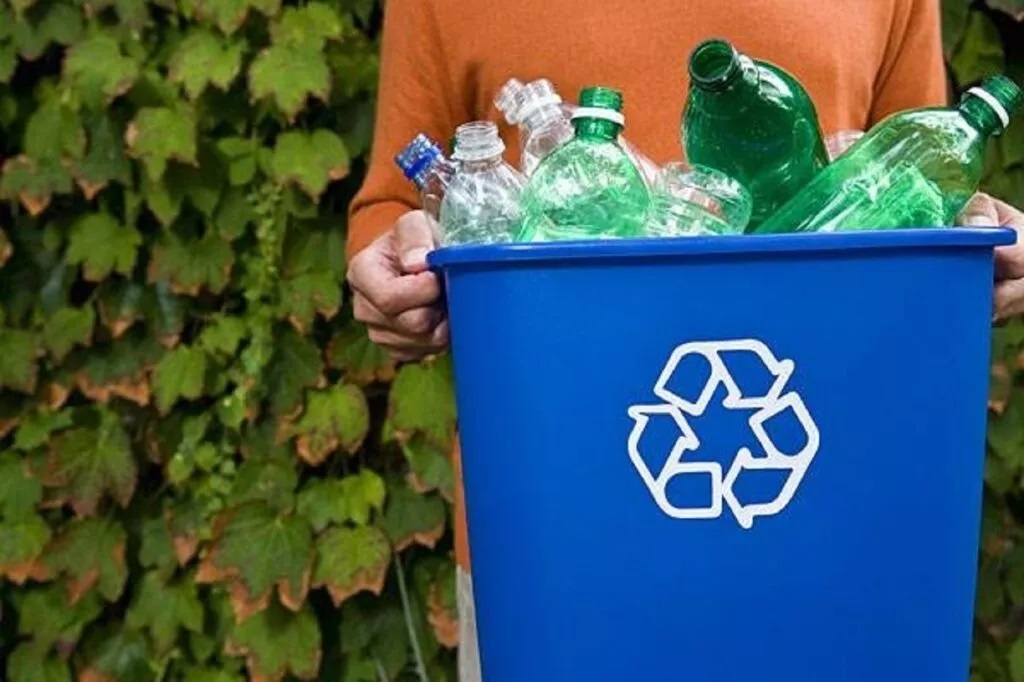
Businesses and organizations with a large volume of waste are put under the microscope of the Ministry. Specifically:
Major producers: Hotels/tourist accommodation, catering businesses, banquet venues, industries/factories, shopping malls, universities, colleges, schools, hospitals, government buildings, municipal markets, meat markets, fish markets, vegetable markets.
Special producers: Airports, ports, military camps and the Central Prisons.
The aim of the PDO is to apply the "polluter pays" principle fairly, transforming waste management into a system that pays for the citizen and, at the same time, to increase the amount of waste collected separately and sent for recycling, composting or reuse.
The mandatory implementation of sorting systems at source and separate collection of municipal waste and Pay As You Throw systems is mentioned in the legislation until 30/6/2024, noting the delay in the practical implementation of the program. In order to help Local Government Authorities (ATAs) implement this system, the Department of Environment is implementing a project, with a total budget of €25 million, which is co-financed under the Cohesion Policy Programme "THALIA 2021-2027".
Mammoth equipment up to €60 million and digital monitoring
To support the project, the procurement of equipment is underway, the cost of which is now estimated at €45-60 million. The list includes everything from prepaid bins and bags to vending machines, closed circuit monitoring and electric vehicles for inspectors.
In fact, in January, the announcement of the major tender through the Dynamic Purchasing System is expected, while, at the same time, the development of an integrated digital platform (€700,000) for the monitoring of projects in real time is being launched.
Despite the planning, there is no shortage of concerns. The Union of Communities expresses reservations about the economic cost to the scattered large rural producers. At the same time, municipalities, such as Kourion, warn of the risk of illegal garbage disposal by citizens who will want to avoid the charge.
To deal with illegality, it is planned to employ 180 inspectors nationwide, who will be responsible for controls and the imposition of fines. Based on the Sustainability Documentation Studies of the PDO system prepared by the ATA, 128 inspectors are required for 20 municipalities and 32 inspectors for 22 community clusters, while the inspectors for the 8 community clusters whose studies are pending are still to be carried out. The cost of employing inspectors reaches €5 million.
Financial support
The state is expected to cover the additional costs of organic waste management for the first three years (2026-2029), with a budget of up to €1,000,000 per year. The problem will be addressed with an initial cooperation with the two private units for the management of the organics that will initially be received from large producers in the first phase. At the same time, a nationwide information campaign (€450,000) is already underway, which will be accompanied by local door-to-door actions in each neighbourhood.
Sustainability documentation studies for the establishment of the PDO system
Each Local Government Authority (ATA) is obliged to prepare a viability study for the preparation of six-year local action plans for the prevention and management of municipal waste based on the "Waste" laws.
The Sustainability Documentation Studies for the implementation of the Pay As You Throw System have been completed for 20 municipalities and 22 clusters of communities, which corresponds to (approximately) 99% of the total population. It is noted that those studies that are completed are approved by the Evaluation Committee of each ATA, while some were forwarded to the General Directorate of Development for opinions and finalization. The remaining studies for the 8 community clusters, lasting 6 months, are expected to be completed gradually by Q1 2026.
As far as the action plans are concerned, the action plans are currently being prepared by 12 municipalities and 5 clusters of communities. The action plans for some municipalities and community clusters have already been completed (Aradippou, Dali – South Nicosia, Nicosia and Kourion), while for the rest of the ATAs the completion is expected within the 1st half of 2026.
Financial Considerations for Organic
For the entry fee/receipt (gate fee) of organic waste at the OEDA of Pentakomo and Koshi, the economic models of the PDO sustainability studies took into account the existing entry fee for mixed waste at €40 and for organic waste at €40 (2025-2027) and the new entry fee at €80 for mixed waste and €20 for organic waste (2028-2030). In case the fee for organic is higher than €40, the additional cost will be covered by the state.
The submission of a proposal to the Council of Ministers for the approval of Regulations on the landfill tax of residual waste after the legislative technical review. The financial support of the ATA to support the implementation of a PDO system in consultation with the General Directorate of Development.
