Filenews 18 January 2026 - by Marios Demetriou

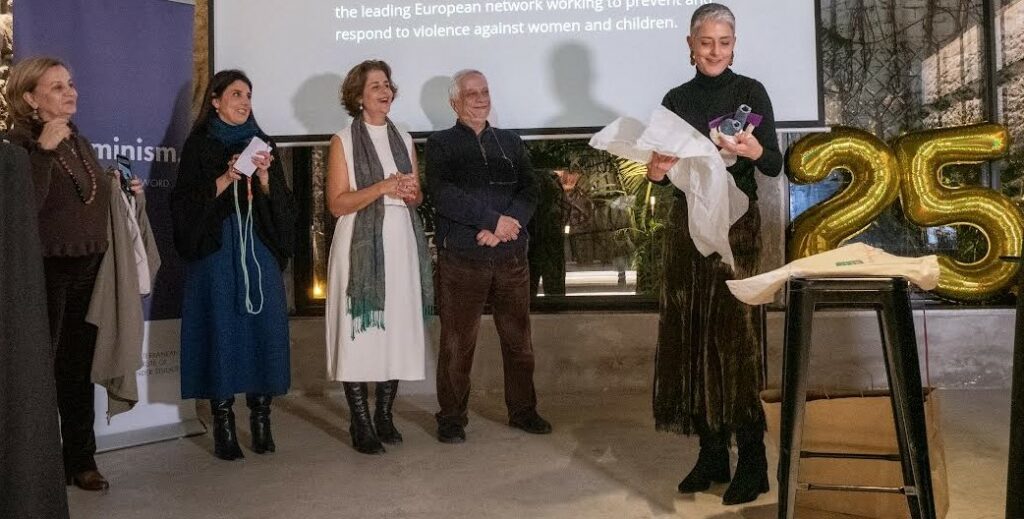
"The Mediterranean Institute for Gender Studies (MIGS) began its activity in Cyprus in 2000 and was formed from the outset as an independent, non-partisan feminist voice – at a time when gender equality remained on the margins of public debate, independent civil society was weak, in a political environment where the Cyprus issue dominated the national agenda and left little room for the promotion of human rights." The above was mentioned, among other things, by the director of MIGS, Susana Pavlou, at an anniversary event in Nicosia on December 10, 2025, on the occasion of the 25th anniversary of the establishment and operation of the Institute. He particularly stressed that MIGS "is dedicated to promoting gender equality and defending the rights of women and girls through research, advocacy, education, information and interregional collaborations in Cyprus, the Mediterranean and Europe".
The event was also addressed by four members of the MIGS Board of Directors: one of the founders of MIGS, former Chairman of the Board of Directors of the University of Nicosia, Dr. Nikos Peristianis, MP Alexandra Attalidou, academic Dr. Miranda Christou and President of Frederick University Natasha Frederick. In the context of this report for "F", positions were made on important initiatives of the Mediterranean Institute and by the other officials of the organization, Dr. Christina Kaili, Maria Angeli and Daphne Demetriou.
Clear voice in a crowd with blurred lines
"I was lucky enough to see the first steps of MIGS because as a University and as active citizens we considered it our obligation to contribute to the establishment of a serious organization on gender issues and other areas and I am glad that MIGS really lived up to this expectation," said Dr. Nikos Peristianis. "It's one of the few organizations where I'm personally involved that has been able to get back on its feet very quickly, to be self-sustaining, not to need someone, not to have dependencies, to be completely autonomous – and I'm proud of their achievement," he noted.
Alexandra Attalidou referred to the "large footprint" of MIGS, stressing that the organization "over the years has managed to turn ideas into action, strengthen women's rights, promote equality, fight violence, support refugees and migrants, open difficult discussions about respect, democracy and social exclusion. It became a documented, serious, credible voice, which is heard not only in Cyprus, but also in Europe. This organization succeeded because it had people who did not see MIGS as a project, but as a mission. Who dedicated countless hours, gave soul and professionalism, persevered even when the conditions were difficult. So I want to say a big "thank you" to all the members, old and new. Your work is not only important, it is transformative."
As Natasha Frederikou said, "MIGS is for our country one of the most consistent, reliable and meaningful organizations that defend women's rights. For the next ten years, my vision for MIGS is to continue exactly like this: uncompromising in defending women's rights, a pioneer in research and documentation, present in every public debate about equality, and always a firm, clear voice in a world that often blurs the lines."
For her part, Dr. Miranda Christou stressed that "a very important step for MIGS is that it has put feminism in the foreground – in practice. Secondly – she added – surround yourself with amazing women, each of whom represents what MIGS is. None of them are there to compromise, to be comfortable and they are all dynamic in their own way." Dr. Christou also made reference to "Christiana Kouta who is no longer with us, who played a very important role in promoting MIGS in difficult times."
Feminist knowledge and international networking
"The Mediterranean Institute of Gender Studies from its first steps adopted a strategy that was not limited to national borders, since internationalization was a conscious choice," said the director of the organization, Susana Pavlou. "This was necessary - he continued - to build credibility, develop knowledge, create partnerships and ensure the viability of an organization that chose to remain autonomous. It started by participating in European networks, sharing knowledge, co-organizing academic and feminist initiatives, and gradually building an international presence. A characteristic milestone of this period was the international conference "Gender in the Mediterranean: Emerging Discourses and Practices" in 2004 in Nicosia. At that time, MIGS began to be recognized outside Cyprus and gradually consolidated its presence domestically. From 2007 onwards, she took a leading role in transnational projects, initially in the areas of prevention of sexual violence and the integration of migrant domestic workers. In its 25 years of activity, it has implemented more than 60 projects, collaborating with universities, research centers and women's rights organizations. Today, MIGS is recognized as a key body of know-how at national and European level and cooperates with a wide range of institutional and political partners, such as the Council of Europe and the European Institute of Gender Equality. His contributions span a wide range of policies: from violence against women and gender mainstreaming, to care, women's participation in decision-making and gender equality in the media. At the same time, MIGS was a founding member of important feminist networks such as the European Network of Migrant Women and the END FGM EU Network, while at the national level it played a leading role in the creation of the Cyprus Women's Lobby. The course of the MIGS shows that feminist knowledge, when documented, networked, and politically positioned, can transcend borders and influence policies. And he reminds that gender equality is not a given, it is a field of constant claim, inside and outside Cyprus. (More information on medinstgenderstudies.org).
Educational work for social change
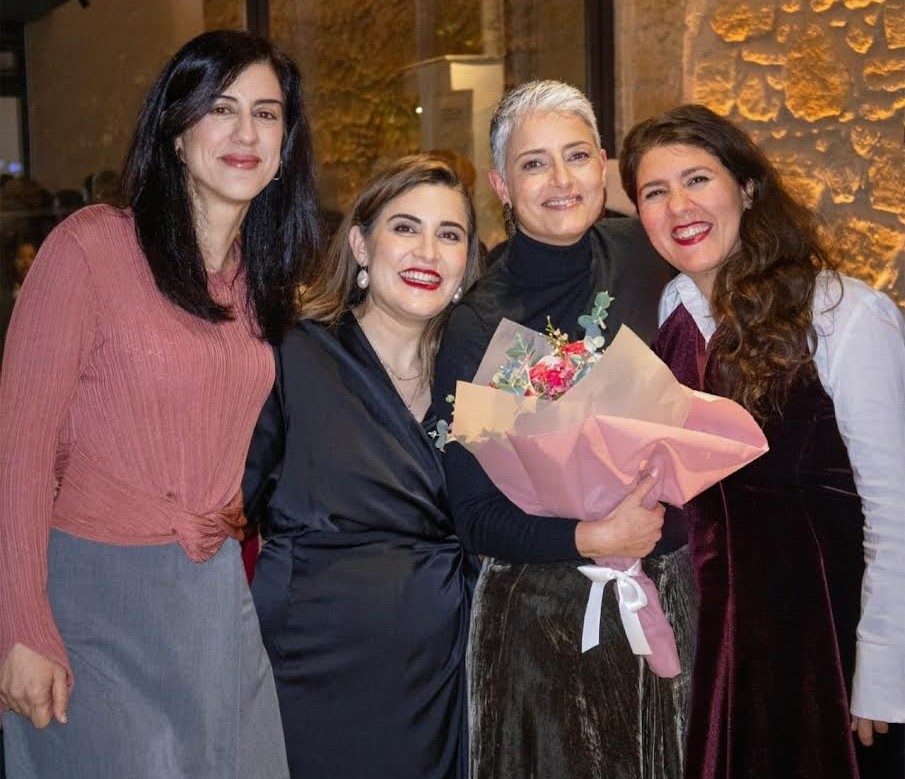
The researcher and program coordinator of the organization, Daphne Demetriou, referred to the "multi-level educational work of MIGS focusing on gender equality and the prevention of gender-based violence". As she pointed out, "thousands of professionals, young people of all educational levels and children, have participated over time in numerous actions of the Institute, in all the provinces of Cyprus. At the core of MIGS's educational action is the empowerment of frontline people. Our educational interventions cover a wide range of topics – from abuse recognition methodologies for health professionals, multi-agency trainings for co-management of cases involving vulnerable groups, such as violence against older women and the establishment of gender-specific codes of conduct for universities, etc. Recognising their critical role as reference persons and agents of social change in and out of the classroom, We pay particular attention to the training of teachers. Through specialized seminars, we empower teachers of all levels to actively advocate equality, knowing that their daily behaviour is reflected in children and contributes to the formation of tomorrow's citizens. Of course, within the school context, we are not only concerned with the teaching staff – we implement interventions with the participation of students continuously, utilizing experiential and participatory methodologies. Through these actions, we encourage young people to reflect on gender issues in their social context. We want to strengthen their critical thinking and active participation in their school and extracurricular community. Over time, the Institute has been offering non-formal learning activities for children and adolescents outside the school context, through educational workshops using digital tools and games. The impact of MIGS educational interventions extends beyond the duration of workshops and programs. Participating students act as positive agents of change in the school community, promoting gender equality and healthy relationships over time. With documented expertise at national and international level, MIGS contributes through its educational work to the promotion of the principles of the Istanbul Convention and to the strengthening of policies and practices aimed at preventing gender-based and domestic violence and promoting gender equality."
Research and action in the media
"At the Mediterranean Institute for Gender Studies, we examine the media as places of production and reproduction of gender hierarchies," the researcher and program coordinator of the organization, Maria Angeli, told our newspaper. He added that "gender equality in the media is not a matter of image, it is a matter of power – the power to define which questions are important, which answers are acceptable, which solutions are worth trying. Since 2009 – he continued – we have been systematically monitoring the gender composition of Cypriot news on television, radio, newspapers and online media. The data is consistent and revealing: 86% of the people who take the floor in the news are men. Our work in the media is based on a fundamental premise of feminist theory: the media is not just windows into reality. They are institutions that constitute what we recognize as reality. When women are systematically absent from this space, it is not just a lack of perspective, the very legitimacy and credibility of the media are undermined. We collaborate with journalists to raise gender issues, develop educational programs for media professionals, contribute to the formulation of regulatory frameworks such as the Equality Code of the Hellenic Broadcasting Authority and participate in European research and policy-making networks. At the same time, we are empirically monitoring the media to document inequality and its persistence over time." Ms. Angeli referred to the shift in the Institute's strategy, "from the exclusive focus on changing existing media, to the creation of autonomous spaces for communication production". She added that "one such initiative is the MIGS Podcasts entitled 'We-Pods: Podcasts for Equality', which as she said "is not just a platform for women's voices, it is an intervention that challenges the monopoly of specific institutions in the production of legitimized knowledge, creates infrastructure for the promotion of women who come from different positions of subjectivity: women of different social classes, LGBTQI, migrant women, but also privileged women, as the experience of exclusion from the public debate touches everyone to a different degree, but it is certainly a common experience. We-Pods continues to operate as an open platform and we are developing a new series of episodes on the policy of care under Caredizo."
Feminist advocacy with an institutional footprint
"Political advocacy has always been at the core of the mission of MIGS, inspired by Dr. Myria Vassiliadou, Dr. Nikos Peristianis and the other founding members of the organization, including academic Dr. Alexia Panagiotou," said Dr. Christina Kaili, senior researcher and program coordinator of the Institute. "These were never piecemeal interventions," she added, "but long-term, persistent work, in times when gender issues were considered 'secondary'. One of the first milestones was the abolition of the so-called "artist's license" in 2008, a regime that had been linked to the trafficking and exploitation of women, with the consent of the Cypriot state. MIGS has played a key role in highlighting the gender dimension of trafficking in human beings, especially in relation to sexual exploitation and domestic work, since it was the first NGO to carry out a mapping survey on this social problem in 2007.
In these 25 years, the imprint of MIGS on the political and institutional development of Cyprus is deep. Every legislative change, every new social policy, carries behind it stories of collective effort, research-knowledge and feminist claims. Looking ahead, MIGS continues with the same commitment to transform women's voice into political action and knowledge into social change. This timeless contribution was also recognized at the international level in 2025, when MIGS was honoured with the Women's Empowerment Award by the Parliamentary Assembly of the Mediterranean, for its overall contribution to the promotion of gender equality and women's rights."
