Filenews 31 January 2026 - by Petros Axfentiou

The Council of the European Union and the European Parliament are on a collision course, against the backdrop of the issue of passenger rights. The two institutions have a completely different philosophy when it comes to air transport, with the Council largely adopting the positions of the airlines and the European Parliament hardening its stance even more in favour of passenger protection.
The controversy began in 2014, when the European Parliament reacted to a proposal by the Commission to update passenger rights. In fact, he suggested that passengers facing delays or cancellations should have better access to compensation, with clearer rules on how airlines should handle passenger complaints. Divergences in positions between EU countries blocked this file for 11 years. However, in June 2025, EU ministers reached a political agreement.
Negotiations with the Parliament started in October 2025, but did not reach an agreement, forcing the European Parliament to proceed to adopt its position at second reading. 632 MEPs voted in favour of rejecting the Council's proposals, 15 voted against, and there were 9 abstentions.
The legal officer of the Cyprus Consumers Association, Virginia Christou, analyzed to "F" the proposals of the two institutions. As she explained, today there is a European regulation that applies to all member states, including the United Kingdom. "This is Regulation 261/2004, which ensures the rights of passengers in matters related to flight delays and denied boarding," she said. She added that the amount of compensation to which the passenger is entitled in the event of cancellation or delay of his flight is also determined.
She also pointed out that there is the international Montreal Convention, which is applied by all airlines and mainly concerns the issue of luggage. "The Montreal Convention was revised some time ago and compensation was increased in cases where baggage is lost or damaged." However, as she clarified, at the moment the issue of revising the European regulation remains open.
What applies today
In case of a flight delay of three hours or more, the passenger is entitled to compensation, which starts from €250 and goes up to €500, depending on the distance of the flight.
In case the flight is delayed, cancelled or overcrowded, the passenger should contact the airline. It is noted that each company has a different way of communicating, such as e-mail or written submission of a complaint.
Check-in: There are airlines that accept the boarding pass in digital format and others that ask for a printed one. If the passenger has not printed it, they may incur a related cost.
Ms. Christou stressed that an effort is currently being made to revise this regulation, as the Council of the EU submitted to the European Parliament changes that, as she noted, degrade the rights of passengers. In particular, the Council proposes, inter alia, to extend the passenger's waiting time at the airport beyond four hours. "This is a recommendation of the airlines that was accepted by the Council," he said, adding that the European Parliament's position is to maintain the three-hour limit.
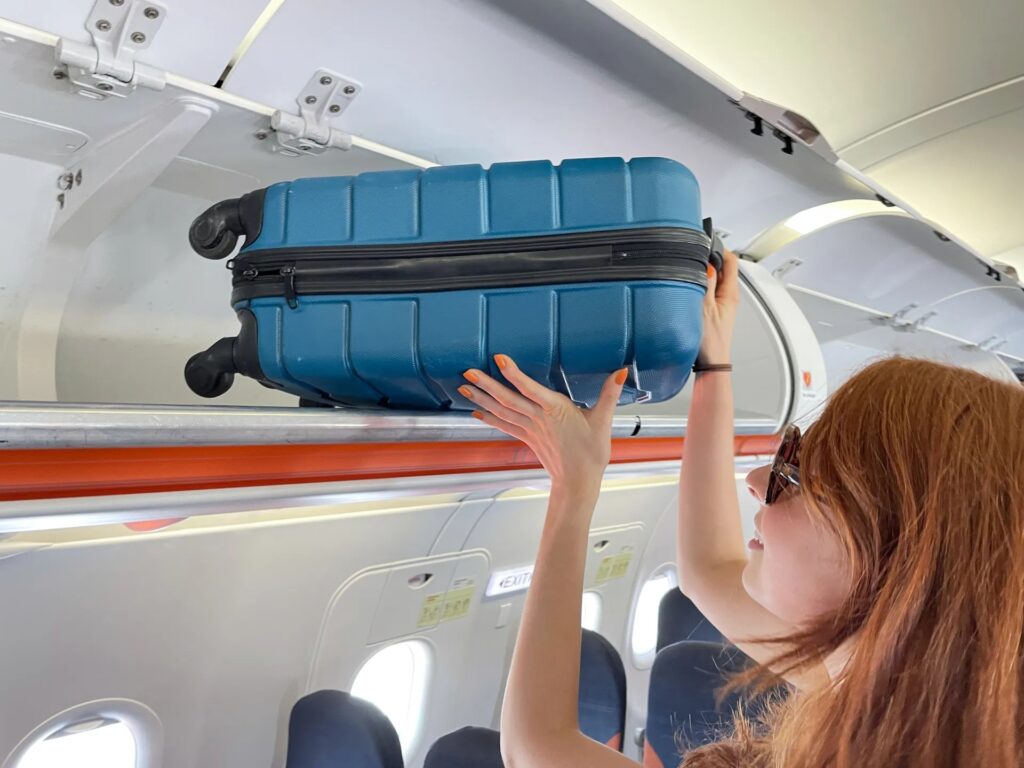
Free carry-on baggage and refund
Following the rejection of the Council's recommendations, the European Parliament adopted concrete proposals that strengthen passenger rights. More specifically, the pre-filled application was adopted: In case of flight delay or cancellation, the passenger will receive an email with the relevant form for a refund.
A strict refund framework has also been introduced, according to which the amounts must be paid within 14 days to the passenger's account. As far as hand luggage is concerned, it was decided to carry one hand luggage and a small personal item in the cabin free of charge.
In addition, a change is being promoted so that children under the age of 14 and people with disabilities or reduced mobility can sit next to their companions at no extra charge. For compensation, the European Parliament calls for them to start from €300 and reach up to €600.
At the same time, it is sought to put an end to the extra charges in cases of typographical errors when purchasing a plane ticket. As Ms. Christou noted, there is a proposal for free corrections to the passenger's name, as well as for free check-in.
An important change also concerns the definition of the concept of "emergency". As he explained, when airlines invoke it, they disclaim their responsibilities towards the passenger. "Now, it is becoming clear what really constitutes an emergency," he said.
The contributions will be sent to the Council. In case of disagreement, a new consultation and drafting of a new text will be required. If there is an agreement, the final text will be sent to the European Parliament for a vote.
In conclusion, Ms. Christou said that several airlines react strongly to the proposals of the European Parliament. "Lately, as a Consumers' Association, we have been observing that EU institutions tend to take decisions to the detriment of citizens, both in the field of air transport and in passenger information."
The issue is in the hands of the Cypriot Presidency
DIKO MEP Costas Mavrides expressed his position on the issue to "F", who pointed out that movement is linked to the fundamental right in the EU to free movement in the European Union. "That is why, as the European Parliament, we have an overwhelming position on passenger rights, as was confirmed in the last plenary, adopting almost unanimously."
He stressed that "as the European Parliament, we reject the weakening of the existing passenger rights and insist that the three-hour delay limit and the existing amount of compensation be maintained. In addition, we ask for free transportation on the plane of a personal item (e.g. bag, backpack or laptop) plus a small hand luggage. At the same time, basic transport services must be provided without unjustified or hidden charges. We attach particular importance to the protection of vulnerable groups, e.g. adult escorts of children under the age of 14 and people with disabilities or reduced mobility have the opportunity to sit with them free of charge. Finally, we insist on simpler procedures, so that citizens know and claim their rights in practice."
Finally, he said that, after 20 years since the last legislation on airline policies, especially low-cost ones, passenger rights must be updated. "The Council of the EU, i.e. the governments of the member states, has a different position from the European Parliament, asking for flexibility, especially on the issue of compensation. Cyprus, as the Presidency of the Council, has a difficult task ahead of it in this "window" of six months. If she reaches an agreement that leans towards the position of the European Parliament, it will be a great success for European citizens and for herself."
