Filenews 16 December 2025 - by Fanis Makridis

A scandal of squandering public money is sealed in the most tragic way. The reason for the two incinerators of Larnaca and Paphos airports, respectively, which cost the taxpayer €2.3 million, were never used and it was finally decided to sell them.
The news in this case is that during the first week of this month the incinerator of Paphos airport was sold at auction for an amount of a few thousand euros.
In other words, the only winner was the contractor who undertook the implementation of a project - doomed to fail - two decades ago and, of course, the big loser is the ordinary citizen, since at two facilities over two million euros were sacrificed without anyone ever being held responsible for the wrong decision to build them.
Two sources confirm
The news of the sale was cross-checked yesterday by "F" talking to two independent sources of information. In fact, information we received from a reliable source states that the entire incinerator facility has been sold to a businessman for an amount approaching €7,000.
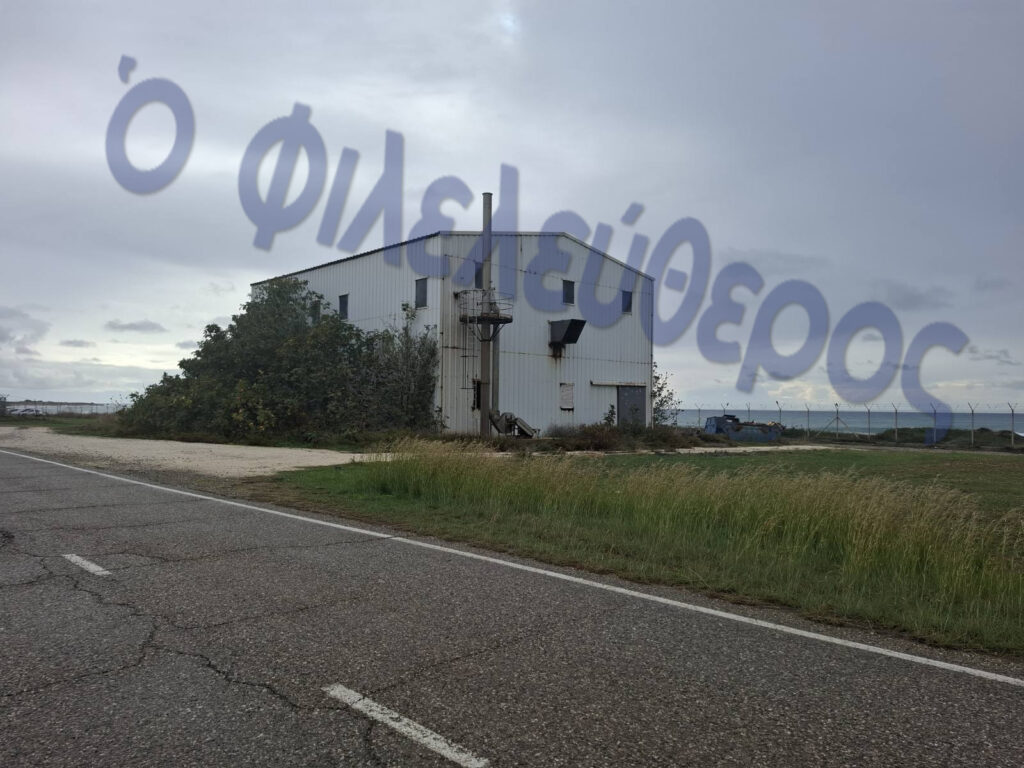
Based on the data, the bidder entrepreneur not only buys the machines, but will also undertake the transport of them. Although this is not confirmed for the time being. However, photos accompanying this article give the picture of the building installation of the incinerator at Paphos airport until a few days ago.
We informed the minister
We put the above data to competent public officials to receive clear information. In fact, although the scandal is dated, since it has a history of two decades, "F" informed the current competent minister, Alexis Vafeadis. The Minister of Transport, Communications and Works responded by telling us that he will ask to be informed about the parameters of the issue.
Disassembled...
As far as the incinerator of Larnaca Airport is concerned, there is currently no clear information about its fate. That is, to what extent it has been put up for sale. However, a reliable source of information from "F" informed us that "the incinerator at Larnaca airport since 2006 remains dismantled in a fenced area".
Other method
It should be noted, however, that the management company was never willing to use the incinerators. It had launched its own waste management procedures from the beginning. Indicatively, we mention that in a report of the Audit Office of the Republic, dated 5/9/2022, it was stated, among other things, that Hermes "informed that it does not need the incinerators in question, since it uses another method/procedure for the management of aircraft waste". We have also asked for information on this issue.
How it skyrocketed to €2,299,273
How did the cost of unnecessary incinerators skyrocket to €2,299,273? The answer to this question is given through the Audit Office of the Republic, which three years ago had pointed out the following in a relevant report for the Ministry of Transport, Communications and Works: "According to the data contained in previous Reports of our Service, as well as relevant information from the Deputy Director of the Department of Electrical and Computer Engineering, from whom we requested information for the investigation of the above complaint, in February 2004 the contract for the supply and installation of the equipment amounting to €1,616,303 was signed, while in July 2004 the required construction works were assigned to the same contractor for €332,323. In addition to the above, an additional €224,170 was paid to the contractor with the approval of KEAA, due to the delay in the progress of the works on the part of the employer and €126,477, as compensation for the termination of the contracts, bringing the total cost to €2,299,273".
No provision for incinerators
- What the Audit Office report on 5/9/2022 said
The scandal with the incinerators is characterized by events that challenge the intelligence of every sane thinking citizen. The most provocative facts are included in the report of the Audit Office of the Republic in September 2022.
From what has been pointed out, it appears that before the implementation of the project began, the necessary steps were not done to allow the incinerators to operate in time. Nor was the European Union in agreement with the use of this method of incineration.
''(…)in October 2003 and while the tenders had not yet been submitted, we asked to be informed by the Director of the Department of Civil Aviation (TAA), which would manage the incineration systems, whether the necessary actions had been taken (...) and the necessary permits and the operating conditions of the units had been secured by the competent Authority (...) We recommended that these licenses/approvals be obtained before the signing of the contract for the purchase/installation of the kilns, in order to avoid problems and possible claims of the contractor (...). The Director of the Waste Disposal Authority informed us in May 2004 that his Department had proceeded the previous month to submit the application for securing the waste gas emission permit of the two units and that he would immediately deal with the issue of obtaining – from the competent Authority – the relevant planning permit (....). Eventually, due to the failure of the LSU to secure the necessary permits/approvals in time, the Department of Electromechanical Services (EHR) proceeded to suspend the works, despite the fact that the incinerator of Paphos Airport was ready for operational inspection and receipt. (…) In September 2008, the Director of the LHR informed the EHR Department that the management of the airport waste and in particular the operation of the incineration furnaces was not the responsibility of the LRA, but was the responsibility of the airport manager, who, however, informed them that he did not need the incinerators in question, since he uses another method/procedure (...). In February 2009, the Director-General of the Ministry of Labour and Social Insurance informed the Director-General of the Ministry of Labour and Social Insurance that the incineration of waste, using large and small incinerators, which do not operate on a continuous basis (...) was not a sustainable practice in the EU, for economic, technical and environmental reasons. Therefore, and in view of the fact that the planned Special Waste Management Center, which was expected to take place in Vata Gonia in Nicosia, included the construction of a central incinerator, he suggested that it be designed appropriately for the incineration of various types of waste and that the incinerators purchased for the airports be made available for sale abroad. In December 2009, ECE requested authorisation from the Director-General of the Ministry of Finance for the sale of those incinerators and their premises in the state they were located at the two airports, through a tender by the LRA, as the owner of those incinerators. (…) we asked in September 2021 from the Director General of the YEE to inform us whether the above procedure had progressed (...) We asked him to inform us of the reasons why the above decision was not implemented and to inform us of any developments on the matter. In January 2022, the Director General of the Ministry of Internal Affairs informed us that the LRA, as the owner of the equipment, has sent the relevant information to the Department of Electrical and Computer Science for the purpose of selling the incinerators and their shelters, which has forwarded them to the Chairman of the Special Inspection Council for electromechanical equipment for further and will then be sent to the Director of State Purchasing and Procurement Services for her own actions".
