Filenews 28 December 2025 - by Ernest Moussas

In three days we say goodbye to 2025. A full year for Cyprus, with great challenges and difficult decisions. The Government, as it is self-evident in every democratic country, is exposed daily to criticism for its handling, sometimes harsh, sometimes milder and constructive. "F of Sunday" today attempts an assessment of events and realities of this year, selecting some of the most important issues that concern society. The vice-president of DIKO, Chrysanthos Savvidis, and the MP of AKEL, Giorgos Loukaidis, submit their views on this year's government work.
Cyprus problem
2025 is the year that the Cyprus problem got back on track. The President, with strategic moves, managed to convince the international players that the Greek Cypriot side really wants to stir up our national issue. The reappointment of Maria Angela Olgin as personal envoy of the UN Secretary-General, as well as the appointment of Johannes Hahn by the Commission, was achieved. Two informal five-party meetings were held, while the prevalence of Tufan Erhurman in the occupied territories is now favourable to the developments. The United Nations communiqué at the beginning of the month, after the tripartite Christodoulides-Erhurman-Olgin, and the clear reference to political equality are a first but very important step for substantial developments. In any case, the Cyprus problem is perhaps the only issue that almost all political forces agree that this year went relatively well. Regardless of how it will develop in the coming months, when - as everything seems - the difficult issues will unfold before us. That's where everyone will be judged, as the President himself says.
Economy and Energy
As far as the economy sector is concerned, the reality is that there are two sides. On the one hand, our country is fiscally stable, with high growth rates. Some sectors are even recording record performance, while unemployment is at low levels. On the other hand, this prosperity is not reflected in the life of the average citizen. The cost of living is rising non-stop, while the unbearable costs of housing and energy make the situation more and more suffocating. At the same time, wages remain frozen and unchanged for ordinary workers. The Government had embarked on a great effort for the ATA, with high expectations that were initially appreciated by the citizens, but with a mediocre result. From the intention of universal expansion and staggered, it reached a compromise with a gradual return of up to 100% in 2027, only for civil servants. An important milestone for the economy is the tax reform, which the Government managed to pass through Parliament last Monday. Among the main changes is the increase of the tax-free allowance from €19,500 to €22,000.
In terms of energy, Cyprus remains the only isolated country in the EU, having the second most expensive electricity, based on purchasing power. The smell of scandal about the terminal in Vasilikos and the mess with the electrical interconnection create reasonable questions and resentment among the citizens. It is recalled that both cases are being examined by the European Public Prosecutor's Office. The issue of the GSI even caused an unprecedented public confrontation with the Greek government, which was even criticized by former President Nicos Anastasiadis. The issue of ambiguity and double-speak on the part of the Government was also raised by its biggest party ally, Nikolas Papadopoulos. On the positive side, 2025 marks the year that the EAC's monopoly was "broken", at least legally. Whether this will lead to a truly competitive electricity market will be seen by how the system will work in the coming months. A new natural gas field was also discovered in the Kronos block, the largest to date, while a commercial agreement with Egypt was announced for its exploitation.
Immigration
The management of immigration, another major challenge for the country due to its geographical location, is assessed positively by most this year. According to recently published Police data, 11,500 foreigners residing illegally in Cyprus were repatriated in 2025. A number that translates into a 53% increase in the last three years. Arrivals of irregular migrants in 2025 amounted to 2,400. Compared to the arrivals of 17,434 arrivals recorded in 2022, a decrease of 86% is recorded in the last three years. Interpreting these numbers, one cannot ignore an important geopolitical development, the fall of Assad in Syria, without this nullifying the fact that there was also an acceleration of the examination of files by the competent departments. By September, 3200 Syrians had already returned to their country, following the regime change.
Deadly fire: The bloody thorn of the year
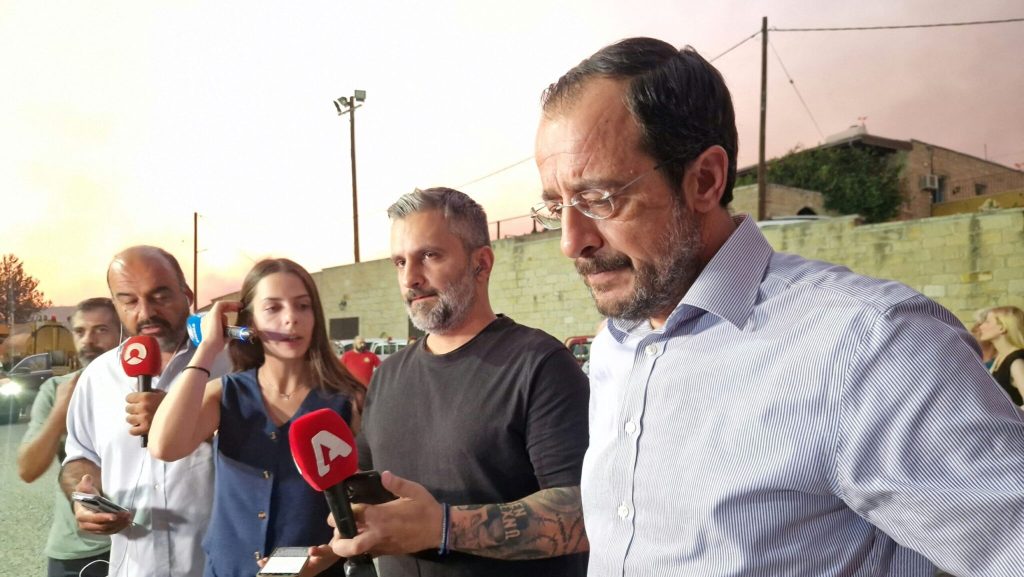
The issue that stigmatized the Government this year and what the President of the Republic would definitely like to forget, is the deadly fire of July. The fire burned 120.7 square kilometers, i.e. about 1.3% of the total area of Cyprus, and took the lives of two of our fellow human beings. Despite the announcements of the highest preparedness in view of the hot summer, the Republic of Cyprus experienced the most destructive fire in its history.
Two chaotic days, accompanied by misguided and even unacceptable statements by competent officials, combined with many weeks of confrontations and accusations falling in the form of an avalanche, led the Government to a standstill. Despite the admittedly difficult weather conditions, the mismanagement exposed the Government to a very large extent, to the point that it was difficult for even its biggest supporter to defend it. Two people were mainly targeted, the then Minister of Justice Marios Hartsiotis and the Minister of Agriculture Maria Panagiotou. The decision to represent the Republic of Cyprus in a mission to Australia by the coordinator responsible for the fires also caused intense discussion.
The citizens demanded immediate resignations or a reshuffle, but neither the President nor the Ministers succumbed to the pressure. At the beginning of December, the President finally proceeded with a reshuffle by removing Mr. Hartsiotis, but the spotlight had long since shifted from the issue of the fire. That is why the impression formed is that the responsibility was not taken in practice by anyone.
As an antidote to the anger of the people, the Government announced a package of 12 support measures for those affected. The measures included immediate financial assistance to the Community Councils to cover emergencies, temporary housing and psychological support for those affected, rent subsidies for uninhabitable homes, as well as full restoration of damage to homes and property, whether insured or not. They also provided for compensation for farmers, livestock breeders and entrepreneurs for loss of income and destruction of infrastructure or equipment, one-off support for families with significant losses, and monthly compensation for workers for three months. In addition, the measures included the restoration of water supply and electricity networks, exemption from community fees and taxes for those affected, and environmental rehabilitation of the affected areas.
Public Safety and Prisons
Serious events and pressures from abroad have highlighted this year – perhaps more than ever – the need for radical changes in the field of Public Order. A series of criminal actions, culminating in the murder of businessman Stavros Demosthenous in broad daylight, combined with what is seeing the light of day about the uncontrollable situation inside the Central Prisons and the findings of the Council of Europe, have significantly affected the sense of security of citizens.
In response to the criticism, the Government is now attempting to proceed in some areas with the aim of turning the game around. Shortly before his departure from the Ministry of Public Order, Marios Hartsiotis announced the establishment of the "Cypriot FBI" in order to attack the underworld and illegal activities. An announcement that is a given in the right direction, but with serious challenges and bets that will have to be addressed, so that it does not end up in another window announcement.
Regarding the dramatic situation in the Central Prisons, the new Minister, Kostas Fytiris, is now called upon to pull the chestnuts out of the fire. The management to date, as evidenced by the CPT report, has not borne fruit. The 240 new detention places created proved to be few to deal with the serious problem of overcrowding, while inadequate administration pushed the penitentiary into the hands of convicts. Public order and security is now perhaps one of the Government's biggest challenges for 2026.
Chrysanthos Savvidis: The report is positive
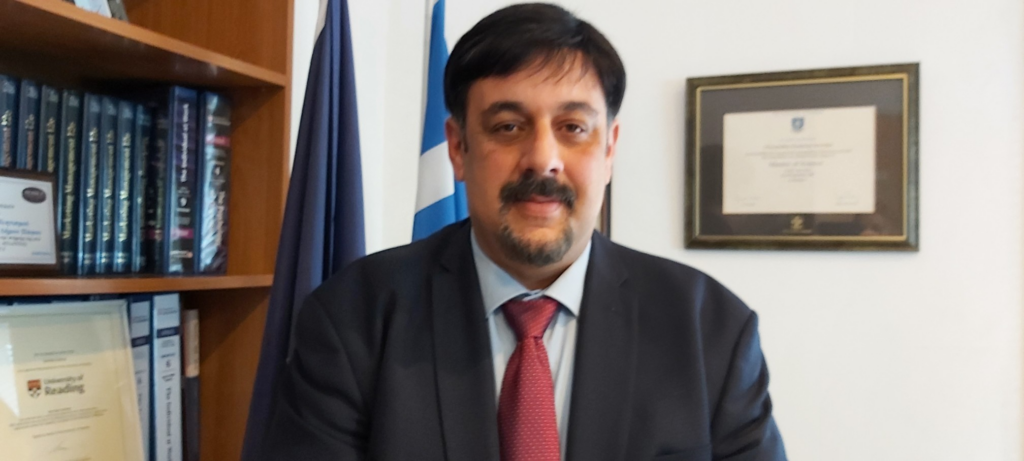
Next March marks three years since President Nikos Christodoulides took over the government of the Republic of Cyprus. This is a three-year period during which the country recorded substantial policy interventions, with an emphasis on addressing chronic pathologies and promoting reforms that had remained pending for decades. Despite the inevitable mistakes or omissions, the government has shown political will, boldness and determination, where previous governments have either hesitated or failed to bring results.
A leading example is the Tax Reform, the first substantial revision of the tax framework in 23 years. In cooperation with the House of Representatives, the government implemented a reform with a clear social sign, which strengthens low and middle incomes and offers substantial support to families, while contributing to a fairer distribution of the tax burden.
The reform of the teacher evaluation system and the educational work is also of particular importance. Its change is a breakthrough aimed at upgrading the quality of public education and substantial evaluation, with a view to the overall improvement of our educational system.
On the national issue, after eight years of prolonged stagnation, there is substantial movement and breaking the impasse on the Cyprus problem. The resumption of the process and the prospect of talks on the merits bear the stamp of the political strategy of President Christodoulides, who succeeded in bringing the Cyprus problem back to the international stage, without discounts on issues of principle and without concessions to Turkey, despite the intense pressure exerted.
In the economy, Cyprus is experiencing a period of stability and international recognition. The continuous upgrades by international rating agencies reflect the credibility and seriousness of the economic policy pursued. Inflation below 2.5%, unemployment below 5%, a permanent agreement on the ATA and targeted benefits to low incomes compose a picture of socially responsible and fiscally balanced policy.
Overall, the report of the three-year period is assessed with a clearly positive sign. This is a government that, with actions and not with slogans, seeks to lay solid foundations for the future of the country.
Giorgos Loukaidis: Change did not come
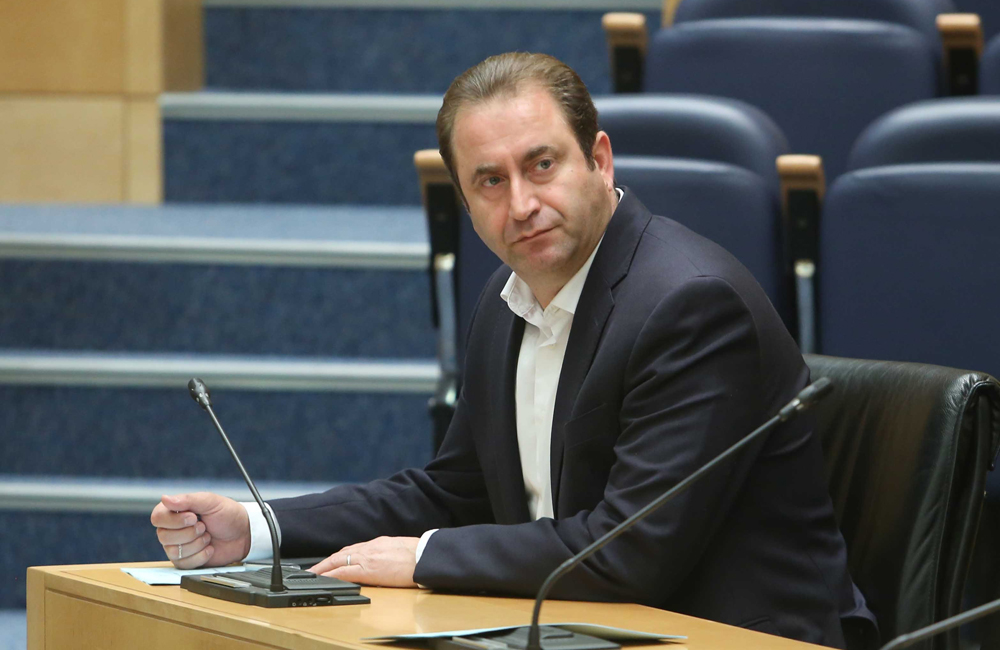
2025 reaffirmed that the change promised by the N. Christodoulides government never came. Behind the rhetoric about "stability", the same political direction of the DISY-Nicos Anastasiades government continued in practice, with the same social deadlocks and the same distortions deepening.
The cost of living crisis remains the dominant problem for households. Despite the positive macroeconomic indicators, everyday life is becoming more and more suffocating. Housing has turned into a social crisis. Rents and house prices are rising uncontrollably, access to credit is limited, thus excluding more and more young people and families from the right to housing. The absence of a comprehensive housing policy and, above all, the necessary regulatory interventions in response to the increased demand from third-country nationals, confirms the breach of key pre-election commitments for affordable housing.
In social policy, the government limited itself to piecemeal and temporary measures. Without a redistribution strategy and permanent interventions, high prices absorb every little relief, leaving middle and low incomes exposed.
At the same time, electricity remains one of the most expensive in Europe. Instead of substantial solutions, society is watching delays, ambiguities and serious scandals being investigated by the European Public Prosecutor's Office around the GSI and the terminal in Vasiliko, with the risk that the cost of wrong choices will be passed on again to the citizens.
In the field of public security, the picture is equally problematic. The inability to fight crime, the conditions, the gaps as well as the existence of an "organized crime directorate" in prisons, exacerbate the feeling of insecurity of citizens and undermine the rule of law.
The water crisis is particularly worrying. The country was unprepared, with farmers already paying the price for the lack of prevention and long-term planning. Water, a key natural and productive resource, was dealt with without a serious strategy, despite early warnings.
Finally, traffic highlights the wrong direction and inadequacy. The absence of integrated planning, delays in efficient public transport and solutions that do not meet the real needs of everyday life.
This is how 2025 is recorded as a year of continuation of dead-end policies and not change. Continuation of policies that widen inequalities and leave critical commitments unfulfilled, at a time when society needs a substantial shift towards social justice, quality of life and security.
