Filenews 30 November 2025 - by Angelos Angelodimou

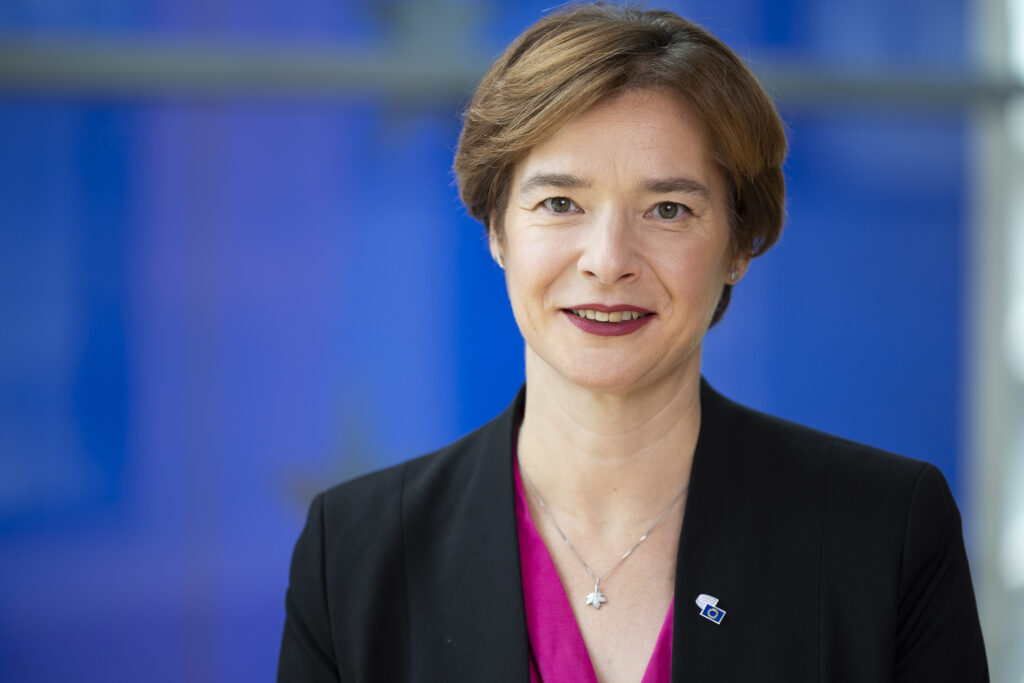
Sandra Parthie, president of the Employers' Group of the European Economic and Social Committee (EESC), was in our country a few days ago on the occasion of the Summit of the Presidents of Business Europe, the leading organization representing employers and industries in Europe. We have taken this opportunity to put a number of questions to Mrs S. Parthie, in relation to issues concerning employers both in Cyprus and in Europe.
The rapid development of artificial intelligence is expected to significantly affect businesses, but also employees. However, to what extent do you think it can be used to boost productivity and competitiveness? Do you think it will reshape the labour market more broadly?
When AI is used strategically, then it can help automate repetitive tasks, optimize production and supply chains, and enable data-driven decision-making that enhances efficiency and innovation.
We should not be afraid of change. Europe can strengthen the adoption of Artificial Intelligence while remaining true to its values. This requires investment in digital infrastructure, SME-friendly tools and training, as well as frameworks that guarantee trust and ethical use issues. With coordinated EU action and strong upskilling policies, AI can reduce Europe's productivity gap and strengthen its leadership in industry and services.
Today, we are facing a sharp increase in AI-related job vacancies, particularly in the software and data engineering sector. We need to quickly integrate lifelong learning into education systems to align them with market needs.
In the EESC, we call for coordinated European and national investment in innovation, as well as the mobilisation of competition policy tools, in order to combat market centralisation, which is dominated by large and often non-European, digital companies. The goal is not just to adapt, but to lead a path of responsible, human-centered AI, turning Europe's diversity and social model into a true global asset.
In light of the trade war between the US and China, there is a widespread perception that EU countries have lagged behind in terms of innovation, technological progress and global competitiveness. Do you share this view? If so, what concrete steps should Europe take to regain its position as a world leader?
This is true. Europe is innovating – but not fast enough. Despite a 12.6% increase in innovation performance from 2018 onwards, progress was "frozen" in 2025, resulting in a loss of momentum in terms of the momentum that had developed.
Leading countries in innovation, such as Sweden, Denmark and the Netherlands, continue to excel, but the EU still lags behind South Korea and the US. The Regional Innovation Scoreboard highlights persistent inequalities, with Northern and Western Europe mainly leading the way. Europe can regain global leadership, but it needs to break down barriers and complete the Single Market, boost R&D in Artificial Intelligence, biotechnology and green technology, and accelerate digital infrastructure and skills.
Simplified rules and stronger support for SMEs will help to reduce the gap between regions and fully exploit the prospect of a integrated, resilient innovation ecosystem.
Water scarcity and economy
A huge chapter for Cyprus is that of the lack of water. An issue that concerns the whole society, but also Cypriot businesses. Businesses in the agricultural and tourism sector are facing a particular problem. The Cyprus presidency is expected to strongly raise the issue of water scarcity and water resilience as a key issue for which solutions must be found. How do you position yourself on this issue and what solutions do you propose?
This is not a problem that Cyprus is facing alone. We can no longer treat water as an unlimited resource. Also, water scarcity is no longer just an environmental issue – it is an economic risk.
In Cyprus, as I understand it, dam levels were reduced to 11% of their capacity in 2025, and water supply cuts are now threatening agriculture and tourism. With a water exploitation rate of 71%, Cyprus is facing one of the most serious crises in the EU.
That is why the EESC's call for an EU Blue Deal is crucial.
Protecting water as a strategic asset means investing in reuse systems, smart monitoring, and circular water management.
For Cyprus, solutions could be scaling up desalination – ideally powered by renewable energy sources – improving irrigation efficiency and expanding public-private partnerships to promote innovation and resilience in the water sector.
EU and ECB policies are designed to ensure consistency and equal treatment across Member States. However, the economic conditions, needs and priorities of southern, northern, coastal and island countries often differ significantly. Do you think that the EU should take these regional differences into account in its policy-making in the coming period?
Yes, absolutely. Equal treatment is a basic principle of the EU, but real justice means recognising the different realities of Europe. The industrial northern regions face different challenges than the southern or island economies. To strengthen competitiveness and cohesion, EU policy must reflect these differences – taking into account climate risks, energy costs and demographics when formulating budgetary and industrial measures.
Employers need incentives, funding and flexibility that will allow each region to grow and contribute to the green transition.
The tools are there. What is needed now is the political will to use strategically and promote convergence through tailor-made rather than uniform solutions.
Access to finance remains a major challenge for Cypriot businesses, as well as for a large number of companies across Europe. What measures do you propose to improve the situation?
Access to finance remains a major barrier to the growth of companies, especially for SMEs in economies the size of Cyprus. We need a stronger mix of European and national tools that combine public guarantees with private investment.
EU instruments under InvestEU and the EIB need to be simpler and more accessible to smaller businesses and start-ups, while national programmes should extend credit guarantees and promote equity financing to boost innovation and sustainability.
Finally, the Capital Markets Union must become a reality, providing businesses with cross-border financing options beyond bank lending. Better access to business and private capital will help European businesses grow, compete and strengthen the EU's economic base.
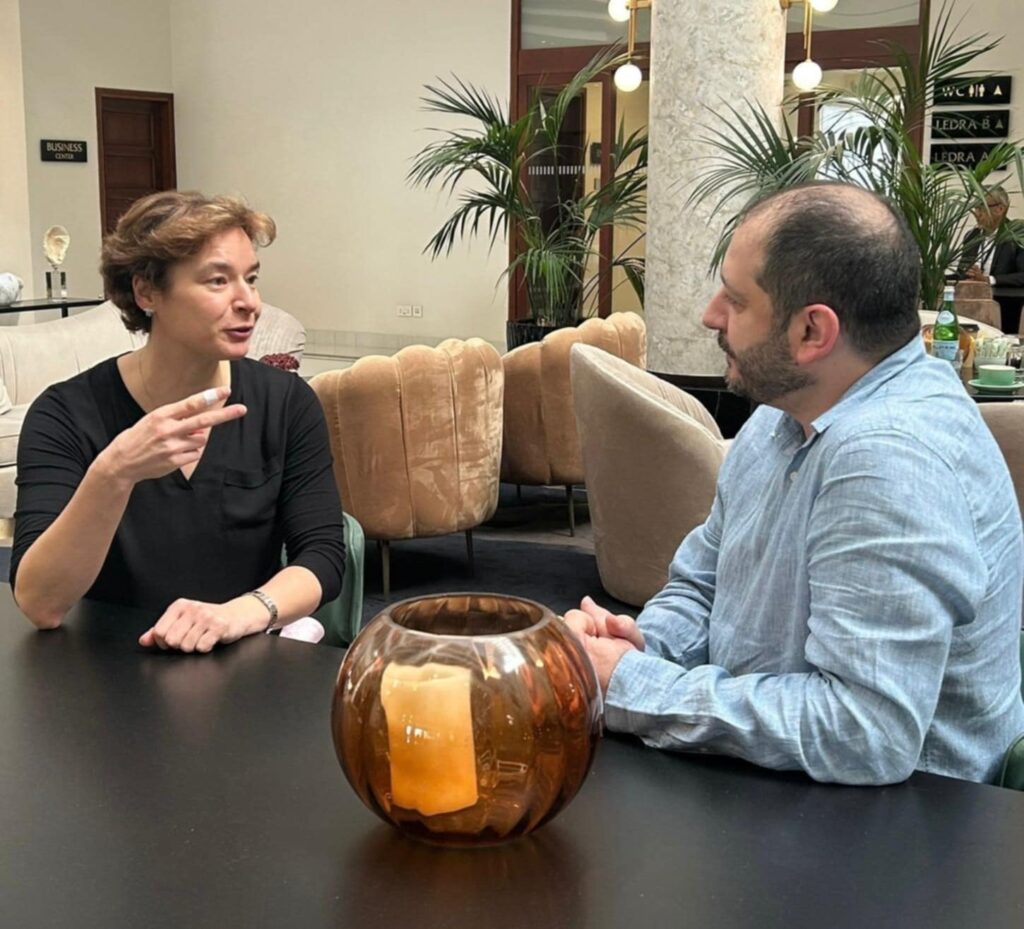
Ukraine as an investment in Europe's security
The war in Ukraine has had a significant impact on Europe. We observe that reactions are increasing regarding the granting of huge funds to support Ukraine, arguing that these funds could be used to address the challenges faced by businesses and workers. Do you share these concerns?
As employers, we fully understand the concerns about the pressure recorded on available resources. However, supporting Ukraine is not a zero-sum option – it is an investment in the stability and security of Europe itself. If Ukraine is weakened or isolated, the geopolitical and economic costs for the EU will be much higher than the current economic effort.
Reconstruction aid is also an opportunity to strengthen Europe's industrial base.
European companies are key to rebuilding Ukraine's infrastructure, energy systems and digital economy. This entails contracting, partnerships and demand for European technologies and expertise, creating value across the Union.
Competitiveness is a guiding principle in every EU choice
For your part, what issues will you prioritise in order to influence EU decision-makers to support growth and competitiveness?
To ensure Europe's prosperity and global influence we need a competitiveness-first agenda that restores our ability to lead.
Employers across Europe – from bakers in Barcelona to developers in Krakow – need an EU that allows, not restricts, ambition.
We need to make competitiveness a guiding principle in every EU policy choice.
This means smarter rules, easier access to finance, more investment in innovation and targeted support for products made in Europe.
We also call for targeted investments in five pillars of transformation: innovation and technology ecosystems; green and industrial development; empowerment and entrepreneurship of SMEs; job mobility and skills; and secure, modern energy and infrastructure.
The future of Europe depends on giving businesses the tools to create value and strengthen resilience, as well as maintain prosperity. The choice is clear: to build a Europe that leads—or to risk falling behind. In my view, the latter is not an option.
