Filenews 30 November 2025

The Director General of the European Anti-Fraud Office (OLAF), Salla Saastamoinen, was in Cyprus last week. The purpose of the visit was to strengthen cooperation between OLAF and the Cypriot authorities, with a focus on ensuring the effective protection of the financial interests of the European Union.
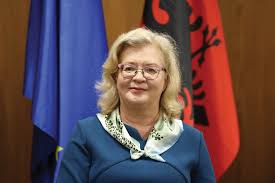
Interview with Xenia Turki
Cyprus, like any other member state, is not free from the risks of fraud or mismanagement of European funds, explained Salla Saastamoinen in an interview with "F". "What we have observed over the years is a common combination of issues: manipulation of procurement processes, conflict of interest, inflated tariffs and so on. In the field of customs, we tend to see tariff evasion, smuggling and counterfeiting of products," he stressed. For this reason, as he mentioned, it is important that in this context, Cyprus develops its own National Anti-Fraud Strategy, while at the same time it is called upon to utilize the tools provided by European programs to strengthen prevention, control and training of the competent bodies.
In particular, the head of Olaf focused on the issue of smuggling along the Green Line is a long-standing problem, as she described it. "Smuggling hurts public finances, undermines public health and creates sources of revenue that can be used by criminal groups for other illegal activities," he pointed out. Especially on this issue, the geostrategic position of Cyprus creates particular challenges. Despite the difficulties, Cyprus has the basic oversight structures and with the cooperation of OLAF it has the potential to strengthen the protection of European funds and actively contribute to a coherent and effective European anti-fraud architecture, Salla Saastamoinen pointed out.
– Why did you visit Cyprus recently?
– I am very happy to have visited Cyprus, especially at such an important time. As Cyprus prepares to take over the Presidency of the Council of the European Union, it is the right time for the European Anti-Fraud Office (OLAF) to strengthen our cooperation and ensure that we are fully aligned for the coming months. The presidency will address important issues related to the protection of the EU's financial interests, from the revision of the Anti-Fraud Architecture to the negotiations on the next Multiannual Financial Framework. Therefore, I believe that early coordination is essential.
It is also worth noting that this is the first time that a Director General of OLAF has visited Cyprus and I consider it a very positive step towards stronger cooperation. Direct contact with national authorities always offers real added value. My visit also had a practical purpose. I wanted to meet the authorities we work with every day, understand how things work in practice, and ensure that our cooperation is as effective as possible. Conversations with the Minister of Finance, the Attorney General, MOKAS and other officials give us a clearer picture of the challenges and opportunities that exist here.
-With its visit to the island, did OLAF manage to assess whether there are risks of mismanagement of European funds in Cyprus?
When we look at Cyprus, we do not single it out as a country with a higher or lower risk than other member states. No part of the EU budget or programme is fully fraud-free, and Cyprus is no exception. What we've observed over the years is a common combination of issues: manipulation of procurement processes, conflicts of interest, inflated invoices, and so on. In the customs sector, we tend to see tariff evasion, smuggling, and counterfeiting of products. These are patterns that we also see in many other countries.
What matters most to us is not so much the level of risk, but the ability to respond. And that's exactly why I was here. Cyprus is currently developing its own National Anti-Fraud Strategy, which is a crucial tool to enhance prevention and detection. On behalf of OLAF, we strongly encourage Nicosia to make better use of the European Anti-Fraud Programme, which offers funding for technical assistance, training and modern control tools. These resources can significantly strengthen national systems.
– How does OLAF cooperate with the national anti-fraud institutions in the Member States and what is the role of local authorities in Cyprus in this cooperation?
– OLAF cooperates with the national authorities in each Member State through what we call the AFCOS network, the National Anti-Fraud Coordination Offices. They are our main point of contact and help us to exchange information quickly, support our investigations on the ground and ensure that our administrative work is properly linked to national law enforcement authorities or judicial follow-up.
In Cyprus, AFCOS (Directorate of Financial Control of European Funds of the General Accounting Office of the Republic of Cyprus) performs exactly this role. It coordinates cooperation between OLAF and the various national bodies, such as customs, managing authorities, law enforcement authorities, all those involved in the management and supervision of European funds. During this visit, we meet several of these partners to see how the cooperation works in practice and where it can be strengthened.
For OLAF, local authorities are essential. We cannot protect the EU's economic interests alone. We rely on national systems that work properly, share information and act promptly when needed. In many cases, local services are the first to detect irregularities. Their expertise and proximity to projects or customs activities make them valuable partners. And Cyprus is an integral part of this joint effort.
– The European Public Prosecutor's Office (EPPO) is conducting an investigation into the project of the liquefied natural gas (LNG) import terminal in Vasiliko. What was OLAF's involvement in receiving the complaint?
– OLAF cannot comment on cases that it may or may not examine. This is done to protect the confidentiality of possible investigations and possible subsequent court proceedings, as well as to ensure respect for personal data and procedural rights.
How does smuggling through the occupied areas in Cyprus affect the EU's financial interests? How does OLAF deal with the situation?
-Smuggling of tobacco products, including new products such as heated tobacco, is a constant issue across the EU and unfortunately, it is on the rise. In Cyprus, we know of course that smuggling along the Green Line is a long-standing problem. Smuggling hurts public finances, undermines public health and creates sources of revenue that can be used by criminal groups for other illegal activities. OLAF's role is to support national authorities in tackling this phenomenon. We provide information, share risk analyses, maintain operational contacts, and engage in joint ventures when needed. Cyprus is part of this wider European effort.
We have regular exchanges with relevant authorities, including customs and law enforcement, and whenever we identify weaknesses or patterns that require attention, we submit appropriate suggestions. Our aim is always the same: to help protect the EU's financial interests and to disrupt smuggling networks in the most efficient way.
-Are the Cypriot authorities in a position to adequately supervise and intervene to protect European interests in the management of EU funds?
-I believe that Cyprus has the basic structures for the supervision of EU funds and overall the cooperation with OLAF is working well. AFCOS is our main partner, coordinating both shared management programmes and EU co-funded projects involving Cypriot beneficiaries. This coordination is critical to ensure that information circulates quickly and that risks are identified promptly. As I mentioned, one of the main reasons for my visit is to strengthen ties with AFCOS and other national authorities, to see how cooperation works in practice and to understand the real challenges they face, especially now that Cyprus is taking a leading role during the upcoming Presidency of the Council of the European Union. Of course, there is scope to further strengthen the system. The fact that Cyprus is developing a National Anti-Fraud Strategy is fundamental for us. In the next Multiannual Financial Framework, a coherent, risk-based National Strategy will be an important requirement for audits and inspection procedures. It helps to strengthen prevention, improve detection and ensure that all competent authorities work in a coordinated manner.
-In which cases have suggestions been made to Cyprus? Are the Cypriot authorities responding immediately to OLAF's requests? ;
– I cannot refer to individual cases, as you can see. But I can explain how the process works. When OLAF concludes an investigation, we issue a final report, which may be accompanied by recommendations, which may be of a financial, judicial, administrative or disciplinary nature. These recommendations are not binding, as it is up to the national authorities to decide on the appropriate follow-up within their legal system. What we are doing is monitoring very closely the follow-up. We remain in contact with the European Commission and the relevant national bodies to ensure that the process progresses. And in general, cooperation is good – communication is open and answers are given in a timely manner.
Of course, each country has its own legal constraints and procedural frameworks, and Cyprus is no exception. That is why the broader revision of the European Anti-Fraud Architecture is important: it aims to simplify roles and improve coordination between OLAF, the EPPO, Europol, Eurojust and national authorities. Stronger and more cohesive structures mean more effective continuity everywhere, including in Cyprus.
Leading role in strengthening the EU Anti-Fraud Architecture is a bet for Cyprus
-Are there specific areas of EU funding in Cyprus where weaknesses appear more pronounced?
– Not exactly since the scam does not choose a domain. It can appear in agriculture, construction, digital transformation, green transition projects, Cohesion Funds. What we are seeing in Cyprus is essentially the same as what we are seeing across the EU. Programs may vary, but the course of action remains the same: manipulation of procurement processes, conflicts of interest, collusion, inflated invoices, and so on. That is precisely why strong, horizontal systems are needed. A solid National Anti-Fraud Strategy, appropriate reporting channels and the use of EU-level resources and options under the European Anti-Fraud Programme all contribute to reducing weaknesses in all areas, not just one.
-What improvements would you like to see in the mechanisms for reporting, preventing or investigating fraud in Cyprus?
-If I had to highlight an area for improvement, it would be for more systematic reference. Timely information is extremely valuable to OLAF, as it allows us to intervene in a timely manner, protecting EU taxpayers and helping to recover funds quickly. Cyprus will soon take over the Presidency of the Council of the EU and this gives it a unique opportunity to demonstrate a leading role in strengthening the overall EU Anti-Fraud Architecture. Strong national reporting, prevention and investigation systems will send a very clear message at EU level. That is why the National Anti-Fraud Strategy is so important in this context. Finally, I would also encourage Cyprus to make greater use of the European Anti-Fraud Programme. It was designed to help member states build capacities, through specialized training, IT systems, secure data exchange tools and customs equipment. With the new Multiannual Financial Framework, the programme's budget will be doubled, so this is an opportunity not to be missed.
Cyprus is a small Member State, but with an important geostrategic position. Does this pose specific challenges for customs fraud or smuggling?
-It is true that Cyprus has a unique geographical and strategic position. The fact that it is located at the EU's external borders and close to several key transit routes means that it may face particular challenges in terms of customs fraud. However, the reality is that each member state can be targeted by fraudsters, depending on a number of factors that make it vulnerable in a given context or another. The important thing is that we never forget that the EU is a single customs area and that we need to work together to be successful. OLAF supports this process with information, rapid alerts, joint operations, coordination and the use of its own investigative powers.
