Filenews 9 August 2025 - by Odysseus Michaelides

Cyprus is faced with one of its most timeless and critical problems: ensuring the adequacy of water resources. The climate crisis is leading to more frequent and prolonged periods of drought, making it imperative to take thoughtful, resilient and comprehensive measures – while for the next two summers, immediate relief interventions are required. The evidence is revealing. Our country ranks second in the world in water pressure, with an index of more than 80% in the Water Stress Index (when the limit for "high pressure" is only 40%). At the same time, Cyprus has the highest Water Exploitation Index (WEI+) in Europe, reaching 124%. Rainfall has decreased by about 15 percent since the 1970s, while inflows into the dams have decreased by about 40 percent. At the moment, the occupancy of the dams is close to 15%.
Since 1997, Cyprus has turned to desalination to address water scarcity. Currently, there are 5 units operating with a total capacity of approximately 235,000 m³/day, while four smaller units (+40,000 m³/day) are expected to be added within the next year. The plan envisages an increase in capacity to 415,000 m³/day by 2030-31. Desalination, although critical for water security, is an energy-intensive, high-cost process, which is passed on to consumers, and has a strong environmental footprint. Overall, climate change is exacerbating an already marginal water balance, requiring immediate action and long-term planning. The tragic situation we are experiencing today and the temporary relief from the loan units of the United Arab Emirates, remind us of the inadequacy of the public policies of recent years, including the current government. The Cypriot governments, while correctly providing for the creation of dams, should have the foresight to predict the magnitude of the problem (experts, after all, have been warning for years) and not limit themselves to the logic of management, but to follow a well-elaborated strategy.
Institutional Interventions and Strategic Planning
Designing and implementing a national water strategy involves difficult policy decisions – such as prioritising across sectors (e.g. tourism vs. agriculture) and reviewing existing agricultural practices and policies, which need to be taken in the collective interest and sustainability. These are deeply political issues, as long as they reflect the government's values and priorities. At the same time, however, once a commonly accepted strategic policy framework has been established, it is crucial to limit political interventions to the executive management of the problem. Experience has shown that excessive politicization leads to piecemeal or fire-fighting solutions instead of consistent implementation of a long-term plan.
Institutional changes in water governance are needed. The 2010 law provided for the creation of a Single Water Management Authority, but this remained largely on paper. It is proposed to reconstitute an independent Single Water Authority with strong responsibilities in the strategic planning and planning of water resources, shielded from micropolitical pressures. This Authority should focus on long-term planning (e.g. assessment of annual needs and stocks, planning of projects and measures) rather than on secondary management issues. In this way, a consistent, long-term strategy will be ensured with small but steady steps in the same direction, regardless of changes of government or temporary years with increased rainfall.
As a matter of fact, the board of directors of this Authority should be technocrats who will be selected through appropriate procedures, on the basis of international best practices, and who will be accountable if the measurable goals they will set and approved by the executive are not achieved. Enough of the boards of directors of a decorative nature and limited responsibility, for the convenience of others.
Immediate Management Measures
For the next 1-2 years, the goal is to reduce consumption by 10-15 million cubic meters per year, without the cuts focusing exclusively on households. We all have to bear a greater burden, although the distribution of the burden must be done according to criteria of public interest, effectiveness, and solidarity.
To this end, we propose the following package of immediate measures:
a) A campaign to inform and raise public awareness about water scarcity and the value of water. It is necessary to cultivate a culture of rational consumption, since water is a valuable and finite natural resource.
b) Desalination coupling with RES: Immediate study and pilot implementation for the connection of energy-intensive desalination plants with Renewable Energy Sources, so that desalinated water is produced at lower energy costs. The units should be managed on an annual basis – producing and storing water in reservoirs even outside peak periods – so that they operate efficiently throughout the year.
c) Limitation of leaks in the networks: Today, as reports of the Audit Service have shown, leaks are not negligible. We are wasting a precious and hard-to-find resource. It is urgent to implement a programme to identify and repair leaks in the water supply and irrigation network, which date back to the 70s, especially in areas with high losses, such as Paphos and Limassol. At the same time, it is important to plan the monitoring, maintenance and upgrade of critical infrastructure (pipelines, dams) to reduce water losses.
d) Immediate utilization of recycled water: Acceleration of wastewater treatment projects and completion of transport pipelines, so that recycled water is included in the water balance and utilized where possible (mainly in irrigation). It is noted that about 70% of the total water consumption concerns irrigation instead of water supply. Therefore, increasing the use of recycled water in agriculture can save significant amounts of drinking water.
(e) Restriction of non-essential consumption in the urban and tourist sectors. Especially:
- Prohibition of the use of drinking water in swimming pools (private and hotel). Only borehole water or brackish water should be used to fill the pools.
- "Unbilled" water control: Intensify controls to detect illegal connections to the network, faulty water meters or unmetered consumption, in order to limit uncontrolled water use
- The irrigation of golf courses should, after a grace period has been given, be done with water that the owners of the courses will provide from their own (legal) sources, not from the network. For the same reason that the use of water in targeted agricultural crops is mandatory, the use of water in targeted tourist facilities is mandatory. The water-intensive version of agriculture and the water-intensive version of tourism must be curtailed.
Long-Term Solutions and Sustainability
Since the water problem is not temporary but structural, a set of permanent interventions is required that will ensure the sustainability of our water resources. The main axes of the long-term strategy include:
(i) Restructuring of agricultural water use: Review of the water use model in the agricultural sector. An honest dialogue with farmers is necessary for realistic decisions, in order to gradually reduce the cultivation of water-intensive products and adopt more efficient irrigation methods. Continuing crops that require huge amounts of water with inefficient irrigation methods is not considered sustainable in the long term.
(ii) Adoption of smart technologies and digitalisation of networks: Promotion of new technologies for more efficient management and monitoring of water management, both in water supply and irrigation
(iii) Modernization of infrastructure networks: Gradual upgrading of urban water supply networks and irrigation infrastructure. This includes replacing obsolete pipelines, zoning networks, and better pressure control to reduce leaks, as well as improving dams and reservoirs where needed for greater efficiency in water retention.
(iv) Sustainable development of new sources: The design of any new water infrastructure must be made with sustainability in mind. For example, new desalination plants must be directly connected to Renewable Energy Sources in order to reduce their energy footprint.
(v) Financial incentives to save: Revise the water pricing policy in a way that encourages savings and discourages waste. Today, water is cheap. For such a valuable and scarce resource, the pricing policy needs to be revised. The implementation of tiered tariffs (where excessive consumption is much more expensive) combined with rewards or subsidies for saving practices (e.g. the use of low-consumption technologies) will create economic disincentives to excessive water use. For incentives and disincentives, the size of the household should be taken into account.
(vi) Learn from countries with similar problems, such as countries in the Middle East. Israel has developed advanced technologies to save and exploit water. A thorough study of such practices will be beneficial for us as well.
Inference
Drought is a natural phenomenon, which will become more intense year after year, but water scarcity is a man-made phenomenon that reveals the lack of long-term and integrated planning. Therefore, Cyprus' water problem is not cyclical, but structural – and cannot be addressed piecemeal or with temporary solutions. Comprehensive, long-term and realistic planning, based on scientific data, coordinated action and active participation of society, is required. Only with a combination of know-how, strong political will and social co-responsibility can an effective and sustainable solution be provided. Boosting supply (through new water sources, e.g. desalination, recycling) must go hand in hand with limiting demand (rationalising consumption, eliminating waste) at all levels.
The issue of water is not an emergency—it is structural, and it is not just a matter of managing natural resources, but a question of responsibility for future generations. We need a serious state, rationality and social responsibility. "Jump" has the will, the proposal and the political planning so that the Cyprus of 2033 does not continue to have the problems of the 1970s, nor deal with them with the logic of that decade.
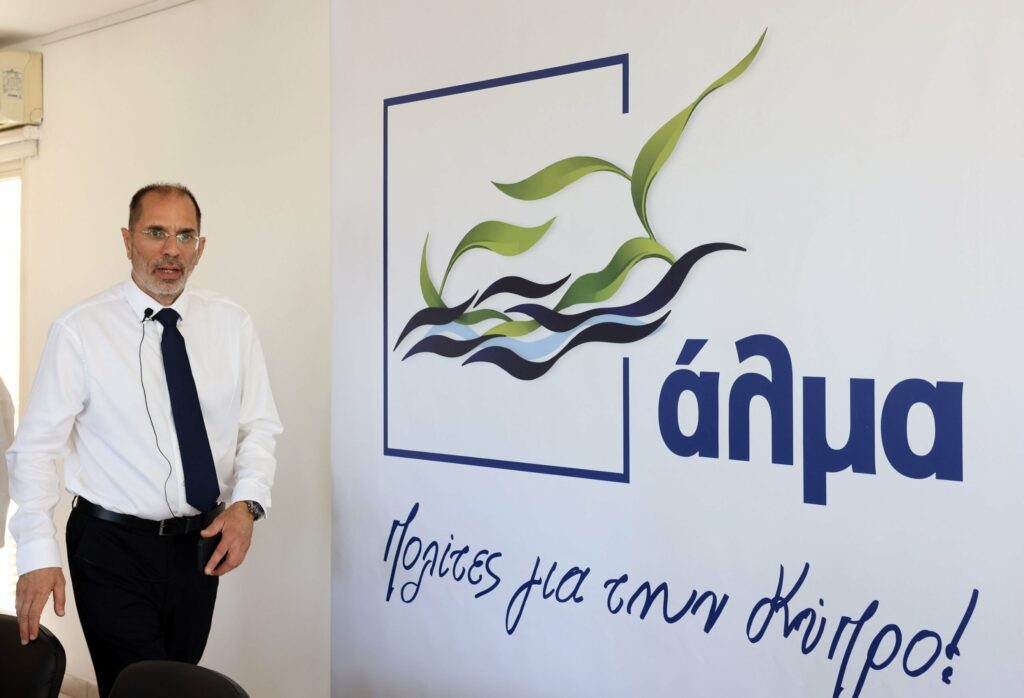
* Head of the Alma Movement, former Auditor General of the Republic, visiting Professor of Economics at the European University Cyprus
