
A widespread and multifaceted organizational phenomenon, with significant gender and hierarchical dimensions, is workplace bullying in Cyprus in the public and broader public sector, with the majority of victims being women, as revealed by a recent study commissioned by the Pancyprian Union of Public Employees (PASYDY) to the gender expert and president of the "Hypatia" Foundation, Dr. Anna Pilavaki, with a grant from National Mechanism for Women's Rights.
According to the results of the study, which Dr. Pilavaki presented at a seminar at the PASYDY headquarters in Nicosia on November 11, 2026, titled "The gender dimension of workplace bullying in the public and broader public sector," 62% of the 5,148 participants stated that they have experienced humiliating, offensive, or intimidating behaviour over the past five years. She stated that the survey included 3,394 women (65.9%), 1,644 men (32.0%), and 110 individuals (2.1%) who declared the opposite gender or did not respond, while data collection took place in June 2026 via an anonymous electronic questionnaire.
"The analysis by gender – emphasized Dr. Pilavaki – reveals clear gender differences, as 64.8% of women report experience of workplace bullying, compared to 56.1% of men. Therefore, although the phenomenon affects both genders at high rates, women show greater exposure to workplace bullying." In his own statement on the psychology of the phenomenon, Professor at the Department of Psychology at the University of Cyprus, Dr. Panagiotis Stavrinidis, said that "it is a pathology, but also an organizational problem, with the responsibility of management being decisive." He added that "silence, tolerance, inertia, and apathy are not neutral but contribute to the increase in workplace bullying incidents and perpetuate the problem."
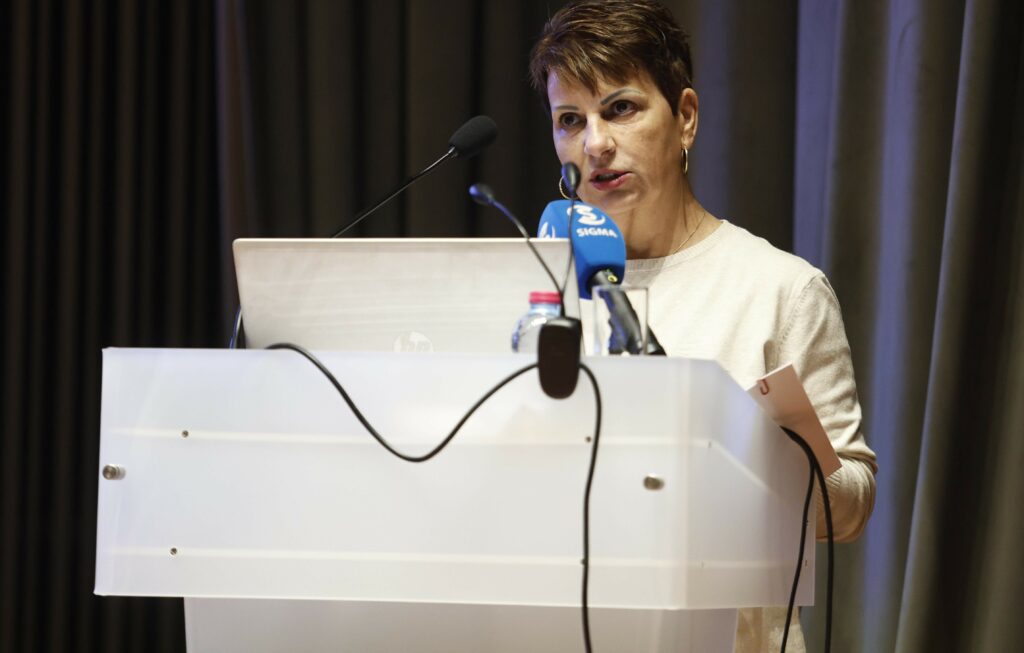 Researcher Dr. Anna Pilavaki
Both the general secretary of PASYDY, Stratis Matthaiou, who said that "they are revealing and should seriously concern us," and the Minister of Labour, Marinos Mousiouttas, who referred to the special law of 2025 on the prevention and handling of violence and harassment in the workplace, expressed their concern about the results of the investigation. both the private and public sectors. He emphasized that "the research clearly shows that the law alone is not enough" and that "three actions are necessary, namely informing employees, operating mechanisms that inspire trust, and training supervisors so that they become part of the solution, not the problem."
A greeting at the seminar was also delivered by the officer of the Office of the Commissioner for Gender Equality, Niovi Georgiadis, who stressed that "the findings of the research should serve as a starting point for reflection, dialogue, and concrete actions by all relevant authorities." The second part of the seminar included a discussion moderated by Alexia Panayiotou, Associate Professor in the Department of Business Administration and co-director of the UNESCO Chair on Gender Equality at the University of Cyprus. The panel included Dr. Anna Pilavaki, Niovi Georgiadi, and the director of the Labor Department, Alexandros Alexandrou. The seminar was coordinated by Maria Tourapi, chair of the Equality Committee of PASYDY.
Work climate, frequency, and formats
Presenting the results, Dr. Anna Pilavaki specifically referred to the findings of the study on the work climate and the culture of tolerance/cover-up, which, as she said, paint a "problematic picture." She added the following: "Only 40.8% agree that there is a climate of professional respect, while 58% believe there is a culture of tolerance or cover-up of abusive behaviors. The second finding is particularly important, as it points to a broader organizational dimension of the problem and not exclusively to isolated behaviors. Gender analysis reinforces this picture. Women rate the climate of professional respect less positively, with an average of 3.05 versus 3.18 for men, a difference that is statistically significant. At the same time, they perceive more strongly the presence of a culture of tolerance or cover-up, with an average of 3.62 versus 3.43 for men. The connection with personal experience is also particularly significant: among those who have experienced degrading behaviour over the past 12 months, the perception of a tolerance/cover-up culture rises to 3.89, compared to 2.93 among those without similar experience."
Regarding the frequency and forms of workplace bullying, the researcher pointed out that "workplace bullying is not limited to isolated incidents" and added: "Among those who said they had experienced it, 41% reported that incidents happened 'sometimes,' while overall 38% experienced them frequently, very often, or daily. This is, therefore, a recurring experience for a significant portion of the victims. Regarding gender, however, it is important to note that there is no significant difference in frequency: about 38% of both women and men report frequent, very frequent, or daily experiences. Therefore, women show higher overall exposure to bullying, but among those who have experienced it, the frequency of incidents is essentially the same across both genders.
Regarding forms of bullying, belittling, irony, and dismissive comments dominate (81%), followed by exclusion from information or processes (48%) and excessive or selective control (46%). The main forms are largely common to both genders. However, women more frequently report belittling, irony, or dismissive comments (83% versus 79%), while men show a higher rate of unjustified disciplinary threats or investigations (38% versus 28%)."

Gender and position of the perpetrator
"Regarding the gender of the perpetrator, the picture is complex," Dr. Pilavaki said, continuing: "Overall, 36.0% mention perpetrators from both genders, 33.9% female perpetrators, and 27.3% male perpetrators. The gender analysis reveals an interesting difference: men more often report male perpetrators (38%), while women more frequently report female perpetrators (38%). Therefore, workplace bullying cannot be attributed exclusively to one gender of perpetrator. Particularly strong is the hierarchical dimension of the phenomenon. Overall, 64% report the perpetrator as a hierarchical superior, and 49% the immediate supervisor. This gap also varies by gender: 70% of men compared to 61% of women report a superior hierarchically. However, bullying is not limited to vertical labor relations. 33.1% report a colleague of the same rank as the perpetrator, and 11.6% a subordinate. In fact, women report bullying more frequently than a colleague of the same rank, 36% compared to 26% of men."
The complaint or reference to the 52% is futile ... No reporting of incidents for a large percentage
The failure to report incidents is one of the most important findings of the study, according to Dr. Pilavaki. She said that "52% of those who experienced workplace bullying did not report the incident at all, 38% made an unofficial report, and only 10% made an official one. There is therefore a very large gap between the experience of bullying and the formal complaint.
The analysis by gender shows different reporting patterns. Women more frequently resort to informal reporting, 41% versus 33% of men, while men show a higher rate of non-reporting, 57% versus 49% of women. However, in the official report, there is no gender distinction: only 10% of both women and men file an official complaint. The hierarchical dimension is particularly important here: 68% believe that the hierarchical relationship is an obstacle to reacting to or reporting the incident. This finding gains greater weight, combined with the fact that 64% report a superior perpetrator hierarchically. Therefore, while women and men differ in informal reporting and non-reporting, they converge on a particularly worrying point: official reporting remains extremely limited to both genders."
The reasons for not reporting mainly highlight a lack of trust and a sense of inefficiency in the procedures.The main reason is the belief that the report would be "pointless" (52%), while 47% report a lack of trust in mechanisms and 36% fear of retaliation. Hierarchical dependence is reported at 15%. The analysis by gender shows that women more frequently report that they consider the report pointless, 54% compared to 47% of men. In contrast, men more frequently report a lack of trust in mechanisms, 51% versus 45% of women, as well as fear of retaliation, 40% versus 34%. In hierarchical dependency, no significant gender differentiation is observed (15% men – 14% women). The findings therefore show that the absence of mention does not have exactly the same reasoning for both genders: women experience a stronger sense of futility in mentioning, while men experience distrust of mechanisms and fear of reprisals."
Double problem for coping mechanisms
"The picture regarding mechanisms to address workplace bullying is particularly problematic," the researcher pointed out, adding: "Only 14% believe there are coping mechanisms, while 49% believe there are none, and 37% do not know. Overall, 86% either believe they do not exist or are unaware of their existence. The gender analysis shows that knowledge, or perception of mechanisms, is low in both genders, but even lower among women: 12% of women compared to 17% of men believe mechanisms exist. Similarly, 50% of women compared to 47% of men believe they do not exist. Equally problematic is the evaluation of their effectiveness. Only 10% consider the mechanisms effective, 48% only partially effective, 23% ineffective, while 18% do not know. Therefore, the problem is twofold: employees either do not know or do not recognize the existence of coping mechanisms, and at the same time, there is a very limited perception of their full effectiveness."

The good news and the bad news... and documentation of the problem - The perpetrators vent their grudges against their most vulnerable colleagues
Professor Panagiotis Stavrinidis initially referred to the "positive and optimistic" aspect of the issue. "My own scientific engagement with this issue for two decades," he said, "shows that workplaces are places of friendship and cooperation where people get to know each other, share experiences, sometimes fall in love, and often form relationships that go beyond the narrow boundaries of work obligations." He added that "... The bad news is that the problem of workplace bullying is real, and this is documented by scientific research." Dr. Stavrinidis spoke, among other things, about the ways workplace bullying manifests. As he said, direct bullying manifests "through threats, insults, humiliation, degradation of personality, social isolation, and exclusion and assignment of humiliating tasks. The indirect is manifested by spreading rumors and/or spreading lies about the victim."
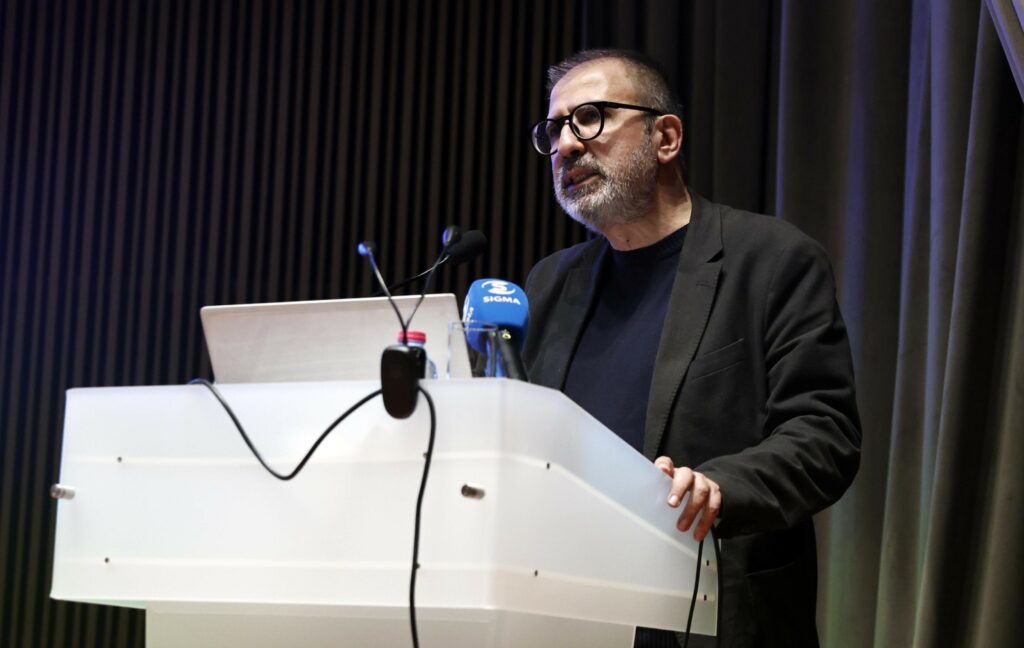 Professor Panagiotis Stavrinidis
Speaking about the psychology of bullying behaviors, he said that "it presupposes a power imbalance in the workplace, which does not necessarily stem from the institutional status of a hierarchically superior to a lower-ranking employee. It may stem from the sense of psychological strength of individuals who may be institutionally lower at work. The second element about the psychology of bullying behaviors requires systematization, given that when bullying begins against an employee, it usually continues with greater frequency and intensity and escalates over time. The third element is intention, as bullying does not happen occasionally or circumstantially, but is something the perpetrator consciously plans, implements, observes, revises, and repeats as time passes." Referring to the psychological profile of the perpetrators, Professor Stavrinidis spoke about the element of narcissism, the need for dominance ("Do you know who I am?"), and the belief that everyone around them is to blame except themselves." He also said that "if something bad happens, perpetrators take out their grudges on their most vulnerable colleagues, since they usually have low empathy, which does not allow them to feel or think that their actions might hurt others' feelings."
Need for protection and action
"Our organization has taken the initiative to conduct this nationwide survey, and presenting the results is an opportunity for substantive reflection, collective responsibility, and, above all, for taking action," said PASYDY's general secretary, Stratis Matthaiou, in his greeting, among other things. He added that "PASYDY believes that the results of the survey should serve as the starting point for a substantive and institutionalized dialogue with the State and the competent authorities, aiming to establish a comprehensive framework for the prevention and management of workplace bullying. In this context, we consider it necessary to create or substantially strengthen independent, reliable, and accessible mechanisms for submitting and investigating complaints, effectively protecting employees who file complaints from any form of retaliation or adverse treatment, establishing clear procedures with guarantees of confidentiality, objectivity, and timely investigation, and systematic training and raising awareness among supervisors and all employees, with particular emphasis on the gender dimension of the phenomenon, strengthening accountability, and establishing a zero-tolerance administrative culture against bullying and degrading behaviors. Above all, however, workers' trust must be restored that when they decide to speak out, they will be heard, treated seriously, and receive the protection they deserve."
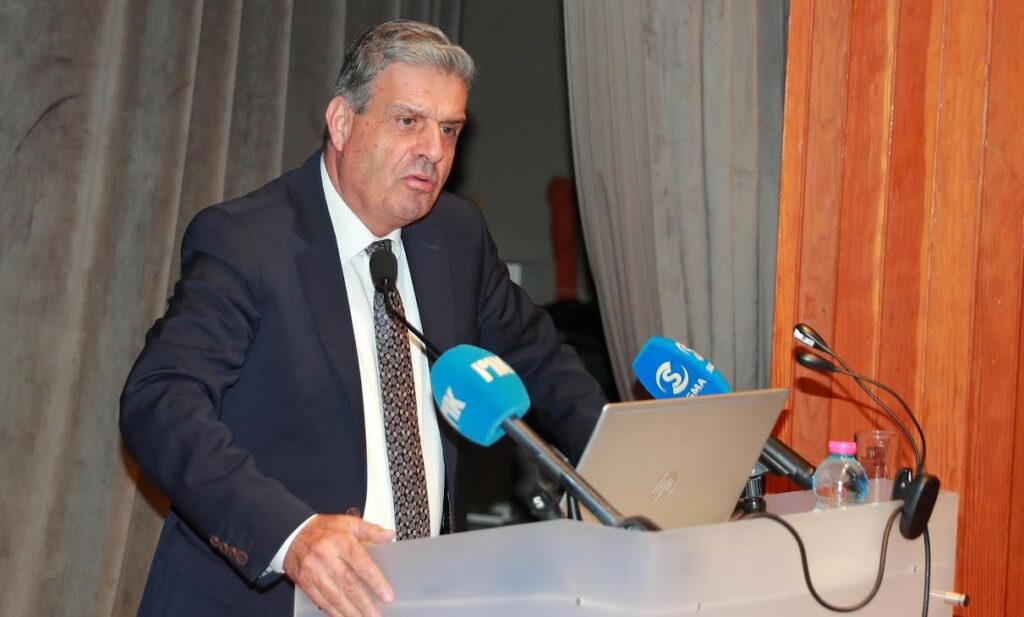 The General Secretary of PASYDY, Stratis Matthaiou
In her own greeting, the officer of the Office of the Commissioner for Gender Equality, Niovi Georgiadis, emphasized that "particular concern is the findings concerning the failure to report incidents of bullying, the lack of trust in available response mechanisms, as well as ignorance about where and how someone can seek support. Violence, harassment, and intimidating behaviours—she continued—cannot be tolerated by any employer, whether in the public or private sector. The employer, in this particular case, the public sector, is obliged to promote a culture of zero tolerance for intimidating and harassing behaviors and all forms of violence."
In conclusion, it is noted the assurance given in his greeting by the Minister of Labour and Social Insurance, Marinos Mousiouttas, that "we will carefully study the findings of the investigation, and I urge you to cooperate—the Ministry, PASYDY, and the relevant services—to make the law for the prevention and treatment of violence and harassment in the workplace enacted, daily practice in every service."
